This site is supported by our readers. We may earn a commission, at no cost to you, if you purchase through links.

Imagine this: you walk into your snake’s room at 6 a.m. and the enclosure lid sits slightly ajar. Your stomach drops. A snake can squeeze through a gap barely wider than its head, and most escapes start with a lock nobody double-checked.
A solid reptile pet snake habitat prevents that moment. It also keeps your snake warm, hydrated, and stress-free, because heat, humidity, and space all work together. Get one wrong and the others suffer.
The good news? Each piece is easy to master. Start with the enclosure, then build upward, one smart choice at a time.
Table Of Contents
- Key Takeaways
- Choose a Secure, Species-Appropriate Snake Enclosure
- Set Up Snake-Safe Substrate, Hides, and Enrichment
- Create a Safe Temperature Gradient for Your Snake
- Maintain Species-Specific Humidity Without Waterlogged Bedding
- Keep Your Snake’s Habitat Clean and Monitor Health
- Frequently Asked Questions (FAQs)
- What is the best habitat for a snake?
- What do snakes need to be happy?
- What is a terrarium for snakes called?
- How much does a full snake set up cost?
- What is the best habitat for a pet snake?
- Where is the best place to keep a pet snake?
- What are the requirements for a snake enclosure?
- What to put in the bottom of a snake tank?
- What lighting types are ideal for diurnal snakes?
- How do I safely transport my snake?
- Conclusion
Key Takeaways
- Lock your enclosure every single time, because snakes can slip through tiny gaps and most escapes start with a lock nobody double-checked.
- Size your enclosure to your snake’s adult length, and use species-specific temperatures and humidity, such as a warm side near 85°F for corn snakes and 60-80% humidity for ball pythons.
- Build a warm-to-cool gradient with every heat source on a thermostat, and check both air and surface temperatures so your snake can choose where to be comfortable.
- Keep the habitat safe with snug hides, non-irritating substrate like aspen or coconut coir (never cedar or pine), daily spot cleaning, and regular checks of your snake’s appetite, shedding, and weight.
Choose a Secure, Species-Appropriate Snake Enclosure
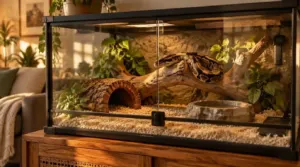
Your snake’s enclosure is its whole world, so let’s get it right. Below, you’ll find three key points to guide your secure snake enclosure choice. Pick well, and your snake stays safe, comfy, and right where it belongs.
Since size, temperature, and humidity needs vary widely between species, it helps to review snake species habitat needs before you commit to a setup.
Enclosure Size and Growth Planning
Enclosure size starts with your snake’s adult length. Match the floor length to it, and make width half to two-thirds of that. Floor space beats gallons. For example, corn snakes and royal pythons commonly need a 120cm by 60cm enclosure as adults.
Plan upgrades early. Why wait?
- Measure your snake monthly.
- Compare length to usable floor.
- Upgrade before hides feel cramped.
- Follow species-specific care.
- Keep temperature gradient, thermal gradient control, and humidity level management in mind.
Safe Materials and Ventilation
Check the build next. Good reptile enclosure design starts with reptile safe materials. PVC and HDPE hold up well. Unsealed pine? Skip it, or seal it with epoxy or water-based polyurethane and let it cure.
Melamine-coated wood also works well when edges are properly sealed, and these DIY snake cage ideas show how to build a durable, easy-to-clean setup.
Enclosure material safety covers airflow. Use species-appropriate ventilation, so tropical snakes keep humidity and air stays fresh. Pick reptile terrarium accessories that won’t block vents.
Secure Locks and Escape Prevention
Snakes are escape artists, so build an escapeproof enclosure from day one.
Good reptile enclosure design means secure locking mechanisms. Use wire locks on sliding doors and clips on screen tops. Seal every cable gap and use solid grommets.
Keep species-appropriate ventilation open, and keep species-matched substrate below the door track. Locked beats shut. Always lock it every single time.
Set Up Snake-Safe Substrate, Hides, and Enrichment
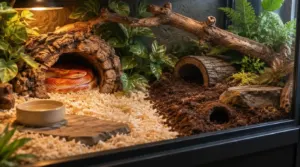
Your snake’s enclosure is built, so what goes inside? Start with smart substrate selection. Aspen shavings work well for many terrestrial snakes, and they’re easy to spot clean. Burrowers love coconut coir, which holds tunnels and keeps humidity steady. Skip cedar and pine, because their oils can irritate your snake. Avoid dusty, fine particles too.
Next, add hiding spots. Give your snake at least two snug hides, one warm and one cool. A close fit lets it coil without being squeezed. Does it feel safe? Then it’ll feel calm.
For ideas on materials, layouts, and safe decor that make those hides look as good as they work, browse these reptile habitat decoration ideas.
Naturalistic decor options add cover. Try cork bark, artificial foliage, and sturdy branches. Secure heavy pieces so they can’t tip, sand down any rough edges. Feed on a clean, separate surface.
Create a Safe Temperature Gradient for Your Snake
Your snake can’t make its own heat, so you have to build a safe temperature gradient for it. Let’s walk through three simple steps: picking the right zones, placing your heat sources, and checking your numbers. Ready to get your snake’s warm and cool ends just right?
Species-Specific Warm and Cool Zones
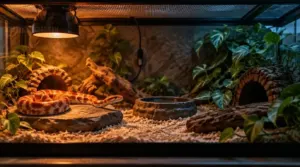
Ever wonder why your snake keeps switching sides? It’s thermal gradient control at work. Your temperature gradient lets snakes choose.
Corn snakes want 85°F warm and 75°F cool. Ball pythons prefer 85–90°F warm and 75–80°F cool, never below 70°F at night. Rosy boas need a 90–95°F basking spot. Species-specific care and ventilation keep that cool and warm side gradient steady.
Heat Sources and Thermostat Placement
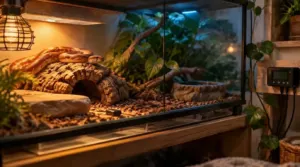
A reliable setup starts with the right heat sources. Good thermal regulation in snakes depends on a steady temperature gradient, so smart heating and thermostat use matters.
- Mount overhead panels on one side.
- Put mats under one end.
- Cage every basking bulb.
- Place the probe under the heat.
- Plug every heater into a thermostat.
Correct thermostat placement keeps everything safe.
Air and Surface Temperature Monitoring
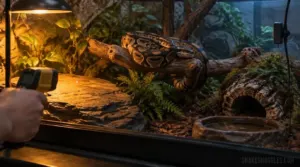
Think of your enclosure as a small town with two weather reports. One tells you the sky, the other tells you the sidewalk.
Check air temperature with a digital probe at snake height, then check the warm and cool ends. Use an infrared gun for surface temperature on the warm floor and cool floor. Keep your angle steady. Skip glass and mesh.
Good temperature and humidity monitoring shows your gradient.
Maintain Species-Specific Humidity Without Waterlogged Bedding
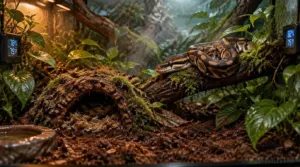
Picture a misty morning in the rainforest. The air feels damp, but nothing drips underfoot. That’s the feel you want inside your snake’s home.
Aim for the feel of a misty rainforest morning, where the air is damp but nothing drips underfoot
Start with your species. Ball pythons need 60-80%, while corn snakes do fine at 40-50%. Boost humidity control for shedding by raising levels to 70-90% when your snake’s eyes turn cloudy.
Skip the soggy bedding. Choose coconut husk for solid substrate moisture retention, at least 4 inches deep, and mix water in rather than pouring it on top. Use gentle misting techniques, such as 30 seconds every 4 hours, and keep air moving.
Build a climate-controlled corner on the warm side with a damp sphagnum humid hide. Add humidity control systems, like two hygrometers. Why guess?
Keep Your Snake’s Habitat Clean and Monitor Health
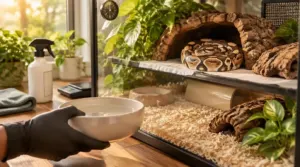
Think a clean tank is just about looks? Think again. Your cleaning routine is your snake’s first line of defense.
Build daily cleaning routines into your morning. Spot clean waste daily and swap in fresh, dechlorinated water. Wipe up spills fast, because damp bedding is a top cause of respiratory issues. Keep vents clear too, so air keeps moving.
Stick to a simple habitat cleaning frequency. Scrub the water bowl weekly with a reptile-safe disinfectant like F10SC. Wipe glass and decor weekly. Change absorbent substrate every one to three months. Skip pine and phenolic cleaners, and let everything dry before your snake goes back in.
Make regular health checks a habit. Watch appetite, shedding, and posture. Check feces and urates. Weigh your snake weekly. Spot a sudden drop? Call your vet.
Frequently Asked Questions (FAQs)
What is the best habitat for a snake?
No single setup fits every snake, and that’s fine. The best habitat matches your species: enclosure size for the adult, speciesappropriate ventilation, thermal gradient control, speciesmatched substrate, snug hides, and humidity levels you measure.
What do snakes need to be happy?
Happy snakes need choices. Give your snake a temperature gradient, snug hiding spots, and proper substrate selection. Match humidity levels to your species. Follow feeding frequency guidelines, keep water fresh, and watch behavior closely.
What is a terrarium for snakes called?
Walk into a reptile shop and ask for a "snake tank," and the clerk will nod. Still, the proper term is snake enclosure. Hobbyists also say vivarium, which means a controlled snake habitat. Easy, right?
How much does a full snake set up cost?
Worried it’ll break the bank? It won’t. Expect $150 to $350.
Enclosure size drives the price. Add substrate selection, reptile thermostat use, a temperature gradient, and humidity levels, and gauges and hides fill the rest.
What is the best habitat for a pet snake?
The best snake habitat is a secure, escape-proof setup. Pick a snake enclosure size that lets your snake stretch out. Add a temperature gradient, two snug hiding spots, steady humidity levels, and fresh water.
Where is the best place to keep a pet snake?
Is a sunny window ideal? Nope, that’s a myth. Pick a quiet, draft-free corner instead. Match enclosure size to species-specific care, choose escapeproof housing with front-opening doors, and keep naturalistic habitat enrichment easy to reach.
What are the requirements for a snake enclosure?
Start with the right enclosure size: your snake should stretch fully inside. Lock it tight, because snakes love escaping. Then focus on substrate selection, a warm-to-cool temperature gradient, steady humidity levels, and two hiding spots.
What to put in the bottom of a snake tank?
Your snake’s floor is the most important square footage in the whole tank, so choose your substrate wisely. Use aspen shavings for dry species, or coconut fiber for humid ones. Skip cedar and pine, and spot-clean daily.
What lighting types are ideal for diurnal snakes?
Your snake basks like a tiny sunbathing king! Meet its proper lighting requirements with a basking light for thermal regulation, plus low-output UVB lighting.
Use a simple timer to keep a steady 12-hour day-night cycle.
How do I safely transport my snake?
Ready to hit the road? Skip feeding beforehand, then place your snake in a ventilated, escape-proof tub or tied snake bag inside a rigid carrier. Keep it warm, steady, and completely separate from other snakes.
Conclusion
Remember that sinking feeling at the ajar lid? You don’t have to feel it again. A well-built reptile pet snake habitat works as a system. Lock the lid, set your gradient, and keep humidity steady.
Check your thermometers and hygrometers often. Spot clean daily. Watch your snake’s eating, shedding, and behavior, because small changes tell big stories.
Do that, and you’ll earn something better than a perfect setup: a thriving snake who feels at home.