
This site is supported by our readers. We may earn a commission, at no cost to you, if you purchase through links.

A mouse stored at 35°F will start decomposing within days, turning your snake’s meal into a bacterial breeding ground—and potentially making your pet seriously ill. Most reptile keepers don’t realize that storing frozen snake feeders isn’t just about tossing a bag of mice into any available freezer space.
The difference between safe, nutritious meals and contaminated prey comes down to proper temperature control, smart packaging choices, and consistent handling protocols. Your freezer setup determines whether you’re preserving quality nutrition or creating health risks for your snake.
Getting the storage process right means your feeders stay fresh for months, your thawing routine becomes foolproof, and you’ll never second-guess whether that prey item is still safe to offer.
Table Of Contents
Key Takeaways
- Store frozen snake feeders at 0°F or colder in airtight, double-bagged containers to prevent freezer burn, bacterial growth, and contamination for up to three months of safe feeding.
- Always thaw prey using refrigerator (12-48 hours) or cold water methods (1-3 hours) with frequent water changes—never microwave or hot water, which create dangerous bacterial hotspots.
- Keep snake feeders completely separated from human food using dedicated containers, color-coded bins, and separate utensils to eliminate cross-contamination risks in shared freezer spaces.
- Label every package with freeze date and prey type, then rotate stock using first-in, first-out methods while watching for spoilage signs like sour odors, slimy textures, or discolored patches before feeding.
Choosing The Right Freezer for Snake Feeders
Getting the right freezer setup makes all the difference when you’re storing frozen prey for your snake. You’ll want something that keeps temperatures rock-solid and gives you enough space to stay organized.
Stocking up on properly stored frozen prey means your snake always has safe, ready-to-thaw meals without last-minute grocery runs.
Let’s look at the freezer types that work best for keeping your snake’s meals fresh and safe.
Make sure the rodents fit your snake’s size—if you’re keeping a children’s python, smaller prey items stored properly will meet their dietary needs perfectly.
Types of Freezers Suitable for Prey Storage
When you’re shopping for a freezer to store your snake’s meals, you’ve got three solid options to choose from: chest freezers, upright freezers, and compact mini-fridges with freezer compartments. Here’s what makes each one work:
If you’re new to frozen prey, check out this guide on switching from live to frozen feeding to make the transition smoother for both you and your snake.
- Chest freezers offer massive freezer capacity and excellent deep freezing for bulk frozen prey
- Upright freezers provide easier organization with shelves for quick access
- Compact storage units fit tight spaces while maintaining proper food storage temperatures
Dedicated Vs. Shared Freezer Space
If you want true freezer organization and exceptional storage hygiene, a dedicated freezer for frozen prey is your golden ticket. It keeps cross contamination at bay and lets you tailor freezer maintenance for animal food.
Following a pet snake feeding guide helps you track proper thawing times and storage limits, so every meal stays safe and nutritious for your reptile.
If you must share space, double-bag feeders and use airtight containers—never let snake food mingle with people food. Temperature control and separation matter!
Proper handling procedures require attention to safe food storage to prevent contamination.
Maintaining Consistent Freezer Temperatures
Once you’ve chosen your freezer, thermal stability becomes your best friend. Set it to 0°F or colder—that’s where frozen prey stays safe for months. Temperature fluctuations wreck food storage quality fast, causing freezer burn and spoilage.
Check your freezer calibration with a thermometer (don’t trust the dial!), minimize door openings, and keep cold storage organized so you’re not hunting around. Consistent temperature control means healthier feeders and safer thawing methods down the line. Effective temperature monitoring is vital for preventing spoilage, as seen in temperature control systems.
Proper Packaging and Labeling Techniques
Once you’ve got the right freezer, the next step is making sure your frozen feeders stay fresh and organized. Good packaging isn’t just about tossing mice in plastic bags—it’s your defense against freezer burn, weird smells, and the chaos of digging through unmarked packages at feeding time.
Here’s how to package and label like a pro so your snake’s meals stay in top condition.
Using Airtight Containers and Freezer Bags

The right packaging is your first line of defense against freezer burn and cross-contamination. Think of airtight sealing as wrapping your frozen prey in a protective shield—squeezing out every bit of air before you seal those freezer bags creates an oxygen-free zone that keeps your feeders fresh for up to twelve months.
Proper storage also maximizes the benefits of frozen prey feeding by preserving nutritional content and ensuring safe thawing practices every time.
- Choose thick, freezer-specific bags over flimsy grocery bags—they resist tears and lock out oxygen better
- Press bags flat to remove trapped air before sealing, or invest in vacuum sealing for gold-standard storage organization
- Double-wrap larger prey with plastic wrap first, then slide into a freezer bag for extra protection against dehydration
- Use sturdy, leak-proof airtight containers with tight lids to prevent any fluids from escaping and contaminating your food storage space
Labeling With Dates and Prey Types
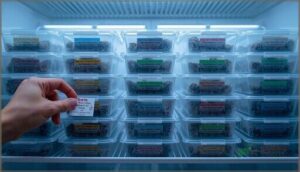
Smart labeling transforms frozen prey chaos into an organized inventory management system. Grab water-resistant labels and note the freeze date plus prey type—”adult mouse, Jan 7, 2026″—so you’ll know exactly what’s in your airtight containers without guessing games.
A simple “first in, first out” marker keeps your freezer storage rotating smoothly, preventing forgotten feeders from languishing in the back corner.
Preventing Freezer Burn and Odor Transfer

Moisture management matters—freezer burn strikes when your frozen prey loses water through weak packaging, creating those grayish dehydrated patches. Double-bag feeders in quality freezer storage bags to block odor control issues and prevent that funky smell from migrating to your pizza.
Keep temperatures rock-solid at 0°F or below, and check seals regularly during freezer maintenance to stop cross-contamination and preserve your food storage quality.
Safe Storage Practices to Prevent Contamination

Keeping your freezer organized isn’t just about convenience—it’s about protecting your family and keeping your snake healthy. When you store frozen feeders alongside everyday groceries, you’re opening the door to cross-contamination that nobody wants to deal with.
Let’s walk through three essential practices that’ll keep everything safe, clean, and worry-free.
Separating Snake Feeders From Human Food
Think of your freezer like a well-organized pantry—everything has its place. To prevent cross contamination, designate a separate storage area for your snake feeders, keeping them completely away from human food.
Use airtight containers labeled clearly, and you’ll boost food safety by 100%. This simple feeder segregation protects your family while maintaining excellent storage hygiene and handling precautions everyone can follow.
Color-Coded Storage and Dedicated Utensils
Color coding your storage bins by prey type slashes cross-contamination risk practically to zero. Pair bright, freezer-proof labels with dedicated utensils—separate tongs for each category—and you’ll cut handling errors by nearly half.
Here’s your storage hack checklist:
- Assign 5–10 distinct colors to represent different frozen prey categories
- Use dishwasher-safe, color-matched tongs for each bin
- Position utensils within clear view of corresponding containers
- Inspect tools routinely to maintain utensil sanitation and food storage standards
This labeling system keeps your reptile food organized and thawing methods safer.
Regular Cleaning of Storage Containers
Bacterial control starts the moment you empty your airtight containers. Rinse with warm, soapy water right after use—no delays—then air-dry upside down to stop moisture buildup.
For deeper storage hygiene, sanitize weekly with diluted bleach (1 tablespoon per gallon), which slashes cross-contamination risks during food handling and thawing methods.
Cracked container materials? Toss them; bacteria love hiding in scratches.
Thawing Frozen Feeders Safely

Getting your frozen feeders thawed properly isn’t just about convenience—it’s about keeping your snake healthy and safe. The way you defrost their meal can mean the difference between a satisfied snake and a night at the emergency vet.
Let’s walk through the smart thawing methods that work, the shortcuts you’ll want to skip, and how to spot prey that’s gone bad.
Refrigerator Vs. Cold Water Thawing Methods
When you’re ready to defrost those frozen prey items, choosing the right thawing method makes all the difference for food safety and hygiene practices. Both refrigerator and cold water thawing techniques keep temperatures low and cross-contamination risks minimal—but they differ in speed and convenience.
Here’s what you need to know about each defrost method:
- Refrigerator thawing takes 12-24 hours for small prey and up to 48 hours for larger items, maintaining steady temperature control at 34-40°F
- Cold water thawing speeds things up to 1-3 hours by submerging sealed bags in cold water changed every 30 minutes
- Both thawing methods require proper packaging in airtight, leak-proof bags to prevent odor transfer and contamination
- Refrigerator thawing offers hands-off convenience with minimal splash risk, while cold water needs active monitoring
- Thawing times vary by prey size, so plan your feeding schedule accordingly for consistent food safety
Avoiding Microwave and Hot Water Thawing
While refrigerator safety and cold water thaw methods work well, microwave and hot water thawing can wreak havoc on frozen prey. Uneven heating creates dangerous warm spots where bacterial growth explodes, and fats spoil faster—compromising food safety for your snake. If you need rapid thawing techniques, use the prey immediately afterward.
For best temperature control and safe handling of reptile food, stick with overnight refrigeration for consistent snake feeding results.
Recognizing Signs of Spoiled Prey
Even after proper thawing techniques, spoilage detection is your next line of defense in food safety. Trust your nose first—spoiled frozen prey develops a sharp ammonia or sour odor that screams “toss me!”
Check for slimy textures, dark patches, or mushy flesh that signals microbial testing failures. These freshness monitoring steps prevent cross-contamination and protect your snake’s biosecurity with smart texture analysis.
Maintaining Quality and Safety During Feeding

Once your feeder is thawed and ready, how you handle it makes all the difference in keeping things safe and clean. Smart handling practices protect both you and your snake from contamination, while proper cleanup prevents bacteria from sticking around between meals.
Let’s walk through the right way to manage feeders during feeding time and keep your setup sanitary.
Handling Feeders With Gloves or Tools
Your hands carry oils and microbes that can compromise frozen prey quality, so glove safety and proper tool hygiene are your first line of contamination control. Here’s how to master feeder transfer while protecting your snake’s health:
- Slip on food-grade gloves before touching any frozen prey to maintain biosecurity and prevent cross-contamination during reptile feeding.
- Grab long-tipped forceps or feeding tongs to handle feeders without direct hand contact, keeping your food handling practices clean.
- Sanitize everything after each batch—hand sanitizing and tool cleaning between rounds stops contamination cold.
Cleaning and Sanitizing Feeding Areas
After handling feeders with proper tools, your next move is establishing rock-solid sanitation protocols. Surface cleaning with the right disinfectant selection controls microbial threats that compromise animal health and food safety.
Here’s your hygiene practices game plan:
| Step | Action | Why It Matters |
|---|---|---|
| Pre-feed | Remove debris with soap and water | Readies surfaces for effective disinfection |
| Sanitize | Apply approved disinfectant at correct contact time | Kills pathogens that cause cross-contamination |
| Post-feed | Clean tongs, bowls, and work zones immediately | Stops bacterial growth in food handling areas |
| Weekly | Deep-clean storage and prep spaces | Maintains long-term reptile care standards |
Color-code your cleaning cloths—one set for feeding zones only—to prevent accidental cross-contamination between reptile care areas and other household spaces.
Frequently Asked Questions (FAQs)
How long can frozen feeders stay fresh?
Frozen feeders stay fresh for up to three months when sealed tight at 0°F. Quality peaks in the first month, then texture and flavor gradually fade—think of it like frozen berries losing their snap.
Can you refreeze thawed snake feeders safely?
You shouldn’t refreeze thawed feeders—bacterial growth and texture changes create serious food safety risks.
If you must, refreeze within two hours and only once, but it’s better to avoid refreezing entirely.
Whats the best way to organize bulk orders?
Most bulk storage operations see a 30% waste reduction when they group frozen prey by size and rotate stock using first-expired, first-out inventory management—keeping airtight containers labeled and order optimization efficient.
Do different snake species need separate storage?
You don’t need separate freezers for different snake species. Cross-contamination risks come from mixing reptile food with human food, not from combining frozen prey for ball pythons, corn snakes, or other species together.
How often should you rotate freezer stock?
Think of your freezer like a living system—fresh inventory flows in while older stock cycles out.
Rotate frozen prey every one to three months using first-in, first-out principles, ensuring maximum shelf life and food safety through smart freezer management and inventory control.
Conclusion
Proper practices protect your snake from preventable health problems. When you’re storing frozen snake feeders with the right temperature, packaging, and thawing methods, you’re doing more than preserving prey—you’re safeguarding your pet’s well-being.
Every careful step, from labeling bags to washing your hands, builds a feeding routine that’s consistent, safe, and stress-free. Your snake depends on you to get this right, and now you’ve got the complete roadmap to do exactly that.
- https://www.betterhealth.vic.gov.au/health/conditionsandtreatments/Pets-safe-handling-of-reptiles-and-tropical-fish
- https://www.perplexity.ai/search/d70cd186-ae2e-4cff-b194-e2c71deb4b8c
- https://www.fda.gov/animal-veterinary/animal-health-literacy/salmonella-feeder-rodents-and-pet-reptiles-and-amphibians-tips-you-should-know-prevent-infection
- https://www.gov.uk/government/publications/salmonella-reducing-infection-from-reptiles/reducing-the-risks-of-salmonella-infection-from-reptiles
- https://www.cdc.gov/healthy-pets/about/reptiles-and-amphibians.html