This site is supported by our readers. We may earn a commission, at no cost to you, if you purchase through links.
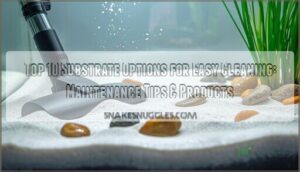
Most aquarium keepers obsess over filtration systems and water chemistry, yet the layer of material lining the tank floor quietly determines whether maintenance becomes a weekend ritual or a dreaded chore.
The wrong substrate traps detritus in microscopic pockets where anaerobic zones develop, hydrogen sulfide builds, and your nitrogen cycle starts working against you. Gravel particle size, porosity, chemical inertness—these aren’t abstract specifications; they’re the difference between a five-minute vacuum pass and an hour of frustrated stirring.
Choosing the right substrate options for easy cleaning gives you back both your time and your tank’s biological stability, and the options available today make that choice more precise than ever.
Table Of Contents
- Key Takeaways
- Best Substrate Types for Easy Cleaning
- Factors to Consider When Choosing Substrate
- Top 10 Substrate Products for Simple Cleaning
- 1. Aqueon Aquarium Plant Substrate
- 2. Fluval Plant and Shrimp Aquarium Substrate
- 3. Aqua Natural White Aquarium Sand
- 4. Aqua Natural Black Quartz Gravel
- 5. Hygger Aquarium Substrate Soil
- 6. Aqua Natural Gravel Substrate
- 7. Chatelet Aquarium Substrate Cliffs
- 8. Aqua Natural Iwagumi Garnet Aquarium Substrate
- 9. Hygger Aquarium Cleaning Tool Kit
- 10. Shrimp Cave Aquarium Decor
- Maintenance Tips for Keeping Substrate Clean
- Substrates to Avoid for Easy Cleaning
- How Substrate Choice Affects Aquarium Health
- Frequently Asked Questions (FAQs)
- What is the easiest aquarium substrate to keep clean?
- What is the best substrate for beginners?
- Is sand substrate easy to clean?
- How often should substrate be completely replaced?
- Can different substrates be safely mixed together?
- Does substrate color affect fish stress levels?
- How deep should substrate be for bottom-dwellers?
- What tools work best for deep substrate cleaning?
- Conclusion
Key Takeaways
- Substrate particle size is the single biggest factor in how easy your tank is to clean — medium gravel (2–5mm) hits the sweet spot where debris lifts out cleanly without you accidentally vacuuming up the bed.
- Highly porous materials like lava rock host great bacteria colonies, but those same pores trap waste where your siphon can’t reach, so you’re trading cleaning ease for biological firepower.
- Your fish species should drive your substrate choice more than aesthetics — sharp or coarse gravel damages the barbels and shells of bottom-dwellers like corydoras and shrimp, turning a budget decision into a vet problem.
- With consistent maintenance, inert substrates like quartz gravel or sand can last 8–10 years without full replacement, making smart upfront selection one of the highest-ROI decisions in your tank setup.
Best Substrate Types for Easy Cleaning
Choosing the right substrate can make or break your cleaning routine. Some options are simply easier to manage than others.
If you’re unsure where to start, this guide on how to change substrate in your tank walks you through the process without the guesswork.
Here’s a look at the top types that keep maintenance straightforward.
Gravel Substrates
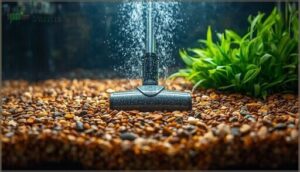
Gravel substrate remains the workhorse of easy-to-clean aquariums—think of it as the reliable backbone for both seasoned keepers and newcomers.
Its versatility is unparalleled:
- Enables healthy Bacterial Colonization
- Allows firm Root Anchorage for plants
- Offers broad Aesthetic Options
- Simplifies Substrate Cleaning with a Gravel Vacuum
- Keeps Aquarium Gravel stable, making it genuinely Easy to Clean
Sand Substrates
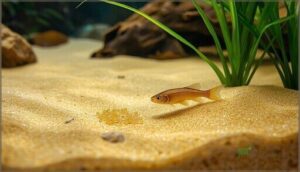
If you’re after a substrate that’s easy to clean and gentle on bottom dwellers, sand substrates are a smart choice.
Sand quality—especially grain size between one and two millimeters—lets waste rest on the surface for straightforward substrate cleaning. Maintain a shallow substrate depth to avoid compaction, support water circulation, and encourage strong bacterial growth across your aquarium substrate.
Plant-Specific Substrates
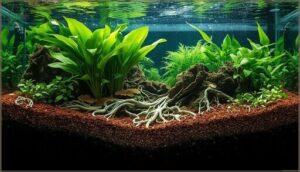
While sand keeps things tidy on the surface, plant-specific substrates bring a deeper layer of control to your planted aquariums—literally. These nutrient-rich materials, often clay-based with high cation exchange capacity, steadily fuel root growth in species like Amazon swords and crypts while supporting beneficial bacteria that stabilize substrate pH and water quality.
You’ll trade slightly more complex aquarium substrate selection for healthier aquatic plant care and reduced dosing over time.
Lava Rock Substrates
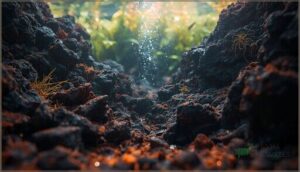
Moving from nutrient-dense substrates, lava rock brings outstanding porous structure and biological filtration to aquarium substrate selection—yet its benefits come with maintenance trade-offs you need to understand. The high surface area colonizes nitrifying bacteria that boost water quality and substrate stability, but those same interconnected voids trap fine debris where standard siphons can’t reach, demanding modified substrate cleaning strategies that balance lava rock benefits against long-term aquarium maintenance realities.
The characteristics of lava rock include:
- Lightweight volcanic stone with rough, irregular surfaces
- Red, black, or brown tones in 5mm to several-centimeter chunks
- High surface area promotes aerobic and anaerobic bacterial colonies
- Inert composition maintains stable pH and hardness levels
- Debris settles deep into pores, resisting conventional vacuuming
Pea Gravel Substrates
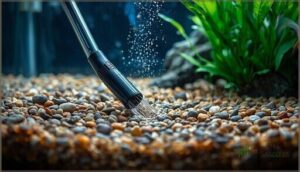
If you’re looking for substrate materials that let your vacuum tube reach deep while trapping less uneaten food than fine gravel, pea gravel substrate—usually 4 to 10 millimeters—offers standout aquarium safety for bottom-dwellers and straightforward substrate cleaning.
Those larger stones promote water flow and bacterial growth between gravel sizing gaps, yet proper substrate depth monitoring prevents waste accumulation that undermines your filtration efficiency.
Factors to Consider When Choosing Substrate

Selecting the right substrate isn’t just about tossing gravel into your tank and calling it a day—you need to weigh several interconnected factors that directly impact maintenance workload, biological stability, and long-term ecosystem health. The wrong choice can trap detritus in microscopic crevices, foster anaerobic zones that compromise water chemistry, or create endless siphoning headaches; the right one streamlines your cleaning routine while supporting nitrifying bacteria and keeping inhabitants comfortable.
Below, we’ll break down the five critical considerations that separate low-maintenance substrates from those that’ll have you scrubbing and vacuuming every other weekend.
Particle Size and Cleaning Ease
You’ll find that grain size dictates how efficiently your cleaning tools extract waste—aquarium gravel between 2 and 5 millimeters lets your siphon lift debris while heavier stones tumble safely back, whereas sand under 1 millimeter demands throttled water flow to prevent stripping the bed entirely.
Medium particle distribution in that 1–3 millimeter sweet spot balances substrate depth stability with effective vacuuming, giving you control over maintenance sessions without constant cloudiness or compacted layers trapping hidden waste.
Porosity and Waste Management
Internal pore structure determines whether waste sits on top for quick removal or lodges deep inside grains, demanding heavier cleaning effort—highly porous lava rock and planted-tank soils trap fine detritus within their voids, while dense sand lets debris rest visibly on the surface for straightforward siphoning.
- Bacterial colonies colonize pore walls, converting ammonia through biological filtration and improving water quality.
- Anaerobic zones form in compacted, fine-pored beds, releasing hydrogen sulfide unless you stir regularly.
- Nutrient release from decomposing waste inside porous media fuels plants but can spike nitrate if you skip maintenance.
- Substrate cleaning efficiency drops when pores clog; coarse lava rock allows vacuum flow through the bed, simplifying waste management.
Chemical Composition and Stability
Chemical composition determines how much your aquarium substrate meddles with water chemistry. Inert silica-based sands and gravels maintain nearly constant pH and hardness throughout their lifetime.
While calcium-carbonate materials like crushed coral dissolve slowly to raise both parameters, and clay-based aquasoils use ion-exchange mechanisms to lower pH by consuming carbonate hardness, though their buffering capacity weakens over one to three years, eventually requiring replacement or fertilizer adjustments.
Compatibility With Aquarium Inhabitants
Your inhabitant species dictate substrate selection far more than aesthetics ever should—because a bottom-dwelling corydora with abraded barbels from sharp gravel won’t thrive no matter how striking your aquascape looks. Soft sand prevents barbel erosion in loaches and cories, while rounded fine gravel protects shrimp exoskeletons and snail shells from chipping. Match grain size to fish behavior, burrowing depth, and feeding habits to preserve aquatic health, support beneficial bacteria colonization, and maintain the ecological balance that keeps tank dynamics stable and fish compatibility problems at bay.
Match your substrate to your fish, not your eyes—sharp gravel harms the very creatures it’s meant to support
- Corydoras and loaches need smooth sand—coarse gravel wears down sensitive barbels, causing painful feeding and infection risk.
- Shrimp thrive on rounded substrates—porous surfaces grow biofilm for grazing, but sharp lava rock scratches delicate shells.
- Burrowing cichlids require light, fine grains—they sift mouthfuls to feed without injuring gills or abandoning natural behavior.
- Active diggers prevent compaction—pairing sand-sifters with fine substrate reduces anaerobic dead zones that compromise fish health.
Aesthetic Preferences
Aesthetic Preferences might seem secondary until you realize that substrate color and texture drive every visual decision in your aquascaping—from foreground contrast effects to the perceived depth of planted arrangements. Dark gravel substrate anchors bold aquarium design by making plant greens pop, while pale aquarium sand brightens compact tanks and creates gentle color schemes.
Pattern mixing between substrate texture options and hardscape must follow naturalistic rules: match tones to your chosen biotope, use gradient techniques to boost visual depth, and avoid clashing hues that break immersion and make maintenance seem harder than it actually is.
| Substrate Color | Visual Effect | Best Use Case |
|---|---|---|
| Dark brown/black | Enhances plant colors, increases perceived depth | Planted tanks, aquascaping layouts |
| Neutral brown/beige | Mimics natural riverbeds, creates calm aesthetic | Community tanks, biotopes |
| Pale sand | Brightens space, makes tank feel larger | Small aquariums, shallow stream themes |
| Mixed earth tones | Adds subtle interest without visual chaos | Natural-style layouts |
| High-contrast pairs | Highlights fish coloration, creates drama | Species showcases, modern designs |
Top 10 Substrate Products for Simple Cleaning
You’ve weighed particle size, porosity, chemical stability, and compatibility—now it’s time to match those criteria with actual products that deliver on maintenance efficiency.
The substrates and tools below represent options engineered to minimize vacuuming frustration, resist compaction, and support biological filtration without creating anaerobic zones or chronic debris traps.
Each entry balances cleanability with functional performance, so you can select based on your specific bioload, aquascaping goals, and tolerance for routine intervention.
1. Aqueon Aquarium Plant Substrate
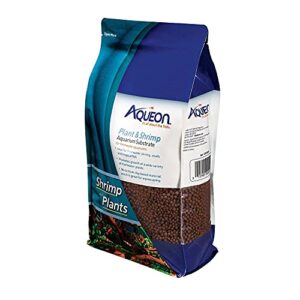
You’ll appreciate the fired-clay formula in Aqueon Aquarium Plant Substrate because each spherical granule maintains its structure for years, never softening into mud or compacting into anaerobic zones that trap waste.
The porous surface holds onto dissolved nutrients for plant roots while allowing water to circulate freely between beads, so detritus settles on top rather than clogging deep layers—you can lift it out with light siphoning during weekly water changes without disturbing anchored stems or uprooting crypts.
| Best For | Aquascapers and planted tank hobbyists who want a stable, long-lasting substrate that supports root development without creating maintenance headaches. |
|---|---|
| Material | Clay |
| Weight | 5 lbs |
| Color | Brown/Black |
| Tank Suitability | Freshwater |
| Ease of Cleaning | Easy with syphon |
| Plant Compatible | Yes |
| Additional Features |
|
- Fired-clay spheres hold their shape indefinitely and won’t break down into compacted sludge
- Porous structure captures nutrients for plant roots while letting debris settle on top for easy removal
- Works well with a variety of freshwater plants, shrimp, snails, and tropical fish in community setups
- Creates dusty cloudiness during initial setup unless you rinse it thoroughly first
- May not be ideal for sensitive caridina shrimp species
- Pricey for the amount you get, and actual volume can fall short of what’s advertised
2. Fluval Plant and Shrimp Aquarium Substrate
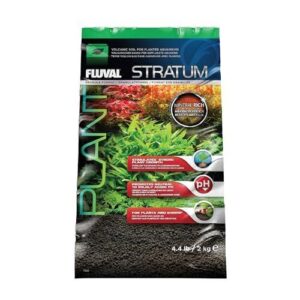
Fluval Plant and Shrimp Stratum draws on mineral-rich volcanic soil from Mount Aso in Japan—its three-to-five-millimeter granules anchor roots firmly, supply trace nutrients directly at the root zone, and buffer pH toward a neutral-to-acidic range that dwarf shrimp prefer.
The irregular pores create refuges for newborn Neocaridina while hosting fast-growing colonies of nitrifying bacteria that oxidize ammonia and nitrite before either compound stresses livestock. Because the granules remain lightweight, you’ll hover your siphon just above the surface to lift debris without sucking up substrate or pulverizing the soil layer.
| Best For | Aquarium hobbyists who want healthy plant growth and a thriving shrimp colony in a naturally buffered, low-maintenance environment. |
|---|---|
| Material | Soil/Substrate |
| Weight | 4.4 lbs |
| Color | Stratum |
| Tank Suitability | Freshwater/Planted |
| Ease of Cleaning | Handle with care |
| Plant Compatible | Yes |
| Additional Features |
|
- Mineral-rich volcanic soil anchors plant roots while delivering trace nutrients directly to the root zone for robust growth
- Porous structure shelters newborn shrimp and supports beneficial bacteria colonies that keep ammonia and nitrite in check
- Naturally buffers pH to neutral-to-acidic levels that tropical fish and dwarf shrimp prefer without constant adjustments
- Can cloud the water during initial setup if you pour too quickly or rinse the substrate beforehand
- Lightweight granules require careful siphoning technique to avoid vacuuming up the substrate during routine cleaning
- Typically costs more than standard gravel or sand options for planted tanks
3. Aqua Natural White Aquarium Sand
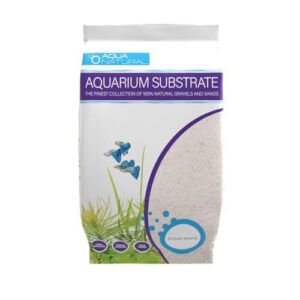
Triple-washed quartz that skips volcanic acidity shifts your maintenance toward ease—Aqua Natural White Aquarium Sand rests inert in freshwater tanks, holding pH steady while its fine, cream-white grains don’t jab corydoras barbels or scratch betta fins.
You’ll pull a gravel vacuum just above that bright surface so debris lifts clear without swallowing sand, and the shallow one-to-one-and-a-half-inch bed you’ll spread prevents anaerobic pockets from trapping waste where you can’t reach it.
| Best For | Freshwater aquarium owners who want a clean, bright substrate that’s safe for bottom-dwelling fish like corydoras and won’t mess with water chemistry. |
|---|---|
| Material | Natural Sand |
| Weight | 10 lbs |
| Color | Off White |
| Tank Suitability | Freshwater/Vivarium |
| Ease of Cleaning | Easy to rinse |
| Plant Compatible | Limited |
| Additional Features |
|
- Triple-washed quartz stays inert and won’t shift your pH, so water parameters stay stable
- Fine grains are gentle on delicate fins and barbels, making it safe for sensitive fish
- Off-white color brightens the tank and creates great contrast with plants and décor
- The shallow one-to-one-and-a-half-inch bed won’t support deep-rooted live plants without extra help
- Sand compacts over time, so you’ll need to stir it occasionally to prevent anaerobic pockets
- Needs thorough rinsing before use or you’ll deal with cloudiness in the tank
4. Aqua Natural Black Quartz Gravel
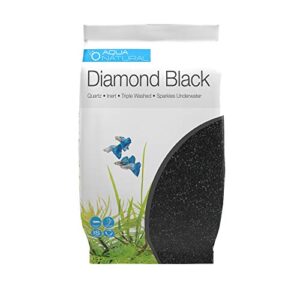
Jet-black quartz grains—one to two millimeters across, naturally rounded—offer you the contrast planted aquariums crave while their inert composition leaves pH untouched and their faceted surfaces sparkle under LED strips like tiny submerged diamonds.
You’ll hover your siphon just above that dark bed so waste lifts free without pulling gravel, and the large surface area per grain feeds colonies of nitrifying bacteria that convert ammonia into safer nitrate, cutting buildup between your weekly cleanings without trapping debris in deep anaerobic zones.
| Best For | Planted tank owners who want a dramatic dark substrate that highlights greenery while supporting beneficial bacteria without altering water chemistry. |
|---|---|
| Material | Quartz Stone |
| Weight | 10 lbs |
| Color | Black |
| Tank Suitability | Freshwater/Terrarium |
| Ease of Cleaning | Easy to clean |
| Plant Compatible | Yes |
| Additional Features |
|
- Natural quartz stays chemically inert so your pH and hardness remain stable across water changes
- Small grain size (1-2mm) creates tons of surface area for nitrifying bacteria that break down fish waste
- Light-reflecting facets catch your aquarium lights and add subtle sparkle to the tank floor
- Sharp edges can injure bottom-dwellers like corydoras or shrimp that sift through substrate
- Needs a thorough rinse before adding to your tank or fine dust will cloud the water for days
- Lightweight grains get pushed around easily by strong filter outflows or powerheads
5. Hygger Aquarium Substrate Soil
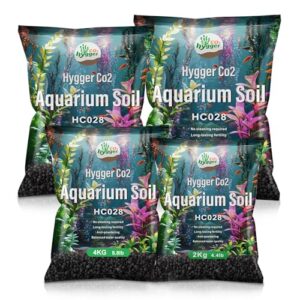
Sintered mountain-soil granules—dark, porous, eight-point-eight-pound bags—lower pH toward 6.5, soften general hardness through polymer purification technology, and release nitrogen, phosphorus, and potassium slowly so your planted shrimp tanks skip the root-tab routine while trace minerals anchor carpeting stems without collapse.
You’ll pour them in dry since rinsing strips the nutrient-rich coating, expect three days of cloudy water cleared by partial changes, then vacuum the surface gently so nitrifying bacteria lodged inside those sponge-like granules convert ammonia undisturbed and your filter shares the bioload with substrate colonies that won’t wash away.
| Best For | Aquascapers and shrimp keepers who want a nutrient-packed substrate that naturally buffers pH and grows carpeting plants without extra fertilizers. |
|---|---|
| Material | Soil/Substrate |
| Weight | 8.8 lbs |
| Color | Black |
| Tank Suitability | Freshwater/Planted |
| Ease of Cleaning | Handle with care |
| Plant Compatible | Yes |
| Additional Features |
|
- Slowly releases nitrogen, phosphorus, and potassium so you don’t need root tabs
- Lowers pH to 6.5–7.5 and softens water, which sensitive shrimp and tropical plants love
- Porous granules host beneficial bacteria that help break down ammonia alongside your filter
- Creates cloudy water for about three days after adding it to your tank
- Some users found debris and a stubborn white film that’s hard to clean off
- Gets expensive if you’re filling a large aquarium
6. Aqua Natural Gravel Substrate
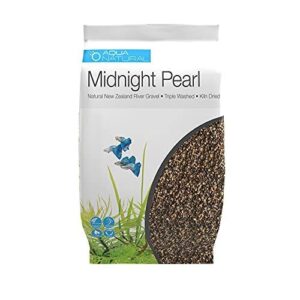
Midnight Pearl pebbles—two-to-four-millimeter inert stones triple-washed, kiln-dried, sourced from New Zealand beach deposits—give you a dark riverbed aesthetic with gold and red flecks that make bright fish pop while debris lands on top instead of sinking through, so your gravel vacuum glides across rounded surfaces, lifts waste without pulling stones.
Nitrifying bacteria colonize that non-porous texture to share ammonia conversion with your canister filter, all while the stable chemistry skips pH swings and the uniform grain prevents compacted dead zones that trap anaerobic pockets.
| Best For | Aquascapers who want a low-maintenance, natural-looking riverbed substrate that showcases colorful fish while making cleanup easier than fine sand. |
|---|---|
| Material | Natural Stone |
| Weight | 10 lbs |
| Color | Brown |
| Tank Suitability | Freshwater/Vivarium |
| Ease of Cleaning | Requires rinsing |
| Plant Compatible | Limited |
| Additional Features |
|
- Triple-washed and kiln-dried New Zealand pebbles create a clean, debris-resistant surface that prevents waste from sinking into the substrate
- Inert composition maintains stable water chemistry without pH swings, while the textured surface supports beneficial bacteria growth
- Uniform 2-4mm grain size with gold and red flecks adds visual depth and contrast that makes bright fish stand out
- Small grain size can clog vacuum cleaners and complicate routine tank maintenance
- May need extra rinsing despite being pre-washed to avoid initial cloudiness in the water
- Packaging reportedly tears during shipping, leading to product loss and mess
7. Chatelet Aquarium Substrate Cliffs
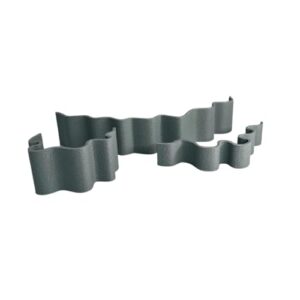
Cliffs that create three distinct substrate levels—gray plastic barriers, six inches deep, molded to mimic natural ledges—let you run nutrient-rich soil behind the wall and inert gravel in the front path, so your vacuum slides along the top edge, siphons detritus without disturbing root zones, and keeps different substrates from mixing into a muddy mess.
Non-porous surfaces wipe clean, anchor under substrate to stay put, and the stepped design adds depth while simplifying zone-by-zone maintenance in planted tanks.
| Best For | Aquarium keepers who want to separate planted zones from bare substrate or create terraced layouts without different soil types mixing together. |
|---|---|
| Material | Plastic |
| Weight | 8 oz |
| Color | Gray |
| Tank Suitability | Freshwater/Terrarium |
| Ease of Cleaning | Easy to arrange |
| Plant Compatible | N/A |
| Additional Features |
|
- Three-level cliff design lets you divide nutrient soil from gravel so cleaning the front won’t wreck your planted area
- Non-porous plastic wipes down easily and won’t leach anything into the water
- Sits under substrate to stay anchored instead of floating around when fish bump it
- Gray color blends into dark gravel, making the cliff edges hard to see in low light
- Small 6-inch footprint means you’ll need several pieces to build terraces in bigger tanks
- Won’t hold position well in sandy substrate unless you really pack material around it
8. Aqua Natural Iwagumi Garnet Aquarium Substrate
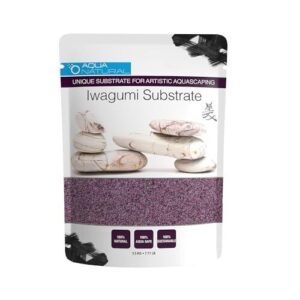
Garnet sand—100 percent real mineral, not painted—delivers a purple-red jewel tone that won’t fade, and its 0.5–1.0 mm grains form a dense, uniform bed where waste sits on top instead of sinking into crevices.
You’ll rinse it once before setup, then siphon surface debris without sucking out handfuls of substrate; the hard, inert particles don’t dissolve or compact into anaerobic mud, so your maintenance stays predictable.
It’s kiln-dried, triple-washed, and sourced sustainably from Australia—practical elegance for Iwagumi layouts and everyday tanks alike.
| Best For | Aquascapers who want a natural purple-red substrate that stays clean, resists compaction, and works well in minimalist Iwagumi-style tanks. |
|---|---|
| Material | Natural Sand |
| Weight | 7.67 lbs |
| Color | Purple |
| Tank Suitability | Freshwater/Vivarium |
| Ease of Cleaning | Easy to rinse |
| Plant Compatible | Limited |
| Additional Features |
|
- Real garnet mineral won’t fade or leach color—you get permanent jewel tones without painted coatings breaking down
- Dense 0.5–1.0 mm grains keep waste on the surface for easy siphoning and prevent anaerobic pockets from forming
- Triple-washed and kiln-dried from the start, so you’ll spend less time rinsing and dealing with cloudy water during setup
- Higher price point compared to standard aquarium sand or gravel
- Fine grain size can compact over time if you’re not careful with maintenance, especially in heavily planted setups
- Limited color range—the purple-red tone won’t suit every aquarium aesthetic or biotope design
9. Hygger Aquarium Cleaning Tool Kit
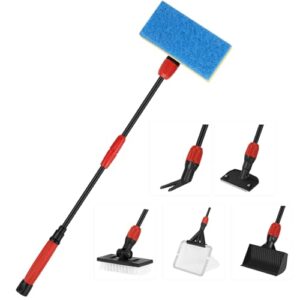
You won’t swap substrate to simplify cleaning when you can deploy a 6-in-1 telescoping kit that tackles algae, compaction, and debris in one pass.
The Hygger’s carbon-fiber pole extends from 19.7 to 35.4 inches, keeping your hands dry while the stainless-steel blade scrapes glass, the gravel rake loosens anaerobic pockets, and the right-angle sponge reaches under braces—no tool changes mid-session.
Spring-lock attachments swap in seconds, the hollow pole resists internal corrosion, and the 4-inch net catches detritus; it’s maintenance efficiency distilled into practical reach.
| Best For | Aquarium owners who want an affordable all-in-one cleaning solution that keeps their hands dry while maintaining tanks of varying sizes. |
|---|---|
| Material | Plastic |
| Weight | 1.21 lbs |
| Color | Black |
| Tank Suitability | All Tank Types |
| Ease of Cleaning | Designed for cleaning |
| Plant Compatible | N/A |
| Additional Features |
|
- Telescoping handle extends up to 28.7 inches so you can clean deep tanks without getting wet
- Six interchangeable attachments handle everything from algae scraping to gravel raking in one kit
- Tool-free attachment swaps let you switch between cleaning tasks quickly
- Handle may loosen over attachments after several months of regular use
- Glass scraper can scratch if you don’t hold it at the right angle
- Adjustable head struggles to reach tight corners in tanks with lids or hoods
10. Shrimp Cave Aquarium Decor
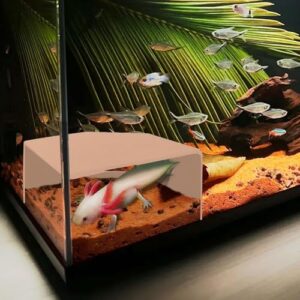
Placing a hollow shelter atop your substrate won’t accelerate cleaning, yet the CPLIKE corner cave‘s open-back design—5.9 × 5.9 × 3.54 inches—lets you vacuum underneath without disturbing berried shrimp or molting juveniles.
Non-toxic plastic resists biofilm adhesion better than porous ceramics, the flat base sits stable on sand or gravel during siphoning passes, and you’ll skip the weekly cave-relocation ritual that stirs detritus clouds.
It’s a functional compromise: minimal substrate disruption for maximal shelter security.
| Best For | Aquarists who want a stable, easy-to-clean shelter for shrimp and nano fish without constantly rearranging decorations during tank maintenance. |
|---|---|
| Material | Plastic |
| Weight | 4.6 oz |
| Color | Sand |
| Tank Suitability | Freshwater |
| Ease of Cleaning | Easy to maintain |
| Plant Compatible | N/A |
| Additional Features |
|
- Open-back design lets you vacuum underneath without moving the cave or stressing inhabitants
- Non-toxic plastic resists biofilm buildup and stays cleaner than porous ceramic alternatives
- Flat base sits stable on substrate during water changes and won’t tip over during cleaning
- Large 5.9-inch footprint may overwhelm smaller tanks or limit floor space
- Sand-colored plastic might clash with certain aquascaping styles and may need moss or plants to blend in
- No back support means you can’t safely stack heavier decorations on top
Maintenance Tips for Keeping Substrate Clean
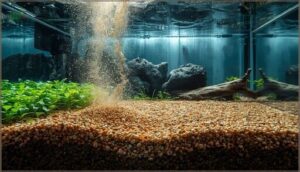
Even the most carefully selected substrate—whether it’s inert gravel, nutrient-rich plant soil, or porous lava rock—will accumulate detritus, organic waste, and compacted zones without consistent intervention.
Your maintenance approach directly determines whether beneficial nitrifying bacteria thrive on substrate surfaces or whether anaerobic pockets develop, compromising water chemistry and aquatic health.
The following five techniques represent the core practices you’ll need to establish substrate cleanliness while preserving biological filtration capacity and structural integrity.
Regular Siphoning and Vacuuming
Think of your gravel vacuum as a diagnostic tool—it tells you what’s accumulating beneath the surface. For most community tanks, siphon techniques targeting 25–50% of the aquarium substrate every one to two weeks during water changes keeps nitrates manageable without disrupting beneficial bacteria.
On gravel, push the vacuum about an inch deep; on sand, hover just above. Consistent vacuum frequency is everything.
Stirring and Preventing Compaction
Beyond vacuuming, substrate aeration matters just as much. Compaction prevention starts with a simple chopstick or aquascaping fork—gently push a few centimeters into your sand or gravel, lifting slowly to release anaerobic zones before hydrogen sulfide builds up.
Malaysian trumpet snails also excel at burrowing techniques, naturally turning fine substrate daily. Consistent stirring methods keep your aquarium substrate breathing.
Targeted Cleaning of Problem Areas
Even after thorough aeration, specific zones in your aquarium demand focused attention.
Feeding corners and bottom-dweller resting spots accumulate mulm faster than anywhere else—these are your waste removal priorities.
A turkey baster provides precise debris control on sand without disturbing surrounding substrate, while a narrow-head gravel vacuum reaches tight spots between rocks.
Tackle the dirtiest patches first during water changes for smarter, efficient substrate maintenance.
Using Automated Cleaning Tools
Spot cleaning handled—now let automation carry the load. Battery-powered gravel vacuums and electric siphons make aquarium maintenance genuinely manageable, cycling filtered water back without draining your tank. Multi-tool kits with interchangeable heads give you flow management flexibility across substrate types.
Three features worth prioritizing:
- Adjustable suction for sand vs. gravel
- Built-in mesh screens protecting shrimp
- Extension tubes reaching back corners
For reliable performance, it’s worth considering devices with battery powered gravel cleaners that efficiently remove debris without disrupting your substrate.
Monitoring Substrate Depth and Condition
Depth is your first line of defense. Most freshwater setups perform best between 2 and 3 inches—shallow enough to maintain healthy water flow, deep enough for root anchorage.
Beyond 4 inches, substrate compaction and anaerobic zones become real concerns; oxygen levels drop, and hydrogen sulfide can build up silently.
Whether you’re running gravel substrate or sand substrate, monitoring regularly keeps your aquarium substrate balanced and your cleaning manageable. Regular cleaning techniques help prevent excess detritus buildup and maintain water quality.
Substrates to Avoid for Easy Cleaning
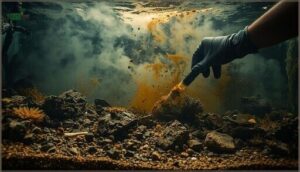
Not every substrate belongs in your tank, and picking the wrong one can turn routine maintenance into a constant headache.
Some materials trap debris, leach harmful compounds, or simply make cleaning far harder than it needs to be. Here are the substrates worth steering clear of if easy upkeep is your priority.
Sharp or Jagged-Edged Materials
Sharp or jagged-edged materials represent some of the most serious aquarium hazards you’ll encounter in substrate selection. Angular gravel substrate and fractured lava rock aren’t just cleaning nightmares—they’re genuine fish injury risks, particularly for bottom dwellers whose barbels and soft tissues scrape against unforgiving edges daily.
Edge safety matters: sharp materials trap waste in unreachable crevices, compounding both substrate risks and water quality problems simultaneously.
Metal-Based Substrates
Metal contamination is a silent saboteur in fish tank substrate — one that compounds every maintenance challenge you’re already managing. Metal leaching, rust formation, and water instability aren’t theoretical risks; they’re documented consequences of poor substrate selection and substrate composition choices.
The effects of metal contamination can be severe, including:
- Toxic effects on shrimp and invertebrates appear first
- Corrosion risks create sharp fragments that jam siphons
- Aquarium substrate with metal traces destabilizes water chemistry unpredictably
- Substrate cleaning becomes nearly impossible without a full teardown
- Dissolved copper kills beneficial bacteria, collapsing biological filtration
Painted or Treated Substrates
Painted gravel might look striking at first, but the coating materials hiding beneath that color are where things get complicated. Resin effects and flake risks turn routine substrate selection into a liability — loose paint chips from painted gravel accumulate faster than your siphon can handle them, compromising substrate composition and biological filtration simultaneously.
For genuine ease of cleaning, choosing the right aquarium substrate means prioritizing durability over aesthetics.
Calcium-Based Substrates
Calcium-based substrates like crushed coral substrate might seem like a solid choice, but their persistent mineral release works against you in most freshwater setups.
That slow pH buffering shifts water chemistry toward alkaline ranges, raising hardness impact beyond what many species tolerate.
Unless you’re maintaining a reef or African cichlid tank, aquarium substrate selection and cleaning becomes substantially harder when pH levels and water chemistry keep drifting.
Decomposing Organic Materials
Organic matter might seem like a living foundation — but in practice, it’s a ticking clock. As decomposition accelerates beneath the surface, anaerobic decay produces toxic gases like hydrogen sulfide while disrupting nitrogen cycling entirely.
Overwhelmed biological filtration can’t compensate, and beneficial bacteria lose ground fast. For reliable waste management and a stable nitrogen cycle, keep decomposing materials out of your aquarium substrate.
How Substrate Choice Affects Aquarium Health
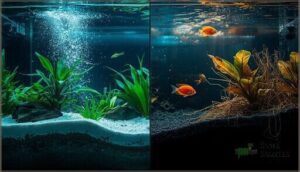
The substrate you pick doesn’t just sit at the bottom of your tank — it actively shapes the health of everything living above it.
From water clarity to how well your beneficial bacteria colonize, every choice has real downstream consequences.
Here’s a closer look at the four key ways your substrate selection directly affects aquarium health.
Impact on Water Quality and Filtration
Your choice of aquarium substrate quietly orchestrates everything downstream — water chemistry, oxygen levels, and how hard your filtration systems have to work.
Nutrient-rich soils can spike ammonia above 0.5 mg/L in under-cycled tanks, while neglected detritus management fuels algae and clogs biological filtration fast.
Inert options like quartz gravel keep water quality management predictable, giving you far greater control over the entire system.
Support for Beneficial Bacteria
Gravel, sand, and especially porous materials like lava rock do more than anchor décor—they’re the infrastructure for Bacterial Colonization. Microbial Balance hinges on these surfaces.
Expect:
- Thick biofilm formation for Biological Filtration
- Deeper Anaerobic Zones for Nitrate Reduction
- Stable Aquarium Ecosystem Management
- Consistent Water Quality
- A habitat where Beneficial Bacteria thrive, even after regular cleaning
Influence on Aquatic Plant Growth
Just as beneficial bacteria need surface area to colonize, Aquatic Plants need the right substrate to truly thrive. Plant Root Depth matters enormously—a nutrient-rich Plant Substrate at least 1.5 inches deep gives roots enough volume to anchor firmly and access consistent Nutrient Uptake.
Without that foundation, even healthy Planted Aquariums stall. Substrate Porosity and Water Chemistry do the quiet, critical work your plants depend on.
Effects on Fish and Invertebrate Wellbeing
Your substrate choice hits closer to home than you might think—Fish Stress, physical injury, and Invertebrate Health all trace back to what’s lining the bottom. Sharp gravel damages Corydoras barbels and disrupts Aquatic Behavior, while decomposing waste creates Substrate Toxicity spikes that compromise Biological Balance.
Smooth, clean substrate isn’t just aesthetic; it’s foundational to Fish Health and Wellness and long-term Aquatic Ecosystem Balance.
Frequently Asked Questions (FAQs)
What is the easiest aquarium substrate to keep clean?
For most hobbyists, rounded quartz gravel—your fish tank substrate’s unsung workhorse—wins for aquarium hygiene.
Its particle gaps let sand siphoning and gravel cleaning remove waste efficiently, keeping water clarity high with minimal effort.
What is the best substrate for beginners?
For beginners, smooth aquarium gravel remains the top fish tank substrate choice — it’s low maintenance, promotes water clarity, and makes aquarium maintenance tips easy to follow while ensuring fish comfort and aquarium safety.
Is sand substrate easy to clean?
Sand substrate can be easy to clean once you master the hover-siphon technique — but skip consistent maintenance, and anaerobic risks from compacted fine sand substrate will quietly threaten your aquarium health.
How often should substrate be completely replaced?
For most tanks, complete substrate replacement is rarely necessary.
With consistent aquarium maintenance, inert gravel or sand can last 8–10 years or more, preserving beneficial bacteria colonies and supporting long-term water quality.
Can different substrates be safely mixed together?
Yes — mixing substrates is generally safe when both are inert, but layering beats blending.
Combining aquarium sand with aquarium gravel, for instance, works well; however, chemical reactions between buffering materials and active materials can destabilize your tank.
Does substrate color affect fish stress levels?
Absolutely — substrate color directly influences fish stress hormone levels and behavior.
Dark substrates tend to calm most species, while overly bright aquarium sand or gravel can trigger chronic stress, affecting fish health and color camouflage strategies.
How deep should substrate be for bottom-dwellers?
There’s no one-size-fits-all answer here — substrate depth for bottom dwellers usually ranges from 1 to 3 inches, balancing fish behavior, aquarium balance, and water quality without sacrificing easy maintenance.
What tools work best for deep substrate cleaning?
For deep substrate cleaning, gravel vacuums, electric cleaners, siphon kits, substrate rakes, and precision tools each serve a distinct role—giving you targeted control over fish tank maintenance without disrupting your biological filtration.
Conclusion
Picture a Saturday morning where your siphon glides through crystal-clear water in five minutes flat—no billowing debris clouds, no sulfurous smell, no second-guessing your setup.
That’s what thoughtful selection of substrate options for easy cleaning actually delivers: a tank that works with your maintenance routine instead of fighting it. When your substrate is right, biological stability follows, your fish thrive, and the hobby stops feeling like labor. Choose deliberately, and the tank rewards you.
- https://dukesfloors.com/what-flooring-types-are-the-easiest-to-keep-clean/
- https://goflooring.com/learn-about-flooring/best-low-maintenance-flooring/
- https://industrial.sherwin-williams.com/na/us/en/resin-flooring/media-center/articles/guide-hygienic-flooring-materials-coatings.html
- https://caviarkitchenandstone.ca/the-best-kitchen-countertop-materials-ranked-by-stain-resistance/
- https://www.towersurfaces.com/blog/why-grout-free-shower-walls-are-a-better-choice-for-institutional-commerical-buildings