This site is supported by our readers. We may earn a commission, at no cost to you, if you purchase through links.
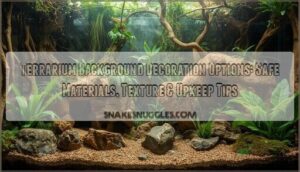
A bare glass terrarium looks about as inviting as an empty fish tank—unless you’re a fan of sterile spaces. But with a few smart tweaks, that blank canvas can become a living backdrop bursting with personality, depth, and safety for your herps.
It’s not just about pretty scenery, either; choosing the right terrarium background decoration options lets you craft hideouts, climbing terrain, and lush microhabitats that’ll make your animals feel right at home. Whether you’re after Jurassic jungle vibes or a slice of rainforest, there’s a practical way to make your setup both stunning and secure.
Table Of Contents
Key Takeaways
- Building a terrarium background is about more than looks—it creates hiding spots, climbing areas, and microhabitats that support your animals’ wellbeing.
- Safe handling practices, like using sharp tools, cut-resistant gloves, and non-toxic adhesives, are essential for crafting and attaching background features.
- Expanding foam and textured materials allow you to sculpt dynamic, natural-looking landscapes, which can be brought to life with plants, moss, and creative hardscape elements.
- Regular upkeep, including mold prevention and prompt repairs, extends the life and functionality of your terrarium backgrounds, helping maintain a healthy environment.
Cutting and Shaping Materials Safely
Let’s get hands-on with the art of safe cutting! Whether you’re wrangling thick cork sheets or whittling down polystyrene foam sheets for bold terrain, the real magic happens when you respect material safety.
Lay out a clean, well-lit workspace—clutter’s your enemy here. Always reach for sharp blades: dull ones do more sliding than slicing, upping slip risk.
For more ideas on how to turn your setup into a stylish part of your home, see this detailed guide on designing naturalistic terrariums that blend seamlessly with your decor using this resource on natural vs. glass terrariums for snakes.
Tuck those hands into cut-resistant gloves, clamp down your materials, and let safety glasses keep stray bits away from your eyes. A steady saw or fine knife—used slowly, always away from your body—beats brute force every time.
Push sticks for small bits? Absolutely, it’s one more layer between you and sharp edge handling drama. Prep with patience, and your background takes shape, not shortcuts!
Attaching Backgrounds With Non-Toxic Adhesives
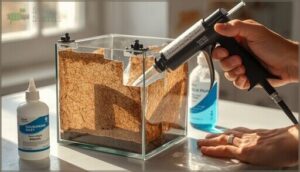
Once your background pieces are cut, it’s time to talk adhesives—because even the most stunning cork or bark won’t stick itself to glass. First, give every surface a quick wipe with isopropyl alcohol (Surface Prep is half the battle!).
For glass or plastic, AquariumSafe Silicone or a silicone sealant is your go-to for a moisture-proof, flexible bond. Tackier jobs—like Bonding Porous cork or balsa—love PVA glue or acrylic craft adhesives.
Gluing? Use thin, even coats, and clamp or weigh down pieces for a snug fit. For those working with paper or wood, checking out a clear non-toxic PVA adhesive can offer excellent bonding and easy cleanup.
Always check Curing Times—patience pays off with a strong, safe hold. Remember, adhesive techniques matter: a tacky layer on both sides grabs better. No shortcuts here; your critters deserve a rock-solid, non-toxic home!
For tips on choosing and cleaning safe bedding, check out this practical guide to selecting the right reptile substrate for humid enclosures.
Creating Texture With Expanding Foam
Now that your adhesive work is locked in, you’re ready to build genuine depth and drama—enter the expanding foam sealant. This is where Foam Application transforms flat surfaces into craggy cliffs and organic textures worthy of Bioactive Terrariums.
Start with Surface Preparation: mist your base lightly with water to slow expansion, then mask off edges with painter’s tape. Apply foam in thin layers—it’ll expand three to four times its volume, so less is more! Let each layer cure before adding another to avoid sagging.
Once fully set (about 24 hours), grab a sharp hobby knife for Foam Carving. Sculpt crevices, ledges, and natural-looking ridges. Then smooth things out with fine-grit sandpaper.
Key steps for Texture Formation:
- Work in well-ventilated spaces and wear a respirator—Foam Safety isn’t optional
- Choose low-odor, water-blown formulas for humid environments
- Cure away from direct heat to prevent warping
- Seal with acrylic paint mixed with a water-based sealer
- Dry-brush earth tones to highlight rock-like details
Your DIY Background Creation Methods just leveled up—gorgeous Terrarium Background texture awaits!
To keep your terrarium backgrounds looking as stunning as day one, check out these expert tips for cleaning, inspecting, and storing your reptile gear.
Adding Decorative Elements and Plants
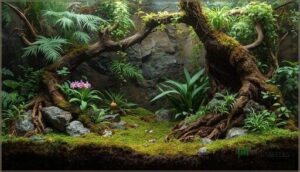
Your textured backdrop is primed—now it’s time to breathe life into it! Plant Placement kicks off with strategic layering: anchor tall ferns or small fittonia at the back, then arrange trailing species near the top edges for a cascading effect. Space roots at least an inch apart to prevent crowding while you’re perfecting your Miniature Gardening Techniques.
Moss Gardening covers exposed foam beautifully—press live sphagnum or sheet moss into crevices using a dab of aquarium-safe silicone. For Epiphyte Care, tuck air plants or mounted orchids into carved pockets; they’ll root naturally over time.
Layer in Decorative Rocks, driftwood, or tiny figurines to build Miniature Landscapes that guide the eye. Keep your Terrarium Design Ideas cohesive by matching colors and textures. This blend of Plant Decoration and hardscape transforms your Terrarium Background into a living, breathing masterpiece! Adding plants can also improve indoor air quality through air-filtering houseplant benefits.
Maintenance Tips for Terrarium Backgrounds

Keeping your terrarium background in top shape comes down to a few simple habits. A little regular upkeep goes a long way for both looks and function.
Here’s what to keep an eye on next.
Cleaning and Preventing Mold
Ever notice how a lush terrarium background can turn into a mold factory overnight?
Mold Removal isn’t just about scrubbing—think Humidity Control first.
Keep ambient humidity under 60%, manage spills promptly, and experiment with Surface Cleaning techniques.
Good Moisture Management and careful Fungal Prevention protect your substrate, safeguard your bioactive environments, and keep your setups thriving long after the first spray!
Repairing and Replacing Damaged Sections
Restoration is a craft—especially when a Damaged Section looms in your DIY terrarium background. Start with clean, sharp cuts for smooth repairs, then choose matching materials for spot-on Background Restoration.
Build resilience with these hands-on steps:
- Sculpt natural seams with expanding foam.
- Use non-toxic adhesives to prevent Damage.
- Blend textures to hide Repair Techniques for a perfect enclosure background.
Ensuring Longevity of Materials
Longevity starts with smart Material Selection and rigorous Durability Testing—think UV Resistance, Chemical Stability, and Moisture Management all rolled into your toolkit.
When building a DIY Terrarium Background or choosing Materials for Enclosure Backgrounds, focus on heat tolerance and non-porous surfaces. Naturalistic Landscaping and Design thrive on these Durability factors, keeping your vibrant scene sturdy for years.
Integrating Backgrounds With Bioactive Setups
Picture your Bioactive Terrarium as a lively city—every structure shapes the daily routine of its tiny residents.
To nail Bioactive Design, pick inert Background Materials and substrates that won’t leach nasties or mess with Terrarium Safety. Carve crevices and shaded nooks right into your DIY Terrarium Background, letting cleanup crews and fauna claim their own slice of habitat heaven.
Choose safe, inert materials and carve cozy shelters so every creature can thrive in your bioactive terrarium’s custom-built habitat
Frequently Asked Questions (FAQs)
How do I choose the best background material?
Choosing the best background material means weighing safety, durability, and the look you want.
For a DIY terrarium background, consider safe materials like cork, rigid foam, or natural wood—each offers unique texture options and aesthetic choices for any design.
Do backgrounds affect temperature or humidity levels?
Absolutely—terrarium background choices steer temperature and humidity. Texture microclimates, material insulation, adhesive sealing, and plant trans all contribute.
Insulation value, surface area, and substrate coating help with humidity management, while certain designs even trap warmth or channel airflow.
What background styles suit different terrarium themes?
Desert Landscapes shine with carved foam and sandy textures; Tropical Themes love cork, moss, and bark; Alpine Designs call for slate colors and plaster; Urban Styles stand out with painted brick.
Mix materials for natural textures and a truly naturalistic environment.
Are printed backgrounds safe near heat lamps?
Printed backgrounds, especially vinyl backgrounds, struggle with heat lamp safety—exposure can warp, fade, or even ignite them.
For terrarium design, thermal resistance matters. Use backgrounds rated for heat, or try DIY backgrounds crafted from more durable materials.
Can backgrounds help hide wires and equipment?
Yes—backgrounds really kill two birds with one stone. Thoughtful backdrop design blends visual camouflage with smart cable management, tucking wires behind textured panels while decorative plants and rocks hide equipment, keeping your terrarium design clean and naturalistic.
Conclusion
A terrarium background seems like pure decoration—yet it’s actually one of your most functional tools for creating a healthy habitat. When you combine safe materials, thoughtful texture, and consistent upkeep, those terrarium background decoration options transform into climbing zones, thermal gradients, and hiding sanctuaries your herps instinctively crave.
The best setups don’t just look impressive; they work behind the scenes to support natural behavior. Build it right, maintain it well, and watch your living masterpiece thrive for years.