This site is supported by our readers. We may earn a commission, at no cost to you, if you purchase through links.

Most snake bites happen to people who thought they had everything under control. A calm ball python can still mistake your hand for dinner, and a stressed one won’t send a warning first.
So when do you need gloves for snakes? Mostly when the odds shift against you: a newly acquired snake, a defensive one, or a messy enclosure cleanup with cuts on your hands. But gloves are puncture-resistant, not puncture-proof, and they never replace hooks, tongs, or a secure setup.
Here’s how to pick the right pair, and how to keep it working for years.
Table Of Contents
- Key Takeaways
- When Do You Need Gloves for Pet Snake Handling?
- Can Snake Handling Gloves Prevent Bites?
- How to Choose Snake Handling Gloves for Fit, Dexterity, and Coverage
- Top 6 Snake Handling Gloves to Compare
- How to Inspect, Clean, and Store Snake Handling Gloves
- Frequently Asked Questions (FAQs)
- Can a rattlesnake bite through leather gloves?
- Are snakes out in 100 degree weather?
- What material can snakes not bite through?
- What temperature is too cold for a snake?
- Should you wear gloves when handling snakes?
- When should you start handling your snake?
- Can copperheads bite through leather gloves?
- Can gloves be used for handling aquatic snakes?
- Do gloves affect snake stress or behavior patterns?
- When should handlers avoid using gloves altogether?
- Conclusion
Key Takeaways
- You rarely need gloves with a calm, established pet snake, but they’re worth wearing with a new, defensive, or skittish one, or when you’re cleaning an enclosure with cuts on your hands.
- Gloves are puncture-resistant, not puncture-proof, so worn spots, loose seams, and finger gaps can still let fangs through, and you should never rely on them without a hook, tongs, and a secure setup.
- Pick gloves that fit snugly enough to close your fist, keep enough dexterity to grip a pen, and have a 12-24 inch cuff, because heavier protection like Kevlar-lined or thick leather costs you feel.
- Gloves are no answer for venomous snakes, so check them for wear before every session, keep them clean and dry, and leave venomous handling to trained pros.
When Do You Need Gloves for Pet Snake Handling?

Why do most keepers handle their snakes bare-handed? Because a healthy, established pet doesn’t need a barrier, and gloves for snakes dull the touch and dexterity you use to read its mood.
Even so, a skittish or newly acquired snake may settle faster if you start with gloves, and these corn snake handling techniques show how to build trust until you can go bare-handed.
Gloves earn their place in specific moments. Use them with a newly acquired snake, one that’s unusually defensive, or one that isn’t used to people. They help when you’re cleaning feces or contaminated enclosure items, especially with cuts on your hands. Wash up, because Salmonella doesn’t care about leather. Since a newly acquired or defensive snake may also test its enclosure, pair your glove routine with secure snake enclosure locks for glass tanks so it stays safely contained between handling sessions.
Skip handling during a shed, right after a meal, or when a snake seems ill. Puncture resistance won’t fix that stress.
And for venomous snake safety, gloves are no answer. Leave those to trained pros with snake handling tools.
Can Snake Handling Gloves Prevent Bites?

Sometimes, yes. Good snake handling gloves can stop a bite from ever reaching your skin, but only when the fabric beats the fang.
Bite prevention comes down to puncture resistance. Layers of Kevlar, thick leather, or SuperFabric create a barrier that blocks fang penetration, and if the fangs never get through, no venom or bacteria gets in either. Since a snake’s scales are keratin-rich folds of living skin with stiff plates and flexible hinges, this snake skin and scale structure helps explain where a fang can slip through.
Here’s the catch. These gloves are puncture-resistant, not puncture-proof. Thin, needle-sharp fangs or a hard strike can still get through. Worn spots, loose seams, and gaps between fingers are open doors.
Snake handling gloves resist punctures but never stop every fang, since worn spots, loose seams, and finger gaps are always open doors
Bigger snakes hit harder, too, so never rely on gloves alone. Pair them with a hook or tongs and a secure setup. For venomous snake safety, that rule is absolute.
How to Choose Snake Handling Gloves for Fit, Dexterity, and Coverage
Picking snake handling gloves isn’t about grabbing the thickest pair on the shelf. The right pair comes down to four things: proper sizing and fit, grip and finger dexterity, material thickness, and cuff length. Run each glove through those checks below, and you’ll know exactly what you’re paying for.
Proper Sizing And Fit

Think of a glove as a second skin, not a winter mitten. Proper glove fit means snug without strangling, so you can still close your fist.
Extra fingertip fabric? Size down. Gaps at the finger crotch? Size up.
Expect a dexterity vs protection tradeoff. A 14inch gauntlet or 23inch cuff length adds full hand coverage.
Grip And Finger Dexterity
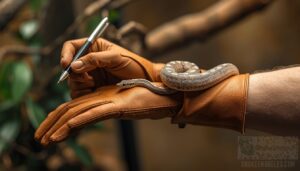
A snug fit gets you halfway there. Grip gets you the rest.
Bulky gloves for snakes turn your hands into oven mitts, and a dropped snake during a transfer is a bad day for everyone. Choose thin leather or snug nitrile when you need real finger dexterity. Elk hide with felt lining stays thin, but still resists punctures. Its suede-lined forearm cuff also keeps reptiles from slipping in at the wrist while you work.
Test it by picking up a pen.
Material Thickness And Flexibility

Because thickness decides whether a fang stops or slips through, treat it as your first filter. Below 4 mil, even small snakes can penetrate, no matter how nimble the glove feels.
Aim for 5 to 7 mil in synthetic composites. Kevlarlined gloves hit protection at thinner gauges than leather gloves, preserving dexterity, though flexible wrist support and material degradation factors still matter.
Cuff Length And Coverage

Cuffs decide how much of your arm stays safe. Aim for 12-24 inch forearm coverage, and choose gauntlet-style gloves with thick leather construction for real puncture resistance. Check cuffs and closures too, since loose openings invite fangs.
Picture the alternatives:
- A bite on your bare wrist
- A fang slipping past a short cuff
- A long, panicked trip to the ER
Top 6 Snake Handling Gloves to Compare
You’ve sized up the fit, tested the grip, and checked the cuff length, so now it’s time to compare real options. Each of the six pairs below earns its spot for a different reason, from welding-style leather to Kevlar-lined and anti-bite builds.
Keep in mind that no glove replaces good technique, so treat whichever pair you pick as backup, never your first line of defense.
1. Steiner Long Welding Gloves
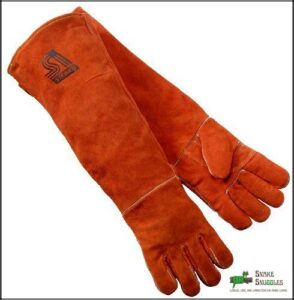
Welding gloves aren’t made for snakes, but they’re surprisingly good at the job. Steiner’s 23-inch pair uses shoulder split cowhide with a foam insulated back, so a defensive python’s teeth have real work to do before reaching skin. Fully welted seams hold up well, and the long gauntlet covers your forearm.
Still, never rely on them as bite-proof. They run tight over sweatshirts, durability reports are mixed, and they won’t stop a venomous strike. Treat them as insurance, not armor.
| Best For | Anyone who needs long, sturdy hand and forearm protection for tending a wood stove, handling hot coals and firewood, or doing rough work like gardening and handling wildlife. |
|---|---|
| Primary Material | Shoulder split cowhide |
| Glove Length | 23 inches |
| Weight | N/A |
| Lining | Foam insulated back |
| Stitching | Fully welted seams |
| Heat Resistance | Foam insulated back |
| Additional Features |
|
- Shoulder split cowhide with a foam insulated back guards against heat
- Fully welted seams help the gloves hold up well
- The 23-inch length covers the forearm and protects against thorns and animal bites
- Not suitable for direct contact with hot pans or oven use
- Can feel tight when worn over sweatshirts or long sleeves
- Reports on long-term durability with heavy use are mixed
2. Hand Max Kevlar Leather Gloves
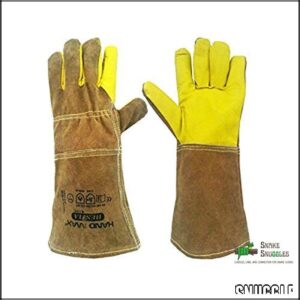
Picture a hungry ball python lunging at your hand, and a sleeve of tough leather catching the strike. That’s the Hand Max pitch: a gauntlet glove built from cowhide leather and Kevlar thread, weighing 8.8 ounces.
Here’s the appeal. The leather stays lighter and more flexible than bulky welding options, so you can still feel a snake shift under your fingers. That balance makes them a practical pick for non-venomous species, especially if you’re watching your budget.
Now the caution. Never rely on these as bite proof. They aren’t thick enough to stop every bite, and customer feedback on bite resistance is mixed. The one-size design can also run big on smaller hands, which costs you dexterity.
Treat them as a backup layer, not a force field. Pair them with calm handling, a grip, and a spotter for large snakes.
| Best For | Animal handlers such as groomers, kennel and zoo workers, and pet shop staff, plus hobbyists who handle non-venomous snakes and want a lighter, more flexible glove on a budget. |
|---|---|
| Primary Material | Cowhide leather |
| Glove Length | N/A |
| Weight | 8.8 ounces |
| Lining | N/A |
| Stitching | Kevlar thread |
| Heat Resistance | N/A |
| Additional Features |
|
- Made with cowhide leather and Kevlar thread for a tough but flexible build
- Lighter than bulky welding gloves at 8.8 ounces, so you keep more feel in your hands
- Trusted by animal control staff, groomers, kennel and zoo workers, and breeders
- Not thick enough to stop every bite
- Customer feedback on bite resistance is mixed
- One-size design can run big on smaller hands, which reduces dexterity
3. Caiman Premium Welding Gloves
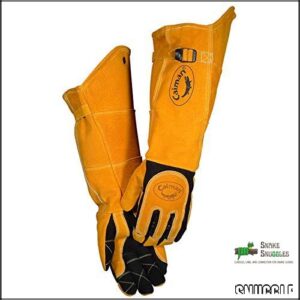
Need armor more than finesse? Caiman’s 21-inch gloves are built for that job. The split deerskin shell, gold cowhide heat shield patch, and Kevlar-sewn seams give you serious bite resistance against large constrictors, and the extended coverage shields your forearm and elbow when a coil gets ideas.
Inside, a foam and fleece lining adds cushion, which also makes these gloves handy in cold rooms. At 16 ounces per pair, they’re hefty, and that padding costs you finger dexterity. Expect clumsier grip on small, wriggly animals. They also handle hot grills, wood stoves, and fire pits.
Know the limits, too. The black leather areas take heat and spatter damage faster than the gold sections, and these gloves aren’t meant for 2,000°F+ industrial heat. Choose them if you’re a professional or handle big snakes and want maximum protection over nimble fingerwork. Delicate hatchling work? Look elsewhere.
| Best For | Professionals and handlers of large snakes, or anyone who needs maximum forearm and elbow protection and is willing to give up fine finger control. |
|---|---|
| Primary Material | Split deerskin and cowhide |
| Glove Length | 21 inches |
| Weight | 16 ounces per pair |
| Lining | Foam and fleece |
| Stitching | Kevlar-sewn seams |
| Heat Resistance | Handles grills and fire pits |
| Additional Features |
|
- The 21-inch length covers your forearm and elbow.
- Split deerskin, a gold cowhide heat shield patch, and Kevlar-sewn seams give strong, durable protection against bites, sparks, and abrasion.
- The foam and fleece lining keeps hands warm in cold rooms, and the gloves also work around hot grills, wood stoves, and fire pits.
- The heavy padding (16 ounces per pair) reduces finger dexterity, making them clumsy for small animals or delicate work.
- The black leather areas take heat and spatter damage faster than the gold sections.
- They aren’t meant for prolonged exposure to extreme industrial heat of 2,000°F or more.
4. Defences Animal Handling Gloves
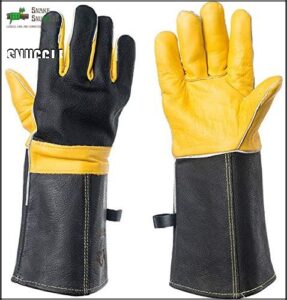
Snakes rarely strike your fingertips. They go for whatever moves closest, and that’s often your wrist or forearm. Defences’ 15-inch gauntlet gloves answer that with a 7.5-inch sleeve that keeps your forearm covered during cage cleaning and handling.
The build is solid. Thick premium cowhide takes scratches and moderate bites, Kevlar stitching keeps seams from splitting, and the cotton lining keeps your hands comfortable through long sessions. Welted fingers add structure, and the built-in hook lets you hang them up neatly.
Be realistic, though. These are bite-resistant, not bite-proof. Reviewers report mixed results on puncture protection and heavy-use durability, and they won’t stop a large constrictor. If you’re working defensive species, never rely on gloves alone. Pair them with hooks or tongs.
Thick leather means small hands may swim in them, and fine work gets clumsy fast. They suit keepers, vets, and groomers handling small to medium animals.
| Best For | Reptile keepers, vets, and groomers who handle birds, reptiles, and small to medium animals and want extra forearm coverage during handling and cage cleaning. |
|---|---|
| Primary Material | Premium cowhide |
| Glove Length | 15 inches |
| Weight | N/A |
| Lining | Cotton |
| Stitching | Kevlar stitching |
| Heat Resistance | N/A |
| Additional Features |
|
- The 7.5-inch sleeve on the 15-inch gauntlet keeps your forearm protected from bites, scratches, and grabs.
- Thick premium cowhide with Kevlar stitching resists scratches and moderate bites while keeping seams from splitting.
- Cotton lining, welted fingers, and a built-in hanging hook make the gloves comfortable for long sessions and easy to store.
- They are bite-resistant, not bite-proof, and won’t stop bites from large animals like big constrictors, lions, or crocodiles.
- The thick leather can feel too big and clumsy for small hands or detailed work.
- Reviewers report mixed results on puncture protection and durability under heavy use.
5. Animal Handling Anti Bite Gloves
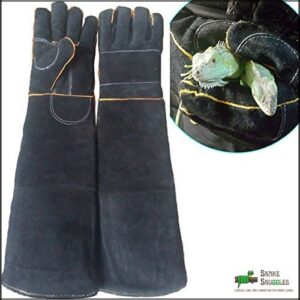
Want more sleeve than the Defences pair offers? These thickened cowhide gloves stretch 23.6 inches (60 cm), which covers most of your forearm when a coiled python strikes high.
The cotton lining keeps long sessions comfortable, and the hands hold up well against scratches and bites from pythons and nonvenomous colubrids. The arm area is thinner, though, so bite protection fades near the elbow. Never trust them with venomous species.
Expect some quirks. The fit runs bulky, which makes scruffing a feral cat awkward and swallows smaller hands. A few buyers say their pair fell apart on day one, so check the stitching before you handle anything.
| Best For | Keepers, groomers, and kennel staff handling pythons, parrots, and defensive cats |
| Material | Thickened cowhide |
| Length | 23.6 inches |
| Primary Use | Animal handling |
| Stitching | Standard |
| Lining | Cotton |
| Heat Resistance | Limited |
| Care | Hand wash |
| Features | Cut, bite, and slash resistant |
| Best For | Veterinarians, animal control officers, kennel and zoo staff, and pet shop workers who handle feral cats, rescue dogs, birds, and reptiles and need extra forearm coverage. |
|---|---|
| Primary Material | Thickened cowhide |
| Glove Length | 23.6 inches |
| Weight | N/A |
| Lining | Cotton |
| Stitching | Standard |
| Heat Resistance | Limited |
| Additional Features |
|
- Thickened cowhide resists cuts, bites, slashes, and scratches
- The 23.6-inch length protects the fingertips, hands, and much of the forearm
- Cotton lining adds softness, comfort, and extra heat protection
- The arm area is thinner, so it offers less protection than the hand area
- Some users report the gloves falling apart on the first day of use
- The bulky fit can make scruffing feral cats difficult and feel large for women’s hands
6. Kim Yuan Fire Resistant Gloves
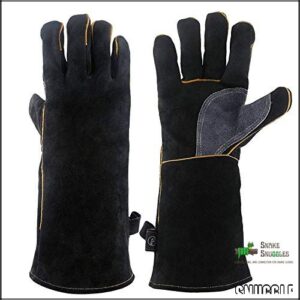
Switching from a sleeve-heavy pair to the Kim Yuan gloves means trading forearm coverage for versatility. These 14-inch split cowhide gloves weren’t built for snakes, yet plenty of keepers pull them on for nonvenomous species.
The 1.0 to 1.2mm leather offers modest bite protection against ball pythons and kingsnakes. Kevlar stitching holds up well, but you get no reinforced fingertips and little forearm cover. Sizing runs large, and short fingers limit dexterity during extended wear.
Treat them as a backup pair for routine enclosure work, never as your main defense. Skip them for defensive or venomous snakes, and keep them dry, since wet conditions can damage the lining.
| Best For | Keepers handling docile snakes like ball pythons or kingsnakes |
| Material | Split cow leather |
| Length | 14-inch |
| Primary Use | Heat tasks and animal handling |
| Stitching | Kevlar |
| Lining | Cotton |
| Heat Resistance | Up to 662°F |
| Additional Features | Denim cuffs, 90-day money back |
| Best For | Keepers of docile, nonvenomous snakes like ball pythons or kingsnakes who want a backup pair of gloves for routine enclosure work and occasional heat tasks. |
|---|---|
| Primary Material | Split cow leather |
| Glove Length | 14 inches |
| Weight | 10.5 ounces |
| Lining | Cotton |
| Stitching | Kevlar thread |
| Heat Resistance | Up to 662°F |
| Additional Features |
|
- Heat resistant up to 662°F, with Kevlar thread stitching that holds up well
- Split cow leather (1.0mm to 1.2mm) offers modest bite protection against docile snakes
- Versatile enough for welding, grilling, fireplace use, and animal handling
- Short fingers limit dexterity during extended wear
- No reinforced fingertips and little forearm coverage, so they are not suited for defensive or venomous snakes
- Not recommended for wet conditions, since moisture can damage the lining
How to Inspect, Clean, and Store Snake Handling Gloves

Once you’ve picked your pair, your job isn’t done. The toughest gloves fail when you ignore them, and a tear is an invitation for fangs.
Start by inspecting for wear and tear before every session. Then follow these steps:
- Check for punctures, cracks, and abrasions by sight and touch.
- Hold the gloves up to light to spot pinholes and thin patches.
- Wash with mild soap and cool water, then rinse off every trace of soap.
- Air dry completely at room temperature, fingers pointing down, away from heat.
- Condition leather gloves once they’re bone dry, using a product made for work gloves.
Glove storage matters too. Keep them flat or hanging somewhere cool, dry, and dark, never in a sealed bag.
Frequently Asked Questions (FAQs)
Can a rattlesnake bite through leather gloves?
Is thick leather really bite-proof? Not against a big rattler. Rattlesnake fang length reaches 3 cm, and fang penetration mechanics favor needle-sharp tips, so leather gloves lose puncture resistance.
Kevlar and reinforced fabrics fare better.
Are snakes out in 100 degree weather?
Snakes treat midday sun like a hot skillet. In 100 degree weather, they hide, emerging at dusk.
Venomous snakes still strike. Heatinduced sweating slows you down, so use strike avoidance techniques and snake behavior interpretation.
What material can snakes not bite through?
Nothing is truly bite-proof, which is the joke. Still, puncture-resistant materials like ballistic nylon, Kevlar, and thick Cordura stop fang tip pressure best. Always check any puncture resistance rated claims, and watch for glove degradation.
What temperature is too cold for a snake?
Your snake’s limit depends on species. Tropical pets need a cool side around 24–27°C, so anything near 10°C is dangerously cold. Prolonged chills hurt digestion and immunity. Check temperatures at snake level, not the thermostat.
Should you wear gloves when handling snakes?
Ironically, the tool meant to keep you safe can make you clumsier. With calm, non-venomous pets, bare hands give better control. For venomous, defensive, or medical cases, use protective gear as backup, following herpetology handling practices.
When should you start handling your snake?
Is the two-week rule gospel? Not quite. Wait about 5 to 7 days, until your snake has eaten and kept its meal down. Rush it, and snake handling safety suffers, along with your snake’s trust.
Can copperheads bite through leather gloves?
Leather gloves are a screen door in a hailstorm. Copperheads bite through leather gloves if they’re thin or worn, but Kevlar adds real puncture resistance. Never rely on gloves; plan for fast antivenom administration anyway.
Can gloves be used for handling aquatic snakes?
Yes, gloves for snakes work well in water, but pick water resistant gloves with anti slip grip, non absorbent materials, and quick dry construction. They’re never bite-proof, so always pair them with hooks and tongs.
Do gloves affect snake stress or behavior patterns?
Gloves deliver zero stress reduction in snakes; they only calm you.
Stiff material dulls your touch, so grips tighten and defensive snake behavior follows. Prioritize handling technique improvement, glove integrity assessment, and safe distance maintenance.
When should handlers avoid using gloves altogether?
Myth: gloves guarantee safety. They breed a false sense of security and dull feel, stalling handling technique improvement. With docile snakes, go bare for stress reduction in snakes. Save proper glove fit for defensive ones.
Conclusion
Picture a thin layer of leather standing between your knuckles and a row of needle-sharp teeth. That’s all a glove is, and it’s enough only when you’ve chosen well.
So, when do you need gloves for snakes? Whenever the odds tilt: new arrivals, defensive moods, or cleanups with cuts on your hands. Pick a snug fit, flexible grip, and wrist-covering cuff.
Keep them clean and dry. Your hooks, habits, and calm hands do the rest.