This site is supported by our readers. We may earn a commission, at no cost to you, if you purchase through links.
A $6 thermometer can’t save a snake, but a bad one can quietly kill it. One probe reading 4°F too cool means a sluggish ape of a feeder refusal, a stalled shed, and a respiratory infection that takes hold before you notice.
Quarantine leaves no margin for guesswork. Every new arrival may carry mites, Cryptosporidium, or worse, and the enclosure is your only checkpoint. You need accurate warm and cool readings, and you need a unit that stays with one tub.
These snake thermometers for quarantine setups are tested for accuracy, probe flexibility, and easy disinfection. Start with the ten below.
Table Of Contents
- Key Takeaways
- Top 10 Snake Thermometers for Quarantine Setups
- 1. Reptile Thermometer Humidity Gauge
- 2. Mini Digital Hygrometer Thermometer
- 3. Paizoo Reptile Thermometer Hygrometer
- 4. Oasirep Reptile Thermometer Hygrometer
- 5. Digital Reptile Thermometer Hygrometer
- 6. Repti Zoo Reptile Thermometer Hygrometer Gauge
- 7. SunGrow Reptile Thermometer Hygrometer
- 8. Weewooday Reptile Thermometer Hygrometer
- 9. Repti Zoo Digital Thermometer Hygrometer
- 10. Reptispa Digital Thermometer Hygrometer
- Choosing Quarantine Thermometers: Accuracy, Probes, and Humidity Tracking
- Placing Quarantine Thermometers to Monitor Warm and Cool Zones
- Cleaning Quarantine Thermometers and Preventing Cross-Contamination
- Maintaining Reliable Quarantine Readings: Calibration, Thermostat Checks, and Backup Power
- Frequently Asked Questions (FAQs)
- What is the best thermometer for snakes?
- How long should I quarantine my new snake?
- Where to put a thermometer in a snake enclosure?
- What temperature is too hot for a snake?
- How to quarantine a snake?
- What is the best hygrometer for reptiles?
- Are cheap digital hygrometers accurate?
- How often should I replace thermometer batteries?
- Can infrared guns replace traditional probe thermometers?
- Whats the ideal quarantine enclosure temperature range?
- Conclusion
Key Takeaways
- Give every quarantine enclosure its own labeled thermometer, because sharing one between tubs can carry mites, Cryptosporidium, and other pathogens from snake to snake.
- Choose a digital unit with an external probe, accuracy within about 1 to 2°F, and min/max memory, then check it against an ice slurry or an infrared gun, since even a 4°F error can cause feeding refusal, stalled sheds, and respiratory infection.
- Put one probe on the warm side at snake level and another on the cool side, place the thermostat probe exactly where its matching thermometer sits, and keep probes off the glass so you read what your snake actually feels.
- Wash probes with soap and water, then disinfect them (70% alcohol for a minute, or F10SC or chlorhexidine for the label’s contact time), and replace batteries as soon as the display dims so your readings stay trustworthy throughout the 60 to 90 day quarantine.
Top 10 Snake Thermometers for Quarantine Setups
Your quarantine snake can’t afford a thermometer that drifts, because a few degrees of error in the first 72 hours can suppress its immune response.
Pairing a proportional thermostat with a correctly placed probe is the simplest fix, and this guide to maintaining consistent heat for corn snakes shows how to set it up.
The ten units below are all digital thermometer and hygrometer options, so you can track temperature and humidity together. Use this list to match one dedicated unit to each enclosure, and you’ll keep your readings honest.
1. Reptile Thermometer Humidity Gauge
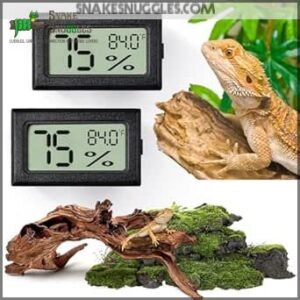
The Reptile Thermometer Humidity Gauge from Vodolo gives newly relocated snakes a stable start, pairing ±0.9°F sensor accuracy with dual probes for warm and cool zones. You get solid temperature accuracy, though humidity accuracy isn’t specified, so verify humidity control against a trusted reference.
Smart probe placement matters:
- Warm side: Mount a probe at snake level near the heat.
- Cool side: Place the second probe opposite, away from heat.
- Switch ℉/℃ to match your protocol.
- Replace batteries before quarantine begins.
2. Mini Digital Hygrometer Thermometer
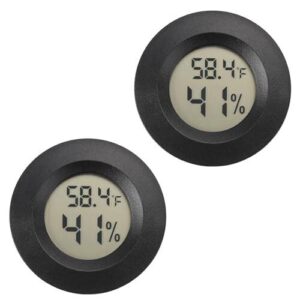
Once your snake settles into its new tub, you’ll want a digital thermometer that doesn’t eat into its space. This mini unit measures 48 × 28.6 mm and sits flush in a tub lid, so the animal keeps every inch of floor.
Its reptile thermometer sensor holds ±1°F temperature accuracy and ±5% humidity, updating every 10 seconds. That speed catches a dangerous swing before a stressed snake pays for it. Check probe placement at snake level, then verify readings against an infrared gun. Temperature monitoring matters most during the first 72 hours.
An LR44 cell lasts 6 to 9 months, and you can switch between °C and °F.
| Spec | Detail |
|---|---|
| Best For | Quarantine tubs and multi-terrarium setups needing affordable monitoring |
| Temperature Accuracy | ±1°F |
| Humidity Accuracy | ±5% RH |
| Refresh | 10 seconds |
| Power Source | LR44 button cell |
| Mounting | Sticky pads |
3. Paizoo Reptile Thermometer Hygrometer
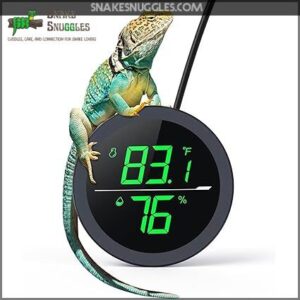
Tight tubs work for small sensors, but a larger enclosure needs readings from both ends. The Paizoo Reptile Thermometer Hygrometer controls that with a 31.5-inch probe cable, so you can leave the display where you’ll actually see it.
Since even matching units can be off by about 5% and drift over time, check each one with a salt test and read this guide to reptile humidity gauges for multiple tanks.
If you’re monitoring more than one enclosure, these snake thermometers for multiple terrariums make it easier to track every setup without juggling separate displays.
Run the probe to the basking spot, then check probe placement at snake level, not on the lid. Suction cups hold it in place, which makes dualzone tracking simple: move the probe to the cool end and compare. Temperature accuracy is rated at ±0.1°F across 32°F to 140°F, and humidity reads 10% to 99% RH within ±3%. The sensitive probe refreshes its readings every 10 seconds, so a drifting heat gradient shows up quickly.
The bright LED screen has an always-on mode, and one button switches °C and °F. A built-in rechargeable battery comes with a 59.05-inch Type-C cable, so you won’t hunt for coin cells mid-quarantine. Its plastic shell wipes clean, which helps your quarantine biosecurity measures between animals and tubs.
4. Oasirep Reptile Thermometer Hygrometer
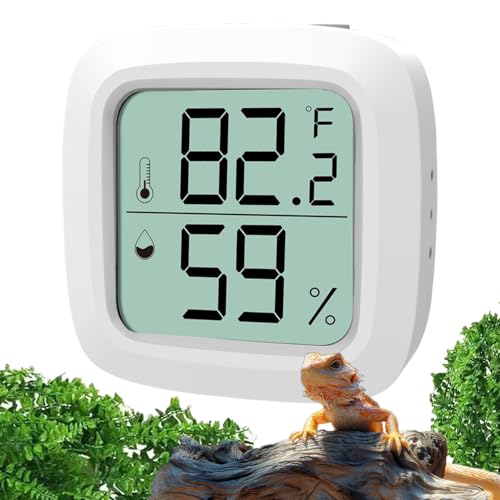
If you’d rather not swap batteries mid-quarantine, the Oasirep Reptile Thermometer Hygrometer answers that with one CR2032 coin cell rated for up to 12 months. Every time you open a tub, you stress a sick snake, so fewer disturbances matter.
Stick it to glass or acrylic with the double-sided adhesive pad, and keep probe placement at snake level, not up near the lid where air runs warmer. This digital thermometer pairs with a built-in hygrometer, so one unit tracks both numbers.
Accuracy is ±1.8°F and ±5% RH, which is fine for spotting temperature fluctuation but not for lab work. Because it’s a single-zone unit, thermal gradient maintenance means buying a second one for the cool end. The housing isn’t waterproof, so keep it out of misting range or your readings will drift. Its ABS shell wipes clean between animals.
5. Digital Reptile Thermometer Hygrometer
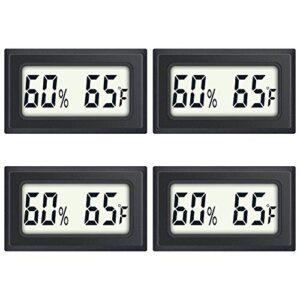
The Digital Reptile Thermometer Hygrometer earns its spot on a quarantine shelf by doing two jobs at once. Its built-in sensor reads ambient air from 14 to 122°F, while the external probe stretches from −58 to 158°F, so you can check the room and the hotspot your snake actually rests on.
Accuracy sits at ±2°F and ±2% RH. That’s tight enough for dependable temperature monitoring and solid humidity control, though you’ll still want to run thermometer calibration against a trusted reference every few weeks.
There’s no data logging, so jot readings in a notebook each morning and evening. Spotting a slow drift early protects a stressed, newly arrived animal.
A pack of four units lets you equip several enclosures. Each runs about eight months on batteries, and mounts through an embedded opening or with tape. Cleaning’s easy.
6. Repti Zoo Reptile Thermometer Hygrometer Gauge
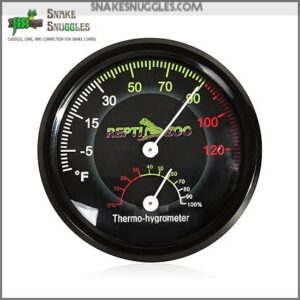
The Repti Zoo reptile thermometer hygrometer gauge gives you a clear read on both temperature and humidity, which matters when a stressed snake can’t afford a bad guess. It covers 14°F to 122°F with ±2°F accuracy, and humidity runs from 20% to 99% with ±5% accuracy. The LCD updates every 5 seconds, so you’ll catch a heat spike before it hurts.
The suction cup mounts on the side or back glass of a terrarium and leaves no adhesive residue, which keeps equipment easy to disinfect under your quarantine protocols. Aim for probe placement at snake level, then check the warm and cool ends to confirm your temperature gradient holds steady.
This digital thermometer ships with a spare LR1130 battery, and two cells together last over a year. Switch between Fahrenheit and Celsius. A 12-month quality guarantee and 24-hour support response add a safety net during quarantine.
7. SunGrow Reptile Thermometer Hygrometer
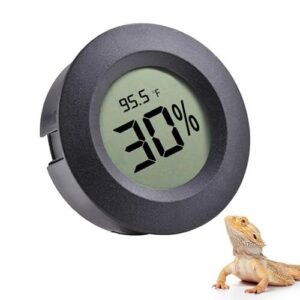
Picture a quarantine tub at midnight, a lone snake coiled under paper towels while a small round face glows on the wall beside it.
That’s the SunGrow, a compact 1.8 x 1.8 x 0.6 inch gauge that pairs temperature monitoring with humidity control and refreshes every 10 seconds.
The pre-installed LR44 cell gets you running immediately, and the wall mount keeps the display clear of your snake.
Here’s how to get trustworthy readings:
- Run thermometer calibration against an infrared gun before first use.
- Prioritize probe placement at snake height, away from heat sources.
- Check humidity control against 1% resolution steps, not guesses.
- Note readings twice daily for simple data logging.
- Swap the battery at the first sign of fading digits.
It’s best for hobbyists wanting affordable dual monitoring in small enclosures. Expect convenience over longevity, so keep a backup unit nearby, just in case.
8. Weewooday Reptile Thermometer Hygrometer
A hot rock glows under a basking lamp while your snake’s quarantine tub sits in shadow, and one misplaced sensor can hide the difference.
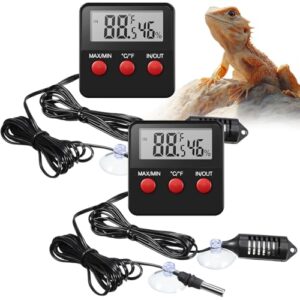
The Weewooday Reptile Thermometer Hygrometer solves that with two probes on 1.5-meter wires, so you can read each zone from outside the enclosure. This digital thermometer also tracks 10% to 95% RH humidity and stores maximum and minimum readings, which helps you catch overnight dips.
Don’t trust it blindly, though. Reviewers report readings drifting about 5%, so run thermometer calibration against an infrared gun and use sensor accuracy verification before each quarantine. Good temperature monitoring starts with numbers you’ve tested.
| Feature | Detail |
|---|---|
| Probe range | -50 to 70°C |
| Mounting | Suction, clip, magnet |
| Power | One AAA battery |
It suits keepers who want affordable monitoring across zones without lab-grade precision. Accuracy isn’t specified, so treat it as a budget quarantine option, and keep a backup thermometer.
9. Repti Zoo Digital Thermometer Hygrometer
Can you trust a gauge you can’t read at a glance? In quarantine, temperature monitoring leaves no room for guessing.
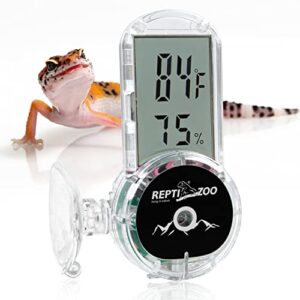
This digital thermometer pairs a large LCD with humidity readout, covering 14–122°F with ±2°F sensor accuracy and 20–99% RH. Readings refresh every five seconds, so you’ll catch drops fast during the vulnerable first 72 hours.
Why it earns a spot on your shelf:
- Four-sided mounting lets you read it from any angle.
- Two LR1130 cells last about 12 months, with a spare included.
- A silicone body shrugs off wipe-downs between animals.
- Probe versions stretch 900 millimeters to check hotspots against your thermostat.
- One unnoticed cold spot can cost you a healthy snake.
Suction cups can slip when condensation builds on glass, so favor tape in humid enclosures. It has no data logging, so jot readings down and schedule thermometer calibration against a reference.
10. Reptispa Digital Thermometer Hygrometer
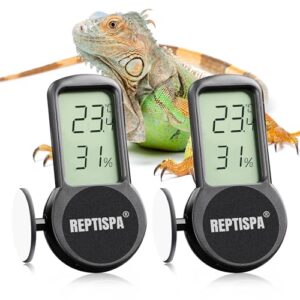
Can a cheap gauge really protect a quarantined snake? Among the Snake Thermometers for Quarantine Setups, the Reptispa Digital Thermometer Hygrometer makes a fair case. It reads 14°F to 140°F with ±1.8°F accuracy, and its humidity sensors cover 20% to 99% RH within ±5%.
The pack includes two units, so every enclosure gets its own device. That matters in quarantine, where moving one gauge between tanks can carry pathogens along.
The LCD refreshes every 10 seconds, which is quick enough to catch a heat lamp drifting off target. Judging temperature stability still takes your attention, though. There’s no data logging, so jot readings down each day and spot trends yourself.
It uses included batteries and needs little upkeep beyond replacing them. Keep it indoors only. Its reusable design lets you redeploy both units after quarantine ends, saving you money.
Choosing Quarantine Thermometers: Accuracy, Probes, and Humidity Tracking

Start with accuracy, because every other feature depends on it. When you compare Snake Thermometers for Quarantine Setups, look for 1F accuracy on the temperature side, since a cheap analog dial can drift several degrees.
Run each candidate through this checklist:
- Pick a digital thermometer with an external probe, so the display stays dry.
- Confirm the probe is water-resistant, since humid hides ruin cheap sensors.
- Choose humidity sensors rated within ±5% RH, covering 20% to 99%.
- Look for min/max memory to catch overnight swings.
- Make sure the probe tolerates your probe disinfection protocols.
Ball pythons need 50-60% humidity, so a unit that can’t hold that window isn’t worth buying. Verify it against a second reading before you commit to it.
Placing Quarantine Thermometers to Monitor Warm and Cool Zones
Once your thermometer passes the accuracy checklist, where you put it decides whether the readings mean anything.
Snakes rely on a temperature gradient for thermal regulation in snakes, so you need data from both ends. Give every enclosure its own probes, because dedicated thermometers per enclosure stop pathogens from traveling between tubs.
| Zone | Probe placement |
|---|---|
| Warm basking spots | Probe taped to the surface |
| Cool end | Suspended at body height, far from heat |
| Thermostat | Same spot as its thermometer |
| Daily check | Confirm nothing got dislodged |
Put the thermostat probe exactly where its matching thermometer sits, so the regulated zone and the measured zone are identical. Keep probes off glass walls, since glass reads wall temperature, not what your snake actually feels.
Cleaning Quarantine Thermometers and Preventing Cross-Contamination
Once your probes sit in the right spots, they become the likeliest carriers of whatever’s sick in that tub, so clean them.
Once your probes are placed correctly, they become the likeliest carriers of whatever illness is in that tub, so clean them
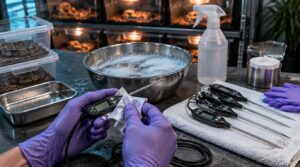
Wash every probe with soap and water first, because organic debris blocks disinfectant. Then wipe with 70% alcohol for one minute, or soak non-porous housings in F10SC or chlorhexidine for the contact time on the label. Rinse, then air dry completely before storage.
Keep dedicated thermometers per enclosure, labeled and stored in sealed containers away from your main collection. That’s equipment isolation biosecurity at its simplest. Change gloves between quarantine and clean racks, and follow your biosecurity protocols every visit.
Inspect each unit monthly for cracks or loose seals. Damaged housings hide pathogens and skew reusable thermometer calibration.
Maintaining Reliable Quarantine Readings: Calibration, Thermostat Checks, and Backup Power
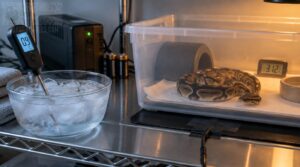
Clean units only help if their numbers are true. Run a thermometer calibration check by sliding the tip into an ice slurry, crushed ice with enough water, and note the error near 0°C (32°F). That tests one point, so compare against a reference thermometer in the warm zone and record the offset.
Don’t trust the thermostat display. Confirm the control probe sits against the heated surface, watch the heater cycle off and on. A displaced probe lets temperature drift into overheating.
Swap batteries when the display dims, and log the date. Keep a battery backup plan: battery-powered units keep reading during power outages, and a UPS can hold your thermostat. Afterward, verify the tub yourself, because settings may have changed.
Frequently Asked Questions (FAQs)
What is the best thermometer for snakes?
Ironically, the best reptile thermometer is the one you can stop worrying about.
Pick dual sensors, ±1°C accuracy, and min/max memory. Verify with accurate thermometer calibration for reptile temperature monitoring and temperature stability in quarantine.
How long should I quarantine my new snake?
Picture a stranger’s germs slipping through your rack. Plan a 90day quarantine period, longer for pythons. Keep your quarantine enclosure setup steady, verify temperature stability in quarantine, run temperature gradient mapping, trust accurate thermometer calibration.
Where to put a thermometer in a snake enclosure?
Your dial says 88°F, but the basking zone hits 98°F. Thermometer placement fixes that: put one probe on the basking surface, another on the cool side substrate, confirming your temperature gradient through enclosure microclimate verification.
What temperature is too hot for a snake?
Ambient air above 95°F is dangerous, and past 100°F you’re risking organ failure.
Thermal stress shows as open-mouth breathing. Use an infrared thermometer gun to catch thermal burns, temperature fluctuation, and unsafe temperature thresholds early.
How to quarantine a snake?
Why gamble your collection on one new arrival? Isolate your snake 60–90 days, verify the thermal gradient with a digital thermometer, enforce strict biosecurity protocols, and start daily quarantine period monitoring plus temperature data logging.
What is the best hygrometer for reptiles?
Choose a digital thermometer with accurate humidity sensors, ±3% or better, and temperature data logging. Govee H5075 and SensorPush HT.w both fit well.
Tight humidity control and steady environmental monitoring protect your snake’s health daily.
Are cheap digital hygrometers accurate?
Can you trust a bargain gauge with your quarantine protocols? Mostly, but expect sensor accuracy of ±5% RH. Budget humidity sensors drift further, so pair a digital thermometer with salt-test checks for your biosecurity protocols.
How often should I replace thermometer batteries?
Swap your digital thermometer’s LR44 battery every 12 months, or every 6 if it runs nonstop. Watch for a dim display or "LO" reading. Low voltage skews numbers before failure, so replace early.
Can infrared guns replace traditional probe thermometers?
No. Infrared guns and thermal imaging read surfaces, not the air your snake breathes. Digital Probe Thermometers with external probes log true enclosure air temperature, and sensor accuracy and thermometer calibration keep your readings dependable.
Whats the ideal quarantine enclosure temperature range?
Think of your quarantine enclosure as a tiny climate with two zones: a sunny shore and a shaded cove. Keep the warm side surface at 85–88°F and the cool side at 75–80°F, with a thermal gradient never dropping below 75°F overnight.
Conclusion
A quarantine tub is a dark room, and your thermometer is the only window into it. Smudged glass means you’re guessing, and guessing is how infections slip past you.
Pick from the snake thermometers for quarantine setups above based on probe accuracy, humidity tracking, and how easily you can disinfect them. Place one probe on the warm side and one on the cool side. Calibrate monthly, and keep a backup battery nearby.
Trust every number.