This site is supported by our readers. We may earn a commission, at no cost to you, if you purchase through links.
Half of all snakebites land on the hand or arm. Not the leg, not the torso. Your hand reaches into a woodpile before your eyes finish scanning it, and by the time you spot the coils, the snake has already committed.
A strike takes under half a second. You don’t get a reaction window once fangs are moving toward exposed skin, only prevention beats reflex here.
Protecting your hands from snake bites starts with understanding how these injuries happen, then building habits that keep your fingers out of range for good.
Table Of Contents
- Key Takeaways
- Why Hands Face The Highest Snakebite Risk
- Step-by-Step Hand Protection Around Snakes
- Top 10 Gloves for Snake Bite Protection
- 1. Rapicca Animal Handling Gloves
- 2. WZQH Leather Welding Gloves
- 3. Tylulikaty Animal Handling Gloves
- 4. V Cheetong Snake Bite Proof Gloves
- 5. Lurmmue Heat Resistant Leather Gloves
- 6. Surfante Animal Handling Gloves
- 7. Aowpfvv Animal Handling Gloves
- 8. Bite Proof Animal Handling Gloves
- 9. Schwer Cut Resistant Work Gloves
- 10. Moutclmb Animal Handling Gloves
- How to Choose Snake Bite Protection Gloves
- Snake Bite First Aid for Hands
- Frequently Asked Questions (FAQs)
- Are there gloves that snakes can’t bite through?
- Will rubber boots stop a rattlesnake bite?
- Do they make snake bite proof gloves?
- Can copperheads bite through leather gloves?
- What gloves will thorns not go through?
- How often should protective gloves be replaced?
- Do snake bite proof gloves work underwater?
- Are there seasonal patterns for hand snake bites?
- Can gloves protect against all venomous snake species?
- Can snake bite gloves be washed or machine-dried?
- Conclusion
Key Takeaways
- Your hands take the brunt of snakebites because you reach and grab before your eyes finish scanning, and half of all bites land on the hand or arm.
- A snake strikes in under half a second, so prevention through distance and tools matters far more than trying to react once fangs are moving.
- Scanning first, using a hook or stick, and keeping six feet of buffer beat any glove, since even the best Kevlar and leather gear can’t guarantee full puncture protection.
- If a bite happens, call for help immediately, keep the hand still and below heart level, and skip outdated myths like cutting, suction, or tourniquets.
For a full rundown of what to do (and what to avoid) in those critical first minutes, this venomous snake bite first aid guide walks through each step in detail.
Why Hands Face The Highest Snakebite Risk

Your hands do more reaching, gripping, and probing than any other part of your body outdoors. That instinct to grab first and look second is exactly what puts fingers in a snake’s strike zone. Here’s why your hands carry the highest risk—and what raises it even further.
A sturdy pair of beginner-friendly snake handling gloves can turn that instinctive grab into a controlled, confident move instead of a costly mistake.
Upper-extremity Snakebite Statistics
When a snake strikes, your hands are usually what’s closest. Roughly 50% of all snakebite victims get bitten on an upper extremity, and men account for 69.3% of those cases.
Bites peak May through July, mostly evenings between 5 PM and midnight. Texas leads the US at 14.70 cases per 100,000 people. Most bites are accidental, not intentional.
Worldwide, snakebite envenoming causes over 125,000 annual fatalities, underscoring why prompt hand protection and treatment matter so much.
Blind Reaching and Hidden Snakes
Most bites happen before you ever see the snake. Blind reaching into woodpiles, rock crevices, or dense brush accounts for the bulk of hand injuries.
Concealed snake habitats hide in plain sight. That’s why visual scanning matters before your hand ever moves. Use a stick for tool-assisted probing first, hands second.
Snake Strike Range and Reactions
A strike takes under 0.5 seconds, start to finish. Rattlesnakes hit contact around 80 milliseconds in, then extract fangs by 120. Your reaction window barely exists once a snake commits.
A snake strikes in under half a second, fangs in by 120 milliseconds, leaving almost no time to react
Strike distance often reaches farther than you’d guess, and fang penetration happens fast on flat, stable ground. That’s why hand positioning before the strike matters more than reflexes after it.
High-risk Hand Positions
Given that reaction window, your hand position before contact decides the outcome. Four postures raise risk fastest:
- Palm-down inspection over logs or rocks
- Fingers wrapped grip around edges and ledges
- Extended reach posture into blind gaps
- Clenched fist defense instead of a neutral cupped stance
Each closes strike distance and invites fang penetration on exposed upper extremity tissue. Protective barriers won’t help if positioning fails first.
Hand Damage and Lasting Disability
A single fang penetration can cost you more than a scar. Venom triggers rapid tissue necrosis in fingers within hours, and swelling can trap blood flow, causing compartment syndrome that demands surgery.
Beyond that first crisis, nerve damage, tendon scarring, chronic stiffness, and complex regional pain syndrome often linger. Some victims face amputation, permanently changing grip and daily function.
Step-by-Step Hand Protection Around Snakes
Protecting your hands starts long before a snake is anywhere in sight. Every step you take—scanning, reaching, lifting—either closes distance or keeps you safe. Here’s exactly how to keep your fingers out of strike range, one habit at a time.
Scan Habitats and Enclosures First

Your eyes are your first tool, not your hands. Before you step into brush or lift a woodpile, run a visual habitat assessment: check tall grass, rock piles, and water edges. Look for shed skins or tracks, wildlife signs that confirm activity. Inspect enclosure fencing for gaps too. Scanning takes seconds. Skipping it costs fingers.
Use Hooks, Tongs, or Sticks
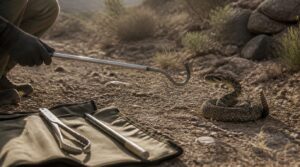
Distance tools do the dangerous work so your hands don’t have to. Snake hooks, 24 to 36 inches long, lift and guide from safety. Tongs grip with padded, serrated jaws, no squeezing needed. Sticks push debris aside.
- Hooks: curved tip, aluminum shaft
- Tongs: corrosion-resistant steel jaws
- Sticks: blunt, fiberglass tip
Inspect tools before each use. Damaged gear fails when you need it most.
Keep Hands Beyond Strike Range

Six feet. That’s the safe distance buffer the U.S. Forest Service recommends, though strike range shifts with a snake’s length, posture, and species.
Even a "still" snake can reach farther than you think. Scan the ground first, keep hands positioned away from its body, and back away slowly if you’re unsure of the distance.
Lift Objects With Fingers Visible

Grip matters as much as distance. Use the claw grip, fingertips curled and visible, thumb over fingers as a barrier.
Position tool shafts perpendicular to your body. Keep palms upward during lifts, maintaining safe lifting posture and constant visual monitoring. Pause if an object blocks your view. Wearing snake bite proof gloves adds another buffer, but visible fingers remain your best defense.
Never Free-handle Venomous Snakes

Confidence kills caution, and that’s exactly what free-handling breeds. Never free-handle venomous snakes, no matter how calm one looks.
Gloves and quick hands can’t replace tool-assisted control. Skin contact means strike range, full stop.
Stick to hooks and tongs. Scan first, use controlled contact methods, and keep an emergency response plan ready. Hand protection starts with distance, not bravado.
Top 10 Gloves for Snake Bite Protection
Not all snake-handling gloves offer the same protection. Some rely on Kevlar, others on SuperFabric or heavy leather, and the difference matters when fangs are involved. Here are ten options worth knowing before you buy.
1. Rapicca Animal Handling Gloves
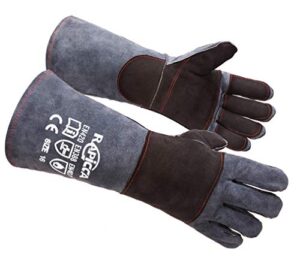
RAPICCA’s gloves earn their spot at the top for a simple reason: genuine cowhide with Kevlar-stitched reinforcement on fingers and palms, built to resist actual fang penetration. You get 16 inches of coverage, including a 7.5-inch forearm sleeve, right where strikes commonly land.
The insulated lining adds comfort without sacrificing grip. They’re heavyweight and bulky, so fine motor work suffers, but for gardening, reptile handling, or brush clearing, that trade-off is worth it.
| Best For | Handlers who need serious puncture and bite resistance for gardening, reptile handling, or brush clearing, and don’t mind trading off some finger dexterity. |
|---|---|
| Material | Cowhide leather |
| Length | 16 in |
| Reinforcement | Kevlar stitching |
| Lining | Insulated |
| Dexterity | Low |
| Best Use | Reptile handling |
| Additional Features |
|
- Genuine cowhide split leather with Kevlar-stitched fingers and palms for real cut, puncture, and heat resistance
- Extra-long 16-inch design with a 7.5-inch forearm sleeve covers where bites and scratches most often land
- Versatile enough for animal handling, gardening, and high-heat tasks like grilling or fireplace work
- Heavyweight, bulky build limits fine motor control for detailed tasks
- Some users find the sizing runs large, especially for smaller hands
- Not enough protection on their own against large, aggressive dogs or big piercing fangs like snapping turtles
2. WZQH Leather Welding Gloves
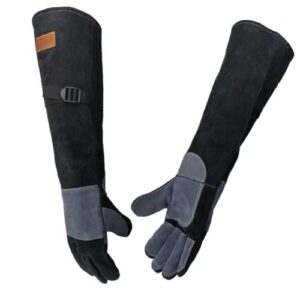
Not built for reptiles, but don’t let that fool you. WZQH’s welding gloves pack 1.2mm thick cowhide with Kevlar-reinforced stitching on both palms and fingers, the same puncture logic that makes them tough enough for sparks and slag.
You get 16 to 23.6 inches of coverage, longer than most gloves marketed specifically for snake handling. That extra length matters when a strike lands high on the wrist instead of the fingers.
Double-layer palms add real bite resistance, and the adjustable cuffs keep debris and fangs from sneaking in underneath. Heat resistance is a bonus if you’re also handling hot equipment around a campsite or grill.
Dexterity takes a hit with leather this thick. Picking up small objects gets clumsy, so these work best for probing, lifting, and clearing rather than fine motor tasks.
| Best For | Welders, grillers, and animal handlers who need long, durable gloves that protect against heat, sparks, and bites. |
|---|---|
| Material | Cowhide leather |
| Length | 16-23.6 in |
| Reinforcement | Kevlar stitching |
| Lining | Not specified |
| Dexterity | Low |
| Best Use | Welding/animal handling |
| Additional Features |
|
- Reinforced double leather palms and Kevlar stitching provide strong bite and puncture resistance
- Extra-long 23.6-inch design with adjustable cuffs protects hands and forearms
- Resistant to heat, wear, cuts, and oil, making it useful across welding, grilling, and animal handling tasks
- Thick leather construction can reduce dexterity for small or detailed tasks
- Some users find the gloves stiff, limiting fine control when handling hot pots or pans
- Sizing may run large, so a medium could fit bigger than expected
3. Tylulikaty Animal Handling Gloves

If you want fine motor control without sacrificing coverage, Tylulikaty’s animal handling gloves deserve a look. You get 23.59 inches of protection, fingertip to mid-forearm, using cow split leather with Kevlar-reinforced palms for solid puncture resistance.
At 1.31 pounds, they’re lighter than the WZQH pair, and the cotton lining keeps hands comfortable during long stretches in the field. The reinforced palm grips slippery reptile scales well, while the flexible finger design lets you still feel what you’re doing.
These aren’t reptile-specific gloves. They’re built for handling cats, dogs, and reptiles alike, which makes them a practical pick if you work with animals professionally.
| Best For | professional and everyday handlers who need reliable puncture resistance and grip across dogs, cats, reptiles, birds, and falconry work. |
|---|---|
| Material | Cow split leather |
| Length | 23.59 in |
| Reinforcement | Kevlar palms |
| Lining | Cotton |
| Dexterity | Moderate |
| Best Use | Multi-animal handling |
| Additional Features |
|
- Kevlar-reinforced leather construction offers strong puncture and scratch protection
- Ambidextrous, adjustable fit works comfortably for either hand
- Reusable and hand washable, making them easy to maintain over time
- Small or sharp-clawed animals like puppies can still puncture through in some cases
- Thick insulation can trap heat, leading to sweaty, uncomfortable hands
- Not machine washable, and the snug fit makes them tricky to turn inside out for drying
4. V Cheetong Snake Bite Proof Gloves
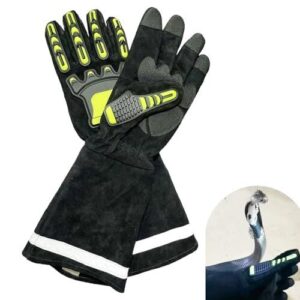
Maximum coverage matters when you’re working near agile species, and V Cheetong built these gloves around that idea. The full-area Kevlar construction wraps your hands and wrists in puncture-resistant material rated for professional bite work. Kevlar’s high tensile strength stops fangs from getting through, but the shorter wrist length means you need to position your hands carefully.
Strikes usually land on your palm and fingers first. That’s why V Cheetong added double-layer split grain leather right where it counts. At 18 inches long and 1.43 pounds, you get solid coverage without much added bulk.
Flannel lining keeps things comfortable during long stretches outdoors. These gloves suit professionals handling venomous snakes or aggressive reptiles who need serious bite protection without sacrificing daily usability in the field.
| Best For | Outdoor workers and professionals clearing undergrowth or pulling weeds in snake-prone areas who need reliable puncture protection for their hands. |
|---|---|
| Material | Split grain leather |
| Length | 18 in |
| Reinforcement | Kevlar construction |
| Lining | Flannel |
| Dexterity | Low |
| Best Use | Snake-prone yardwork |
| Additional Features |
|
- Heavy-duty, puncture-resistant construction offers peace of mind when working near snakes
- Well-suited for tasks like pulling weeds under broadleaf plants and clearing undergrowth in boxwoods
- Compact at 18 x 5.1 x 0.7 inches and only 1.43 pounds, so protection doesn’t mean excess bulk
- Bulky design can make fine motor control difficult
- Sizing may run small, which can be an issue for some adult male users
- Stiff material requires a break-in period before finger mobility feels natural
5. Lurmmue Heat Resistant Leather Gloves
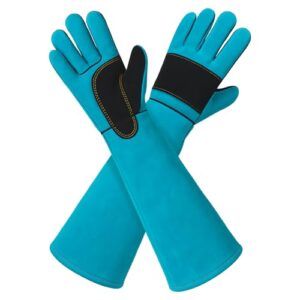
If heat is your main enemy, these gloves earn their keep. Lurmmue’s 23.6-inch gauntlets resist temperatures up to 932°F, built for welding sparks and campfire coals, not fangs.
Split cowhide and a double-layer palm add scratch and bite resistance for non-venomous handling. But don’t mistake that for certified snake bite protection. No puncture testing backs these against venomous strikes.
Pair them with hooks and distance if snakes enter the picture. Alone, they’re not enough.
| Best For | Welders, grillers, and gardeners who need serious heat and scratch protection for tough outdoor or workshop tasks. |
|---|---|
| Material | Split cowhide |
| Length | 23.6 in |
| Reinforcement | Double palm |
| Lining | Cotton |
| Dexterity | Moderate |
| Best Use | Heat protection |
| Additional Features |
|
- Handles heat up to 932°F, making them great for welding, fireplace work, and grilling
- Full 18-inch gauntlet design shields hands, wrists, and forearms from sparks and spatter
- Reinforced double-layer palm adds durability and grip without killing dexterity
- Some users find the fit bulky, which can hurt precision on detailed tasks
- Thick leather and cotton lining can get sweaty during longer wear
- Not rated for venomous animals or extreme industrial hazards, so know their limits before relying on them
6. Surfante Animal Handling Gloves
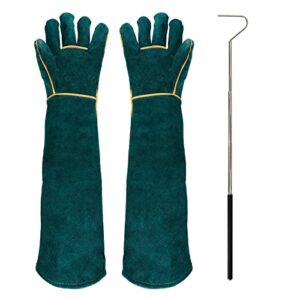
A snake hook built right into your glove set. That’s the pitch behind Surfante’s 23-inch cowhide gloves, and it makes sense for reptile beginners still learning distance and technique.
The thickened leather experiences scratches and bites from smaller animals fine. But that hook bends under a larger snake’s weight, and there’s no puncture certification against venomous fangs.
Field data shows 61 percent of bites hit fingers. Good starter gear, not a substitute for real technique.
| Best For | Reptile-handling beginners and pet owners who need sturdy, protective gloves for everyday tasks like gardening, grilling, or safely handling small animals. |
|---|---|
| Material | Cowhide |
| Length | 23 in |
| Reinforcement | Thickened leather |
| Lining | Not specified |
| Dexterity | Moderate |
| Best Use | Beginner reptile handling |
| Additional Features |
|
- Thickened cowhide offers solid protection against bites, scratches, and heat from tasks like welding or grilling
- Long 23-inch sleeves give extended coverage for the arms during animal handling or outdoor chores
- Built-in retractable stainless steel snake hook adds convenience for reptile handling
- The hook may bend or break when used on larger, heavier snakes
- Only available in one medium size, which may not fit those with larger hands or arms
- Gloves can feel stiff at first and need a break-in period before they’re fully comfortable
7. Aowpfvv Animal Handling Gloves
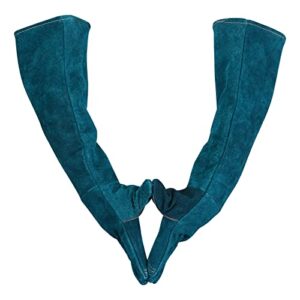
Top-grain cowhide runs the full 23.6 inches here, with a 13.5-inch sleeve guarding your forearm and double-reinforced palms on both sides. Cotton lining adds comfort during long grooming or garden sessions.
Fit runs large for some hands, and dexterity takes a back seat to bulk. Fine for cats, dogs, and general wildlife handling.
For venomous species, though, don’t rely on it. No manufacturer claim or independent lab test backs fang-level protection here.
| Best For | Pet owners, groomers, and rescue workers who need heavy-duty protection from bites and scratches during routine animal handling. |
|---|---|
| Material | Top-grain cowhide |
| Length | 23.6 in |
| Reinforcement | Double palms |
| Lining | Cotton |
| Dexterity | Low |
| Best Use | Pet grooming |
| Additional Features |
|
- Full-length top-grain leather construction with double-reinforced palms for serious bite and scratch protection
- 13.5-inch extended sleeve shields the forearm, and the leather resists heat, punctures, and cuts
- Cotton lining adds comfort during longer grooming or handling sessions
- Bulky design sacrifices dexterity, so it’s not ideal for precision tasks
- Sizing runs large for some users, and the leather can feel stiff
- Inner lining may wear out or pull loose with repeated use
8. Bite Proof Animal Handling Gloves
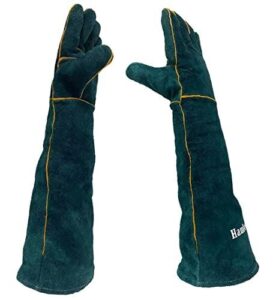
Denim under leather sounds like overkill, until you see the numbers. Lab testing on rattlesnake strikes found that adding denim layers cut venom delivery by 60 to 66 percent, even when fangs punctured the outer material. That’s the logic behind this glove’s build: cowhide exterior, Kevlar-reinforced palms, and cotton padding stacked for real-world bite resistance.
Coverage runs 23.7 inches, stretching well past your wrist to guard the forearm. Palm width sits at 5.7 inches, roomy enough for most hands without sacrificing grip. The cotton lining keeps things comfortable during longer handling sessions, and yes, it’s hand wash only.
Veterinarians, animal control workers, and zoo staff tend to reach for this one when working with small to medium aggressive animals. Just don’t mistake "bite resistant" for bite-proof. No glove, this one included, guarantees full protection once large venomous species are in play.
| Best For | These gloves are best for veterinarians, shelter workers, and pet owners who need extra protection while handling feral or aggressive cats during vet visits or socializing sessions. |
|---|---|
| Material | Cowhide leather |
| Length | 23.7 in |
| Reinforcement | Kevlar palms |
| Lining | Cotton |
| Dexterity | Moderate |
| Best Use | Vet/animal control |
| Additional Features |
|
- Thick leather construction offers solid bite and scratch resistance
- Pliable finger design keeps enough dexterity for confident animal handling
- Large sizing gives plenty of room for arm movement during transport or restraint
- Fingers can run large, causing the gloves to slip down the arm during use
- Durability is inconsistent, with some users reporting failure after just two uses
- Not suitable for dogs or animals capable of serious, forceful bites
9. Schwer Cut Resistant Work Gloves
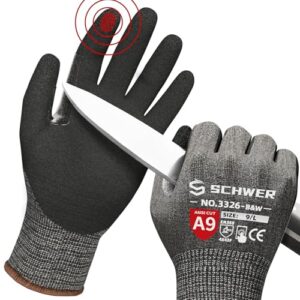
A cut-resistant glove isn’t built with fangs in mind, but the Schwer design still earns its spot on this list. You get HPPE-polyester-spandex construction rated ANSI A9, plus sandy nitrile coating for grip in wet or greasy conditions.
Here’s the catch: cut resistance and puncture resistance aren’t the same thing. These gloves won’t stop a direct strike. Use them for clearing brush or debris near snake habitat, where thorns and sharp edges pose the bigger threat.
| Best For | Gardeners, wood carvers, and workers in automotive repair, metal fabrication, or glass manufacturing who need reliable grip and cut protection in wet or greasy conditions. |
|---|---|
| Material | HPPE polyester spandex |
| Length | N/A |
| Reinforcement | ANSI A9 rating |
| Lining | Breathable knit |
| Dexterity | High |
| Best Use | Brush clearing |
| Additional Features |
|
- ANSI A9 cut resistance rating backed by durable HPPE polyester spandex metal wire construction
- Sandy nitrile coating improves grip and abrasion resistance, even in wet or greasy environments
- Breathable 13-gauge knit design allows for touchscreen use without removing the gloves
- Some users report the gloves ripping or wearing out quickly in heavy-duty tasks
- Not recommended for temperatures below 40°F, as warmth and flexibility drop off
- Puncture resistance is inconsistent, despite the strong cut resistance rating
10. Moutclmb Animal Handling Gloves
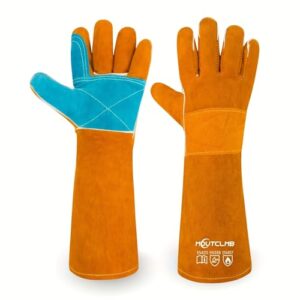
Rounding out this list, the Moutclmb gloves take a different approach. Built for pet grooming and vet work, they use double-layered cowhide leather stretching 17.7 inches up your forearm. Cat scratches, dog nips, nervous bird bites, this is the glove’s home turf.
Here’s the problem. You won’t find an ANSI or EN 388 puncture rating anywhere on this product. That absence matters more than it sounds. A fang isn’t a claw, and thick leather that stops a scratch can still let venom through with enough force behind the strike.
Some buyers also report sizing issues, with the fit running too large for precise grip work. That bulk costs you dexterity exactly when you need steady hands, like administering eye drops or handling a syringe.
Keep these in your grooming kit. Just don’t reach for them if you’re clearing brush or moving firewood in snake country.
| Best For | Pet owners, groomers, and vet techs who need bite and scratch protection while giving eye drops, medications, or handling nervous cats, dogs, birds, and reptiles. |
|---|---|
| Material | Double leather |
| Length | 17.7 in |
| Reinforcement | Double padding |
| Lining | Not specified |
| Dexterity | Low |
| Best Use | Pet medication |
| Additional Features |
|
- Double-layered cowhide leather guards against bites and scratches
- 17.7-inch length shields a large portion of the forearm
- Flexible enough to still grip leashes or carriers while wearing them
- No ANSI or EN 388 puncture rating listed for this product
- Runs large for some users, cutting down on precise grip
- Bulkier fit makes fine tasks like handling droppers or syringes harder
How to Choose Snake Bite Protection Gloves

Not all gloves protect the same way. Material, fit, and coverage all decide whether fangs stop or get through. Here’s what to check before you buy.
Leather, Kevlar, and SuperFabric
Not all glove materials guard your hands the same way.
Leather gives you natural abrasion resistance and flexes as it wears in.
Kevlar adds cut and puncture resistance without bulk.
SuperFabric embeds tiny armored plates for serious bite resistance while keeping fingers nimble.
Combined in layers, they build gloves tough enough for snake country.
ANSI Puncture Resistance Ratings
Numbers cut through marketing claims fast. Look for ANSI ISEA 105 labels showing puncture level, tested with a blunt stylus, not a needle. Level 5 resists at least 150 N of force.
Kevlar-reinforced blends often score higher than plain leather. The 2024 standard update clarified pictograms, so check which version your gloves cite.
Gauntlet Length and Wrist Coverage
Puncture ratings mean little if a snake strikes above the glove. That’s why gauntlet length matters just as much. Cuffs run 4 to 9 inches, and extra-long styles protect your forearm when kneeling near brush.
Look for wrist coverage that meets your sleeve, secured by velcro or zippers. Adjustable cuffs seal gaps without sacrificing too much movement.
Secure Fit Without Lost Dexterity
A good cuff means nothing if the glove fights your hand. Snug finger flexibility keeps you fast and precise. Look for 4-way stretch panels at the joints, letting fingers bend 60 degrees freely.
This preserves grip strength, tactile sensitivity, and wrist mobility, closing the classic dexterity tradeoff between hand protection and fine motor control when using snake bite proof gloves.
Damage Inspection and Replacement
Before every session, run your hands over seams, palms, and cuffs. Check high-flex points for fraying, thinning fabric, or peeling coating. Any puncture, nick, or seam gap means retirement, no exceptions.
Contaminated with venom or fluids? Remove it from service. Replace gloves that shrink, loosen, or stay stiff after cleaning. Track age, follow manufacturer service life, and trust your inspection over convenience.
Snake Bite First Aid for Hands
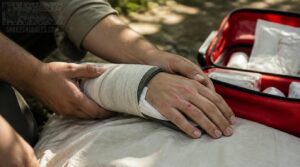
A snake bite on the hand turns minutes into a countdown. What you do first can protect fingers, nerves, and function for years to come. Here’s exactly how to respond, step by step.
Call Emergency Services Immediately
Fangs in your hand mean the clock is running. Call first, every time, even if the bite looks minor.
- When to call: immediately, no waiting to "see how it feels"
- What to say: location, what bit you, your condition
- Stay on phone: don’t hang up until told to
This isn’t optional first aid. It’s your emergency action plan.
Remove Rings and Tight Items
That watch on your wrist is now a threat. Get rings, watches, and bracelets off the bitten hand fast, before swelling locks them in place.
Work quickly but stay calm. Slide items off with steady motion, don’t tug or twist. Waiting even a few minutes can mean cutting jewelry off later, or worse.
Keep The Bitten Hand Still
Every wiggle of your fingers pumps venom closer to your heart. Movement avoidance matters as much as any bandage.
- Rest the hand below heart level, palm down
- Splint wrist to elbow with a stick or cardboard
- Wrap firmly with elastic bandage, fingers to shoulder
Stay still for ten minutes minimum. Immobilization slows venom spread through your lymphatic system, buying precious time before help arrives.
Avoid Cutting, Suction, and Tourniquets
Grab a knife or suction kit and you’ll do more harm than the bite itself. Cutting severs nerves and invites infection. Suction pulls out less than 0.04% of venom, doing nothing but damaging tissue. Tourniquets trap venom, killing muscle within an hour.
These are first aid myths. Current medical guidelines call them harmful practices. Trust immobilization and snake bite proof gloves for real hand protection instead.
Prepare a Snakebite Emergency Plan
A snakebite plan beats panic every time. Save emergency contact numbers before you head out, and know your evacuation route in advance.
Pack a first aid kit, assign response team roles, and set a communication plan.
Since bite rates spike in summer, review antivenom access at nearby hospitals.
Your emergency action plan is what saves the hand.
Frequently Asked Questions (FAQs)
Are there gloves that snakes can’t bite through?
No glove guarantees full protection.
Kevlar-reinforced animal handling gloves with high puncture resistance ratings and thick leather layers stop most fangs.
Real-world bite testing shows tapered fingers and gauntlet coverage cut penetration risk a lot, though dexterity trade-offs remain.
Will rubber boots stop a rattlesnake bite?
Not always. Boot fit and coverage matter as much as material: thin rubber can fail under a direct strike, while thicker, snug-fitting boots resist fang penetration better than loose, standard-issue rubber work boots.
Do they make snake bite proof gloves?
Bite-proof" oversells it. Manufacturers do build Kevlar-reinforced animal handling gloves with heavy leather layering, tested for puncture resistance under ANSI standards. They lower risk a lot but can’t guarantee zero fang penetration, so treat them as one safety layer, not a shield.
Can copperheads bite through leather gloves?
Yes. Copperhead fangs (1 to 2 mm) can pierce thin standard leather, especially at seams or under strong strike force. A leather thickness test matters: heavy-duty hides resist punctures far better than soft, worn, or degraded material.
What gloves will thorns not go through?
Thorns are nature’s fishhooks, grabbing at anything soft. Full grain cowhide and Kevlar-reinforced blends stop them cold. Check for ANSI Level 2 puncture ratings, layered defense that still lets your fingers work.
How often should protective gloves be replaced?
No fixed schedule exists. Inspect gloves before every use, checking seams, palms, and fingertips. Replace immediately after fang punctures, tears, or any loss of puncture resistance. Discoloration, stiffness, or thinning material also signal it’s time for a fresh pair.
Do snake bite proof gloves work underwater?
Underwater performance stays uncertain. Water pressure glove fit changes, seals can loosen, and submerged puncture resistance hasn’t been formally rated.
Waterlogged leather softens, and underwater dexterity loss makes precise handling riskier, so treat aquatic bite resistance as unproven, not guaranteed.
Are there seasonal patterns for hand snake bites?
Peak bite months run April through October, with summer alone driving over half of yearly cases. Warmer temperatures trigger snake foraging and defensive strikes, especially near woodpiles, trails, and gardens during peak human activity.
Can gloves protect against all venomous snake species?
No glove guarantees full protection against venomous snakebites. Fang penetration force varies by species, and coverage gaps or worn puncture resistance ratings let large rattlesnakes or gaboon vipers strike through even top-rated snake bite proof gloves.
Can snake bite gloves be washed or machine-dried?
Toss them in the wash? Not so fast. Most leather snake bite gloves need hand washing only. Machine drying melts protective layers, so air dry away from heat to preserve material durability and grip.
Conclusion
Test this claim yourself: most snakebites happen not from bad luck, but from bad habits. Reach without looking once, and the odds catch up fast.
Protecting your hands from snake bites isn’t about fear. It’s about discipline, the kind that becomes automatic. Scan first. Use your tools. Keep your fingers where you can see them.
Snakes don’t hunt you. They defend themselves when you leave no room to retreat. Give them that room, and your hands stay yours.
- https://snakeprofessional.com/products/venom-defender-snake-gloves
- https://www.rapicca.com/products/rapicca-animal-handling-gloves-bite-proof-kevlar-reinforced-leather-padding-dog-cat-scratch-bird-handling-falcon-gloves-grabbing-reptile-squirrel-snake-bite-22in
- https://pmc.ncbi.nlm.nih.gov/articles/PMC11020954