
This site is supported by our readers. We may earn a commission, at no cost to you, if you purchase through links.

Your ball python strikes at the thawed mouse, then recoils. You watch, confused, as your snake refuses the meal you carefully prepared. The rodent feels room temperature on the outside, but inside, ice crystals still cling to muscle tissue—a texture your snake instincts to reject.
Improper thawing doesn’t just waste food; it triggers regurgitation, digestive stress, and bacterial blooms that compromise your snake’s health over time. The temperature gradient between a frozen core and lukewarm exterior creates the perfect environment for pathogens to multiply rapidly, while uneven thawing strips away the nutrients your reptile needs.
Getting this process right means understanding exactly how heat moves through tissue, which methods preserve nutritional integrity, and why shortcuts with microwaves or hot water create more problems than they solve.
Table Of Contents
Key Takeaways
- Improper thawing creates dangerous temperature gradients that trigger bacterial multiplication, nutrient loss, and feeding refusal—your snake’s thermal sensors detect frozen cores even when the outside feels warm.
- Refrigerator thawing at 4°C for 4-6 hours or lukewarm water baths between 90-110°F are the only safe methods—microwaves and hot water create internal hotspots that burn your snake’s mouth and accelerate pathogen growth.
- Never refreeze partially thawed rodents because each freeze-thaw cycle spikes bacterial contamination and destroys protein integrity, making the prey dangerous and nutritionally worthless for your snake.
- Thawed prey must reach 38-40°C internally before feeding and can’t sit out longer than two hours at room temperature—beyond that window, bacterial growth turns the rodent into a health hazard.
Why Proper Thawing of Rodents Matters
Thawing a frozen rodent might seem simple, but how you do it directly affects your snake’s health and whether it’ll even eat. Get it wrong, and you’re looking at regurgitation, refusal to feed, or worse—digestive problems that linger for weeks.
Here’s what happens when thawing goes sideways, why doing it right protects your snake, and the feeding issues you’ll avoid with proper technique.
Risks of Improperly Thawed Prey
Impatience during the thawing process isn’t just inconvenient—it’s dangerous. When you rush or mishandle frozen rodents, you’re opening the door to bacterial growth and foodborne pathogens that threaten snake health and your own. Prey spoilage, nutrient degradation, and digestive issues follow poor thawing like clockwork. Proper handling is essential to avoid methodological flaws in the thawing process.
- Freezer burn compromises tissue quality before you even start thawing
- Uneven temperatures create hot spots where microbes multiply rapidly
- Repeated freeze-thaw cycles accelerate spoilage and strip nutritional value
Benefits for Snake Health and Digestion
When you thaw prey correctly, you’re preserving gut-friendly microflora that keeps your snake’s digestive health on track. Proper temperature control boosts enzyme activity during digestion, reducing feeding stress and preventing regurgitation.
Following proper snake food thawing techniques ensures your prey reaches the ideal internal temperature without creating bacterial hotspots that could harm your snake.
Fully thawed rodents offer consistent texture, minimizing digestive issues while maintaining nutrient preservation. That’s the difference between a meal your snake tolerates and one that truly enhances reptile nutrition and diet.
Understanding language patterns can also help you research and learn more about animal care and nutrition.
Common Feeding Issues From Poor Thawing
When your snake turns its head away from prey, poor thawing is often the culprit. Feeding refusal spikes when frozen rodents stay cold internally—your snake’s thermal sensors detect the mismatch, and digestive issues follow if it eats anyway. Regurgitation risks climb with partially frozen cores, triggering snake stress and nutrient loss.
If your snake consistently refuses meals despite proper thawing, check whether oversized prey is triggering defensive avoidance instead of hunger.
Poor thawing leaves prey cold inside, triggering your snake’s refusal, regurgitation, and stress before digestion even begins
The thawing process determines whether your snake feeding becomes routine or frustrating guesswork.
Thaw rodents in the fridge overnight or in warm water for faster results, especially if you’re transitioning from live prey to frozen alternatives.
Choosing and Storing Frozen Rodents
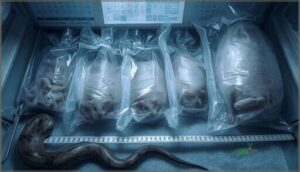
Getting the right rodents and keeping them fresh isn’t complicated, but a few smart choices up front will save you headaches down the road. You need to match prey size to your snake’s body, store everything properly to avoid freezer burn, and understand how long frozen rodents stay good.
If you’re new to feeding schedules and portion sizes, this guide to boa constrictor care covers the essentials that apply to most pet snakes.
Let’s break down each step so you can stock your freezer with confidence and keep your snake eating consistently.
Selecting The Right Size for Your Snake
Getting prey proportions wrong invites regurgitation, stress, and even injury to your snake.
For solid snake feeding techniques and prey selection, aim for frozen rodents that match 10-15% of your snake’s girth at the widest point—use feeding charts as your baseline, then adjust rodent size and snake sizing decisions as growth monitoring reveals changes during the thawing process and beyond.
Safe Storage Practices to Prevent Freezer Burn
Once your freezer temperature drops below -18°C and stays there, you’ll slash freezer burn risk by half. Use vacuum-sealed storage containers or double-wrap frozen rodents in moisture-barrier packaging materials, label each batch with dates, and rotate stock first-in first-out.
Proper humidity management and packaging protect nutritional value before refrigerator thawing or cold water thawing ever begins, keeping your snake feeding techniques on point.
Shelf Life and Quality Considerations
Quality matters more than longevity for frozen rodents. You’ll see the best nutrient preservation and animal nutrition if you use prey within three to six months—vacuum-sealed packaging extends that window.
Beyond that timeframe, freezer management becomes critical because vitamin content drops roughly fifteen percent, affecting snake feeding and nutrition. Temperature swings degrade quality faster than age alone, so stable conditions beat long storage every time.
Step-by-Step Thawing Methods for Rodents
You’ve got your frozen rodent, and now it’s time to bring it back to a temperature your snake will actually recognize as food.
The method you choose depends on the rodent’s size, how much time you have, and what equipment you’ve got on hand.
Let’s walk through the safest approaches that protect both your snake’s health and the rodent’s nutritional value.
Thawing With Room Temperature and Refrigeration
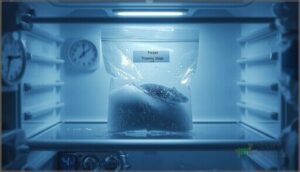
You’ve heard the advice to thaw overnight, but here’s the truth: refrigeration at 4°C (40°F) is your safest bet for frozen mice and snake food. This method prevents bacterial explosion while ensuring even thawing.
- Place frozen storage rodents in sealed bags to contain thawing fluids
- Set your refrigerator thawing timer for 4–6 hours, or overnight for larger prey
- Check that rodents feel soft throughout before any temperature control adjustments
- Never refreeze uneaten prey—thawing safety means one cycle only
Room temperature works if you’re feeding within hours, not days.
Using Lukewarm Water Safely
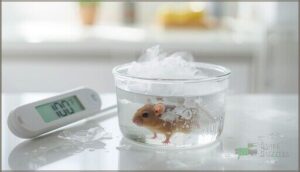
Lukewarm water between 90 and 110°F speeds up thawing frozen mice without cooking them—that’s the sweet spot. Submerge your snake food in a clean container, changing the lukewarm baths every 5 to 10 minutes to keep water temperature consistent and knock down bacterial risks. Never use hot water or sealed bags that trap heat and create uneven thawing nightmares.
Thawing Larger Rodents Vs. Smaller Rodents

Small rodents like frozen mice thaw fast in warm water—about an hour, done—but larger rats demand patience and a two-stage strategy. Here’s why rodent size changes everything about thawing techniques and safety precautions:
- Small mice go straight from freezer to lukewarm water, thawing evenly in 35–40 minutes without temperature control nightmares.
- Medium to large rats need overnight refrigerator thawing first, then warm water, preventing that cooked-outside-frozen-inside disaster.
- Thawing times stretch to several hours for jumbo rats—rushing creates cold spots that mess with your snake’s digestion.
- Cold water thawing works for safety-conscious keepers managing bacterial growth during longer thaws.
Methods to Avoid (Microwaving, Hot Water)

Microwaves create thermal injury hotspots that burn your snake’s mouth even when frozen mice feel barely warm outside—internal organs superheat while outer tissue stays cold. Hot water dangers include rampant bacterial growth in that 41–135°F danger zone, doubling pathogens every twenty minutes.
Both methods cause nutrient loss through protein breakdown and fat oxidation, wrecking the prey quality your snake deserves.
Stick with cold water thawing or controlled warm water instead.
Safe Handling and Feeding Preparation
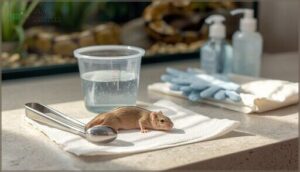
You’ve thawed the rodent properly, but the work isn’t done yet. How you handle that prey item and present it to your snake can make the difference between a clean feeding response and a frustrating refusal.
Let’s cover the essential steps to keep things safe, sanitary, and successful from thaw to strike.
Preventing Contamination During Thawing
During thawing, cross-contamination becomes your biggest enemy—pathogens from frozen mice can spread faster than you’d think. Clean handling and sanitary utensils aren’t optional; they’re your first line of defense against airborne pathogens and storage hygiene disasters.
- Use dedicated containers and tools cleaned with hot, soapy water before every thawing session, whether you’re using warm water, cold water thawing, or refrigerator thawing methods.
- Keep thawing prey covered and isolated from human food prep areas to block airborne pathogens and prevent surface contact.
- Wash hands thoroughly before and after handling thawed rodents, inspecting for off odors or discoloration that signal contamination.
Presenting The Rodent to Encourage Feeding
Once your prey item is clean and ready, your feeding setup becomes the stage for snake stimulation. Grip the rodent by the scruff, head angled away from your snake, to trigger that hardwired feeding response—moving it gently mimics live prey. Avoid stiff, lifeless handling methods; snakes read vitality through motion.
Keep your feeding environments calm, visibility high, and distractions low to boost your snake feeding success.
Monitoring Temperature Before Offering Prey
Before you present that prey, grab a digital thermometer and verify the surface sits between 38 and 40 degrees Celsius—this sweet spot minimizes bacterial bloom and thermal shock.
Here’s your thermal safety checklist:
- Scan the rodent’s body with an infrared thermometer for instant readings
- Compare with a second device to confirm accuracy
- Document temperature alongside each feeding session
Prey warmer than 40°C risks mouth burns; colder than 38°C triggers refusal.
Maintaining Nutritional Quality During Thawing

You’ve done the hard work of thawing that rodent safely, but here’s something most snake keepers overlook: the nutritional value can drop faster than you think if you’re not careful. Every time you freeze and thaw prey, you’re gambling with vitamins, proteins, and minerals your snake needs to stay healthy.
Let’s talk about how to keep that rodent as nutritious as possible, from freezer to feeding time.
Preserving Protein, Vitamins, and Minerals
Your snake’s meal doesn’t lose much during proper freezing—frozen mice retain around 17–22 percent crude protein and most minerals stay stable.
But here’s the catch: slow, uncontrolled thawing accelerates protein denaturation and vitamin retention drops, especially fat-soluble vitamins like A and E.
Thaw under refrigeration in sealed packaging to preserve nutrient preservation and mineral bioavailability, protecting against freeze damage that undermines animal nutrition in reptile care.
Minimizing Freeze-Thaw Cycles
Every time you refreeze thawed frozen mice, you spike lipid oxidation and wreck texture—studies on beef show measurable rancidity jumps with each cycle. Proper freezer management means portioning prey before storage and using temperature control to avoid door-side warming.
Thaw only what you need for one snake feeding session. Refreezing risks bacterial growth and destroys the nutritional integrity your reptile care depends on for ideal animal nutrition.
Timing Feeding to Reduce Stress in Snakes
Often, your snake won’t eat if you’re randomly tossing prey into the enclosure at odd hours. Feeding schedules aligned with natural reptile behavior—evening for nocturnal species—trigger cleaner strikes and reduce stress.
Predictable routines around snake feeding improve animal behavior, minimize refusals, and support better reptile care. Environmental cues like stable lighting reinforce feeding techniques.
Skip handling 24 hours before meals to avoid stress reduction setbacks.
Frequently Asked Questions (FAQs)
Can you refreeze a partially thawed rodent?
Hitting pause on a half-frozen mouse might seem logical, but refreezing carries hidden Reptile Care landmines.
Bacterial growth explodes in that danger zone, compromising Rodent Quality and Freeze Thaw Safety for your snake’s next meal.
How do you thaw multiple rodents at once?
You can batch thaw frozen mice by placing them in sealed bags in the refrigerator overnight or submerging them in cool water for an hour, then finishing with warm water to raise the temperature before snake feeding.
What if my snake refuses thawed prey completely?
First, don’t panic—snakes fast for months without harm.
Check your feeding environment first: insufficient heat, poor hiding spots, or bright lighting often trigger refusal before you consider prey presentation tweaks or veterinary evaluation.
Should the rodent be wet or dry when offered?
You want the rodent mostly dry but fully thawed inside. Pat off excess water after warming—too much surface moisture increases aspiration risk factors and substrate ingestion, while affecting prey surface texture and your snake feeding response.
How long can a thawed rodent sit out safely?
Once a rodent is thawed, you’ve got about two hours at room temperature before bacterial growth turns it into a health risk. After that window, toss it—your snake’s safety isn’t worth gambling on spoilage.
Conclusion
There’s no shortcut worth taking when your snake’s health hangs in the balance. Thawing frozen rodents for snakes the right way—slowly, safely, without temperature extremes—keeps your reptile thriving while eliminating the guesswork that leads to rejected meals and digestive trouble.
You’ve learned the methods that preserve nutrients, prevent bacterial growth, and encourage confident strikes. Now you control the outcome, one properly thawed meal at a time, with nothing left to chance.
- https://www.journals.uchicago.edu/doi/10.1086/physzool.52.3.30155760
- https://azeah.com/reptiles-amphibians-snakes/benefits-feeding-frozenthawed-rodents-snakes
- https://community.morphmarket.com/t/frozen-thawed-feeding-issues/42135
- https://www.biorxiv.org/content/10.1101/2023.04.05.535800v1.full-text
- https://rodentpro.com/informationcenter/resources/feeding-frozen-thawed-prey-items-to-snakes-in-captivity