This site is supported by our readers. We may earn a commission, at no cost to you, if you purchase through links.
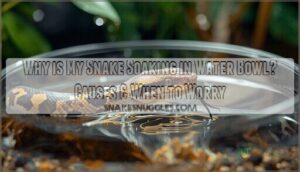
You find your ball python coiled in its water bowl—again. While occasional soaking is perfectly normal snake behavior, persistent immersion often signals something needs your attention. Snakes don’t lounge in water for entertainment; they’re responding to specific physiological needs or environmental stressors.
The behavior usually points to shedding difficulties, improper enclosure temperatures, inadequate humidity levels, or underlying health concerns like mites and respiratory infections. Understanding the difference between routine soaking and excessive water bowl time requires examining your snake’s overall condition alongside its habitat parameters.
Most soaking issues resolve quickly with simple environmental adjustments, but recognizing when the behavior indicates veterinary-level problems can prevent serious complications.
Table Of Contents
- Key Takeaways
- Why Snakes Soak in Water Bowls
- How Soaking Helps During Shedding
- Temperature and Humidity Issues Causing Soaking
- Health Problems That Trigger Excessive Soaking
- Proper Snake Water Bowl Setup
- When to Worry About Soaking Behavior
- Frequently Asked Questions (FAQs)
- Why is my snake soaking in water?
- Why does my snake stay in his water bowl?
- How long should you let a snake soak in water?
- Can soaking indicate pregnancy or egg-laying preparation?
- Do different snake species have varying soaking preferences?
- How does water quality affect soaking behavior?
- Can snakes drown from soaking too long?
- Does seasonal change influence how often snakes soak?
- Conclusion
Key Takeaways
- Persistent soaking typically signals shedding difficulties, improper temperature gradients, inadequate humidity (below 50-60%), or health problems like mites and respiratory infections rather than normal behavior.
- Most soaking issues resolve through environmental corrections—verify your basking spot maintains 85-90°F, cool side stays at 70-75°F, and humidity reaches species-appropriate levels before assuming illness.
- Extended water bowl immersion paired with labored breathing, skin lesions, bloody discharge, or tremors demands immediate veterinary consultation rather than continued home adjustments.
- Your snake uses soaking as a compensatory mechanism for enclosure problems it can’t otherwise escape—the bowl becomes a refuge when proper thermal gradients, humidity zones, or hiding spots fail.
Why Snakes Soak in Water Bowls
Snakes soak in their water bowls for several distinct physiological reasons, and understanding these causes helps you distinguish normal behavior from potential health concerns.
For guidance on selecting the right bowl size to support healthy hydration and reduce stress-related soaking, check out whether corn snakes need large water bowls.
Water immersion fulfills critical functions beyond simple hydration—it’s a behavioral tool your snake uses to manage its environment and physical needs. Let’s examine the four primary reasons snakes seek out their water bowls.
Shedding Assistance
Soaking helps your snake shed more effectively by softening old skin and promoting hydration. When your snake immerses itself before or during the shedding process, water loosens the outer layer, making removal easier and reducing the risk of retained patches—especially around delicate areas like eyes and tail tips.
How soaking aids snake shedding:
- Moisture absorption through skin hydration allows water to penetrate scales, increasing skin elasticity during the shedding process.
- Loosening old skin occurs as humidity levels around your snake’s body rise, separating the worn layer from new tissue beneath.
- Preventing retained shed on toes, tail, and eye caps becomes easier when your snake has access to soaking opportunities.
- Supporting hydration during pre-shed periods when many snakes reduce feeding and require additional moisture intake through their water bowl.
- Facilitating normal snake behavior as immersion mimics natural conditions reptiles seek when preparing to shed in the wild.
Temperature Regulation
Beyond shedding, your snake uses water for temperature regulation—a critical ectothermic survival strategy. When environmental temperature climbs too high, immersion facilitates rapid heat dissipation through conduction and evaporative cooling, helping maintain thermal balance and prevent hyperthermia.
| Cooling Method | Mechanism | Effectiveness |
|---|---|---|
| Conduction | Direct heat transfer to cooler water | High for rapid cooling |
| Evaporation | Surface moisture loss after soaking | Moderate for sustained relief |
| Behavioral thermoregulation | Seeking water when thermal gradients fail | Critical for ectothermic regulation |
| Vasodilation response | Increased blood flow to skin during immersion | Aids heat dissipation |
| Metabolic adjustment | Reduced activity while cooling | Prevents additional heat production.” |
Thermoregulatory adaptations like soaking indicate your snake’s instinct to counteract overheating when basking spots or ambient conditions push beyond its comfort zone.
Hydration and Moisture Absorption
While thermoregulation drives many soaking episodes, your snake also relies on water balance for hydration.
Cutaneous absorption—moisture uptake through skin—complements oral drinking, especially during shedding when epidermal layers swell with water. This cutaneous drinking doesn’t replace a water bowl, but it aids skin hydration and moisture regulation through evaporative dynamics that maintain physiological function when environmental humidity falls short.
The outermost layer of skin, known as the stratum corneum, plays a vital role in barrier function and water loss.
Stress Relief and Comfort
Water caters to more than physical needs—it offers psychological refuge. When your snake feels exposed or chronically stressed by handling or bright lights, the bowl’s curved walls create a secure microenvironment that mimics a proper hide.
- Environmental Comfort: Bowl walls provide enclosure when hides are too large or missing
- Sensory Stimulation: Water pressure and buoyancy deliver gentle, calming tactile input
- Stress Reduction: Soaking becomes a coping behavior during cage transitions or persistent noise
- Comfort Habits: Repeated soaking at specific times signals routine rather than distress
Snakes may also seek relief from, which can lead to soaking behavior as they try to stay hydrated and support healthy shedding.
Maintaining proper ball python water requirements helps prevent dehydration and ensures they have enough moisture to shed their skin completely.
How Soaking Helps During Shedding
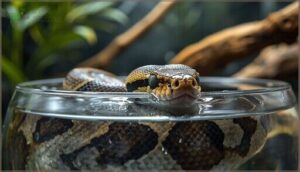
Shedding isn’t just uncomfortable for your snake—it’s a complex process that requires adequate moisture to succeed. When you see your snake spending extra time in its water bowl before a shed, it’s engaging in a natural behavior that directly aids skin removal and hydration.
Understanding how soaking promotes this process helps you distinguish normal pre-shed activity from potential health concerns.
Loosening Old Skin
When your snake settles into its bowl, warm water begins softening the outermost layer, separating worn scales from fresh tissue beneath. This moisture absorption aids the shedding process by reducing friction and preventing tears during old skin removal.
Scale loosening happens gradually—sometimes over several hours—as hydration penetrates surface layers, making slippage easier and protecting your snake’s skin health throughout the entire snake shedding process.
Cutaneous Water Absorption
Your snake’s skin actually absorbs moisture during soaking—a process called cutaneous drinking. The epidermal barrier permits limited water permeation through specialized scales, particularly around the jaw and cloaca, supporting skin hydration during the shed cycle.
While this cutaneous absorption doesn’t replace drinking from the water bowl, it aids moisture regulation and helps meet reptile hydration needs when soaking behavior increases naturally.
Normal Pre-Shed Behavior
Most snakes increase soaking behavior during the shed cycle—usually as eyes cloud and the body dulls. This pre shed care phase involves brief water immersion over a few hours, supporting skin flexibility and moisture levels.
You’ll observe reduced feeding and decreased activity. Adequate snake hydration and stable temperature help guarantee normal shedding, while proper soaking aids natural skin loosening without stress.
Signs Your Snake is About to Shed
Spotting pre shed signs early helps you prepare the right snake care adjustments. Your snake’s body sends clear shedding cues as skin preparation begins—watch for these critical indicators:
- Cloudy, milky-blue eyes lasting 5 to 14 days before the shedding process starts
- Dull, faded body color with matte scales showing reduced vibrancy
- Decreased appetite and activity as your snake conserves energy
Proper hydration and stable temperature support healthy skin health throughout this period.
Temperature and Humidity Issues Causing Soaking
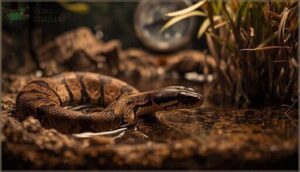
Your snake’s environment plays a critical role in whether it seeks out its water bowl for extended periods.
When enclosure conditions miss the mark—whether too hot, too dry, or poorly configured—soaking becomes a compensatory behavior.
Let’s examine the specific temperature and humidity problems that drive this response.
Overheating and Cooling Behavior
When your enclosure runs too hot, soaking becomes a critical cooling mechanism. Excess heat drives snakes to water bowls for evaporative cooling and conduction—they’re using environmental thermoregulation to maintain temperature homeostasis. Heat stress triggers this behavioral shift. If you notice frequent immersion paired with lethargy or rapid breathing, your thermal balance is off and your gradient needs immediate adjustment.
| Temperature Issue | Soaking Behavior | What to Check |
|---|---|---|
| Basking spot too hot | Extended water bowl sessions | Probe thermometer readings at heat source |
| No cool retreat zone | Prolonged soaking even at night | Temperature gradient from warm to cool end |
| Ambient heat too high | Increased frequency of immersion | Room temperature and enclosure ventilation |
| Poor ventilation | Soaking combined with mouth breathing | Air circulation and vent placement |
| Inadequate gradient | Constant water bowl presence | Thermostat function and heat element placement |
Low Humidity Levels
Dry air makes your snake compensate by sitting in its water bowl—humidity control isn’t optional. When ambient levels drop below 40 to 60 percent, you’ll see behavioral shifts aimed at water absorption and preventing dehydration risks.
- Corn snakes need 65 to 75 percent humidity, not the outdated lower ranges
- Screen-top enclosures lose moisture fast, creating shedding issues
- Wrinkled skin and sunken eyes signal chronic dehydration from environmental factors
- Humid hides provide localized moisture without constant bowl immersion
Improper Enclosure Temperature Gradient
Beyond humidity, you need a proper temperature gradient—a warm side around 85 to 90 degrees Fahrenheit and a cool side in the mid-70s.
When heat spreads evenly across the enclosure, your snake loses its ability to thermoregulate and defaults to the water bowl as the only cooler refuge. Poor heat source management or small enclosures flatten that thermal balance, triggering compensatory soaking behavior.
Evaporative Cooling Process
When your snake sits in its water bowl, water evaporation pulls heat away from its body—the same principle behind cooling systems that rely on evaporative heat transfer.
As moisture leaves the bowl’s surface, it absorbs energy from both the water and your snake, lowering temperature through latent heat loss. Air flow across the wet scales amplifies this effect, helping restore thermal balance when overheating disrupts normal thermoregulation.
Health Problems That Trigger Excessive Soaking
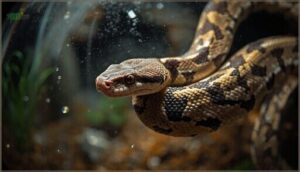
When your snake starts spending hours in its water bowl outside of shedding season, you’re often looking at a health problem that needs attention.
Excessive soaking acts as a red flag—your snake is trying to self-medicate or find relief from an underlying condition. Let’s examine the most common health issues that drive this behavior.
Snake Mites and Parasites
Ophionyssus natricis—tiny arachnids that haunt ventral scales and skin folds—drive infested snakes to soak persistently, seeking parasite relief through water immersion.
Your snake may rub frantically against surfaces between soaks. Mite infestation triggers this behavior because drowning disrupts the mite life cycle and provides temporary comfort.
Proper parasite prevention requires environmental treatment and strict snake hygiene, not just water access.
Skin Infections and Dermatitis
Bacterial infections, fungal issues, and viral lesions compromise your snake’s integument, prompting persistent water bowl immersion as the animal seeks skin irritation relief.
Staphylococcus or dermatophyte colonies beneath retained shed layers worsen during incomplete shedding cycles. Contact irritation from substrate chemicals or rough surfaces damages the epidermis further.
Soaking won’t cure dermatitis—you’ll need veterinary intervention addressing reptile health and wellness through proper diagnostics and targeted antimicrobial therapy.
Respiratory Issues
Watch for open-mouth breathing, wheezing, or mucus at the nostrils—all hallmarks of respiratory health decline and snake pneumonia. Breathing difficulties from airway infections or lung disease drive your snake toward its bowl, where humid air soaks into respiratory congestion-irritated passages.
Low humidity levels worsen these snake health issues by drying airways further. Persistent soaking paired with labored breathing demands immediate veterinary attention, as reptile thermoregulation alone won’t resolve infectious processes.
Dehydration Signs
Lethargy, sunken eyes, and skin that stays tented when gently pinched reveal dehydration symptoms compromising fluid balance in your snake.
Poor water intake leads to dull scales, sticky mouth lining, and reduced urination—clear hydration levels dropping below safe thresholds.
Excessive water bowl soaking attempts to restore skin health and correct the deficit, signaling urgent reptile care needs before dehydration jeopardizes critical snake health functions.
Proper Snake Water Bowl Setup
Getting your snake’s water bowl right isn’t complicated, but the details matter more than most owners realize. The right setup prevents many of the soaking issues we’ve just discussed—from mites to overheating.
Here’s what you need to know about bowl selection, placement, and maintenance to keep your snake healthy.
Choosing The Right Bowl Size
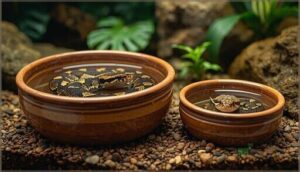
Your snake’s water bowl must accommodate full-body soaking without crowding your enclosure space. Bowl depth should equal one to two times your snake’s body height, allowing comfortable submersion while preventing accidental drowning.
Consider these sizing priorities:
- Bowl diameter matching your snake’s coiled body width for complete immersion
- Water capacity balanced against enclosure humidity needs for your species
- Bowl material heavy enough (ceramic or resin) to resist tipping during use
Monitor snake comfort and hydration closely when adjusting bowl dimensions.
Water Bowl Placement
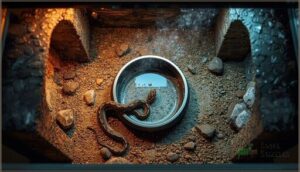
Position your water bowl where it fulfills three critical functions: Snake Access, Humidity Control, and temperature regulation. Place it between the warm and cool zones, never directly over heat sources, to prevent overheating while maintaining ideal Bowl Positioning for soaking.
This central Enclosure Layout ensures your snake reaches water easily from either hide, promotes reptile hydration, and allows Water Depth monitoring that directly impacts snake health and wellness.
Maintaining Clean Water
Fresh water isn’t optional—it’s the foundation of reptile hydration and temperature control. Inspect your water bowl daily, replacing it whenever you notice cloudiness, slime, or debris, because bacterial overgrowth accelerates in warm enclosures.
Follow this Water Quality checklist for ideal hydration and Humidity Control:
- Change water daily in warm weather
- Replace immediately after defecation or shedding
- Scrub bowls weekly during Bowl Sanitizing
- Use dechlorinated tap or spring water for safe water intake
Cleaning and Sanitizing Guidelines
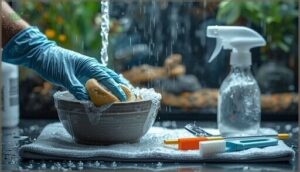
Biofilm harbors Salmonella, E. coli, and Candida—organisms that thrive when you skip proper Sanitizing Techniques. Scrub your snake’s water bowl with hot soapy water daily, then apply a reptile-safe disinfectant like 10 percent bleach solution or quaternary ammonium spray. Rinse thoroughly until no chemical odor remains.
Strict Biosecurity Measures demand dedicated tools per enclosure, preventing cross-contamination between animals and protecting both reptile hydration and temperature control from pathogen spread.
When to Worry About Soaking Behavior
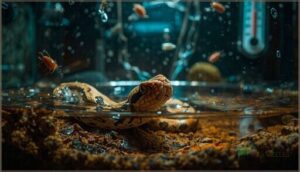
Soaking is normal snake behavior, but sometimes it signals a problem that needs your attention.
The key is knowing when occasional soaking crosses the line into something concerning. Let’s break down what’s normal, what’s not, and when you should reach out to a reptile vet.
Normal Vs. Excessive Soaking
Frequency matters when you’re evaluating soaking patterns and snake behavior. Normal water immersion lasts minutes to a few hours before your snake returns to its hide, whereas excessive soaking means constant time in the water bowl with immediate returns after leaving.
Healthy reptile hydration and thermal balance don’t require marathon sessions. Compare your snake’s current behavior to its long‑term baseline, not to other keepers’ animals, to spot true problems.
Warning Signs Requiring Veterinary Care
Veterinary care becomes urgent when respiratory distress signs are present, such as soaking coinciding with labored breathing, mouth discharge, or open-mouth gasping—classic emergency signs. Snake distress manifests as repeated vomiting, bloody diarrhea, or unexplained lethargy lasting beyond 48 hours.
Skin conditions with spreading redness, pus, or swelling demand immediate health monitoring. Don’t wait if your snake shows tremors, disorientation, or inability to right itself—these signal serious systemic problems requiring veterinary checks.
Monitoring Your Snake’s Health
Regular health checks form your first line of defense against serious illness. Weigh your snake monthly, track feeding responses, and log shedding intervals to establish a baseline for reptile health and wellness.
Inspect eyes, scales, and vent during routine handling—early detection of mites, lesions, or dehydration signs means simpler veterinary care. Consistent environmental monitoring paired with attention to animal hydration and snake hygiene transforms subtle changes into actionable data.
Environmental Adjustments to Try First
Before you schedule a veterinary appointment, adjust the enclosure itself. Most soaking problems resolve when you correct husbandry gaps—simple fixes often eliminate stress-driven water bowl visits within days.
Most soaking problems resolve when you correct enclosure conditions—simple husbandry fixes often eliminate stress-driven water bowl visits within days
- Humidity Control: Raise levels to 50–60 percent with a hygrometer and targeted misting.
- Temperature Gradients: Confirm your basking spot stays at 85–90°F, cool side at 70–75°F.
- Substrate Management: Switch to cypress mulch for moderate moisture retention.
- Lighting Adjustments: Maintain a consistent 12-hour day-night cycle.
- Enclosure Maintenance: Clean daily and monitor for persistent soaking behavior.
Frequently Asked Questions (FAQs)
Why is my snake soaking in water?
Your snake soaking in water is like hitting reset—it’s helping with shedding, cooling down from overheating, absorbing moisture for hydration, or seeking comfort.
Sometimes it signals environmental stress or health issues.
Why does my snake stay in his water bowl?
Your snake stays in his water bowl to regulate thermal balance, ease skin irritation, support hydration through water immersion, or find relaxation behavior—all normal reptile responses to environmental needs or shedding cycles.
How long should you let a snake soak in water?
You should limit soaking sessions to 15–30 minutes, monitoring water temperature closely.
Use a shallow bowl and never leave your snake unattended—dry it thoroughly afterward to prevent respiratory complications.
Can soaking indicate pregnancy or egg-laying preparation?
Soaking alone isn’t a reliable pregnancy sign or gravidity indicator in snakes.
Breeding behavior and egg formation rarely trigger water bowl activity; decreased appetite and restlessness are more consistent reproductive cues before egg laying.
Do different snake species have varying soaking preferences?
Yes, species hydration and water preferences differ dramatically. Semi-aquatic snakes like anacondas soak routinely, while desert species rarely do.
Ball pythons and boas show moderate soaking habits, usually tied to humidity needs or shedding cycles.
How does water quality affect soaking behavior?
Water chemistry directly influences soaking frequency and skin health. Clean, neutral-pH water minimizes irritation, while contaminants trigger prolonged hydration-seeking behavior.
Temperature stability in your water bowl promotes predictable reptile hydration patterns and temperature regulation.
Can snakes drown from soaking too long?
Healthy snakes rarely drown in shallow water bowls because they can lift their heads to breathe.
However, breathing difficulties, prolonged submersion time, or excessive water depth can lead to snake exhaustion and drowning risks.
Does seasonal change influence how often snakes soak?
Your snake’s calendar matters more than you’d think.
Seasonal soaking patterns shift dramatically with winter brumation, summer heat, and humidity swings—environmental cues that directly influence reptile hydration needs, shedding frequency, and temperature regulation year-round.
Conclusion
Your snake’s extended bath sessions aren’t cause for panic—they’re usually straightforward communication. Check humidity levels first, verify your temperature gradient, and inspect for mites or skin abnormalities.
Most cases of why your snake is soaking in water bowl resolve with simple habitat corrections. However, persistent immersion despite proper conditions, visible skin lesions, or labored breathing warrant immediate veterinary consultation. Trust your observations, adjust methodically, and remember: attentive husbandry prevents most complications before they escalate.
- https://thetyedyediguana.com/blog/stuck-shed-why-it-happens-and-how-to-safely-help-your-reptile
- https://www.zenhabitats.com/blogs/reptile-care-sheets-resources/why-is-my-pet-snake-soaking-in-their-water-dish-zen-habitats
- https://www.partridgepractices.co.uk/article/skin-shedding-in-snakes-everything-you-need-to-know-from-head-vet-darren-partridge
- https://www.justanswer.com/pet-reptile/maexc-stuck-shed-tip-snakes-tail.html
- https://pmc.ncbi.nlm.nih.gov/articles/PMC6517710