This site is supported by our readers. We may earn a commission, at no cost to you, if you purchase through links.

A snake enclosure can look perfect and still be failing. The glass fogs over by noon, the substrate smells faintly sour, and your ball python sits with its mouth slightly open.
Stale, damp air breeds mold and respiratory infections, while too much draft dries out a shedding snake until the skin tears in patches. Good ventilation for snake enclosure setups avoid both extremes, and the right balance changes with every species, from a humid tree boa habitat to a dry bearded dragon-style desert cage.
You’ll learn where to place vents, which materials last, and how to fix airflow problems before they cost you a healthy animal.
Table Of Contents
- Key Takeaways
- Match Snake Enclosure Ventilation to Species Needs
- Choose Secure Vents for Your Snake Enclosure
- Set Up Your Snake Enclosure’s Airflow
- Balance Snake Enclosure Airflow, Heat, and Humidity
- Troubleshoot and Maintain Snake Enclosure Ventilation
- Frequently Asked Questions (FAQs)
- How to ventilate a reptile enclosure?
- What are the best air vents for reptile enclosures?
- How much ventilation do snakes need?
- How hot is too hot for a snake enclosure?
- Can I use computer fans for snake enclosure ventilation?
- How often should ventilation holes be cleaned?
- Do bioactive enclosures need different ventilation approaches?
- Can over-ventilation harm my snakes health?
- How often should snake enclosure vents be cleaned?
- Can too much ventilation stress a snake?
- Conclusion
Key Takeaways
- Match your airflow to your snake’s origin, since tropical species like tree boas need restricted airflow to hold 60 to 80 percent humidity while arid species like corn snakes and kingsnakes need more air exchange.
- Choose secure, durable vents by using stainless-steel mesh with holes smaller than your snake’s thinnest body width, and place intake low on the cool side and exhaust high on the warm side.
- Treat airflow, heat, and humidity as one system by tracking them with digital probes, changing vents in small steps, and adding guarded fans only when passive airflow leaves condensation or musty air.
- Watch for warning signs like open-mouth breathing, mucus at the nostrils, mold, or stuck sheds, because too little airflow breeds infection while too much dries your snake out and causes shedding problems.
Match Snake Enclosure Ventilation to Species Needs

You’ll get the best results when your ventilation matches where your snake comes from, not just what’s convenient to buy. Tropical species like green tree pythons need restricted airflow so humidity stays between 60 and 80 percent, yet the air still can’t turn stagnant. Green tree pythons and emerald tree boas need high humidity without stagnant air, since poor airflow causes scale rot in tropical arboreal snakes.
Arid species such as corn snakes and kingsnakes need a higher air exchange rate to hold humidity near 30 to 50 percent. Keep drafts off the basking site, since they can chill your snake. A plug-in reptile humidity controller can help keep levels within that 30 to 50 percent range by switching a humidifier or dehumidifier automatically.
Corn snakes are temperate and thrive at 50 to 70 percent, and this ideal humidity guide for snake enclosures shows how to get there.
Hatchlings dry out very quickly, so they need tighter humidity control. Heavy boas and pythons need larger openings, yet their temperature control suffers if airflow hits warm spots. Shedding snakes do best with slightly less airflow, then more once the shed finishes.
Choose Secure Vents for Your Snake Enclosure
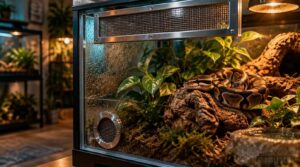
Once you know how much airflow your snake needs, the next step is choosing vents that deliver it without giving your snake a way out. Your ventilation holes should be smaller than your snake’s thinnest body width at every life stage, so plan for growth.
Here’s what to look for in an air vent:
- Stainless-steel woven mesh lasts 5+ years, while plastic breaks down under basking lamps and aluminum oxidizes in humid cages within 12 to 24 months.
- Use 2 to 3 mm mesh for adults and 1.0 to 1.5 mm for hatchlings.
- Aim for 8 to 15 percent open area, with intake low and exhaust high.
- Secure vents with locking rings or aquarium-safe silicone.
Fresh air shouldn’t invite escapes.
Set Up Your Snake Enclosure’s Airflow
Once your vents are secure, you’re ready to get air moving through the enclosure. Two approaches cover most setups, and each gives you a different level of control. Here’s how passive ventilation and guarded fans work, so you can choose what suits your snake.
If you’re unsure how much airflow your setup needs, this snake enclosure ventilation guide explains how vent placement affects humidity and temperature.
Passive Ventilation and Vent Placement

Think of your enclosure as a chimney with a draft door. Cool air slips in low, warms up, and drifts out high.
Set your intake vents low on the cool side and your exhaust vents high on the warm side. That keeps Natural Ventilation steady, supplies Fresh Air, and keeps Airflow indirect over the basking spot.
When to Use Guarded Fans

Passive vents handle most setups, but they stall in some. If you see condensation, a musty smell, or stubborn shed, add guarded fans to your mechanical ventilation. They help in tall arboreal enclosures and in large cabinets where air pools.
Since airflow needs scale with enclosure volume, it helps to start by choosing the right tank size for your snake before deciding how many fans you need.
Wire a fan to a thermostat or a timer matched to your lamp cycle. Air circulation improves, and so does indoor air quality.
Balance Snake Enclosure Airflow, Heat, and Humidity

Airflow, heat, and humidity work as a system, so a change to one affects the other two. You’ll keep your snake safe and your enclosure stable by checking the numbers first and adjusting second. The two steps below show you how to do both.
Monitor Temperature and Humidity
Your snake can’t tell you the enclosure feels off, so your sensors have to.
Pairing temperature and humidity readings with a natural snake habitat setup gives you early warning signs and a space that feels more secure to begin with.
Since your snake can’t say when its home feels wrong, reliable sensors must speak up for it
- Use digital probes, not analog dials.
- Place humidity probes halfway up the sidewall.
- Check an infrared gun against your probe.
- Read min/max memory twice daily.
- Replace batteries when readings stick at 99%.
Steady numbers confirm your ventilation rate is working.
A digital thermometer hygrometer combo makes it easy to watch both numbers at once and spot ventilation problems before your snake does.
Adjust Vents and Screen Covers
Change your vents in small steps, then watch the readings for a full day. If humidity drops too low, close adjustable dampers partway or cover part of the screen. If air feels stale or condensation builds, open them again.
Keep grilles clear and fans guarded. Good ventilation and steady air circulation matter more than any single adjustment, so don’t rush.
Troubleshoot and Maintain Snake Enclosure Ventilation
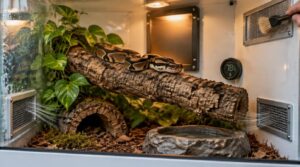
You might think a tidy enclosure with no odor doesn’t need regular checks, but airflow problems build quietly. Wheezing, mucus near the nostrils, or constant glass condensation usually mean your ventilation rate is too low.
Run a quick monthly check:
- Clear clogged vent screens so air circulation stays steady.
- Reseal PVC seams that leak and swing humidity control off target.
- Keep heaters away from vent panels, since warping hurts temperature control.
- Sniff for musty substrate and check corners for mold.
- Space intake and exhaust vents apart to prevent short-circuiting.
If you spot persistent mold or open-mouth breathing, fix airflow first, then adjust humidity in small steps. Change one variable at a time, so you know what worked. Call your vet.
Frequently Asked Questions (FAQs)
How to ventilate a reptile enclosure?
Your corn snake needs 1-2 air changes hourly. Ventilation works best with a low intake on the cool side and a high exhaust on the warm side, improving air circulation, humidity control, and temperature control.
What are the best air vents for reptile enclosures?
Say your 4-foot ball python cage runs stuffy near the substrate. The best vents there are PETG vents, since they handle heat and humidity better than PLA. Add guarded Fans and Grilles for Fresh Air.
How much ventilation do snakes need?
You’d think a sealed glass tank keeps your snake safe, but stale air says otherwise. Arid species need 1-2 air changes hourly, tropical and arboreal setups need 2- That fresh air protects your snake’s health.
How hot is too hot for a snake enclosure?
Say your ball python’s tank hits 95°F by afternoon. That’s too hot.
Internal temperature above 90°F stresses snakes, and 120°F injures them. Poor ventilation, low air exchange rate, and little fresh air ruin thermal regulation.
Can I use computer fans for snake enclosure ventilation?
Picture a quiet breeze lifting stale air off your snake’s glass. Yes, computer fans work for mechanical ventilation, improving air distribution and indoor air quality, but screen them so your snake can’t touch the blades.
How often should ventilation holes be cleaned?
Check your vents weekly and clean them monthly. Clean more often in humid, arboreal, or fossorial setups. Natural Ventilation depends on clear screens, so they protect Air Quality, Fresh Air, and your Air exchange rate.
Do bioactive enclosures need different ventilation approaches?
Humidity above 60% plus stagnant air breeds Mold fast. Bioactive setups do need different Ventilation: use Natural Ventilation with low intake, high exhaust, add Mechanical Ventilation if needed, and keep your Air Exchange Rate moderate.
Can over-ventilation harm my snakes health?
Too much ventilation raises the air exchange rate, drying the enclosure and pulling heat away. Your snake’s health suffers through stuck sheds and respiratory issues. Keep humidity steady, and you’ll protect its Indoor Air Quality.
How often should snake enclosure vents be cleaned?
Neglect your vents for a year and your snake will pay for it.
Clean standard vents every 3 to 6 months, fine mesh monthly, and any time dust, musty odors, or condensation appear. Ventilation matters.
Can too much ventilation stress a snake?
Giving your snake extra fresh air sounds kind, yet it backfires. Too much ventilation raises the air exchange rate, causing temperature fluctuations.
Those swings dry your snake out and invite respiratory issues, hurting its health.
Conclusion
Last spring, a keeper noticed fogged glass and a sour-smelling substrate in her ball python’s tank. She added two high vents, cut one low vent, and checked her hygrometer. Within a week, the air cleared and the snake shed cleanly.
Your enclosure can improve the same way. Good ventilation for snake enclosure setups comes down to steady, balanced airflow, tuned to your species and checked often. Watch, adjust, and trust what the numbers show you.