This site is supported by our readers. We may earn a commission, at no cost to you, if you purchase through links.

A corn snake will happily live twenty years in a 4’x2’x2′ enclosure, eat one frozen-thawed mouse every week or two, and forgive nearly every rookie mistake you throw at it.
That’s the secret behind the easy to care snake reputation. These animals tolerate fumbles, stay calm in your hands, and ask for a warm side around 85°F, a cool side near 70°F, and a lid that locks. Skip any of those, though, and a curious snake will find the gap.
Eight species earn the beginner label, from the rosy boa that balls up instead of biting to the ball python that demands steady humidity. Here’s how to pick yours.
Table Of Contents
- Key Takeaways
- 8 Easy-to-Care Pet Snakes for Beginners
- Corn Snake: Adaptable and Beginner-Friendly
- Ball Python: Humidity and Feeding Considerations
- California Kingsnake: Active and Escape-Prone
- Rosy Boa: Small and Generally Calm
- Garter Snake: Diet and Activity Needs
- Milk Snake: Handling and Habitat Needs
- Western Hognose: Feeding and Defensive Behaviors
- Children’s Python: Size and Care Needs
- Choosing a Beginner Snake: Temperament, Size, and Lifetime Commitment
- Beginner Snake Habitat Setup: Secure Enclosures, Heating, Humidity, and Hides
- Feeding Beginner Snakes: Species-Appropriate Diets, Prey Size, and Feeding Frequency
- Keeping Your Snake Healthy: Cleaning, Safe Handling, and Illness Checks
- Frequently Asked Questions (FAQs)
- What is the most low maintenance snake?
- What are the easiest snakes for beginners to care for?
- What snake is the best for beginners?
- Which pet snake is the calmest?
- Can snakes recognize their owners over time?
- Do pet snakes need regular veterinary checkups?
- How often do snakes shed their skin?
- What sounds or noises do snakes make?
- Can different snake species live together safely?
- How much does owning a snake cost?
- Conclusion
Key Takeaways
- Pick a species that fits your life, since corn snakes are the easiest all-around choice while ball pythons need steady humidity and rosy boas, kingsnakes, garter snakes, milk snakes, hognoses, and Children’s pythons each have their own quirks.
- You’ll need a locking, escape-proof enclosure sized for your snake’s adult length, with a warm side around 80-85°F, a cool side near 70-75°F, a hide on each side, and every heat source run through a thermostat.
- Feed frozen-thawed rodents no wider than your snake’s widest point, adjust the schedule as it ages (every 5-7 days for juveniles, up to every 10-21 days for adults), and wait 48 hours after meals before handling.
- Plan for a decades-long commitment (15-20 years for corn snakes, 20-30 or more for ball pythons) that includes a captive-bred animal, yearly reptile vet checkups, and roughly $360-$770 in year-one costs.
8 Easy-to-Care Pet Snakes for Beginners
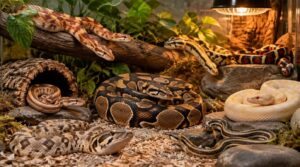
You’re about to meet eight snakes that forgive beginner mistakes and still make great pets. Each one comes with its own size, temperament, and quirks, so you can pick the best fit for you. Let’s start with the species that keep first-time keepers coming back.
If you’re leaning toward a larger, calm companion, our guide to the best pet boas for beginners explains how their gentle nature and steady growth suit new keepers.
Corn Snake: Adaptable and Beginner-Friendly
A corn snake is the pet that forgives your rookie mistakes. Corn snakes rank among the best beginner-friendly pets because they’re calm, hardy, and happy with simple setups.
Offer a proper temperature gradient, warm side 80-85°F, and feed frozen-thawed rodents. Pair that heat with at least two secure hiding spots, one on the warm side and one on the cool side, so your snake can regulate its body temperature and feel safe.
Gentle handling techniques build trust fast, so keep sessions short and always support its whole body with both hands.
Ball Python: Humidity and Feeding Considerations
Ball pythons are a little pickier than corn snakes, but they’re still very doable. Humidity control is the big one: aim for 60-70% ambient, then bump it up during shedding with a moist hide. Verify with a digital hygrometer.
Feed frozen-thawed rodents sized to your snake’s widest point. Juveniles thrive on weekly feeding routines, and enclosure sanitation keeps things fresh.
California Kingsnake: Active and Escape-Prone
If you want a snake that’s out and about, a California Kingsnake delivers. Smooth, banded, and curious, it patrols its enclosure day or night, depending on temperature.
That curiosity makes it a escape artist, so build an escapeproof habitat: secure lid latches, front-opening designs, and sealed cable entries. Check them weekly.
Rosy Boa: Small and Generally Calm
Want something mellower after the kingsnake? Meet the Rosy Boa, one of the most beginnerfriendly pets around. Adults stay 2 to 3 feet, so they fit nicely among small enclosure snakes, and their calm nature means they’d rather ball up than bite.
Still, they’re sneaky squeezers, so keep that escapeproof habitat. Offer a 36-inch enclosure with a 90°F basking spot.
Pair that setup with moist hide boxes and steady humidity, and this milk snake care sheet covers feeding schedules and shedding tips too.
Garter Snake: Diet and Activity Needs
A varied menu keeps garter snakes thriving. Offer frozen/thawed mice, reptile-sourced earthworms, and the occasional comet goldfish, and match prey size to your snake’s mid-body width. Feed juveniles every other day, adults once weekly.
Smart habitat design adds a water dish for swimming, branches for climbing, and a temperature gradient. Watch snake behavior patterns, since these active snakes forage constantly.
Milk Snake: Handling and Habitat Needs
You’ll find a Milk Snake easy to read once you nail the basics. Start handling techniques at five minutes, support the whole body, and skip sessions within 48 hours of feeding.
Habitat design starts with a secure, ventilated lid, because escape artists exist. Build a temperature gradient from 82-90°F down to 70-75°F, and add a warm and cool hiding spot.
Western Hognose: Feeding and Defensive Behaviors
They look like cobras and play dead like actors, yet Western hognose snakes rarely bite. Those defensive behaviors are pure theater, so don’t panic.
Stick to a feeding schedule of every 1 to 2 weeks for adults, using frozen-thawed mice and careful prey size matching to head width.
Give them loose substrate in your habitat setup so they can burrow.
Children’s Python: Size and Care Needs
Picture Maya, who brings home a pencil-thin hatchling and watches it triple in length within a couple of years. That’s the Childrens Python for you.
Adults top out around 3 to 4 feet, so size stays manageable.
Care needs are simple: give them a roomy 36-inch enclosure size, a 90°F basking spot, and a steady feeding schedule. Pretty easy, right?
Choosing a Beginner Snake: Temperament, Size, and Lifetime Commitment

Picking your first snake is easier when you know what to look for. Below, you’ll find five points that help you match a species to your patience, your space, and your schedule. Work through them in order, and you’ll land on a snake you can commit to for years to come.
Beginner-Friendly Species
Not every snake suits a first-timer, but these five do. Each stays manageable, eats reliably, and forgives small mistakes while you learn.
- Corn snakes: hardy, curious, widely available
- Ball pythons: calm, shy, easy to handle
- Rosy boas: compact, mellow, simple to keep
- California kingsnakes: bold, active, tolerant of handling
Childrens pythons round out the list, staying around four feet long.
Temperament And Handling
Corn snakes rank among the most docile snake breeds, and their calm nature forgives beginner mistakes. Use these handling techniques:
| Do | Don’t |
|---|---|
| Approach from the side | Grab from above |
| Support the full body | Restrain the head |
| Wait 48 hours after meals | Handle after eating |
Temperament varies, so watch for stress behaviors like hissing or striking, then put your snake down.
Adult Size And Space
Once handling feels easy, think about room to grow. Your enclosure size should match adult length, not hatchling length.
- A 30gallon tank suits juveniles briefly.
- A 2040 gallon enclosure works for small enclosure snakes like rosy boas.
- Corn snakes and ball pythons need 4’x2’x2′ as adults.
Smart habitat design saves money, stress, and midnight upsizing scrambles later.
Species-Specific Care Needs
Once space is sorted, match the snake’s personality to your routine. Each species has its own quirks.
| Species | Quirk | Your Move |
|---|---|---|
| Corn Snakes | Escape artists | Lock the lid |
| Ball Pythons | Picky eaters | Fix husbandry first |
Rosy Boas stay calm, California Kingsnakes test every gap, and Garter Snakes want varied prey. Learn these habits early and you’ll feel confident, not surprised.
Lifespan And Commitment
Personality sorted? Now picture the calendar. Pet snake lifespan runs long: corn snakes hit 15 to 20 years, ball pythons 20 to 30 or more.
That’s a decadeslong partnership, so budget for it. Book annual reptile vet checkups, and choose captive breeding for healthier animals. Longevity is the real payoff, and you’ll never, ever release a snake into the wild.
A pet snake is a decades-long partnership, so budget for it, choose captive-bred animals, and never release one into the wild
Beginner Snake Habitat Setup: Secure Enclosures, Heating, Humidity, and Hides
Once you’ve picked your species, the home you build matters as much as the snake itself. Start with a secure enclosure: tight-fitting lid, clips or locks, and zero gaps, because snakes can flatten and squeeze through surprisingly small openings. Front-opening tanks also startle your snake less than top-openers.
Next, build a temperature gradient. Aim for 80-85°F on the warm side, a basking spot up to 88°F, and 70-75°F on the cool side. Run every heat source through a thermostat, and keep heat over one-third to one-half of the floor. Steady warmth keeps your feeding schedule on track.
Humidity control varies by species, so track it with a digital hygrometer. Add a hiding spot on each side, snug, dark, and secure.
Feeding Beginner Snakes: Species-Appropriate Diets, Prey Size, and Feeding Frequency

You don’t need a fancy menu to feed a beginner snake well. Most thrive on frozen-thawed rodents, and corn snakes, kingsnakes and ball pythons all take mice or rats happily.
Match prey size to your snake’s body width at its widest point, never bigger than its head. Oversized meals cause regurgitation.
Thaw prey in lukewarm water at 40°C for 15 to 20 minutes, then offer it warm.
Your feeding frequency shifts with age:
- Hatchlings and juveniles: every 5 to 7 days
- Subadults: every 7 to 10 days
- Adults: every 10 to 21 days, depending on species
Treat your feeding schedule as a guide. Let body condition decide. Avoid power feeding. Whole prey covers nutrition, so dietary supplements are rarely needed.
Since young snakes grow fast and adults slow down, how often corn snakes shed can also hint at whether your feeding routine suits their age.
Keeping Your Snake Healthy: Cleaning, Safe Handling, and Illness Checks
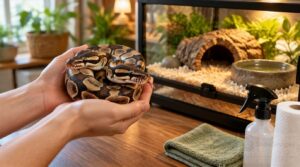
You’ll keep a snake healthy with a few steady habits, and none of them take much time. Spotclean waste daily, and swap the water the moment it’s soiled. Once a month, scrub walls, glass, and decorations with a reptile-safe disinfectant, then rinse well. Frontopening designs make this far easier, since you can reach every corner without lifting a lid.
Wash your hands before and after handling, and wait 48 hours after feeding so your snake doesn’t regurgitate. Move slowly and support the whole body.
Watch for trouble. Breathing with mouth open, wheezing, or bubbling means a vet visit. Hiding more than usual, refusing meals, or moving less or seeming sluggish deserve attention. Book a yearly checkup with a reptile vet.
Frequently Asked Questions (FAQs)
What is the most low maintenance snake?
Corn snakes are the most low maintenance snakes you can own.
Pick healthy captive bred snakes, build a secure enclosure with a proper heat gradient, and stick to a weekly feeding schedule. You’ve got this.
What are the easiest snakes for beginners to care for?
Corn snakes top almost every beginner list, and for good reason: they’re hardy, calm, and eat reliably. Ball pythons, rosy boas, California kingsnakes, and garter snakes follow close behind, since they’re manageable in size and forgiving of mistakes.
Because they’re docile and rarely bite, corn snakes are often a good fit for families, though whether a corn snake is a good pet for kids also depends on a child’s age and maturity.
What snake is the best for beginners?
Corn snakes are your best bet. They’re docile, forgiving of humidity swings, and reliable eaters, unlike fussy ball pythons. Rosy boas, California kingsnakes, and garter snakes work too, but corn snakes make learning far easier.
Which pet snake is the calmest?
No single winner exists, but docile snake breeds share a pattern. Ball pythons, Corn snakes, Rosy boas, and a Kenyan Sand Boa all stay relaxed with regular handling.
Pick a calm individual, not a species.
Can snakes recognize their owners over time?
Your snake knows you better than you’d believe!
Corn snakes and ball pythons, docile snake breeds, learn your scent over months. Calm, steady handling builds trust, helps reduce stress, and keeps snake handling safety simple.
Do pet snakes need regular veterinary checkups?
Picture a corn snake refusing meals repeatedly, then wheezing.
Yes, book yearly reptile vet care. Your vet spots respiratory trouble signs, parasites, and shedding poorly or too often, plus weight stability tracking before problems escalate.
How often do snakes shed their skin?
Snakes shed 4 to 12 times a year. Shedding frequency follows growth: juveniles go every 4-6 weeks, adults every 6-
Shedding poorly or too often? Check humidity, since your snake’s molting cycle depends on it.
What sounds or noises do snakes make?
Think of a snake as a quiet roommate with one opinion: the hiss. Hissing sounds communication means back off.
Use habitat design for stress reduction, practice behavioral observation, and book reptile vet care for wheezing.
Can different snake species live together safely?
Snakes make terrible roommates, like tiny landlords who might eat the tenant.
Cohousing risks include cannibalism, disease, and constant stress. For beginner snakes, a separate enclosure setup, feeding schedule, and temperature gradient keep everyone safe.
How much does owning a snake cost?
Your low-maintenance pet will happily eat your savings.
Expect $360–$770 in year one, mostly for the snake enclosure, temperature monitoring gear, and a humidity gauge.
Frozen prey runs $5–$15 monthly, so beginner reptiles stay affordable.
Conclusion
Twenty years is how long a well-kept corn snake can share your home, so choose with the long haul in mind. Your best easy to care snake is the one whose size, temperament, and needs match your life, not the one with the prettiest pattern.
Build a secure enclosure, dial in the warm and cool sides, and keep fresh water nearby. Do that, and you’ll earn a calm, curious companion who trusts your steady hands.