This site is supported by our readers. We may earn a commission, at no cost to you, if you purchase through links.
Your new ball python arrives healthy and active, but within two weeks, your entire collection is fighting respiratory infections. This scenario plays out more often than you’d think—improper quarantine protocols are behind roughly 42% of disease outbreaks in captive reptile collections during the first month.
Even snakes that appear perfectly healthy can harbor parasites, viral infections, or bacterial pathogens that won’t show symptoms until stress triggers an outbreak. Establishing strict ball python quarantine procedures isn’t just cautious—it’s the difference between a thriving collection and a veterinary emergency.
The good news? A systematic approach to isolation, monitoring, and biosecurity can prevent most transmission events before they start.
Table Of Contents
Key Takeaways
- Proper quarantine protocols reduce pathogen introduction by 42% in the first month and prevent cross-contamination by 58% when combined with strict biosecurity measures, making isolation essential rather than optional for protecting both new arrivals and existing reptile collections.
- A minimalist quarantine setup requires a secure 20-60 gallon enclosure with paper towel substrate, one hide, controlled temperature gradients (88-92°F basking, 78-80°F ambient), 50-60% humidity, and dedicated tools that never contact other animals to enable effective health monitoring and disease detection.
- Daily observation tracking behavior, weight checks, and parasite screening catches the 25% of ball pythons carrying internal parasites and up to 30% with respiratory infections that show no immediate symptoms, with health clearance requiring 14 consecutive illness-free days and negative pathogen testing.
- Post-quarantine vigilance through weekly weight tracking, fecal exams every 2-4 weeks, and thorough recordkeeping reduces late-onset disease detection failures by 25-40%, transforming scattered observations into actionable protocols that protect your entire collection long-term.
Why Quarantine is Essential for Ball Pythons
Bringing home a new ball python is exciting, but it comes with real responsibilities—chief among them is quarantine. Whether you’re adding to an existing collection or bringing home your first snake, proper isolation isn’t just cautious; it’s essential for protecting both your new python and any reptiles you already own.
Let’s look at the three critical reasons why quarantine should never be skipped.
Preventing Disease Transmission
Quarantine protocols cut pathogen introductions into your collection by 42% in the first month—a powerful layer of disease prevention. When you combine strict biosecurity measures with dedicated quarantine tank workflows, cross-contamination drops by 58%.
Regular health screening using molecular diagnostics catches 6–12% of asymptomatic carriers, protecting both your new ball python and any existing reptile health investments.
Effective literature reviews involve a thorough review process to verify accuracy and reliability in research findings.
Identifying Hidden Health Issues
Beyond stopping disease transmission, quarantine tank observation uncovers silent threats that routine health screening might miss. Up to 25% of newly acquired ball pythons carry internal parasites, while respiratory infections, metabolic issues, and neurological signs surface in 30%, 10%, and under 1% respectively—all detectable before contaminating your bioactive enclosure.
Watch for these warning flags during parasite detection and microbiome analysis:
- Wheezing or nasal discharge signaling respiratory distress
- Incomplete shedding indicating hydration or environmental problems
- Weight loss exceeding 10% within the first month
- Tremors or balance issues requiring immediate veterinary assessment
Effective research requires a thorough policy analysis approach to identify and address potential health issues in ball pythons.
Protecting Existing Reptile Collections
When you add a new ball python to your collection without strict quarantine protocols, you’re rolling the dice with your established animals. Studies show 63% of multi-animal setups experience pathogen spillover when equipment isn’t properly disinfected.
That’s why disease prevention through biosecurity measures matters—your quarantine tank acts as the first line of defense against cross-contamination, protecting months or years of reptile safety investments.
Preparing a Proper Quarantine Enclosure
Setting up a quarantine enclosure doesn’t require anything fancy—just the right basics to keep your new ball python safe and easy to monitor. You’ll want an enclosure that’s simple to clean, secure enough to prevent escape, and large enough for the snake to move comfortably without being overly spacious.
Let’s walk through the key components you’ll need to create an effective quarantine setup.
A fish quarantine tank setup guide can help you choose the right equipment and keep newcomers healthy.
Choosing The Right Enclosure
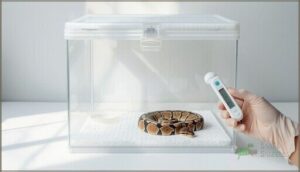
Your quarantine tank’s design sets the stage for successful health monitoring. Choose secure-lidded plastic or vinyl enclosures—20 gallons for hatchlings, 40–60 for juveniles—with smooth interiors to prevent injury. Front-opening designs simplify daily checks.
Prioritize ventilation systems that balance airflow with humidity control, and select non-porous substrate options like paper towels for easy cleaning and quick detection of mites or abnormal droppings.
Essential Equipment and Supplies
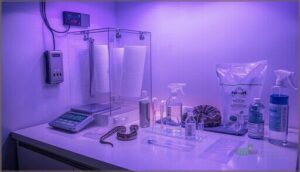
You’ll need a digital scale with 0.1 g precision, UVB lighting outputting 5–10% UVB on a 12–14 hour cycle, and reptile-safe thermometers requiring regular thermometer calibration. Pair your heat mat with a reliable thermostat to maintain proper gradients.
Use quarantine substrate like paper towels, dedicated feeding tongs, and biosecurity kits containing gloves, 70% isopropyl alcohol, and sealed waste bags for cross-contamination prevention.
Temperature, Humidity, and Ventilation

Temperature control starts with a proper heat mat and thermostat to maintain a daytime basking zone of 88–92°F and ambient temps around 78–80°F—this temperature gradient lets your snake self-regulate.
Keep humidity levels steady at 50–60% using a digital hygrometer, and guarantee ventilation systems promote airflow management without creating drafts that destabilize your carefully calibrated environment.
Setting Up a Minimalist Environment
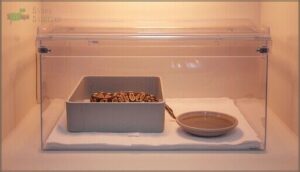
Your quarantine tank doesn’t need fancy decorations—focus on function. Choose a rigid plastic enclosure with secure lids to prevent escapes, then line it with paper towels for easy monitoring.
Add one hide for security and a shallow water dish. This minimalist approach with proper ventilation systems and heating options reduces stress while making health changes immediately visible.
Step-by-Step Ball Python Quarantine Procedures
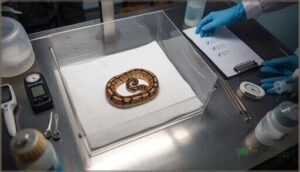
Once you’ve got your quarantine enclosure set up, the next step is putting practical protocols into action.
These procedures protect both your new ball python and any snakes you already own.
Let’s walk through the essential steps that make quarantine actually work.
Establishing a Separate Quarantine Area
Physical separation is your first line of defense—position your quarantine tank at least 1–2 meters away from existing enclosures to minimize airborne pathogen transfer. This isolation protocol forms the backbone of effective disease prevention in reptile quarantine.
- Designate a dedicated quarantine room with its own entry/exit to contain potential contamination.
- Install proper ventilation systems that maintain air exchange without creating drafts.
- Use separate waste handling systems to reduce crosscontamination risk by up to 90%.
- Implement strict visitor restrictions and require PPE changes between rooms for biosecurity measures.
Strict Biosecurity and Hygiene Practices
Think of biosecurity protocols as your invisible shield—studies show that sanitizing hands and equipment between enclosures reduces pathogen load by 92% in reptile quarantine settings.
Sanitizing hands and equipment between enclosures reduces pathogen load by 92% in reptile quarantine settings
You’ll want to use surgical-level gloves, disinfect surfaces for at least 10 minutes, and maintain dedicated workwear.
These hygiene practices create barriers that prevent cross-contamination and strengthen disease prevention throughout your quarantine tank setup.
Dedicated Tools and Equipment
Your quarantine toolbox works like a surgeon’s instrument tray—each piece stays exclusively in your quarantine area. Set up these dedicated essentials:
- Separate feeding tongs to prevent 60% reduction in pathogen transmission
- Quarantine tank with built-in thermostat for consistent temperature
- Dedicated water dish for humidity control and hydration
- Ventilation-specific equipment for air exchange monitoring
- Tool sterilization supplies including antimicrobial disinfectants
Proper equipment sanitization and cleaning protocols protect your entire collection.
Safe Feeding and Waste Disposal Protocols
After you’ve established your dedicated tools, feeding and waste disposal become your frontline biosecurity measures. Thaw frozen rodents between 88-93°F using warm water baths, then use your quarantine feeding tongs exclusively for this snake. Wait 24-48 hours before handling post-feeding.
Spot-clean daily using disposable gloves, removing waste immediately. Deep-clean weekly with F10 disinfectant, maintaining five-minute contact time for effective pathogen inactivation.
Monitoring Ball Python Health During Quarantine
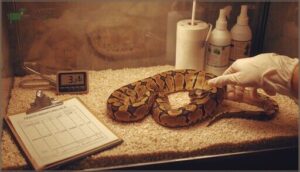
Keeping a close eye on your ball python during quarantine isn’t just good practice—it’s your first line of defense against disease. Daily health monitoring helps you catch problems early, when they’re easiest to address.
Here’s what you need to watch for and how to track your snake’s condition throughout the quarantine period.
Daily Observation and Behavior Tracking
Each day, you’ll need to watch your ball python closely to catch health signs that might otherwise slip by. Track three key behavior patterns:
- Activity level: Note when your snake moves and explores its quarantine tank versus resting.
- Feeding habits: Document acceptance or refusal of meals during quarantine procedures.
- Snake activity: Record shelter-seeking behavior and any environmental factors affecting reptile behavior.
This vigilance safeguards animal welfare.
Weight Checks and Health Logs
Beyond watching your ball python’s behavior, you’ll need to track its weight throughout the quarantine period. Weigh your snake monthly using a digital scale, placing it in a secure container to prevent escape. Record each measurement in a health log alongside feeding dates, defecation, and shedding cycles.
Weight monitoring reveals growth patterns, hydration status, and early signs of illness—critical data for reptile health assessment during quarantine procedures.
Identifying Signs of Illness or Parasites
While tracking weight reveals growth trends, you’ll also need to recognize active disease signs during health screening.
Watch for a sunken abdomen—often indicating chronic parasitism with 10–20% body mass loss over weeks. Frequent regurgitation, pale gums, visible mites on shed skin, or excessive rubbing against your quarantine tank all signal immediate parasite detection needs.
These illness symptoms demand swift veterinary care to protect your snake’s reptile health and prevent disease spread.
When to Consult a Reptile Veterinarian
When should you escalate from home observation to veterinary care? If your ball python refuses food for 7–10 days, shows respiratory distress like wheezing, or loses over 5% body weight in one week, contact a reptile veterinarian immediately.
New skin lesions, visible parasites in feces, or persistent lethargy during the quarantine period all require medical diagnosis to safeguard reptile health and prevent cross contamination.
Safely Ending Quarantine and Next Steps
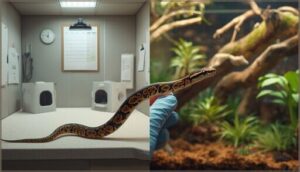
Once your ball python has completed the full quarantine period without signs of illness, you’re ready to move them safely into their permanent home. This step requires careful evaluation of specific health markers and a methodical approach to integration.
Let’s walk through the criteria for release, what to watch for afterward, and how to keep records that protect your snake’s long-term health.
Criteria for Releasing From Quarantine
Your ball python earns health clearance when it shows no illness for 14 consecutive days, maintains stable weight, and passes pathogen testing for common reptile diseases.
Environmental stability in the quarantine tank—consistent temperature and humidity—matters just as much as behavioral assessment of feeding responses and shedding cycles.
Release protocols demand negative results on parasite screenings and documented adherence to your quarantine protocol before you can safely end the quarantine period.
Post-Quarantine Health Monitoring
Vigilance doesn’t end when your snake leaves the quarantine tank—post-release monitoring catches hidden disease and protects your entire collection. Daily health logging during the first two to four weeks picks up subtle changes in reptile health that visual checks alone might miss.
Your disease prevention checklist should include:
- Weight tracking every seven days to spot ±5% shifts that signal underlying illness
- Parasite surveillance through fecal exams at two-week intervals, detecting helminths in 6–12% of released individuals
- Behavioral monitoring for feeding refusals lasting five days or activity drops of 20–30% from baseline
Schedule a veterinary consultation within 7–14 days of release—structured follow-up reduces late-onset disease detection failures by 25–40% and strengthens your animal welfare protocols for snake care.
Recordkeeping and Ongoing Care
Your quarantine procedures only work if you can prove they happened—thorough documentation turns scattered observations into actionable reptile care protocols. Start with daily health logs tracking behavior, appetite, shedding, and stool consistency, then build your medical history file from day one.
Weight management requires weekly weigh-ins on the same equipment—percent changes reveal subclinical disease before visible symptoms emerge. Parasite control demands baseline screening plus interval retesting to catch gastrointestinal parasites missed in initial exams. Your animal health documentation becomes the foundation for disease prevention across your entire collection, creating traceability that protects current and future reptiles.
| Record Type | Frequency & Details |
|---|---|
| Quarantine Logs | Daily entries: behavior, feeding response, elimination patterns |
| Weight Management | Weekly measurements using identical scales; flag ±5% changes |
| Parasite Control | Baseline fecal exam, then recheck every 2–4 weeks during isolation |
| Medical History | Source origin, prior treatments, exposure incidents, test results |
| Transfer Records | Chain-of-custody log for feeders, substrates, cleaning tools |
Frequently Asked Questions (FAQs)
How long can ball pythons go without eating?
While many worry that missing a meal spells disaster, healthy adult ball pythons can safely fast for six to eight weeks due to their slow metabolism and natural fasting periods.
What humidity level is ideal for ball pythons?
You should maintain humidity levels between 50% and 60% in your ball python’s quarantine tank, using a calibrated hygrometer for accurate humidity monitoring.
Increase to 70% during shedding to support proper skin loosening and snake hydration.
Can I quarantine multiple ball pythons together?
It’s tempting to save space, but group quarantine risks cross-contamination. Studies show disease transmission jumps 20-40% when ball pythons share enclosures.
Strict biosecurity measures demand separate quarantine tanks—one snake per setup prevents hidden infections from spreading.
Do ball pythons need UVB lighting in quarantine?
You don’t need UVB lighting during ball python quarantine. A basic 12:12 light-dark cycle using ambient room light is sufficient, letting you focus on monitoring health, maintaining stable temperatures, and minimizing stress.
How often should I change quarantine water bowls?
Like clockwork, you’ll want to replace the water in your quarantine tank’s dish daily. This change frequency promotes snake hydration, maintains bowl hygiene, and upholds strict quarantine protocols essential to reptile quarantine and Ball Python Care and Maintenance.
Conclusion
Think of quarantine as your collection’s firewall—invisible but essential protection that stops threats before they spread. These ball python quarantine procedures aren’t optional protocols for cautious keepers; they’re foundational biosecurity that separates responsible husbandry from preventable disaster.
Your dedication to systematic isolation, thorough monitoring, and disciplined hygiene practices determines whether new arrivals integrate safely or introduce chaos. Every day you invest in proper quarantine strengthens the barrier protecting everything you’ve built.