This site is supported by our readers. We may earn a commission, at no cost to you, if you purchase through links.
Your albino eats exactly the same way your piebald does. That’s not a guess, it’s measurable: metabolic rate holds steady at roughly 1-2% of body weight daily across every ball python morph in existence. The genetics that produce striking patterns don’t rewire a snake’s digestive system.
What shifts outcomes is everything surrounding the feeding: prey size, enclosure temperature, handling timing, and schedule. Get those wrong, and even a healthy animal starts refusing meals or regurgitating. Understanding ball python morph feeding habits means knowing which variables drive real outcomes, and which ones you can stop worrying about.
Table Of Contents
- Key Takeaways
- Do Ball Python Morphs Affect Feeding Habits?
- Choosing The Right Prey for Your Ball Python
- Ball Python Feeding Schedule by Age
- Why Your Ball Python is Refusing Food
- Feeding Mistakes That Risk Your Ball Python’s Health
- Frequently Asked Questions (FAQs)
- What is the rarest ball python morph?
- What is the best feeding schedule for ball pythons?
- How do I tell my ball pythons morph?
- What is ball python behavior like after feeding?
- Can spider morphs have feeding-related neurological issues?
- Do albino morphs require different lighting conditions?
- Are certain morphs more prone to obesity?
- Do pied morphs digest food at different rates?
- Can breeding season affect morph feeding patterns?
- How does brumation affect ball python feeding behavior?
- Conclusion
Key Takeaways
- Ball python morph genetics have zero effect on feeding behavior or metabolic rate — every morph runs on the same 1–2% of body weight daily, so your husbandry choices drive outcomes, not your snake’s color pattern.
- Prey size is your most controllable feeding variable: keep it under 20% of your snake’s body weight to avoid regurgitation, and always calculate based on current weight, not age alone.
- Feeding frequency must track life stage — juveniles need meals every 5–7 days, while adults over two years do best on a 10–14 day cycle to prevent obesity.
- When your snake stops eating, check the environment first: a two-degree temperature drop alone can shut down the feeding response, and overhandling within 48 hours of a meal compounds the problem.
Do Ball Python Morphs Affect Feeding Habits?
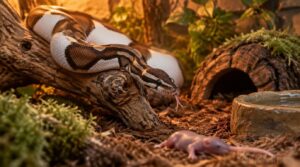
Morph genetics shape your ball python’s appearance, but they don’t reliably dictate feeding habits. Across hundreds of documented variants, metabolic rate stays consistent at roughly 1-2% of body weight daily, regardless of color pattern. Albinos, piebalds, and other popular ball python morphs show no measurable shift in digestive efficiency or caloric demand compared to wild-type animals.
Keepers of visually striking variants like spiders or super cinnamons can cross-reference feeding schedules with a comprehensive ball python morph guide to confirm that standard prey sizing still applies across the board.
What actually drives feeding refusals is individual personality, stress levels, enclosure conditions, and schedule consistency. Some heavier morphs may strike prey slightly slower due to jaw mechanics, but successful feeding outcomes depend far more on your husbandry practices than on morph genetics. If your ball python refuses food, first examine temperature gradients, hide quality, and handling frequency before attributing the problem to its morph.
Husbandry, not genetics, determines whether your ball python eats
Choosing The Right Prey for Your Ball Python
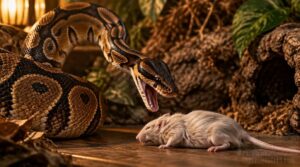
Getting prey selection right is one of the most controllable variables in your ball python’s health. Two factors determine whether your snake eats consistently: prey size relative to body and whether you’re offering live or frozen-thawed. Both are covered below.
Getting both factors right takes some trial and error, but choosing live vs. frozen-thawed ball python prey is often where feeding problems start or end.
Prey Size by Age and Morph
Every feeding decision starts with your snake’s body mass. Hatchlings need prey at 10-15% of their weight; juveniles scale to 8-15%, and adults can reach 25% during growth spurts. Keep prey size under 20% to cut regurgitation risk. Weighing your snake before every meal is easiest with a precise digital reptile scale that reads in grams, so your prey-size calculations stay accurate as your ball python grows.
Some ball python morphs, like zebra and hyper-melanistic, grow faster. Always tie your prey sizing ratios to growth rate, not just age.
Live Prey Vs Frozen-Thawed
Once you’ve sized your prey correctly, your next call is live versus frozen-thawed. Frozen-thawed rodents carry far fewer live prey risks: no defensive bites, no stress injuries.
Many keepers prefer frozen-thawed for this reason, and a dedicated corn snake feeding guide can help you build a safe, stress-free routine from the start.
- Warm prey to 32-36°C before offering
- Bacterial contamination spikes with improper thawing or refreezing
- Discard any prey showing odor or discoloration
- Prey safety demands frozen prey be sourced consistently and stored below -18°C
Ball Python Feeding Schedule by Age
Once you’ve nailed prey size, your feeding schedule by age becomes the next variable to lock in. Juveniles run on faster metabolic rates than adults, which means feeding frequency needs to reflect their current growth phase directly.
As juveniles grow, their faster digestion means weekly feedings are essential—if regurgitation becomes an issue, reviewing proper prey sizing for your snake’s age and weight can help you fine-tune the schedule before problems escalate.
For the first year, feed your snake every 5 to 7 days. Between 12 and 24 months, stretch that interval to every 7 to 9 days as growth begins to slow. You’re targeting 2 to 4 grams of weight gain weekly during this window.
Adults over three years will need feeding every 10 to 14 days. Their metabolic rates plateau, and overfeeding at this stage causes obesity rather than growth. Stick to 10 to 12-day intervals once your snake crosses the two-year mark.
Why Your Ball Python is Refusing Food
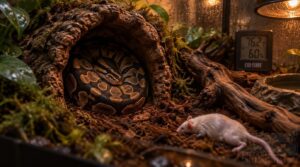
Why does your ball python stop eating? Usually it’s environmental. Temperature and humidity are your first suspects: a drop of just two degrees shuts down the feeding response, and low humidity impairs your snake’s ability to detect prey.
Stress reduction is just as important. Without adequate hides, your snake won’t feel safe enough to eat. Overhandling near mealtime triggers fear and disrupts your entire ball python care routine.
Female ball pythons reaching 800 to 1,000 grams may enter "The Wall," a pause driven by follicle development. Lethargy or mouth gaping alongside refusal signals a respiratory infection, not a feeding schedule problem.
Key feeding tips: avoid offering food repeatedly after feeding refusals. It reinforces the non-eating habit and extends the problem. If your snake misses two or more consecutive meals, it’s worth reviewing common feeding refusal causes such as incorrect temperatures, relocation stress, or inappropriate prey types.
Feeding Mistakes That Risk Your Ball Python’s Health
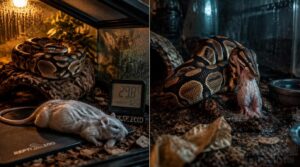
Across all feeding attempts, the mistakes that cause the most damage are predictable and avoidable.
Prey size mismatches are the leading driver of regurgitation. If the prey exceeds the widest point of your snake’s body, swallowing becomes a mechanical stressor that often ends with the meal coming back up.
Overfeeding is equally destructive. Feeding adults more than once every 10-14 days builds poor body condition over time and makes future feeding refusals far more likely.
Improper thawing matters more than most keepers realize. Prey that’s been left too long at warm temperatures loses palatability and raises your spoilage risk considerably. A feeder rodent thawing bag gives you reliable, controlled thawing that keeps prey fresh and cuts down on spoilage risk.
Stress reduction isn’t optional. Don’t handle your snake for at least 48 hours post-feeding, and always feed inside the enclosure. A well-placed ball python hide and enrichment gives your snake a secure retreat that naturally reduces post-feeding stress.
Frequently Asked Questions (FAQs)
What is the rarest ball python morph?
Picture yourself spending eight generations carefully stabilizing a single breeding line. The Queen Bee morph holds that title, combining multiple recessive alleles so rare that fewer than a dozen verified, true-breeding specimens exist worldwide today.
What is the best feeding schedule for ball pythons?
Juveniles need feeding every 5–7 days. Once yours reaches adulthood, stretch that to every 10–14 days. Match prey size to body width, and always wait until the previous meal is fully digested before offering more.
How do I tell my ball pythons morph?
Start with breeder-recorded lineage, not guesswork. Visual markers like eye color and scale pattern can help narrow your morph down, but only DNA testing or pedigree documentation will accurately confirm truly ambiguous or mixed-lineage alleles.
What is ball python behavior like after feeding?
Ironically, a ball python doing absolutely nothing after eating is exactly what you want. Expect 24-72 hours of burrowing, reduced movement, and calm basking. Handling during this critical window adds stress and disrupts normal digestion.
Can spider morphs have feeding-related neurological issues?
Like a frayed wire, the spider morph’s neurological deficit affects motor control, not feeding drive. Feeding refusals in these ball pythons often trace back to environmental stressors, with genetic interference staying under 5% of cases.
Do albino morphs require different lighting conditions?
Think albino morph genetics demand special lighting? They don’t. Your albino ball pythons need the same 12-hour photoperiod as any other morph; standard enclosure conditions and proper supplementation adequately cover both calcium and vitamin D.
Are certain morphs more prone to obesity?
No specific morph is genetically predisposed to snake obesity, despite popular belief. What drives poor metabolic health is overfeeding. Match caloric intake to your snake’s age, and check body condition every four to six weeks.
Do pied morphs digest food at different rates?
No, they don’t. Morph genetics don’t alter digestive physiology. Prey size, ambient temperature, and handling stress drive digestion rates across all ball python morphs, including pied. Your husbandry choices matter far more than coloration does.
Can breeding season affect morph feeding patterns?
Yes, breeding season disrupts feeding patterns. Reproductive stress reduces female feeding by 12-15%, triggering seasonal fasting. Hormonal surges alter appetite signals, so adjust your feeding frequency and prey size to match your morph’s energy demands.
How does brumation affect ball python feeding behavior?
Brumation can wipe out your ball python’s appetite entirely for up to 3 months. Seasonal fasting is completely normal. Post-brumation, feeding latency lingers 1-2 weeks as feeding responses gradually recover, so adjust your feeding schedule.
Conclusion
A ball python that hasn’t eaten in six weeks is terrifying, but it’s almost never the morph causing the problem. Ball python morph feeding habits are identical across every pattern and color variation; what differs is your setup, your schedule, and your technique.
Fix the temperatures. Match prey size to girth. Keep handling away from feeding days. Do those three things consistently, and your snake eats.