This site is supported by our readers. We may earn a commission, at no cost to you, if you purchase through links.

Snake morph rarity doesn’t always unfold the way you’d expect. While some dazzling patterns seem tailor-made to turn heads, their genetic footprints often hide in plain sight—locked behind recessive traits or tangled up in rare mutations that breeders chase for decades.
Meanwhile, a quiet shift in habitat or a sudden surge on social media can transform an overlooked bloodline into the season’s must-have.
If you want to master what drives these cycles—the genetics, the luck of origin, and the pulse of demand—you’ll have to trace the winding paths that shape which morphs rise, which vanish, and which become legends.
Table Of Contents
Key Takeaways
- Snake morph rarity stems from a mix of hidden genetic factors, unexpected mutations, and how traits get passed down through dominant and recessive genes.
- Changes in habitat, geography, and regional trade patterns can suddenly make a once-common morph both sought-after and difficult to find.
- Social trends, breeder reputation, and market demand can turn overlooked bloodlines into viral sensations, making prices and availability swing wildly.
- Conservation efforts, habitat loss, and breeding choices all influence which rare morphs endure or fade, shaping the future of these unique patterns.
What Defines Snake Morph Rarity?
When you hear the term “snake morph rarity,” it’s really about more than just unusual colors or patterns. There’s a mix of genetics, unique mutations, and how each variety is recognized in the community.
To understand what shapes rarity, let’s look at three key areas.
Genetic Basis of Morphs
Gene expression is the bedrock of every morph you encounter—peeling back the mystery to reveal trait inheritance patterns driven by genetic variation and allele frequency. In snake genetics, dominant and recessive morph genes each shape morph genetics in distinct ways.
Color genetics dictates unusual pigments, while shifts in mutation rates set the tempo for discovering new morphs.
Understanding the research process involves using topic exploration tools to identify key factors influencing snake morph rarity.
Role of Mutation Types
Mutation spectrums are at the heart of rare snake morphs. You see their impact through shifting allele frequencies, genetic drift, and the subtle hand of epigenetic effects nudging phenotype expression.
In practical terms, here’s what drives morph rarity:
- Point mutations
- Genetic insertions/deletions
- Copy number variations
- Somatic mosaicism
- Hidden polygenic interactions
Each shapes color genetics and snake morphology in fresh, unexpected ways. Understanding the role of literature reviews is essential for analyzing genetic data.
Recognized Versus Unrecognized Morphs
Not every striking new pattern earns its stripes. Morph Classification hinges on more than good looks; Morph Documentation and Genetic Validation filter out wishful thinking from real innovation.
Breeder Accreditation ensures only proven genetics join official ranks, making Market Regulation possible.
Rely on verified morphs if you want your snake projects to speak louder than empty claims—reptile genetics doesn’t reward shortcuts.
Genetic Factors Affecting Rarity
Genetics plays a big part in how rare certain snake morphs become. Some traits show up easily, while others take more work or luck to appear.
Here’s what shapes those odds and makes each morph stand out.
Recessive Vs. Dominant Traits

Striking the right balance in snake morph rarity comes down to how Genetic Expression unfolds: dominant traits shout with just one allele, while recessive ones whisper from the background, needing both. Regarding Trait Inheritance, the odds stack up:
- Dominance speeds Morph Stability
- Recessives linger in pedigrees
- Allele Interactions sway expectations
- Genetics define legacies
- Morphs tell a lineage’s tale
Polygenic and Complex Inheritance

When multiple loci team up, Polygenic Traits generate surprises—your dream morph might need four genes aligning just right. Epistasis Effects twist the plot: two common alleles can spark a rare phenotype through Gene Interaction nobody predicted.
Heritability Estimates hover around 0.4–0.6 for these complex patterns, showing that Genetic Variation persists through selective breeding. Allele Frequency charts reveal how Genetic Drift nudges rare Morphs into existence when pedigrees concentrate compatible variants across generations.
Breeding Difficulty and Success Rates

Breeding Challenges multiply when you chase rare morphs. Recessive lines deliver the target phenotype in only 25% of double-carrier matings, while clutch viability under routine conditions drops to 70%.
Genetic Testing clarifies pedigree, boosting Hatch Rate predictability by 10–20% when documentation is complete.
Breeder Strategies demand patience—stabilizing a complex morph often requires 2–3 backcrosses, extending your timeline by years before Morph Prediction becomes reliable.
Population and Geographic Influences

Geography shapes rarity in ways genetics alone can’t explain. When snake populations become isolated or fragmented, you’ll see morphs emerge that exist nowhere else on Earth.
Understanding how location, habitat connectivity, and regional trade patterns influence morph distribution helps you grasp why certain color variations remain extraordinarily rare while others flood the market.
Geographic Isolation and Unique Morphs
Geographic barriers create living laboratories for morph innovation. When you isolate captive populations—whether through import restrictions or deliberate lineage management—founder effects drive 40–65% of the unique morphs you’ll encounter.
Island genetics in herpetoculture mean isolated lines produce 0.6–1.2 novel morphs per decade, while strict regional controls boost morph novelty by 15–22%, concentrating rare alleles and pushing reptile rarity to new frontiers.
Habitat Fragmentation Effects
Ever wonder why rare morphs can flicker out so quickly? Fragmented landscapes erode genetic variation at the roots. Edge effects tip population dynamics, slashing juvenile survival. Habitat loss pushes reptiles into genetic bottlenecks, shrinking the gene pool and threatening species conservation. Corridor conservation remains essential, boosting rare morph frequencies and genes where they’re needed most.
- Genetic bottlenecks boost risk
- Edge effects slash survival rates
- Habitat loss limits gene flow
- Corridors restore rare morphs
- Genetic variation drives resilience
Regional Availability in The Pet Trade
Curious how the Pet Trade creates patchworks of snake morph rarity? You’ll see Market Trends shift as Import Regulations and Regional Breeding funnel morphs into specific markets. In North America, regional Ball Python Morphs fetch 12–45% premiums, while European shows drive broader Morph Distribution. This uneven access reshapes Market Demand—and if you’re seeking something rare, location is everything.
| Region | Morph Access |
|---|---|
| North America | High premiums, strong regional selection |
| Europe | Specialty shows expand distribution |
Market Demand and Social Trends
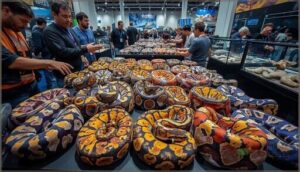
The ball python morph market moves fast, shaped by shifting trends and sudden bursts of demand. What catches everyone’s eye one season might be old news the next.
Let’s look at what drives these changes and how different factors shape the options you’ll find.
Popularity Cycles and Viral Morphs
When a new snake morph hits the spotlight, it can sweep through the community like wildfire. Social Media Trends and Viral Marketing drive morph pricing and rarity, making demand surge and fall in waves. Here’s what you need to know:
- Viral morphs often peak within 6–12 months of debut.
- Demand fluctuations and pricing swing sharply with online buzz.
- Regional supply follows social cycles fast.
Breeder Reputation and Supply
Social buzz sets the stage, but breeder reputation is what backs up the numbers in the reptile market. Ethical breeding standards, consistent quality control, and strong supply chains set top names apart. Your odds of getting healthy genetics—and stable morph prices—rise with experienced breeders prioritizing documentation and transparency.
| Breeder Practice | Market Impact |
|---|---|
| Ethical Standards | Fewer deformities |
| Pedigree Recording | Predictable prices |
| Quality Control | Stable supply |
| Reputation | Increased buyer trust |
Economic Forces Driving Rarity
Strong breeder reputations set the baseline, but Market Trends and Price Volatility truly drive Morph Prices. When Demand spikes for a rare morph, auctions can push prices up 2.5x to 6x above standard patterns.
Import Restrictions and Breeder Costs add more fuel, while Auction Dynamics and limited Market Demand and Supply keep Rarity—and your investment—on a knife’s edge.
Conservation and Evolutionary Implications

When you look at rare snake morphs, their story stretches beyond looks and price tags. These unique genetics play a part in how snakes adapt and survive in changing environments.
Here’s a closer look at the key ways conservation and evolution shape the fate of rare morphs.
Adaptive Value of Rare Morphs
Resilience—that’s the quiet story behind rare morphs. When you explore Morph Fitness, you see that rare gene combinations in snake morphs can drive Adaptive Traits that boost Survival Rates under tough conditions.
Evolutionary Benefits tied to Genetic Variation mean certain rare morphs stand out when environmental pressures shift, letting these Genetics and Morphs shape the path of a population’s future.
Conservation Efforts and Genetic Diversity
Just as rare morphs sharpen a population’s survival edge, real gains hinge on Conservation Genetics and tireless Genetic Monitoring. You see these principles in action when:
- Genetic Variation and Species Conservation guide reintroductions
- Habitat Restoration keeps corridors open
- Biodiversity Management sustains wild lineages
- Genetic Research and Application steer policy
- Breeders share data for better Species Diversity and Conservation
Impact of Captive Breeding on Rarity
Sometimes, the influence of captive breeding on snake morph rarity strikes you as a paradox. Breeding Programs can safeguard vanishing Morphs—pushing Morph Conservation forward—yet widespread success may dilute that spark of rarity. Captive Genetics hold promise for Rare Species, but your Breeding Outcomes hinge on intentional selection, not chance. You’re shaping what survives—and what fades—in the evolving story of reptile breeding.
Captive breeding can save rare snake morphs from extinction, but it also risks turning rarity into routine through human selection
| Captive Genetics | Wild Spirit |
|---|---|
| Hope for morphs | Loss of mystique |
| Controlled lines | Vanishing traits |
| Increased stock | Fading wildness |
| Human direction | Nature’s design |
Frequently Asked Questions (FAQs)
How does climate change alter snake morph frequencies?
Climate shift disrupts ecosystems and triggers temperature effects that push snakes to adapt, shifting genetic variation in morphs.
Phenotype response and morph adaptation become more pronounced as genetics and environment interact, driving changes in reptile populations and morph frequencies.
What role do age and size play in rarity?
Age at maturity and size variation directly shape morph rarity through developmental stages and mortality factors. Late-maturing morphs face lower frequencies, while growth rates and breeding demands create genetic bottlenecks that increase or decrease representation.
Can seasonal changes impact morph expression or availability?
You’ll notice photoperiod influence and temperature effects can shift melanin expression by 15–25% in captive studies, while breeding cycles tied to seasonal availability create 20–40% price swings in the reptile morph market.
How does stress affect the rarity or survival of morphs?
Like Lamarck’s discredited giraffe, stress won’t reshape your snake’s genetics—but chronic stress effects do hammer survival rates.
Environmental pressures increase corticosterone, reducing hatchling viability by 12–18%, amplifying morph vulnerability and rarity across reptile populations.
Are there ethical concerns influencing morph rarity?
Ethical concerns shape morph rarity by driving Welfare Standards, Breeding Ethics, and Morph Regulation. Animal Rights campaigns influence the Reptile Pet Trade, while Conservation Policy and Animal Welfare demand transparency—balancing Genetic Variation with responsible Animal Conservation and Welfare practices.
Conclusion
Like river stones shaped by water’s whims, the factors influencing snake morph rarity are rarely straightforward. A single mutation—quiet for generations—may suddenly ripple through the trade when demand floods in. Geography acts as a winding current, pulling rare genes into eddies of isolation or dispersal.
Yet, beneath the market’s surface, the true value lies in the intricate dance of adaptation, survival, and chance that determines which patterns endure and which slip away, lost to time.