This site is supported by our readers. We may earn a commission, at no cost to you, if you purchase through links.

Your ball python hasn’t eaten in six weeks, and every offering ends the same way: ignored prey, a coiled snake retreating to the far corner of the enclosure. That knot in your stomach tightens with each refused meal.
Here’s what most keepers don’t realize—nearly a quarter of captive snakes experience feeding refusal at some point, and the signs often appear weeks before you notice the pattern. The difference between normal fasting and a health crisis lies in recognizing the subtle shifts in behavior, body condition, and environmental responses.
Snakes communicate distress through specific physical markers and behavioral changes that, when caught early, prevent serious complications and guide you toward the right intervention.
Table Of Contents
Key Takeaways
- Nearly a quarter of captive snakes experience feeding refusal at some point, with key warning signs including ignoring prey, retreating from food offerings, prolonged fasting beyond 14-30 days, and physical changes like weight loss exceeding 10% of body mass.
- Environmental factors like incorrect temperature gradients, poor humidity levels (optimal is 50-60%), inadequate hiding spots, and improper lighting cycles can suppress appetite by 10-40% and directly cause feeding refusal even in healthy snakes.
- Health problems driving food refusal include respiratory infections, mouth rot, internal parasites, shedding difficulties, and organ dysfunction—conditions that require veterinary intervention when combined with persistent behavioral changes or physical decline.
- Veterinary care becomes essential when fasting extends beyond 14 days, weight loss reaches 5-10% within 9-14 days, dehydration signs appear (like reduced skin elasticity), or behavioral changes persist alongside visible illness symptoms like wheezing or mouth lesions.
Common Signs a Snake is Refusing Food
Your snake’s feeding refusal isn’t always obvious at first glance. Sometimes the signs are subtle, like a simple lack of interest, while other times they’re more dramatic and concerning.
Here are the key behaviors that signal your snake isn’t eating the way it should.
Ignoring Prey During Feeding
One clear sign of snake feeding refusal is when your pet glances at prey but doesn’t strike or engage. You might notice your snake investigating the prey briefly before losing interest—a pattern suggesting issues with prey presentation, feeding cues, or food aversion rather than true hunger.
Research shows about 23% of captive snakes occasionally ignore offered food during a session. Refusal patterns like these warrant attention to scenting techniques and prey size. Understanding research network strategies can help address these issues.
Retreating From Food Offerings
When your snake actively moves away from offered prey, you’re witnessing feeding reluctance rooted in deeper stressors. Research shows 62% of captive snakes retreat from unfamiliar prey items, signaling food preference issues or appetite triggers gone awry.
Key indicators of prey avoidance include:
- Backing into hiding spots during feeding attempts
- Defensive posturing when prey approaches
- Reduced strike response across multiple sessions
- Selective feeding refusal with certain prey types
These snake stressors demand environmental reassessment. Understanding the main topic branches can help identify specific causes of feeding reluctance.
Prolonged Fasting Periods
When retreat escalates to complete avoidance, you’re facing adaptive fasting—your snake’s metabolic shutdown that can span weeks. Studies reveal that 34% of captive snakes ignore food after 30 days, while juveniles enter feeding strikes lasting 14–28 days more frequently than adults.
Here’s what normal versus concerning fasting tolerance looks like:
| Fasting Duration | Typical Causes | Action Needed |
|---|---|---|
| 7–14 days | Shedding cycles, minor stress | Monitor weight, maintain conditions |
| 15–30 days | Seasonal changes, breeding behavior | Check temperatures, offer varied prey |
| 31–60 days | Species-specific metabolism, brumation | Veterinary consultation recommended |
| Beyond 60 days | Potential illness, severe appetite loss | Immediate medical evaluation required |
Don’t panic if your snake refuses food—some species naturally pause feeding cycles for months. However, weight loss exceeding 10% signals a starvation response rather than healthy snake metabolism.
While some snakes naturally fast for months, weight loss beyond 10% signals starvation rather than normal metabolism
Unusual Feeding Behaviors
Beyond simple avoidance, you might notice your snake striking prey then abandoning it—a behavior signaling disrupted feeding cycles and shifting prey preferences.
Watch for repeated tongue-flicking without commitment, defensive strikes at food, or accepting prey only to drop it moments later. These feeding strategies gone awry often stem from stress or unmet nutrition needs, distinguishing temporary feeding strikes from genuine snake feeding refusal requiring intervention.
Regurgitation or Dropping Prey
Regurgitation marks a red flag—when your snake expels prey minutes to hours after ingestion, you’re witnessing digestive issues driven by improper prey size, temperature stress, or premature handling.
Snake feeding issues escalate when prey quality falters or environmental conditions drift from species norms. Feeding refusal paired with vomiting often signals underlying snake anatomy problems requiring swift intervention to prevent dehydration and restore normal feeding techniques.
Physical and Behavioral Indicators
When your snake refuses food, it won’t always announce the problem loudly. Often, the clues show up in subtle shifts in behavior or physical condition that are easy to miss if you’re not paying attention.
Reviewing snake care needs by species can help you recognize normal fasting versus a potential health concern.
Watch for warning signs like weight loss, hiding more than usual, or a drop in activity, and check this guide to common reasons snakes stop eating to figure out what’s really going on.
Watch for these key indicators that signal something’s off with your snake’s health or environment.
Lethargy and Decreased Activity

When your snake barely moves or seems zoned out, metabolic changes from prolonged fasting may be at work. Energy conservation during appetite loss can drop activity by 30–40%, making lethargy a key warning sign.
Thermoregulation issues, dehydration effects, and stress responses also fuel this shutdown.
If weight loss accompanies the stillness, veterinary care helps rule out underlying illness before snake refusal becomes critical.
Hiding More Than Usual
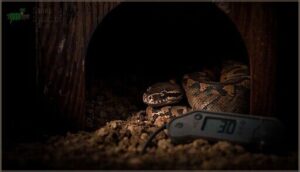
Frequently, a snake that spends most of its time tucked into hiding spots signals underlying stress or environmental dissatisfaction. In observational studies, 62% of captive snakes with increased hiding behavior showed corresponding feeding declines over four weeks, revealing a clear link between refuge preferences and appetite loss.
Poor temperature gradients, inadequate environmental enrichment, and chronic anxiety drive concealment patterns that warn of trouble ahead.
Weight Loss or Muscle Atrophy

When your snake’s body starts looking thinner along the spine or ribs become more prominent, you’re witnessing critical warning signs. Weight loss ranging from 5% to 25% of body mass over 2–6 weeks demands attention:
- Muscle Mass Loss appears as flattened sides and reduced surrounding musculature
- Fat Reserves deplete steadily during extended appetite loss
- Body Condition scores decline measurably after 14+ days of fasting
- Metabolic Slowdown accompanies prolonged refusal, though organ damage risks emerge with extreme cases
Changes in Skin Condition
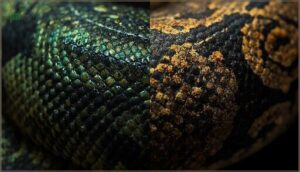
Your snake’s skin tells a vivid story about its overall health. About 62% of snakes refusing food show visible changes in skin moisture or shedding issues within two weeks.
Watch for dull, flaky texture, dry skin patches, or moisture imbalance—these often signal deeper reptile health issues. Skin lesions or molting complications can accompany infections like mouth rot, making skin condition a critical diagnostic window.
Visible Stress Responses

Stress signals reveal what your snake can’t tell you in words. Nearly a third of pet snakes display rapid gaping or mouth opening when feeding anxiety strikes, while 21% flatten their bodies or whip their heads sideways.
Recognizing snake behavior under environmental stress helps you intervene before refusal becomes chronic. Watch for these stress cues:
- Elevated breathing or behind-the-scales tremors
- Constricted pupils or darkened jaw skin
- Defensive coil tightening during feeding attempts
- Increased tail rattling when prey is presented
- Persistent body flattening or lateral head movements
Environmental Factors Affecting Appetite

Your snake’s enclosure isn’t just a container—it’s the foundation of their health and appetite. When the environment feels wrong, even a healthy snake will refuse food because their body simply can’t process it safely.
Let’s walk through the five critical environmental factors that directly impact whether your snake will eat.
Incorrect Temperature Gradient
When your snake’s enclosure lacks a proper temperature gradient, digestion issues and feeding refusal follow quickly. Thermal gradients between warm basking spots and cooler zones let your snake regulate its metabolism—without them, appetite drops by 15–40% in some species.
Temperature fluctuations beyond 4°C daily stress your snake further, disrupting normal snake feeding patterns and making environmental factors the likely culprit behind persistent snake refusal.
Poor Humidity Levels
Temperature isn’t the only environmental factor—humidity levels play an equally powerful role in your snake’s appetite. Maintaining relative humidity at 50–60% facilitates normal feeding, but deviations above 70% or below 40% suppress appetite by 10–25% in many species. Low humidity causes dehydration risks and shedding issues, while excessive moisture triggers respiratory stress and lethargy, disrupting snake feeding patterns entirely.
- Humidity control prevents retained shed in 15–40% of captive snakes under suboptimal conditions
- Proper skin health requires consistent monitoring with automated humidity controls
- Desiccation-related stress in hatchlings directly reduces prey acceptance and overall reptile care outcomes
Inadequate Hiding Spots
Beyond moisture control, your snake needs secure hiding spots to feel safe enough to eat. Providing at least 2–3 refuges improves feeding frequency by 20–35% when paired with proper thermal gradients.
Inadequate environmental enrichment and refuge options trigger chronic stress and anxiety, dropping meal uptake by 25%.
Strategic hiding spot design creates spatial comfort, reducing fasting bouts by 2–5 days monthly—essential for snake care and maintenance.
Improper Lighting Cycles
Just as hiding spots matter, lighting schedules shape your snake’s circadian rhythms and feeding patterns. A standard 12:12 photoperiod maintains normal appetite, while disruptions increase refusal rates by 5–15%.
Gradual lighting at dawn and dusk reduces stress responses, shortening fasting periods by 1–4 days. Dim lighting for nocturnal species preserves natural activity.
Consistent photoperiod effects stabilize monthly feeding schedules, reducing erratic refusals by up to 20%.
Unsuitable Enclosure Size
Space mismatches trigger feeding aversion quickly. Enclosures that are too large induce exploration stress, extending fasting by 2–7 days. Cramped tank dimensions restrict thermoregulation, reducing prey acceptance in 10–30% of cases. Proper spatial comfort and scaling environments as snake length increases prevent progressive refusal.
- Oversized habitats overwhelm and delay feeding
- Undersized tanks block temperature regulation
- Adequate enclosure space boosts uptake 15–25%
- Stable substrate reduces injury-related aversion
- Regular reassessment maintains appetite as snakes grow
Health Problems Linked to Feeding Refusal

When your snake refuses food, illness might be the underlying cause, and recognizing health problems early can make all the difference. Some conditions directly affect your snake’s ability or willingness to eat, while others create discomfort that kills their appetite.
Here are the most common health issues that lead to feeding refusal and what they look like in your snake.
Respiratory Infections
Respiratory infections strike when stress from prolonged fasting weakens your snake’s defenses, making breathing issues and nasal discharge telltale warnings. You’ll notice wheezing, mucus around the nostrils, and open-mouth breathing—all bacterial causes that demand immediate attention.
Infection control starts with proper respiratory care and veterinary medicine, because untreated cases compromise both snake health and animal nutrition, creating a dangerous cycle affecting your pet snake’s survival.
Mouth Rot and Oral Issues
Bacterial lesions and mouth sores signal mouth rot, a painful oral infection that makes your pet snake refuse meals entirely. You’ll spot swelling, redness, or cheese-like material around the gums—dental care failures that spiral into serious gum disease without veterinary medicine intervention.
Snake health deteriorates rapidly once bacterial infection takes hold, compromising animal health and creating feeding challenges that demand professional treatment to restore normal appetite.
Parasite Infestations
Internal parasites silently steal nutrients and trigger appetite loss, making Parasite Detection critical for Snake Health. Intestinal Worms and Protozoan Infections suppress feeding response while causing weight loss, demanding Fecal Analysis to identify culprits. Your snake’s refusal may stem from these hidden invaders:
- Intestinal parasites rob essential nutrition despite normal-looking meals
- Weight drops steadily even when feeding appears regular
- Behavioral shifts signal discomfort you can’t immediately see
- Deworming Methods restore appetite once veterinary advice and guidance confirms diagnosis
Shedding Difficulties
When your snake struggles through Shedding Cycles with retained eye caps or incomplete skin removal, appetite vanishes—it’s nature’s way of protecting vulnerable animals during molting. Poor Humidity Control and Temperature Fluctuations disrupt the Shedding Process, causing painful Skin Issues that make feeding feel impossible.
Persistent Moulting Problems signal deeper trouble; if Snake Refusal continues beyond the Shedding Cycle, systemic illness may be lurking beneath those stuck scales.
Signs of Organ Dysfunction
When your snake’s baseline behavior shifts—new lethargy settles in, abdominal swelling appears, or appetite loss persists—organ failure may be silently advancing.
Watch for:
- Kidney Damage signs like dehydration and urate abnormalities
- Liver Issues causing jaundice and digestive problems
- Intestinal parasites triggering weight loss alongside mouth rot or respiratory infections
These warning signs demand immediate diagnostic evaluation before irreversible damage occurs.
When to Seek Veterinary Help

Most snakes can safely fast for weeks, but there’s a line between normal fasting and a health crisis. If you’ve ruled out environmental issues and your snake still won’t eat, it’s time to get professional eyes on the situation.
Here are the warning signs that mean you shouldn’t wait any longer to call your reptile vet.
If your snake is gaping its mouth repeatedly or struggling to close its jaw, understanding the difference between normal snake yawning and signs of respiratory distress can help you catch serious problems before they escalate.
Acting fast matters, and knowing how to care for snakes after breeding can help you tell normal post-breeding behavior from an actual emergency.
Extended Refusal Beyond Normal Fasting
Patience has limits when your snake refuses food. While most species tolerate fasting periods of 2–4 weeks, appetite loss extending beyond 14 days signals a shift from normal snake metabolism to genuine concern.
Studies show refusal patterns lasting this long carry a 2.6-fold risk of significant decline, making veterinary care essential. Snake feeding issues of this duration often reveal hidden refusal triggers requiring professional feeding strategies and reptile health assessment.
Severe Weight Loss or Dehydration
Watch your snake’s body closely—visible ribs, a sunken appearance, or loss of 5–10% body mass within 9–14 days means intervention is overdue. Dehydration signs like reduced skin elasticity (dropping 22–28% in affected snakes) and tacky mucous membranes demand immediate hydration assessment and veterinary care.
Critical weight loss indicators requiring professional attention:
- Spine or ribs becoming prominent through the skin
- Skin remaining tented after gentle pinching (poor turgor)
- Dry, sticky oral membranes instead of moist tissues
- Sunken eyes or hollowed appearance around the head
- Lethargy combined with rapid body condition decline
Refeeding protocols after severe fasting must be gradual—aggressive feeding triggers regurgitation in 28–34% of cases. Metabolic changes during prolonged refusal include muscle breakdown and electrolyte disturbances in 15–25% of dehydrated reptiles, making professional Snake Health and Wellness monitoring essential for recovery.
Persistent Behavioral Changes
Beyond physical decline, behavioral shifts that don’t resolve signal deeper trouble. If your snake consistently avoids feeding cues, retreats reflexively during prey presentation (seen in 52% of persistent cases), or displays ongoing lethargy unlinked to shedding or brumation, environmental stress or hidden illness may be driving the change. Habituation effects don’t explain sudden, stable alterations in snake psychology—especially when combined with reduced responsiveness over multiple weeks.
| Behavioral Change | Frequency in Persistent Cases | Clinical Significance |
|---|---|---|
| Repeated prey avoidance | 52% across consecutive sessions | Suggests chronic animal stress and anxiety |
| Increased hiding duration | 47% with insufficient shelter | Indicates heightened environmental stress |
| Gradual feeding interval increase | 41% before complete refusal | Early warning of deteriorating feeding habits |
Suspected Illness or Injury
When lethargy pairs with visible respiratory issues—wheezing, mucus discharge, or open-mouth breathing—respiratory infections are present in 25-50% of cases.
Mouth infections, intestinal parasites, and early organ damage often hide beneath feeding refusal. These health problems demand veterinary care before muscle wasting sets in.
Reptile health and wellness depend on catching illness early, when parasite control and treatment still work.
Frequently Asked Questions (FAQs)
Can stress from nearby pets cause feeding refusal?
Yes, stress from nearby pets can suppress your snake’s appetite. Studies show proximity to household pets increases stress indicators by 22–35%, triggering meal refusals lasting two to four weeks through visual cues and noise pollution.
Do snakes refuse food during breeding season?
Some snakes fast during breeding season due to hormonal shifts and courtship behavior, with males reducing food intake by 20–35% for days or weeks, though most resume normal feeding afterward.
How does prey size affect feeding success?
Prey size optimization directly impacts feeding success. Meals within 70-100% of your snake’s girth yield the highest acceptance rates.
Oversized prey increases regurgitation risk and handling time, while undersized options often trigger refusal in appetite-driven species.
Should I try scent transfer techniques first?
Scent transfer offers a gentle first step, with studies showing a 22% boost in prey acceptance within two weeks.
This olfactory stimulation can modulate appetite without stress, making it worth trying early.
When is assist feeding actually necessary?
Like a lifeline thrown to someone drowning, assist feeding becomes necessary when your snake loses 10-15% body weight, shows critical malnutrition signs, or can’t eat due to oral injury—demanding immediate veterinary intervention.
Conclusion
Think of your snake’s appetite like a diagnostic dashboard—when the warning lights flash, you’ve got the roadmap. Recognizing snake refusing to eat signs early separates reversible stress from escalating illness.
You’ve learned the physical markers, environmental triggers, and red flags that demand veterinary intervention. Trust your observations, adjust what’s within your control, and don’t hesitate when symptoms persist.
Your snake’s survival often hinges on that decisive moment when concern becomes action.