This site is supported by our readers. We may earn a commission, at no cost to you, if you purchase through links.
Your snake’s survival hinges on a few critical degrees—get the temperature wrong, and you’re looking at a cascade of health problems that can spiral from sluggish digestion to complete immune system failure. Snakes can’t shiver or sweat, so they’re entirely dependent on your ability to create and maintain precise thermal zones.
Most snake owners don’t realize they’re slowly compromising their pet’s health until symptoms become severe: incomplete sheds, refused meals, or unexplained lethargy. The challenge isn’t just setting up a heat lamp and hoping for the best—it’s understanding how to tell if your snake is getting the right temperature through active monitoring and behavioral observation.
The signs are there if you know what to look for, from basking patterns to feeding response, and catching temperature issues early prevents the serious complications that land snakes in veterinary ICUs.
Table Of Contents
- Key Takeaways
- Why Proper Temperature is Crucial for Snakes
- Ideal Temperature Ranges for Popular Snake Species
- Setting Up a Thermal Gradient in The Enclosure
- Signs Your Snake is Getting The Right Temperature
- How to Accurately Monitor Enclosure Temperatures
- Troubleshooting and Adjusting Temperature Issues
- Frequently Asked Questions (FAQs)
- Conclusion
Key Takeaways
- Snakes depend entirely on external temperature for survival since they can’t generate body heat, making precise thermal gradients (88–92°F warm side, 78–80°F cool side) essential to prevent digestive failure, immune suppression, and lethal thermal stress.
- You’ll recognize correct temperatures through consistent feeding schedules, complete single-piece sheds, and natural movement between warm and cool zones—while overheating shows as gaping and rapid breathing, and chilling appears as prolonged basking without digestion.
- Accurate monitoring requires digital thermometers with probes placed at snake level in both thermal zones, connected to calibrated thermostats that prevent dangerous temperature spikes and maintain species-specific gradients.
- Temperature problems escalate quickly from behavioral changes to life-threatening emergencies, so immediate veterinary intervention becomes necessary when you observe persistent feeding refusal beyond two weeks, respiratory distress, or physical collapse.
Why Proper Temperature is Crucial for Snakes
Your snake’s survival hinges on temperature—it’s not optional, it’s life or death. Unlike mammals, snakes can’t generate their own body heat, so they depend entirely on their environment to fuel every biological process.
Your snake’s survival hinges on temperature—it can’t generate body heat, so the environment fuels every biological process
When temperatures fall outside the ideal range, you’ll see cascading failures in digestion, immunity, and behavior that can quickly become irreversible. Maintaining strict temperature gradients between 88–92°F on the warm side and 78–80°F on the cool side is essential, so review a complete care guide for green tree pythons to set up proper heating zones.
Effects of Incorrect Temperatures on Snake Health
Thermal stress from faulty temperature regulation disrupts your snake’s ectothermic systems in measurable ways. Incorrect temperatures slow digestion, suppress immune function, and trigger visible distress.
- Cold exposure reduces nutrient absorption and delays gastric emptying
- Heat extremes increase stress hormones, weakening disease resistance
- Temperature fluctuations cause incomplete shedding and behavioral changes like persistent basking
These health implications compound quickly without proper thermoregulation. Maintaining ideal temperatures is vital for preventing health issues, much like ensuring methodological rigor in scientific studies.
Temperature’s Role in Digestion and Immunity
When your snake’s temperature regulation sits in the ideal range, enzyme activity peaks and drives efficient digestion—proteins and fats break down predictably. Poor thermoregulation slows gut motility, disrupting digestive health and potentially causing regurgitation.
Beyond the gut, metabolic rate directly influences immune function: temperatures outside species-specific bounds weaken white blood cell activity, making your snake vulnerable to pathogens it would normally resist. Regular temperature checks help you catch dangerous fluctuations before they compromise your snake’s immune defenses—learn how to verify your habitat stays within safe thermal ranges.
Stress and Behavioral Changes From Temperature Issues
Thermal stress from poor temperature regulation triggers visible behavioral changes in your snake. Temperature fluctuations cause repetitive pacing, thrashing, and altered basking times—classic signs of snake anxiety. Addressing these stressors early—especially through proper enclosure setup—helps prevent long-term health issues, which is why following a comprehensive corn snake care guide for beginners can make all the difference in keeping your snake calm and healthy.
Chronic exposure to inadequate thermal gradients suppresses immune function, making infections more likely. Watch for increased shedding frequency and reduced feeding response; these heat-related disorders signal that your snake’s behavior is compensating for an unstable environment.
Ideal Temperature Ranges for Popular Snake Species

Each snake species has evolved in a specific climate, and your captive animal needs those exact conditions to thrive. Getting the temperature wrong—even by a few degrees—can disrupt digestion, weaken immunity, and trigger serious health problems. A well-designed corn snake lighting setup guide walks you through creating the right temperature zones with safe bulb placement and reliable thermostat control.
Let’s look at the precise temperature ranges for the most commonly kept species so you can set up your enclosure correctly from day one.
Ball Python Temperature Requirements
Ball pythons demand precision regarding temperature regulation. Set your thermal gradient with a basking spot at 88-92°F and a cool zone at 76-80°F. Here’s what you need:
- Heat sources positioned at one enclosure end for effective temperature control
- Nighttime temperatures dropping to 75–78°F without issue
- Humidity levels maintained at 50–60% to support healthy snake behavior
This setup mimics their natural West African habitat perfectly. If humidity drops too low during this process, you may need to address incomplete shedding around the eyes or tail tip.
Corn Snake Temperature Preferences
Corn snakes thrive with moderate thermal gradients that won’t stress your budget or your animal. Position your basking spot at 85–90°F while keeping the cool zone at 75–82°F—this range promotes healthy snake metabolism and digestion.
Tracking these zones accurately with a digital thermometer and hygrometer designed for corn snakes takes the guesswork out of diagnosing why your snake is off-feed or struggling to shed.
Use reliable heat sources like under-tank heaters or ceramic emitters, and maintain humidity levels around 40–50% for proper snake temperature regulation without complications.
Boa Constrictor and Other Common Species
Boa constrictors demand warmer enclosure design than corn snakes—set your basking spot at 90°F and maintain the cool zone at 75–85°F to support proper snake nutrition and metabolism. These powerful constrictors need precise temperature control and adequate reptile lighting.
Key boa habitat requirements:
- Basking spot at 90°F for ideal digestion
- Cool zone ranging 75–85°F for thermal gradient
- Under-tank heaters or radiant heat panels as primary heat sources
- Temperature zones monitored with dual digital probes
- Species handling considerations when adjusting snake habitat temperature
King snakes tolerate 85–90°F basking areas with 70–75°F cool sides, while rosy boas thrive at similar ranges but adapt well to slightly lower nighttime temperatures.
Setting Up a Thermal Gradient in The Enclosure
Your snake won’t thrive without a proper thermal gradient—think of it as building a temperature highway from warm to cool. You can’t just toss in a heat lamp and hope for the best.
Let’s walk through exactly how to create hot and cool zones, where to place your heating elements, and why consistency matters more than you think.
Creating Warm and Cool Zones
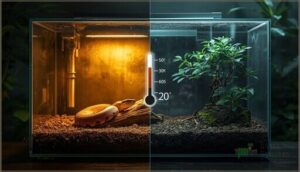
Your thermal gradient begins with two distinct temperature zones at opposite ends of the enclosure. Position the basking spot at one end—around 88–92°F for ball pythons or 85–90°F for corn snakes—and maintain the cool side 10–15°F lower. This heat distribution lets your snake self-regulate, moving between zones as needed for digestion, rest, and comfort.
| Species | Warm Zone | Cool Zone |
|---|---|---|
| Ball Python | 88–92°F | 78–82°F |
| Corn Snake | 85–90°F | 70–75°F |
| Boa Constrictor | 90–95°F | 80–85°F |
Don’t let zones overlap—gradient maintenance requires clear separation. Substrate depth and enclosure design affect how heat spreads, so verify temperatures at snake level, not just air readings. Consistent zone creation reduces stress and promotes healthy thermoregulation throughout the day.
Placement of Heating Elements
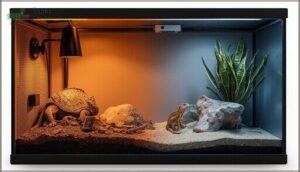
Correct heating element placement determines whether your thermal gradient functions or fails. Position under-tank heat mats or ceramic heaters at one enclosure end to establish your basking spot, then let the opposite end remain unheated for the cool zone. Secure all devices with a temperature controller to prevent dangerous fluctuations and hot spots.
- Mount heat lamps above mesh lids, never inside glass enclosures where contact burns occur.
- Place thermostats between the heat source and substrate to regulate output accurately.
- Avoid excessive enclosure insulation that traps heat unevenly and disrupts gradient stability.
Importance of Consistent Temperature Gradients

Gradient consistency shapes every aspect of your snake’s well-being. A stable thermal gradient facilitates precise thermoregulation techniques, letting your pet select distinct microclimates for digestion, rest, and activity.
Without steady temperature control, heat stress escalates and immune function drops. Minimize temperature fluctuation to support efficient metabolism, and you’ll see fewer respiratory problems and stronger feeding responses.
Thermal balance isn’t optional—it’s foundational for reptile health.
Signs Your Snake is Getting The Right Temperature
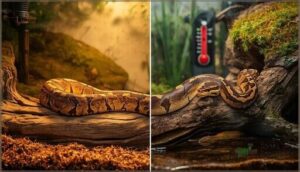
You’ll know your snake’s environment is on target when its daily patterns look right. A well-heated enclosure shows up in consistent feeding schedules, clean sheds, and natural movement between zones.
Let’s break down the behavioral cues and physical signs that tell you the temperature gradient is doing its job.
Healthy Activity and Feeding Patterns
Your snake’s appetite consistency and activity levels are reliable indicators of proper thermoregulation. When temperature maintains a healthy metabolic balance, you’ll observe regular feeding responses and purposeful exploration.
Monitor digestion rates—prey should process predictably without regurgitation. Strong feeding cues like tongue-flicking and confident strikes signal thermal comfort. Conversely, sudden appetite declines or lethargy warrant immediate enclosure temperature reassessment to maintain ideal reptile health.
Normal Shedding and Skin Condition
Consistent shedding patterns reflect proper thermoregulation and humidity levels. You’ll notice complete, one-piece sheds when environmental conditions support the molting process. Incomplete shedding or dull skin signals temperature effects disrupting metabolism—cold spots slow enzymatic processes essential for healthy skin health.
Watch for:
- Complete sheds in single intact pieces
- Clear eye caps without retention
- Vibrant coloration between shed cycles
- Regular shedding intervals matching species norms
- No retained patches of old skin
Abrupt changes in shedding cues demand immediate enclosure review.
Typical Resting and Basking Behaviors
Beyond skin condition, basking postures reveal thermal comfort. Your snake’s resting patterns along the temperature gradient indicate whether the environment suits its cold-blooded metabolism. Observe relaxed, stretched forms on warm surfaces—behavioral signs of proper snake body temperature.
Ball pythons coil loosely, while corn snakes alternate between rest and exploration near the basking spot. These thermal cues confirm your heating setup is effective.
| Species | Comfortable Basking Posture | Duration |
|---|---|---|
| Ball Python | Loosely coiled on substrate | 2-4 hours |
| Corn Snake | Semi-extended, frequent shifts | 1-3 hours |
| Boa Constrictor | Flattened, spread on rocks | 3-5 hours |
How to Accurately Monitor Enclosure Temperatures
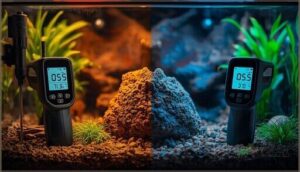
You can’t rely on guesswork regarding your snake’s thermal environment. Accurate monitoring requires the right equipment placed in the right spots, combined with consistent verification habits.
Let’s break down the tools and techniques that’ll give you reliable temperature readings every single time.
Choosing and Placing Thermometers and Probes
Without digital thermometers with probes, you’re guessing whether your snake’s environment is safe. Install at least two temperature sensors—one in the basking zone at snake level, another in the cool end—to capture the gradient accurately.
Position probes away from substrates that distort readings, and secure them so they won’t shift. Calibrate monthly using ice-water and boiling-water references to maintain measurement precision.
Using Thermostats and Remote Monitoring Tools
Thermostats paired with remote sensors transform guesswork into precision. Connect your heat mat or ceramic emitter to a rated aquarium thermostat, positioning the probe near the basking zone to prevent overheating.
Smart thermostats with Wi‑Fi capability send automated alerts to your phone when temperatures drift, while temperature logging tracks 24‑hour trends—giving you control even when you’re away.
Routine Spot Checks and Calibration Tips
Calibrate your digital probes monthly against an ice-water bath (0°C) or boiling water (adjusted for altitude) to catch drift before it harms your snake.
Place temperature probes at head height in both temperature zones—not directly under heat lamps or touching the heat source.
Record readings twice daily for a week to establish your baseline enclosure monitoring routine, then verify weekly.
Troubleshooting and Adjusting Temperature Issues

Even with careful setup, temperature problems can still crop up in your snake’s enclosure. You’ll need to recognize warning signs quickly, know how to adjust your heating equipment, and understand when a vet visit becomes necessary.
Let’s walk through the most common issues and their practical solutions.
Recognizing Symptoms of Overheating or Chilling
Thermal stress often reveals itself before serious heat stroke or cold shock develops. Watch your snake’s behavior closely—temperature fluctuations disrupt normal patterns, signaling that your thermal gradient needs immediate attention:
- Frequent open-mouth gaping and rapid breathing indicate overheating
- Prolonged basking without digestion progress suggests chilling
- Persistent tail flicking combined with lethargy signals heat management failure
- Blotchy coloration or dehydration-related tackiness shows extreme temperature exposure
- Appetite disruption or regurgitation reveals inadequate snake habitat temperature
Adjusting Heat Sources and Enclosure Setup
Once you’ve identified temperature stress, precision-driven adjustments restore thermal balance. Use thermostats to regulate heat source output and prevent dangerous spikes. Place heat lamps or heat mats to create a defined warm zone at the correct gradient creation without overheating basking areas. Never position heating elements directly under your snake’s resting surface to reduce burn risk.
Employ enclosure materials with good insulation to minimize overheating and energy waste, then verify your temperature readings at multiple points throughout the day.
| Adjustment Strategy | Implementation Details |
|---|---|
| Thermostat calibration | Set controller 2-3°F below target to compensate for probe lag |
| Heat mat placement | Position under one-third of enclosure design floor for safe temperature gradient |
| Lamp distance | Maintain 12-18 inches between bulb and basking platform |
| Insulation check | Seal ventilation gaps that disrupt temperature control |
| Equipment inspection | Replace worn heating elements showing uneven output |
When to Seek Professional Veterinary Advice
Temperature problems can spiral into life-threatening snake emergencies faster than you’d expect. Seek veterinary care immediately if your snake shows sunken eyes, persistent feeding refusal beyond two weeks, or respiratory distress after exposure to incorrect temps.
Retained shed, unexplained lumps, or collapse all demand urgent consultations—medical intervention prevents complications that home adjustments can’t fix.
Frequently Asked Questions (FAQs)
Can seasonal temperature changes affect my snakes behavior?
Yes. Seasonal temperature fluctuations act as environmental cues that shift your snake’s thermoregulation strategies, activity levels, and feeding rhythms—just as wild coldblooded snakes follow nature’s thermal gradient throughout the year.
Do baby snakes need different temperatures than adults?
Hatchlings demand warmer basking zones—usually 2–6°C higher—to fuel rapid metabolism and digestion.
Neonate care requires tighter temperature gradients and closer monitoring because inadequate thermal needs quickly trigger feeding refusal and compromised hatchling health.
How does room temperature impact enclosure heating needs?
Your room’s ambient conditions set the baseline for heater sizing and thermal gradients. Cooler rooms demand stronger heat sources to maintain proper temperature regulation, while warmer spaces risk compressing your snake habitat temperature zones.
Should nighttime temperatures drop for all snake species?
Nocturnal temperature drops aren’t universal—species-specific tolerances matter. While some snakes benefit from nighttime cooling to support circadian rhythms and thermal cycles, others need consistent warmth.
Always verify your snake species’ documented night temperature requirements before adjusting temperature regulation protocols.
What backup heating options work during power outages?
When the grid fails, battery backup units keep ceramic heat emitters running temporarily.
Portable heaters with ventilation, insulation methods like reflective shielding, and solar heating pads offer emergency protocols that prevent dangerous temperature drops.
Conclusion
Temperature accuracy isn’t optional—it’s the difference between a thriving snake and a slow medical crisis. You’ve learned how to tell if a snake is getting the right temperature through behavioral cues, thermal monitoring, and gradient management.
Now put that knowledge to work: check your thermometers, observe your snake’s patterns, and adjust before problems escalate. Your vigilance today prevents the complications that veterinarians see tomorrow. Those few critical degrees? They’re entirely in your control.