This site is supported by our readers. We may earn a commission, at no cost to you, if you purchase through links.
The saw-scaled viper is smaller than your forearm, and it kills more people than any other snake on Earth. Not the black mamba. Not the inland taipan, which carries the most toxic venom known and almost never bites anyone.
That gap matters. Most aggressive snake species aren’t hunting you. They’re cornered, stepped on, or grabbed from above, and a bite is the last thing they try after hissing, flattening their necks, and tightening their coils.
Know which species to avoid and which warning signs to read, and you’ll spot danger early. Here’s where to start.
Table Of Contents
- Key Takeaways
- 7 Dangerous Snake Species to Avoid Handling
- Why “Aggressive” Snakes Usually Act Defensively
- Where Dangerous Snake Encounters Are More Likely
- How to Avoid Snakebites and Respond to Encounters
- Choosing Beginner-Friendly Pet Snakes Over High-Risk Species
- Frequently Asked Questions (FAQs)
- What snake is most aggressive?
- What is the least aggressive snake to own?
- Which snake is called the silent killer?
- What are the 10 most dangerous snakes?
- What is the snake’s worst enemy?
- What will vinegar do to a snake?
- What is the least aggressive snake species?
- How can climate change influence snake aggression levels?
- What sounds or vibrations attract aggressive snakes?
- How do seasonal changes affect snake encounter risk?
- Conclusion
Key Takeaways
- Most "aggressive" snakes are really defending themselves, so you’ll stay safe by reading warning signs like hissing, a flattened neck, tail vibration, or tightening coils and backing away slowly while keeping at least 6 feet of distance.
- Venom strength doesn’t tell you how dangerous a snake is, since the inland taipan has the most toxic venom but rarely bites, while the milder saw-scaled viper kills more people worldwide.
- You’re most likely to meet dangerous snakes on rural farmland, near water edges, tall grass, and trails in tropical Africa, Asia, and Latin America, and you can cut your bite risk with over-the-ankle boots, long pants, and watching where you step.
- If you want a pet snake, choose a captive-bred, calm beginner species like a corn snake, ball python, or rosy boa, and never handle high-risk venomous species.
7 Dangerous Snake Species to Avoid Handling
Respect keeps you safe around these aggressive snake species, so don’t handle them. The black mamba, inland taipan, Russell’s viper, saw-scaled viper, fer-de-lance, eastern diamondback and coastal taipan all top the list.
If you want to know how these species differ in venom type and temperament, this guide to venomous snakes breaks it down clearly.
Each one packs serious venom. Black mamba bites can cause respiratory failure within hours, while the saw-scaled viper kills more people worldwide than any other snake. Defensive behaviors like gaping, tail vibrating or standing their ground signal that you’re too close. An eastern diamondback can deliver up to 450 mg of venom in a single bite, and less than 150 mg is a potentially lethal dose for humans.
Snakebite prevention starts with distance. Wear protective clothing such as thick boots and long trousers in snake country, and know your local emergency protocols before you need them. If one strikes, you won’t have time to improvise. Give it space and let it leave on its own.
Why “Aggressive” Snakes Usually Act Defensively
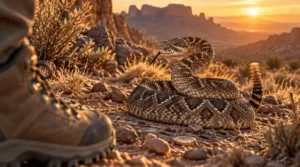
A striking snake isn’t hunting you; it’s defending itself. Once you understand defensive snake behavior, you’ll spot warning signals sooner and stay calmer around venomous snakes. Below, you’ll learn what triggers a defensive strike and how venom potency compares with your real bite risk.
Defensive Triggers and Warning Signals
Rough handling, sudden hands from above, and a cloudy-eyed shedding snake all trigger Defensive Behaviors. Watch for the Warning Signs first: rapid tongue flicking, body tension, hissing, a flattened neck.
If you’re unsure how to lift a nervous snake without triggering those warning signs, this guide to proper snake holding methods shows how to support the body calmly and confidently.
Don’t ignore them. A raised head and tighter coils signal a full Defensive Posture, and Strike Speed leaves you no time to react.
Back away slowly. That’s real Snakebite Prevention.
Venom Potency Versus Bite Risk
Backing away works, but knowing which snakes to fear matters too. Venom Potency doesn’t tell the whole story. The inland taipan tops the toxicity charts, yet it rarely bites people. The saw-scaled viper is milder, but it kills more humans worldwide.
Because a snake’s real danger depends on its range, temperament, and venom type, a guide to venomous snake breeds and how their venoms differ can help you know what to watch for.
The deadliest venom isn’t always the deadliest snake, since the inland taipan rarely bites while the milder saw-scaled viper kills more people
Why? Bite risk depends on yield, frequency and overlap with people. Learn Bite Symptom Recognition and Emergency Protocols now.
Where Dangerous Snake Encounters Are More Likely

Knowing why snakes strike is half the picture. Knowing where you’ll meet them is the other half.
Tropical Africa, Asia, and Latin America account for most venomous bites worldwide, and South Asia alone carries nearly half of the deaths and disabilities. Rural farmland is the hot spot. Habitat Encroachment pushes fields and homes into snake territory, and that Human-Wildlife Conflict plays out at your feet, especially if you’re barefoot.
Habitat Preferences are predictable: water edges, tall grass, rocky ground, forest margins, and trails where snakes bask or hunt. Activity Patterns matter too. In the U.S., 84% of venomous bites happen in summer, and in Costa Rica activity peaks at night during the rainy season.
Snake Encounter Tips start here: know your terrain, and watch where you step.
How to Avoid Snakebites and Respond to Encounters
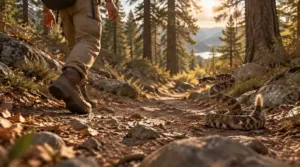
You can cut your risk of a bite sharply with a few habits. Snakebite Prevention starts before you ever see a snake, and it’s simpler than most hikers think.
Wear over-the-ankle boots, thick socks, and loose long pants. Stay on the trail, and skip the headphones so you can hear a rattle.
These Snake Encounter Tips work in the moment: Pairing them with a snake bite first aid kit that includes a compression bandage keeps you prepared if a bite happens anyway.
- Stop moving and locate the snake, keeping at least 6 feet between you.
- Watch for Warning Signs like hissing, tail vibration, or an S-shaped neck.
- Back away slowly with two giant steps, using Safe Retreat Methods that leave the snake an exit.
Defensive Behaviors escalate, so you’ve got time.
If bitten, call emergency services now and keep the limb low.
While you wait for help, a snake bite emergency kit with a splint, bandages, and a first-aid card can keep you prepared.
Choosing Beginner-Friendly Pet Snakes Over High-Risk Species

Curiosity about snakes is healthy, but your first pet shouldn’t test your nerves. Pick a species bred for calm handling and you’ll learn faster, stay safer, and enjoy the hobby.
Three beginner picks stand out:
- Corn snake: docile, 3 to 5 feet, reliable feeder.
- Ball Python: a Calm Demeanor, forgiving of husbandry mistakes.
- Rosy boa: slow-moving, just 2 to 3 feet.
Skip the high-risk species. Good Snake Identification at the pet shop matters, because a mislabeled animal can turn a hobby into an emergency. Buy captive-bred, never wild-caught.
Even gentle snakes get stressed. Know your Safe Retreat Methods, keep Protective Clothing handy for any unfamiliar animal, and back away slowly when a snake flags defensive signals. Your safety comes first.
Frequently Asked Questions (FAQs)
What snake is most aggressive?
The saw-scaled viper takes the title. Among Aggressive Snake Species, it strikes fast, and its Warning Displays are easy to hear.
Habitat Encroachment fuels Human-Snake Encounters, so you should always respect its blistering Strike Speed.
What is the least aggressive snake to own?
Want a snake that won’t bite back? Pick a corn snake. It’s calm, hardy and forgiving.
A Ball Python is shy but fussier. Avoid Copperhead, Western Diamondback Rattlesnake, Eastern Brown Snake and African Rock Python.
Which snake is called the silent killer?
India sees 58,000 snakebite deaths yearly; the Common Krait is the silent killer. Its painless bite fools you, unlike Black Mamba’s.
Venomous Snake Bites need care; Snakebite Prevention means Protective Clothing and less Human-Wildlife Conflict.
What are the 10 most dangerous snakes?
Your ten most dangerous snakes: Inland Taipan, Eastern Brown Snake, Coastal Taipan, Black Mamba, King Cobra, Russell’s Viper, Saw-Scaled Viper, Puff Adder, Fer-de-lance, and Common Krait.
Respect them all, and always keep a safe distance.
What is the snake’s worst enemy?
Humans are, by a million miles, the snake’s deadliest enemy.
Habitat Loss and Habitat Encroachment feed Human-Wildlife Conflict, so Defensive Behaviors get punished and Conservation Status slips.
Hawks and mongooses can’t offset what you’ve caused.
What will vinegar do to a snake?
Oh, great, a pantry staple will save you from a venomous snake. Don’t count on it. Vinegar only irritates scent-sensitive skin briefly, and a snake’s defensive behavior won’t stop. Real snakebite prevention means sealing gaps and clearing habitat overlap.
What is the least aggressive snake species?
Corn snakes win this one. They’re calm, nonvenomous, and rarely bite, so you can build handling confidence fast. A Ball Python is a close second, curling up instead of striking when scared.
How can climate change influence snake aggression levels?
Heat is a loaded spring for snakes. Climate Change speeds strikes and metabolism, shifts ranges through Habitat Loss, and sharpens Aggressive Snake Behavior, fueling Human-Wildlife Conflict. Stay alert, because your Snakebite Prevention starts with understanding.
What sounds or vibrations attract aggressive snakes?
Low, irregular ground vibrations signal Prey Availability, so hungry snakes investigate. Sudden stomps or loud noises do the opposite, triggering Defensive Behavior and rapid Strike Speed.
Habitat Fragmentation fuels HumanWildlife Conflict, so tread softly nearby.
How do seasonal changes affect snake encounter risk?
Ever notice how snakes seem to appear overnight? They don’t. Spring brings slow, cautious movement, while summer’s peak activity shifts to Nocturnal Hunting and Diurnal Behavior. Autumn’s Prey Availability drives risky travel toward dens.
Conclusion
Still picturing a snake lunging at your ankles? Drop the image. Most aggressive snake species avoid people when given a choice, and they bite only after every warning fails.
Your job is simple: give them space, watch where you step, read the hiss, the flattened neck, the tight coil. Respect their distance and they’ll respect yours.
Keep pets beginner-friendly, keep your boots on, and keep your hands off. Calm beats courage, and distance always wins.