This site is supported by our readers. We may earn a commission, at no cost to you, if you purchase through links.

Every year, snakes bite roughly 5.4 million people worldwide, killing up to 138,000, and most victims never saw the snake that struck them. A triangular head does not make a snake venomous. A slender body does not make one safe. The real indicators, fanned fang apparatus, scale row counts, and geographic range, require knowledge that most people simply don’t carry.
Understanding venomous snake breeds information means recognizing not just which species exist, but how their venom works, what it does to the body, and how to respond when seconds count. The profiles ahead cover all of that.
Table Of Contents
- Key Takeaways
- Venomous Snakes: Fangs, Species, and Identification
- Major Venomous Snake Families
- 20 Notable Venomous Snake Species Worldwide
- Snake Venom Types, Potency, and Effects
- Snakebite Prevention, First Aid, and Treatment
- Frequently Asked Questions (FAQs)
- What are the top 10 venomous snakes?
- What is the #1 deadliest snake?
- How to tell if a snake is venomous or poisonous?
- What are the 30 most venomous snakes in the world?
- How long after bitten by rattlesnake?
- What are some facts about venomous snakes?
- What is the rhyme about venomous snakes?
- What is the most venomous snake breed?
- What is the top 10 most venomous snake?
- Which venomous snake kills the most humans?
- Conclusion
Key Takeaways
- Common identification shortcuts like triangular head shape are unreliable — the features that actually matter are fang structure, scale row counts, and confirmed geographic range.
- Venom type determines how fast and how severely a bite harms you: neurotoxic venoms (elapids) can cause paralysis within minutes, while hemotoxic venoms (viperids) destroy tissue and disrupt clotting over hours.
- The Saw-Scaled Viper kills more people than any other snake despite its small size, proving that lethality is driven by range, aggression, and venom yield — not by the species that top potency charts.
- If bitten, immobilize the limb below heart level, call emergency services immediately, and get antivenom as fast as possible — cutting, sucking, or icing the wound makes outcomes worse, not better.
Venomous Snakes: Fangs, Species, and Identification

Understand venomous snakes well enough and you’ll stop relying on dangerous myths. Head shape, often cited as the primary field indicator, is notoriously unreliable. Many highly venomous species have round or gently tapered heads, while harmless snakes can appear just as triangular. What truly distinguishes venomous snakes is their specialized fang apparatus, which delivers venom through hollow or grooved teeth connected to paired glandular sacs positioned just behind the skull.
Banding patterns offer one useful clue, though even these vary—species-by-species details on black and yellow snake identification illustrate how dramatically coloration can mislead.
The Elapidae family includes cobras, mambas, and kraits, all carrying short, fixed front fangs. The Viperidae family uses hinged, retractable fangs capable of much deeper tissue penetration. Beyond fang type, scale row counts at midbody, ventral scale patterns, and geographic range are your most dependable identification tools in the field.
Major Venomous Snake Families
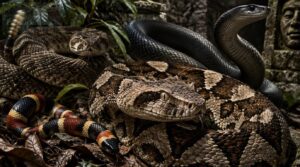
Venomous snakes fall into a handful of distinct families, each with its own venom delivery system, fang structure, and biochemical arsenal. Understanding these taxonomic groupings gives you a clearer framework for recognizing why certain species behave and strike the way they do. A good venomous snake field guide pairs naturally with this taxonomic framework, giving you visual references that map directly to each family’s distinctive features.
The four families below account for virtually every snake that poses a meaningful threat to humans.
Elapidae: Cobras, Mambas, and Taipans
Though hood inflation gets the attention, Elapidae family members like the King Cobra, Black Mamba, and Inland Taipan deploy front fangs to inject neurotoxins quickly, and they’re among the most dangerous snakes you’ll ever encounter.
- Front fangs stay permanently erect
- Neurotoxins block nerve signals, causing paralysis
- Cobras use hood inflation as a warning
- Mambas and taipans strike with impressive speed
Viperidae: Vipers and Rattlesnakes
Where elapids rely on speed, the Viperidae family uses ambush. Vipers have long, hinged fangs that fold flat between strikes and swing forward to inject hemotoxic venom, targeting blood and tissue.
Rattlesnakes are the most identifiable members. Their rattle, triangular head, and heat-sensing pits simplify venomous snake identification, which matters when managing venomous snake bites and prioritizing snakebite first aid.
Atractaspididae: Burrowing Asps
Unlike vipers, burrowing asps don’t need to open wide. Atractaspis spp. project fangs sideways, injecting venom through a lateral thrust in a narrow burrow. Their cytotoxic and neurotoxic venom drives rapid tissue necrosis and edema.
Three rules if you’re in their range:
- Never handle burrows bare-handed.
- Probe loose soil with long tools only.
- Seek urgent care after any suspected bite.
Rear-Fanged Venomous Colubrids
Within the family Colubridae, rear-fanged colubrids occupy a uniquely misunderstood position among venomous snakes. Their Duvernoy’s gland venom requires sustained jaw pressure to deliver, so a brief bite often causes no envenomation.
Species like the boomslang can still produce serious systemic effects. If bitten, immobilize the limb, seek medical care, and bring precise species identification to aid diagnosis and treatment.
20 Notable Venomous Snake Species Worldwide
The following 20 species represent some of the most medically significant venomous snakes on Earth, drawn from every major venomous family and every inhabited continent. Each profile covers the snake’s range, venom type, and threat level so you can build a clear picture of what makes it dangerous. Whether your interest is scientific or safety-driven, these entries give you the grounding you need.
Understanding how these snakes strike and subdue their prey is easier when you look at common snake hunting behaviors, which reveal just how quickly venom can be deployed.
Inland Taipan
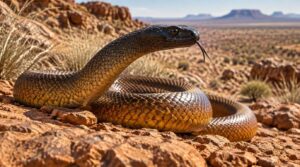
The Inland Taipan tops every list of venomous snakes by sheer venom potency per bite. Found in central Australia’s rocky semi-arid outcrops, it’s a shy, rarely seen predator that strikes only when cornered or grasped.
Its hollow proteroglyphous fangs deliver neurotoxins and procoagulants that can cause paralysis within hours. If you’re bitten, immobilize the limb immediately and get antivenom fast.
Eastern Brown Snake
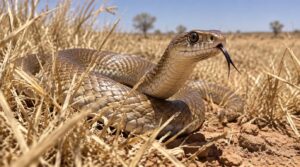
A pale, slender shape gliding through sun-baked pasture grass doesn’t look like a killer, but the Eastern Brown Snake does. Responsible for most snakebite fatalities in Australia, its venom potency is fierce enough to trigger coagulation failure within minutes. Among all venomous snake types, few strike as fast or willingly.
If you’re envenomated, you need prompt antivenom, not false reassurance.
Coastal Taipan
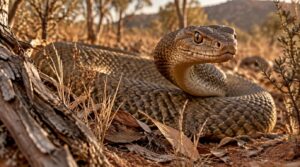
A blur of olive-brown moving through scrubland. That’s your warning from the Coastal Taipan.
This species spans northern and eastern Australia, its snake habitat distribution including sugarcane fields. Venom potency is severe, with neurotoxic and myotoxic effects. Without antivenom, snakebite fatalities occur fast.
- Olive to brown coloring
- Distinct large eyes
- Found near human habitation
- Rapid symptom onset
- Seek antivenom immediately
King Cobra
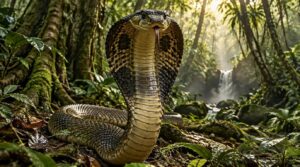
No venomous snake rivals the King Cobra (Ophiophagus hannah) in raw presence. A member of the Elapidae family, it’s the world’s longest venomous species, reaching 3 to 4 meters and sometimes past 5.
You can identify it by its broad distinctive hood and olive-brown dorsal scales. Its potent neurotoxic venom causes respiratory failure quickly, making antivenom treatment essential for survival.
Indian Cobra
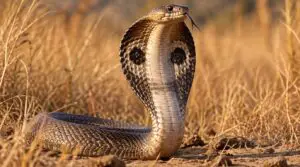
The iconic spectacle marking on the Indian Cobra’s hood makes it one of the most recognized venomous snakes on Earth. Reaching 1.2 to 1.8 meters, it delivers neurotoxic snake venom triggering ptosis and rapid respiratory failure within 60 minutes.
Clinical symptoms of snakebite escalate fast, so antivenom must reach the patient quickly. Know this species before entering its grassland habitat.
Common Krait
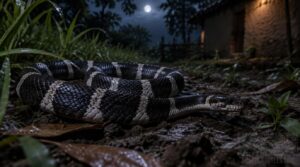
The Common Krait, a close relative of the Banded Krait, kills through stealth rather than spectacle. Its neurotoxins strike at night while you sleep, delivering near-painless bites that progress to ptosis, diplopia, and descending paralysis.
For venomous snake identification, you’ll spot pale crossbands on a slender dark body near villages.
Antivenom and ventilator support are critical for snakebite envenomation survival.
Russell’s Viper
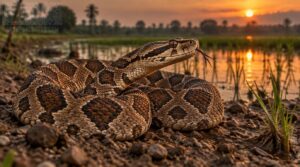
Where the Krait whispers, Russells Viper announces itself far more dramatically. Among venomous snakes of the Indian subcontinent, its hemotoxic snake venom composition triggers rapid, painful swelling, ecchymosis, and dangerous coagulopathy.
You’ll recognize it by its broad dark crossbands on a pale gray-brown body, most often near paddy fields and irrigation canals.
When snakebite symptoms appear, always get antivenom fast.
Saw-Scaled Viper
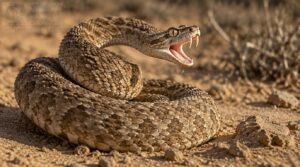
Russell’s Viper announces itself clearly. The Saw-Scaled Viper doesn’t.
Across Africa, the Middle East, and the Indian subcontinent, this small, irritable species is responsible for more snakebite deaths than almost any other snake. Miniature serrated scales along its dorsal surface produce a rasping sound when threatened. Its coagulopathic venom causes bleeding disorders fast. Immobilize the limb and seek antivenom immediately.
Black Mamba
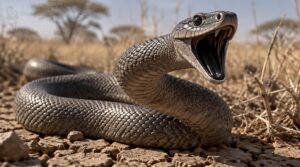
The Saw-Scaled Viper is a volume killer. The Black Mamba is a speed killer.
Part of the Elapidae family, this large sub-Saharan elapid produces neurotoxic effects that advance quickly, shutting down respiration within hours. Venomous snake behavior here includes multiple rapid strikes when cornered. Snake venom mortality rates without antivenom remain severe. Immobilize the limb and reach medical care fast.
Puff Adder
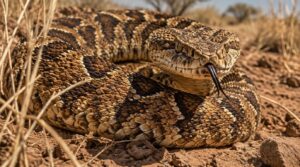
Africa’s Puff Adder is responsible for more snakebite deaths than any other venomous snake on the continent. Its broad, flattened head and zigzag pattern make identification clear. Facts about its venom and antivenom inform wildlife safety guidelines across the region.
- Venom is cytotoxic and haemotoxic
- Swelling and necrosis begin within hours
- Seek antivenom immediately
- Immobilize the limb; don’t cut wounds
Gaboon Viper
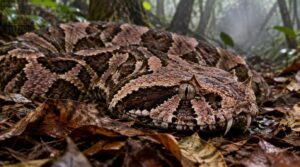
Although the Gaboon Viper is slow-moving, its fangs reach two inches long, the greatest length recorded in venomous snake anatomy. This Viperidae family ambush predator blends perfectly into leaf litter across sub-Saharan Africa, striking without warning.
Its venom’s hemotoxins and cytotoxic effects destroy tissue and rapidly disrupt blood clotting. If you’re bitten anywhere near one, get to a hospital immediately.
Boomslang
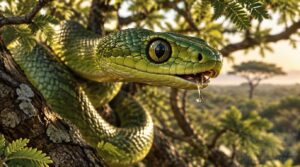
Herpetologist Karl Schmidt died from a boomslang bite in 1957, fatally underestimating it. This rear-fanged venomous snake lives in sub-Saharan Africa’s woodlands, often perching high in the trees. Its hemotoxic venom strikes insidiously.
- Large round pupils and a slender body aid identification.
- Venom destroys clotting, causing internal bleeding.
- Symptoms appear 4-6 hours post-bite.
- Don’t delay; seek antivenom and medical care.
Mojave Rattlesnake
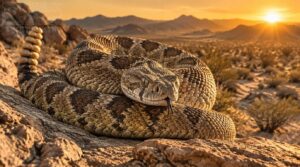
Picture pale tan scales on sunbaked rock: the Mojave Rattlesnake, still and waiting. Its pit viper heat sensing pit locates prey without any light.
| Feature | Detail | Risk |
|---|---|---|
| Venom | Neurotoxic | High |
| Habitat | SW deserts | Arid |
| Bite care | Immobilize fast | Urgent |
Rattlesnake warning signals alert you before a strike. Use snakebite prevention methods outdoors. These venomous snake bites always require emergency attention.
Western Diamondback Rattlesnake
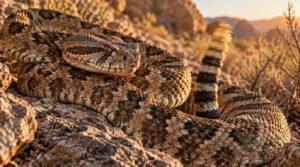
The Western Diamondback’s distinctive zigzag crossbands and rattling tail make it instantly recognizable across arid southwestern United States and northern Mexico. Its hemotoxic venom destroys tissue and disrupts clotting, with swelling progressing up to 72 hours post-bite.
Most bites happen when you step on or handle one. Immobilize the affected limb and reach care fast, since prompt antivenom improves outcomes.
Eastern Coral Snake
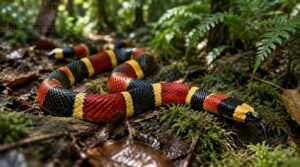
Red touches yellow, kill a fellow." That old rhyme is still your best coral snake identification shortcut. A North American snake identification guide can help you recognize coral snakes and their harmless lookalikes before you’re ever close enough for the rhyme to matter.
The Eastern Coral Snake packs highly neurotoxic venom that blocks neuromuscular junctions, causing rapid, potentially fatal paralysis.
Despite its glossy bands and slender build, this venomous snake is deceptively easy to underestimate.
If you spot red touching yellow, don’t linger. Seek antivenom fast.
Fer-de-Lance
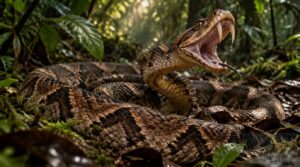
Unlike the coral snake’s neurotoxic threat, the Fer-de-Lance causes immediate tissue destruction. Its hemotoxic snake venom triggers swelling, necrosis, and coagulopathy within 30 to 60 minutes of a snake bite. Antivenom is your only reliable defense against this venomous snake.
5 identification tips:
- Broad triangular head
- Dark dorsal zigzag bands
- Body reaches two meters
- Long retractable fangs
- Distinct narrowed neck
Bushmaster
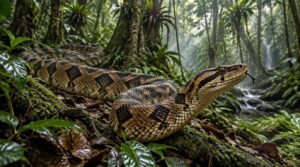
Like the Fer-de-Lance, the Bushmaster is a hemotoxic pitviper, but takes scale to an extreme. As the Americas’ longest venomous snake species, reaching 3.7 meters, it delivers a massive venom dose in one strike. Found in Neotropical forests, it’s reclusive and bites only when disturbed. Coagulopathy and local swelling set in fast, so transport victims and administer antivenom without delay.
| Feature | Detail | Risk Implication |
|---|---|---|
| Body length | Up to 3.7 meters | Greater venom volume per bite |
| Venom type | Hemotoxic, coagulopathic | Rapid tissue damage and bleeding |
| Habitat | Neotropical lowland and upland forests | Remote locations slow treatment |
| Behavior | Reclusive; bites when disturbed | Accidental contact is primary risk |
| Treatment | Polyspecific antivenom needed | Delay raises mortality risk sharply |
Common Death Adder
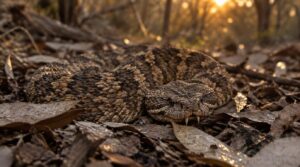
Shifting from South America to Australia, you meet a very different threat. The Common Death Adder is compact but lethal, with front-positioned fixed fangs capable of deep neurotoxic envenomation in a strike barely 2 cm long.
In southeastern Australia’s leaf-litter woodlands, its crossbanded body blends perfectly. At dusk, watch your step; this ambush predator rarely reveals itself before it strikes.
Dubois’s Sea Snake
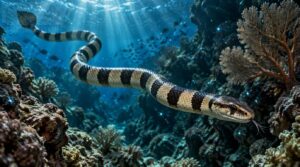
From Australia’s leaf litter to open ocean, Dubois’s Sea Snake inhabits a world few snakes can claim. This Elapidae family member carries potent neurotoxins and myotoxins, placing it among the most dangerous marine snake venoms in the Indian Ocean.
Growing to 1.8 meters, it targets divers or fishing gear when threatened. Apply pressure bandaging immediately and seek urgent medical care.
Beaked Sea Snake

The beaked sea snake (Enhydrina schistosa) inhabits shallow estuaries and mangrove zones of the Indo-Pacific, where you might easily mistake it for debris drifting near mud banks. Its phospholipase A2 venom delivers rapid neurotoxic and myotoxic effects, causing paralysis, rhabdomyolysis, and respiratory failure.
Most bites follow accidental contact, not aggression. If envenomated, apply pressure immobilization and seek immediate medical care.
Snake Venom Types, Potency, and Effects

Across venomous snake families, venom composition determines how quickly and severely a bite will affect you. Elapids deliver neurotoxic venom that blocks nicotinic acetylcholine receptors, shutting down neuromuscular transmission and pushing you toward flaccid paralysis and respiratory failure within minutes to an hour. The Inland Taipan exemplifies extreme LD50 venom potency, clocking in at roughly 0.02 mg/kg in mice, the lowest recorded for any snake on earth.
Viperids work quite differently. Their hemotoxic venom triggers coagulopathy, tissue necrosis, and sometimes disseminated intravascular coagulation, with local swelling and pain appearing almost immediately. Systemic effects then build over hours. Both venom classes can also damage the kidneys and liver through cytotoxic components, compounding the danger substantially if you don’t reach treatment quickly.
Snakebite Prevention, First Aid, and Treatment
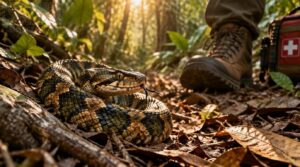
An ounce of prevention is worth a pound of cure, and snake bite prevention starts the moment you enter the field. Wear sturdy boots, stay on clear paths, and never reach into hidden spaces.
- Call emergency services immediately
- Keep the bitten limb still and below heart level
- Remove rings or tight clothing near the bite
- Don’t cut, suck, or apply ice to the wound
- Note the snake’s appearance for medical toxicology assessment
Snake bite statistics put global bites at roughly 5.4 million per year, with up to 138,000 deaths. Clinicians base antivenom selection on suspected species, geography, and clinical signs. Your wildlife safety ultimately depends on the choices you make before and after any encounter. Knowing which species inhabit your destination dramatically improves both prevention and treatment outcomes — this guide to identifying and avoiding the world’s most venomous snakes is worth reviewing before any wilderness trip.
With 5.4 million bites and 138,000 deaths yearly, your survival depends on the choices you make before and after the encounter
Frequently Asked Questions (FAQs)
What are the top 10 venomous snakes?
Snakebite kills roughly 138,000 people yearly.
The top ten venomous snakes are the Inland Taipan, Eastern Brown Snake, Coastal Taipan, King Cobra, Indian Cobra, Common Krait, Russell’s Viper, Saw-Scaled Viper, Black Mamba, and Puff Adder.
What is the #1 deadliest snake?
Picture a single drop of venom capable of killing over 100 humans outright. That’s the Inland Taipan, the deadliest species on Earth, with LD50 values that dominate every known venom potency ranking. Antivenom is available.
How to tell if a snake is venomous or poisonous?
Think identifying venomous snakes is simple? It isn’t. A reliable snake identification guide combines head shape, fang visibility, and geographic range. Snake mimicry makes color alone dangerously misleading, so always observe from a safe distance.
What are the 30 most venomous snakes in the world?
Topping the list are the Inland Taipan, Eastern Brown Snake, Black Mamba, King Cobra, Common Krait, Coastal Taipan, Dubois’s Sea Snake, Russell’s Viper, Gaboon Viper, and Boomslang, though exact rankings shift by study and region.
How long after bitten by rattlesnake?
After a rattlesnake bite, local swelling and redness usually appear within 30 to 60 minutes, with blisters forming by hour eight.
Antivenom is most effective within 4 hours, so get yourself to an ER immediately.
Clinicians may administer CroFab or ANAVIP antivenom depending on symptom severity and the patient’s response to initial treatment.
What are some facts about venomous snakes?
Venomous snakes inhabit every continent except Antarctica and use hollow, movable fangs to inject venom. Depending on the species, that venom can cause paralysis, severe bleeding, or tissue death. Antivenom is the only reliable treatment.
What is the rhyme about venomous snakes?
The classic coral snake mnemonic is "red on yellow, kill a fellow; red on black, friend of Jack." It helps you tell the deadly Eastern Coral Snake apart from harmless mimics like the scarlet kingsnake.
What is the most venomous snake breed?
No single venomous snake on Earth packs a more devastating punch than the Inland Taipan. Its venom potency, measured by LD50 values, dwarfs every other known species, making an untreated bite potentially lethal within hours.
What is the top 10 most venomous snake?
Measured by venom potency, the top 10 most venomous snake species include the Inland Taipan, Eastern Brown, Coastal Taipan, Black Mamba, King Cobra, Common Krait, Dubois’s Sea Snake, Beaked Sea Snake, Death Adder, and Boomslang.
Which venomous snake kills the most humans?
The Saw-Scaled Viper kills more humans than any other snake worldwide. Its aggression, high venom yield, and wide range across densely populated regions drive human mortality rates far above the Inland Taipan or Black Mamba.
Conclusion
Funny how a triangular head became everyone’s shorthand for danger, while the Boomslang, with its large eyes and slender frame, quietly kills you with anticoagulant venom. That’s the gap venomous snake breeds information is built to close.
Know the families. Respect the geographic ranges. If you spend any real time outdoors where these species live, carry this knowledge the way you’d carry a first aid kit, because the snake that bites you simply won’t wait.