This site is supported by our readers. We may earn a commission, at no cost to you, if you purchase through links.
Most arboreal reptiles spend 90% of their lives above ground, yet many keepers house them in enclosures designed for terrestrial species. The result? Stressed animals that can’t exhibit natural behaviors, compromised immune systems, and a terrarium that looks more like a fish tank than a vertical forest.
Choosing reptile terrariums for arboreal species isn’t about bigger floor space, it’s about thinking upward. Your green tree python or crested gecko needs climbing routes, proper airflow at multiple heights, and humidity zones that shift from substrate to canopy.
The right enclosure transforms your pet’s environment from a holding container into a thriving habitat where climbing, perching, and exploring become second nature.
Table Of Contents
Key Takeaways
- Arboreal reptiles need vertical space at least two to three times their body length—prioritize height over floor space when selecting terrariums to support natural climbing behaviors and reduce stress.
- Proper ventilation through cross-flow vents maintains 70-80% humidity without creating stagnant air pockets that breed mold, making PVC enclosures with strategic vent placement superior to full-screen tops that lose moisture too quickly.
- Installing climbing structures at 30-45 degree angles using natural branches with 2-6 cm diameters across 60-70% of vertical space creates the functional pathways arboreal species need to thrive, not just survive.
- Daily spot cleaning and humidity management below 70% prevent the bacterial and mold growth that cause respiratory infections, making maintenance routines as critical as enclosure selection for long-term reptile health.
Key Features of Arboreal Reptile Terrariums
Your arboreal reptile’s terrarium isn’t just a container—it’s the foundation of their health and behavior. Chameleons, tree frogs, geckos, and other climbers need specific features that mirror their natural canopy habitats, from vertical climbing space to precise humidity control.
Elevated hides and perches give your pet secure resting spots while maintaining the vertical structure they instinctively seek—check out these arboreal snake hide options designed specifically for climbers.
Let’s break down the four essential features you can’t overlook when choosing or evaluating an enclosure for your tree-dwelling species.
When it comes to lighting and warmth, especially in larger setups, choosing the right heat lamps for large enclosures can make all the difference in maintaining proper temperature gradients.
Importance of Vertical Space for Climbers
Vertical space isn’t just a nice-to-have—it’s the backbone of your arboreal reptile’s wellbeing. Your climbers need at least two to three times their body length in height to move naturally, explore confidently, and maintain healthy body condition. Without adequate vertical clearance, you’ll see reduced climbing behavior and increased stress markers.
Planning proper height ratios early helps you avoid costly upgrades—check out this complete guide to large snake enclosure dimensions for species-specific vertical clearance recommendations.
Arboreal reptiles need vertical space at least two to three times their body length to thrive—without it, you’ll see stress and reduced climbing behavior
Here’s what proper vertical space delivers:
- Enhanced climbing behavior: Multiple height levels trigger natural exploration patterns your reptile craves
- Reduced stress indicators: Captive studies show vertically-oriented enclosures outperform horizontal designs for arboreal health
- Improved body condition: Enclosures offering 60 cm or more vertical climbability support healthier physical metrics in arboreal lizards
Ventilation and Humidity Control Essentials
Proper air exchange separates thriving habitats from struggling ones. You need cross-ventilation through opposing wall vents to maintain 70 to 80 percent humidity levels without creating stagnant pockets. PVC enclosures with strategic vent design retain moisture management better than full-screen tops, which rapidly lose humidity.
Adding low vents above substrate boosts circulation while your misting system maintains temperature regulation. Balance is everything—too much ventilation dries your reptile out, too little breeds mold. Effective air movement techniques are vital for a healthy environment.
Access Points for Handling and Cleaning
You’ll need two to four access points positioned at different heights to safely retrieve your arboreal reptiles without disrupting their climbing space. Front-opening designs like Exo Terra models give you better handling safety than top-entry terrariums.
Look for secure latches that prevent escapes while allowing easy cleaning through access ports near the base. Proper terrarium design puts ventilation systems and waste removal where you can reach them without stressing your animal.
Escape-Proof Design Considerations
Screen cages and climbing space won’t matter if your arboreal reptiles slip through gaps. Check that mesh gaps measure less than 1 cm, and install locking mechanisms with backup locks on every door.
Your terrarium design should include hinges you inspect weekly for tension loss, plus substrate edges anchored to prevent lifting. Secure latches and gap sealing turn your reptile enclosure into a fortress.
Choosing The Right Enclosure Material
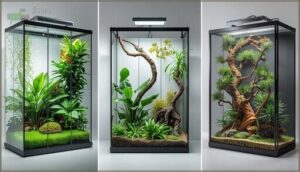
The material you choose for your arboreal enclosure affects everything from humidity retention to how easy it’s to clean. Glass, PVC, and screen cages each bring their own strengths to the table, depending on your species’ needs and your setup goals.
Let’s break down what each option offers so you can pick the right fit.
If you’re setting up a home for arboreal snakes, check out vertical enclosures designed for climbing species that maximize height over floor space.
Glass Vs. PVC Vs. Screen Cages
Choosing the right cage material shapes your reptile’s entire environment, from visibility to climate control. Each option—tall glass terrariums, PVC cages, or screen cages—brings unique strengths to arboreal enclosures:
- Glass terrariums provide crystal-clear views, tight seals for humidity control, and secure escape prevention
- PVC cages resist impacts better, weigh less, but need careful ventilation systems management
- Screen cages boost airflow and natural ventilation but require extra attention to escape prevention
- Cage durability varies notably between materials under daily use
Durability and Maintenance Needs
Glass terrariums resist scratching and staining better than plastics, extending material longevity and reducing cleaning schedules. PVC offers impact resistance but may compromise structural integrity under poor humidity control and ventilation systems.
You’ll want corrosion-resistant frames—aluminum with coated surfaces—to maintain arboreal enclosure design in moist environments. Proper sealing prevents water intrusion, keeping your tall glass terrariums or reptile terrariums stable for years with consistent terrarium maintenance.
Regular cleaning also extends to selecting species that thrive in these setups—check out care guides for pet snake species to match humidity needs with your enclosure materials.
Customization for Climbing and Hiding Spots
Perch placement determines whether your arboreal reptiles thrive or merely survive. You’ll need climbing structures spaced 2–4 cm apart across multiple heights, forming continuous vertical networks rather than isolated platforms.
Species adaptation matters—chameleons require omnidirectional branches with leaf cover, while darting geckos prefer shallow ledges.
Cork bark tubes and plant-backed retreats create hideout designs that reduce stress, completing your arboreal enclosure design with functional terrarium design principles.
Top 7 Terrariums for Arboreal Species
Choosing the right terrarium can make or break your arboreal reptile’s quality of life. You need an enclosure that balances height, ventilation, and access while fitting your species’ specific needs.
Here are seven proven options that work well for climbers like chameleons, tree frogs, geckos, and arboreal snakes.
1. Reptviva Arboreal Reptile Terrarium Enclosure

If you’re looking for a reptile enclosure that puts vertical climbing front and center, the Reptviva Arboreal Reptile Terrarium delivers on terrarium design specifically for arboreal species. Measuring 11″L x 11″W x 16″H, this reptile habitat gives crested geckos, chameleons, and tree frogs the vertical space they crave for natural reptile behavior.
The mesh top provides ventilation while the 5-sided blackout reduces stress in shy climbers. You’ll appreciate the escape-proof locks and included trellis for arboreal care, though you’ll need to seal seams with silicone since it’s not waterproof.
| Best For | Owners of crested geckos, chameleons, tree frogs, or small arboreal snakes who want a vertical enclosure that prioritizes climbing space and stress reduction. |
|---|---|
| Material | Acrylic/PVC/Metal |
| Dimensions | 11×11×16 inches |
| Capacity | Not specified |
| Ventilation | Mesh top |
| Access | Secure locks |
| Weight | 6 pounds |
| Additional Features |
|
- Vertical design with 16″ height maximizes climbing opportunities for arboreal species
- 5-sided blackout and mesh top combination reduces stress while maintaining proper ventilation
- Escape-proof locks and included trellis provide security and immediate climbing structure
- Not waterproof out of the box—requires sealing with silicone or epoxy before use
- Can’t support overhead heat lamps or heavy UVB fixtures on top
- Assembly instructions are confusing and may need super glue for some components
2. Repwild Reptile Terrarium Tank Enclosure
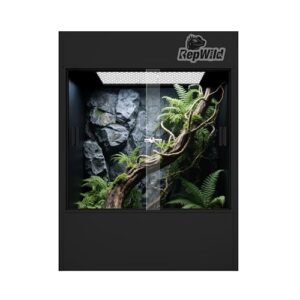
When your arboreal species need serious climbing room, the Repwild Reptile Terrarium delivers 36x18x18 inches of vertical exploration space for geckos and chameleons.
This reptile enclosure features front-lidded vents and mesh top sections that give you precise ventilation control and humidity systems management, critical for arboreal reptiles’ respiratory health.
You’ll find the front door access and removable top panel make terrarium lighting adjustments and tank security checks straightforward. Silicone-sealed edges prevent escapes while supporting bioactive terrarium design with branches and live plants that encourage natural reptile behavior.
| Best For | Reptile owners who need a spacious vertical habitat for arboreal species like geckos, tree frogs, and chameleons that require climbing space and controlled humidity. |
|---|---|
| Material | PVC |
| Dimensions | 17.7×17.7×23.6 inches |
| Capacity | 33 gallons |
| Ventilation | Ventilated mesh |
| Access | Front access |
| Weight | 13.52 kg |
| Additional Features |
|
- Large 36x18x18-inch design provides plenty of vertical space for climbing and natural behaviors
- Front door and removable top panel make feeding, cleaning, and decorating super convenient
- Excellent ventilation system with mesh top and front vents helps you dial in the perfect humidity levels
- Needs extra sealant to make it fully waterproof, so plan for some prep work before setup
- Assembly instructions can be vague in spots, which might frustrate first-time builders
- Not suitable for aquatic pets since it’s not designed to hold water long-term
3. Maiyuolg Reptile Terrarium Tank
You’ll appreciate the Maiyuolg’s compact 16x16x24-inch vertical design if you’re working with crested geckos, chameleons, or similar arboreal species that demand height over floor space.
This acrylic material terrarium weighs just five pounds, making tank assembly and repositioning manageable for regular reptile care routines.
Front access doors simplify feeding and observation of reptile behavior, while integrated ventilation systems maintain airflow without compromising humidity levels.
The clear panels provide unobstructed viewing, letting you monitor your arboreal reptiles’ climbing patterns and health status throughout the enclosure design.
| Best For | Reptile keepers with arboreal species like crested geckos or chameleons who need a tall, lightweight enclosure that’s easy to access and maintain. |
|---|---|
| Material | Acrylic |
| Dimensions | 16×16×24 inches |
| Capacity | 25 gallons |
| Ventilation | Excellent ventilation |
| Access | Front access |
| Weight | 5 pounds |
| Additional Features |
|
- Vertical 16x16x24-inch design maximizes climbing space while keeping a small footprint
- Lightweight acrylic construction at just 5 pounds makes moving and cleaning simple
- Front-opening doors and clear panels let you easily feed, observe, and monitor your pet’s behavior
- Assembly can be frustrating and time-consuming without clear instructions
- May need extra sealing around edges to prevent leaks during misting or cleaning
- Ventilation gaps are sometimes large enough for small feeders or hatchlings to escape
4. Reptizoo Large Reptile Tank Enclosure
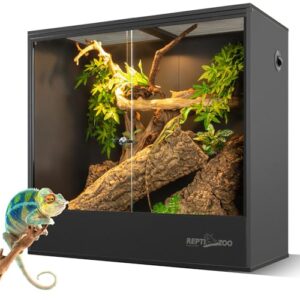
The Reptizoo Large Reptile Tank Enclosure steps up the capacity game with its 100-gallon PVC construction, offering 36x18x36 inches of vertical space suited for larger chameleons, tree monitors, or breeding groups of geckos.
This enclosure design delivers effective insulation for temperature control, helping you maintain stable thermal gradients without constant heat lamp adjustments. The removable mesh screen allows excellent ventilation, while the sliding glass doors—secured with safety locks—simplify tank maintenance and daily feeding routines.
You’ll find this terrarium design ideal for creating humid arboreal habitats that replicate rainforest microclimates.
| Best For | Keepers of arboreal reptiles like chameleons, tree monitors, and geckos who need a spacious, well-ventilated enclosure that holds humidity without constant adjustments. |
|---|---|
| Material | PVC |
| Dimensions | 36×18×36 inches |
| Capacity | 100 gallons |
| Ventilation | Detachable mesh screen |
| Access | Sliding door with lock |
| Weight | 65.9 pounds |
| Additional Features |
|
- 100-gallon vertical design gives plenty of climbing space for larger or multiple reptiles
- PVC construction maintains stable temps and humidity better than glass, cutting down on energy costs
- Sliding glass doors with safety locks make feeding and cleaning straightforward while preventing escapes
- Door openings can feel cramped when working with larger decorations or handling bigger reptiles
- Mesh screen may block some UVB output, so you’ll need to adjust lighting placement or strength
- Suction cups and lock mechanism get mixed reviews—some users report sticking issues and fiddly latches
5. Acrylic Spider And Reptile Terrarium Enclosure
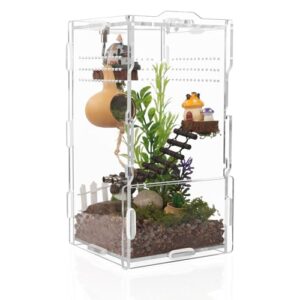
Compact terrariums work best when you’re raising smaller climbing species like jumping spiders, juvenile tree frogs, or hatchling crested geckos.
The Acrylic Spider And Reptile Terrarium Enclosure provides 8x4x4 inches of crystal-clear viewing space, letting you observe reptile visibility and spider habitat behaviors from every angle. This enclosure security design features 1mm micro-vents, a magnetic sliding lid, and quick-assembly buckle panels that prevent escapes while maintaining proper airflow.
You’ll appreciate how terrarium lighting penetrates the transparent acrylic, creating an ideal arboreal environment without heavy glass weight—though acrylic care requires non-abrasive cleaners to preserve clarity.
| Best For | Hobbyists raising smaller climbing species like jumping spiders, juvenile tree frogs, or hatchling arboreal reptiles who want clear visibility from all angles. |
|---|---|
| Material | PVC |
| Dimensions | 8×8×12 inches |
| Capacity | 3.5 gallons |
| Ventilation | Side holes & top |
| Access | Front-opening door |
| Weight | 2.2 pounds |
| Additional Features |
|
- Crystal-clear acrylic panels offer 360-degree viewing with minimal visual distortion, so you can watch your pets from any angle
- Lightweight design makes it easy to move and reposition compared to heavier glass enclosures
- Escape-proof features including 1mm micro-vents and magnetic sliding lid keep small critters secure while maintaining airflow
- Acrylic scratches more easily than glass over time, which can reduce clarity and require polishing or replacement
- Some users report screws coming loose and an interior lip that makes accessing pets difficult
- The 8x4x4 inch size limits you to smaller species and won’t work for larger reptiles or pets needing more space
6. Repti Zoo Chameleon Cage Terrarium
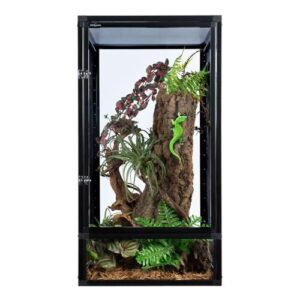
Upgrading from compact enclosures, the Repti Zoo Chameleon Cage Terrarium delivers 16x16x30 inches of vertical climbing territory for juvenile panthers, veileds, and crested geckos approaching adult size.
This arboreal reptile care system combines a rust-resistant metal frame with three-sided mesh ventilation, supporting naturalistic habitats without sacrificing cage security.
You’ll find the front-opening lockable door simplifies chameleon care routines, from terrarium lighting adjustments to reptile nutrition feeding, while cable outlet holes keep your heating and misting equipment organized.
The terrarium design and assembly takes minutes, letting you focus on understanding animal behavior instead of wrestling with complicated hardware.
| Best For | Reptile keepers with juvenile to sub-adult arboreal species like veiled chameleons, panther chameleons, or crested geckos who need a secure vertical habitat with easy maintenance access. |
|---|---|
| Material | Acrylic |
| Dimensions | 8×4×4 inches |
| Capacity | 2000 mL |
| Ventilation | Micro-vents |
| Access | Magnetic sliding lid |
| Weight | 16 ounces |
| Additional Features |
|
- Three-sided mesh ventilation prevents mold buildup while maintaining proper humidity levels for tropical species
- Front-opening lockable door makes daily feeding and cleaning way easier than top-entry designs
- Cable management holes and removable tray keep your heating elements and misting systems organized without cluttering the habitat
- 16×16-inch footprint may be too small for fully grown adult chameleons, requiring an upgrade within 6-12 months
- No built-in temperature or humidity control means you’ll need to budget for separate thermostats and misting equipment
- Assembly instructions mention needing a rubber mallet, and some users report sharp edges that need filing down before handling
7. Exo Terra Glass Terrarium Kit
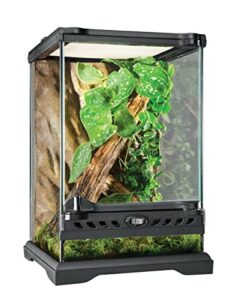
For entry-level keepers new to reptile care and housing, the Exo Terra Glass Terrarium Kit arrives with front-opening dual doors and a raised bottom frame ready for arboreal substrate layering—no complicated kit assembly required.
At 8x8x12 inches, this glass terrarium suits starter species like mourning geckos and juvenile day geckos while demonstrating glass durability through tempered panels and reinforced seals.
Patented front ventilation systems pair with full-screen top access, letting terrarium lighting penetrate while maintaining humidity for young arboreal reptile inhabitants.
| Best For | Entry-level keepers starting with small arboreal species like mourning geckos, juvenile day geckos, or stick insects who want a ready-to-use enclosure with good ventilation and easy access. |
|---|---|
| Material | Metal/Polycarbonate |
| Dimensions | 16×16×30 inches |
| Capacity | 34 gallons |
| Ventilation | 3-sided metal mesh |
| Access | Front door with lock |
| Weight | Not specified |
| Additional Features |
|
- Front-opening dual doors with locks make feeding and cleaning simple without reaching down from the top
- Patented ventilation system combines front vents and full screen top for proper airflow while allowing UVB and heat lamp penetration
- Tempered glass construction with reinforced seals provides durability and clear viewing while the raised bottom fits substrate heaters
- Small 8x8x12 inch footprint limits use to starter species and juveniles—not suitable for larger or terrestrial reptiles
- Metal mesh top can be harsh on delicate species like mantises and may require modification or removal
- Plastic locks and latches feel cheaply made and need careful handling, while gaps near doors may let small feeders escape
Setting Up an Ideal Arboreal Habitat
Once you’ve chosen the right terrarium, the real work begins. Setting up an arboreal habitat means thinking like your reptile, creating a space that mimics the trees and canopy layers they’d navigate in the wild.
Here’s how to build an environment where your climber won’t just survive, but thrive.
Selecting and Installing Climbing Structures
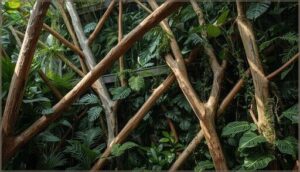
Think of climbing structures as the skeleton of your arboreal reptile habitat—they define how your animal moves and thrives.
Choose natural wood branches with varying diameters, ideally 2–6 cm, to accommodate species compatibility and grip strength. Install them at 30–45 degree angles, spanning 60–70% of your terrarium’s vertical space.
Secure with stainless steel fasteners to handle shifting loads and prevent wobble during active climbing.
Incorporating Live or Artificial Plants
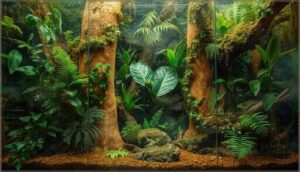
Plant selection shapes how your arboreal species interacts with its terrarium. Choose non-toxic live plants with humidity tolerance and sturdy branches, or opt for artificial greenery that mimics natural setups without the care demands. Anchor both types securely to prevent displacement during climbs.
Position them to create vertical gardening complexity in your Exo Terra or similar naturalistic setup, avoiding ventilation blockages while maximizing your reptile habitat creation goals.
Creating Hiding and Resting Areas
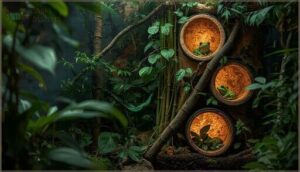
Your arboreal species needs strategic retreat zones to thrive in naturalistic setup enclosures. Position hiding spot design elements at multiple vertical levels using cork bark, bamboo tubes, or commercial reptile cages accessories that create visual barriers while supporting climbing structure pathways.
Effective resting area layout includes:
- Cork rounds mounted at 45-degree angles for secure perching
- Leaf hammocks positioned beneath basking zones within your Exo Terra terrarium
- Hollow branches providing mid-level concealment and thermal gradients
- Fabric or foam hides anchored to rear walls in enclosure systems
Managing Temperature and Humidity Levels
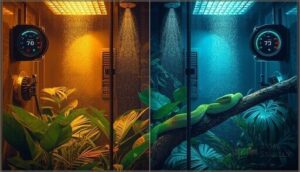
Controlling environmental parameters transforms your terrarium into a thriving reptile habitat creation.
Install a thermostat to maintain thermal gradients from warm basking zones to cooler refuges, minimizing temperature fluctuations within species-appropriate ranges.
Position hygrometers at multiple heights for microclimate management, then integrate misting systems with timers for humidity control.
Balance ventilation systems with moisture retention to prevent mold while supporting heat gradients throughout your vertical setup.
Maintenance Tips for Arboreal Terrariums
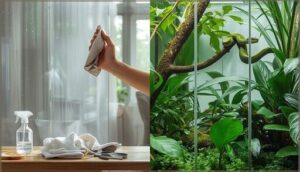
Keeping your arboreal terrarium in top condition isn’t just about aesthetics—it’s about preventing health issues before they start. Regular maintenance protects your reptile from mold, bacterial infections, and respiratory problems that thrive in poorly managed environments.
Here’s what you need to do daily, weekly, and monthly to keep your climbing species healthy and thriving.
Daily Spot Cleaning and Waste Removal
Your arboreal terrarium’s hygiene hinges on a solid waste management routine, protecting enclosure size and naturalistic setup from harmful buildup. Daily sanitizing keeps reptile habitat creation thriving while biosecurity measures safeguard reptile care and health.
- Remove feces and uneaten food from branches within 24 hours using terrarium-safe cleaning tools
- Wipe surfaces with reptile-approved disinfectant to prevent ammonia accumulation
- Replace soiled substrate immediately to maintain proper humidity levels
- Sanitize scoops between uses to avoid cross-contamination
- Inspect water bowls and climbing areas during each cleaning cycle
Preventing Mold and Bacterial Growth
Humidity levels above 70 percent turn your terrarium into a breeding ground for mold and bacteria. Keep humidity management tight with cross-ventilation and moisture-wicking substrates like coconut fiber.
Your cleaning protocols should include daily waste removal and weekly disinfection with reptile-safe solutions.
Bacterial control demands you monitor condensation on glass surfaces, especially in bioactive setups where naturalistic features can trap moisture.
Monitoring Air Circulation and Ventilation
You’ll need a ventilation system that pushes at least 5-10 air changes per hour through your terrarium to keep air quality ideal. Position vents above climbing structures so airflow management targets vertical space where your reptiles spend time.
Test circulation protocols with a quick mist spray—if smoke disperses evenly, your naturalistic setup maintains proper humidity control without stagnant pockets that compromise reptile environment health.
Regular Health Checks for Arboreal Reptiles
Beyond ventilation, your reptile’s health depends on routine observation and health monitoring. Watch for changes in activity, appetite, or breathing daily—early disease prevention starts with catching subtle stress management signals.
Check skin condition weekly, weigh monthly, and schedule veterinary care annually. These terrarium maintenance habits protect animal welfare better than any exotic pet care product, keeping your climber thriving through proactive reptile nutrition and amphibian health oversight.
Frequently Asked Questions (FAQs)
What substrate works best for arboreal reptiles?
Your best bet is live moss or coconut fiber—both hold humidity well and create a naturalistic setup.
Just keep the top layer dry to prevent ingestion risks and maintain proper reptile safety.
How often should lighting bulbs be replaced?
Replace UVB lighting every six to nine months to maintain proper UVB output for reptile health. Even when bulbs still glow, their UV intensity fades, compromising your terrarium’s naturalistic setup and requiring regular bulb maintenance.
Can multiple arboreal species share one terrarium?
Mixing arboreal reptiles is like pairing roommates with different sleep schedules—rarely ideal. Species compatibility demands matching temperature, humidity, and social behaviors. Disease management becomes complex, and territorial stress increases. Single-species housing protects your chameleon’s welfare.
Whats the ideal terrarium placement in my home?
Position your terrarium on a stable surface away from direct sunlight, drafts, and heating vents.
Choose rooms with steady ambient temperatures between 68-80°F to maintain proper humidity and airflow control for ideal reptile health.
How do I quarantine new arboreal reptiles?
Set up a dedicated isolation enclosure within 24 hours of arrival, keeping new arrivals separate for at least 30 days.
Conduct health screening during the first week, monitoring daily for respiratory issues or parasites.
Conclusion
Your arboreal reptile will spend thousands of hours exploring the vertical world you create, making every setup decision critical. The right reptile terrariums for arboreal species give your climber room to behave naturally, from canopy exploration to secure resting spots.
With proper height, ventilation, and strategic placement of branches and plants, you’re not just housing a pet—you’re replicating an ecosystem. Now climb into action and build the habitat your tree-dwelling companion deserves.