This site is supported by our readers. We may earn a commission, at no cost to you, if you purchase through links.
You walk into your reptile room and—surprise—there’s a lake where your snake’s enclosure used to be dry. The bowl’s flipped again, substrate’s soaked, and your ball python is coiled in the corner looking smug. This isn’t a one-time accident.
Snakes tip water bowls constantly—burrowing under them, using the rim as a scratching post during shed, or just bulldozing through during their nightly patrol. The problem isn’t your snake being clumsy; it’s physics meeting natural behavior. Large-bodied pythons and boas leverage their weight against lightweight dishes, while even smaller colubrids destabilize poorly placed bowls through routine movement.
The good news? Preventing tipped bowls doesn’t require engineering skills—just the right combination of bowl design, strategic placement, and a few anchoring tricks that work with your snake’s habits instead of against them.
Table Of Contents
Key Takeaways
- Snakes tip water bowls through natural behaviors like burrowing, shedding leverage, and nocturnal movement—not clumsiness—so choose heavy ceramic or stainless steel bowls with wide bases that resist physics instead of fighting instinct.
- Strategic placement in cool-zone corners on flat, compacted substrate reduces tipping by limiting leverage angles and preventing the bowl from becoming a projectile during routine snake activity.
- Permanent anchoring methods like silicone-bonded tiles, magnetic mounts, or wall-secured holders eliminate daily spills for determined diggers and large-bodied pythons that treat lightweight dishes like obstacles.
- Daily water checks and substrate monitoring prevent not just tipping chaos but also dehydration, bacterial blooms, and mold growth that compromise your snake’s health faster than a missed shed cycle.
Why Do Snakes Tip Over Water Bowls?
Your snake isn’t trying to redecorate—it’s just doing what snakes do. Tipping happens when natural behaviors collide with bowl design, substrate choice, and enclosure layout.
Choosing bowl designs that resist tipping helps prevent spills and keeps your snake’s habitat clean and stress-free.
Let’s break down the main culprits so you can stop mopping up water every morning.
Common Snake Behaviors That Cause Tipping
Snakes don’t tip bowls out of spite—they’re just doing what comes naturally, from burrowing underneath to bracing against surfaces during a shed. This behavior can be related to their snake shedding process and other factors.
Here’s what drives your snake to become an accidental demolition crew:
- Burrowing habits—they push under bowls while exploring substrate
- Shedding behavior—using the bowl’s edge for leverage during skin removal
- Feeding patterns—post-meal restlessness increases movement and environmental interaction
- Snake curiosity—investigating their water bowl as part of natural environmental exploration
Species Most Likely to Flip Bowls
Large pythons top the list of chronic bowl-flippers. Burmese and reticulated pythons, exceeding 20 feet and 5 kg, apply massive leverage during soaking—a key aspect of reptile care and maintenance. Ball pythons repeatedly tip lightweight dishes through nocturnal roaming, while carpet pythons coil in bowls for extended periods. Boa constrictors shift containers with sheer body mass.
Choosing the right water bowl size for ball pythons helps prevent tipping while ensuring they can soak comfortably when needed.
Active colubrids—corn snakes and California kingsnakes—destabilize bowls through burrowing and post-feeding thrashing, making species traits critical for tipping prevention and proper enclosure design. To prevent such issues, take into account water bowl maintenance when setting up the terrarium.
How Substrate and Enclosure Setup Affect Stability
Your enclosure’s flooring plays a bigger role in bowl stability than most keepers realize—loose substrate acts like quicksand under a heavy dish, while solid surfaces give bowls the grip they need to stay put.
For a deeper look at how water dish placement affects hydration and shedding cycles, check out this complete guide to snake water requirements.
Substrate depth, enclosure layout, and surface texture directly impact weight distribution around snake water bowls:
- Shallow substrate (1-2 inches) prevents bowl rocking
- Firm, compacted bedding creates stable bowl placement
- Smooth enclosure floors increase surface contact
- Corner positioning limits leverage angles
- Level surfaces prevent gradual bowl migration
Choosing a Tip-Proof Water Bowl
The right water bowl does half the work in keeping things upright. Material, shape, and size all play a role in whether your snake can launch that dish across the enclosure or whether it stays put.
Here’s what actually works.
Best Materials for Stability (Ceramic, Glass, Stainless Steel)
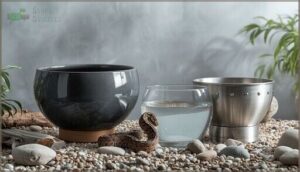
Imagine a slippery opponent—bowl weight is your best ally. Ceramic bowls outmuscle plastic, using mass for built-in stability and enhanced Ceramic Safety.
Glass bowls shine for hygiene: smooth, nonporous, and easy to inspect. Stainless Steel Bowls score high in Stainless Sanitation, especially with heavy-gauge builds.
For lasting control, material durability keeps water clean and tipping trouble at bay.
Optimal Bowl Shapes and Designs

A dish’s footprint beats height every time—physics don’t lie. Wide Base Bowls spread mass outward, forcing your snake to work harder for tipping leverage.
Heavier snakes generate more force, so pairing bowl stability with age-appropriate prey sizing keeps feeding sessions safe and mess-free.
Choose snake water bowls that make tipping mechanically difficult—not just inconvenient.
- Heavy Construction ceramic bowls or stainless steel bowls anchor through sheer weight
- Integrated Hides distribute force across a broader platform
- Textured Rims limit body-hook leverage during exploration
- Non Slip Bases grip substrate, stopping lateral slide-and-tip
- Low-profile designs keep the center of gravity near the floor
Proper Bowl Sizing for Different Snake Ages
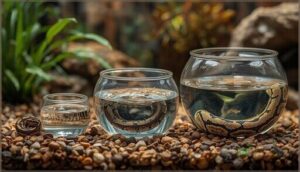
Hatchlings need an 8-ounce cup—adults demand a full liter of soaking space, and using the wrong size invites drowning risk or chronic dehydration. Juveniles sit in the middle at 16 ounces, giving them room to submerge without swimming laps.
Match bowl capacity to your snake’s girth and length—water depth should let them coil comfortably without their head going under involuntarily.
Effective Placement for Water Bowl Stability

Where you put the water bowl matters just as much as what kind you choose. A stable bowl in the wrong spot still ends up on its side—or worse, contaminated with substrate and waste.
Let’s look at the best placement strategies to keep that water where it belongs.
Ideal Bowl Location in The Enclosure
You want your water bowl where it won’t become a daily cleanup project—position it in the cool zone, away from basking spots. This placement respects thermal gradients while reducing evaporation that drives excessive soaking.
A corner on flat substrate works best: walls brace at least two sides, limiting leverage. Keep it visible for quick daily checks without disturbing your snake’s entire enclosure design or compromising substrate stability beneath.
Avoiding Heat Sources and High-Traffic Areas
Heat mats and basking lamps create hot spots your snake will push against while thermoregulating—often flipping lighter bowls in the process.
Position your snake water bowl on the cooler end, away from primary heat sources, to reduce bacterial growth and prevent thermal burns that drive frantic burrowing beneath dishes.
Avoid high-traffic routes between warm and cool hides; snakes patrolling these corridors will shove anything in their path, destabilizing even heavy ceramic bowls on loose substrate.
Using Corners and Flat Surfaces for Support
Corners reduce leverage—a snake pushing against two walls simultaneously can’t generate the same torque it would against a freestanding bowl in open space. Flat surfaces prevent wobbling that invites investigation; textured substrates grip ceramic bases better than smooth paper.
- Corner placement offers edge support from two enclosure walls, making snake-proof positioning easier
- Surface texture beneath your water bowl matters—tile anchors dishes better than loose substrate
- Bowl stabilizers aren’t necessary when flat surfaces and corners provide natural snake access without tipping risk
Anchoring and Securing Water Bowls
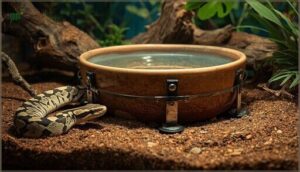
Sometimes a heavy bowl isn’t enough—especially if you’ve got a determined burrower or a snake that treats its water dish like a wrestling opponent. Physically anchoring the bowl to something immovable takes tipping off the table entirely.
Here are three reliable ways to lock down your snake’s water source for good.
Attaching Bowls to Tiles or Heavy Bases
A heavy base anchored to a tile transforms your water bowl into something your snake can’t budge. Clean both surfaces with isopropyl alcohol, roughen smooth spots with sandpaper, then apply aquarium-safe silicone—the kind without fungicides.
Press the bowl firmly onto the tile and let it cure 48–72 hours outside the enclosure. This secure mounting gives you control while keeping snake access safe.
Using Fixed Holders or Two-Part Systems
Permanent bases eliminate daily cleanups—wall mounts screw directly into enclosure panels, gripping your snake water bowl above substrate chaos. Magnetic holders lock cups against glass using rare-earth magnets, while suction cups stick ledges to terrarium walls for snake-proof stability. Non-tip racks fit drawer systems tightly, and fixed inserts let you swap disposable cups without disturbing the mount—your control, their hydration.
Five systems that deliver water bowl safety:
- Wall mounts secure 8-oz deli cups elevated and unmovable
- Magnetic holders clamp food dishes between paired magnets
- Suction cup ledges resist climbing reptiles pushing downward
- Non-tip racks nest snugly inside drawer corners
- Fixed inserts accept replaceable cups in anchored frames
DIY Solutions for Preventing Movement
Beyond fixed brackets, homemade solutions lock your snake in water bowl access without tipping chaos. Weighted bases—ceramic tiles bonded with aquarium silicone—anchor lightweight cups against burrowing pushes. Magnetic mounts clamp dishes to glass using paired neodymium discs, while anti-slip mats grip smooth floors. Integrated hides carved from foam combine shelter with inset reservoirs for snake-proof stability—water bowl safety you engineer yourself.
| Method | Materials | Best For |
|---|---|---|
| Weighted Bases | Tile + silicone | Active diggers |
| Magnetic Mounts | Neodymium magnets | Glass enclosures |
| Integrated Hides | Foam + sealant | Corner installations |
Maintenance Tips to Prevent Bowl Tipping
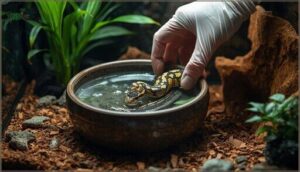
Even the most secure bowl won’t stay upright if your maintenance routine invites chaos. Regular cleaning and smart observation keep your setup stable—and your snake healthy. Here’s how to build habits that prevent tipping before it starts.
Daily Water Checks and Cleaning Routines
Check your snake water bowl every single day—tipping isn’t the only threat to water quality. Daily inspections catch spills, feces, shed skin, and bacterial blooms before they compromise reptile hygiene and health.
- Empty and refill the bowl with fresh water each morning
- Scrub with hot water and unscented dish soap to maintain bowl sanitation
- Rinse thoroughly to remove all detergent residue
- Check water depth after your snake soaks or feeds
- Disinfect weekly using diluted bleach, then rinse completely
Clean water promotes proper snake care and maintenance—and prevents infections you won’t see coming.
Monitoring for Substrate Contamination
Substrate inspection around your water bowl reveals more than spills—it exposes mold prevention failures and microbial growth. Spot single contaminated patches daily and remove soiled bedding immediately to maintain water quality and reptile hygiene and health.
Damp zones breed fungi fast, so check for biofilm, uneaten prey, and fecal matter. Good hygiene practices and humidity control stop pathogens before they threaten snake care and maintenance.
Adjusting Placement After Shedding or Feeding
After shedding or feeding, your snake enters peak movement windows—24 to 72 hours when bowl tipping skyrockets. Snake behavior, temperature, and humidity shifts dictate water bowl stability and snake care success.
Post shedding care and feeding strategies demand proactive enclosure layout shifts:
- Verify substrate compaction under the water bowl before and after each shed to eliminate voids that create leverage
- Reposition near corners after large sheds to add lateral support during increased cruising
- Time adjustments several hours pre-feeding or post-digestion—never mid-cycle when startle risk peaks
Ensuring Snake Safety and Hydration
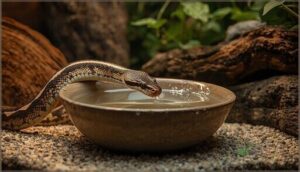
A stable water bowl isn’t just about convenience—it’s about keeping your snake healthy and hydrated. When bowls tip or stay dirty, you’re looking at dehydration, skin infections, and behavioral stress that can snowball fast.
Here’s what you need to monitor to make sure your setup actually works for your snake’s well-being.
Importance of Clean, Accessible Water
Your snake’s water bowl isn’t just a drinking station—it’s life support. Snakes denied fresh water for even a few days risk severe dehydration, which tanks kidney function and overall reptile care faster than you’d expect.
Clean water benefits extend to humidity control (aim for 40–70%), smooth shedding, and disease prevention.
Shallow water depth works fine, but water quality matters more—contaminated bowls breed bacteria that compromise snake hydration and animal welfare.
Preventing Health Issues From Spilled or Dirty Water
Spilled water turns your enclosure into a breeding ground for mold, scale rot, and respiratory infections—three disasters you can dodge with consistent bowl maintenance. Daily checks catch contamination before bacterial control fails, while proper hydration management keeps your snake’s immune system firing.
Water quality dictates reptile health more than most keepers realize—dirty bowls compromise snake hygiene and animal welfare faster than a missed shed.
Monitoring Hydration and Behavior After Changes
Watch your snake’s hydration levels closely after swapping bowls—dehydration sneaks in through sunken eyes, wrinkled skin, and chalky urates before you notice behavioral signs. Weigh your animal weekly to catch gradual mass loss, monitor hiding patterns for stress-related drinking changes, and track water quality alongside temperature and humidity.
Most dehydration prevention starts with observation, not intervention—your eyes beat supplements every time.
Preventing dehydration starts with watching your snake closely—observation catches problems before supplements ever could
Frequently Asked Questions (FAQs)
How often should I replace an old bowl?
Like an old coffee mug etched with invisible cracks, your snake’s bowl eventually becomes a biofilm factory.
Replace plastic every six to twelve months, ceramic when chipped, and stainless steel when dull or pitted to prevent sanitation risks.
What if my snake never uses the bowl?
Don’t panic—many snakes drink when you’re not watching, and some get hydration from prey.
But watch for dehydration signs like wrinkled skin, incomplete sheds, or sunken eyes, then adjust humidity and water quality.
Are there bowls specifically designed for arboreal snakes?
Form follows function—arboreal bowl designs like magnetic ledges and cup holders attach to vertical surfaces, providing climbing species elevated water access.
These reptile hydration systems prevent substrate contamination while meeting snake hydration needs naturally.
Conclusion
Stable setups stop soaked substrates—and the midnight cleanup rituals that follow. Learning how to prevent snake water bowl from tipping means choosing weight over wishful thinking, positioning over prayers, and anchoring methods that match your snake’s bulldozing tendencies.
Your ball python won’t thank you for the secure bowl, but your back will appreciate skipping the 2 AM substrate swap. Fix the physics, respect the behavior, and reclaim your reptile room from unnecessary flooding.
- https://www.zenhabitats.com/blogs/reptile-care-sheets-resources/why-is-my-pet-snake-soaking-in-their-water-dish-zen-habitats
- https://www.thebiodude.com/blogs/fungus-and-bacteria-in-your-bioactive-terrarium/fungus-and-bioactive-terrariums
- https://www.boa-constrictors.com/en/Interesting_facts_about_Boa_constrictor/Boa_constrictor_Care/water
- https://www.drool.pet/blogs/the-tips/the-top-tip-to-avoid-a-snake-stand-off
- https://herpetocultureinc.com/2023/03/08/the-great-substrate-debate/