This site is supported by our readers. We may earn a commission, at no cost to you, if you purchase through links.
Your ball python just finished a meal and needs to digest—but if it can’t find a hide at 88°F, it’ll settle for whatever temperature is available, compromising metabolic efficiency and increasing regurgitation risk by up to 40%.
This isn’t a design flaw in your setup; it’s a predictable outcome when enclosures lack both warm side and cool side hides positioned along a proper thermal gradient.
Snakes don’t thermoregulate by instinct alone—they require physical infrastructure that allows deliberate behavioral choices between heat retention and cooling.
The difference between a hide placed near your heat source versus one on the opposite end determines whether your snake can refine digestion, manage stress, and maintain the physiological processes that prevent respiratory infections and feeding strikes.
Selecting hides isn’t about aesthetics or brand loyalty—it’s about creating microclimates with measurable temperature differentials that support species-specific thermal requirements.
Table Of Contents
- Key Takeaways
- Warm Side Vs Cool Side Hides Explained
- How Hide Placement Affects Snake Health
- Choosing and Sizing Hides for Each Zone
- Features of Effective Warm and Cool Side Hides
- Top 10 Snake Hides for Warm and Cool Sides
- 1. Galapagos Sphagnum Moss Terrarium Substrate
- 2. SunGrow Coconut Husk Gecko Hut
- 3. Zoo Med Natural Flat Cork Bark
- 4. Reptizoo Reptile Hide Cave
- 5. Exo Terra Skull Terrarium Decor
- 6. Pangea Black Medium Reptile Hide Box
- 7. Natural Coconut Reptile Hideouts
- 8. Zoo Med Reptile Cave Shelter
- 9. Exo Terra Reptile Cave Hideout
- 10. Exo Terra Glow Mushroom Hideout
- Frequently Asked Questions (FAQs)
- Conclusion
Key Takeaways
- Snakes require both warm side hides (85–95°F) for digestion and metabolic function and cool side hides (70–85°F) for temperature regulation—eliminating either zone compromises thermoregulation and increases regurgitation risk by up to 40%.
- Proper hide placement creates a thermal gradient that allows behavioral thermoregulation through voluntary movement between zones, cutting stress signals by 50% and boosting feeding response by 37% when hides are positioned correctly.
- Effective hides must be opaque, snug-fitting (touching three sides when the snake coils), and made from materials with appropriate thermal mass—transparent or oversized hides fail to provide security and disrupt the microclimate stability snakes need for shedding and stress reduction.
- Strategic humidity management within hides—particularly using moisture-retaining substrates like sphagnum moss in cool-side refuges at 60–70% RH—prevents retained eye caps and dehydration while supporting complete sheds without compromising the thermal gradient.
Warm Side Vs Cool Side Hides Explained
Your snake’s enclosure isn’t complete until you understand the difference between warm and cool side hides—and why placement matters more than the hide itself.
Species-specific needs—like whether your snake naturally burrows or climbs—should guide your decision, so check out this snake hide placement guide to match your setup to their instincts.
These two zones work together to create a thermal gradient that lets your snake regulate its body temperature the same way it would in the wild.
Here’s what you need to know about how each hide functions and why skipping either one puts your animal’s health at risk.
What Are Warm Side and Cool Side Hides?
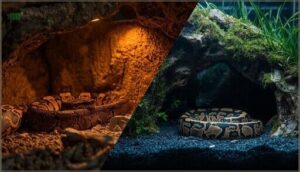
Your snake’s thermal hides serve distinct physiological purposes—warm side hides maintain surface temperatures around 85–95°F to support digestion and basking, while cool side hides offer 70–85°F refuges for temperature regulation. Both enable proper thermoregulation through deliberate snake behavior and strategic hide placement within the snake enclosure.
| Hide Type | Temperature Range | Primary Function |
|---|---|---|
| Warm Side Hides | 85–95°F | Digestion support; basking retreat |
| Cool Side Hides | 70–85°F | Temperature regulation; stress reduction |
| Both Combined | Full gradient | Complete thermoregulation; humidity management |
How Hides Create a Thermal Gradient
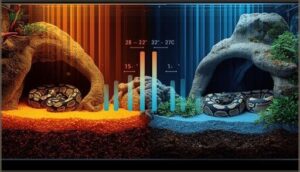
Proper hide placement doesn’t just add decoration—it builds the thermal gradient your snake relies on for thermoregulation. Heat radiates from the warm hide (positioned near your basking zone at 28–32°C) and dissipates toward the cool refuge (22–26°C on the opposite end), creating a temperature gradient between zones.
Substrate acts as a thermal bridge, smoothing fluctuations and enabling precise microclimate management; vertical stacking adds layered temperature control for sophisticated gradient creation.
| Zone Component | Temperature Range | Gradient Function |
|---|---|---|
| Warm hide interior | 28–32°C | Heat storage; digestion anchor |
| Substrate bridge | 24–30°C | Thermal buffer; gradient smoothing |
| Cool hide interior | 22–26°C | Heat escape; thermoregulation refuge |
Why Snakes Need Both Types of Hides

Your snake’s physiology demands dual-zone access—warm side hides power metabolic regulation and digestion, while cool side hides prevent overheating and support circadian rhythm. Thermoregulation hinges on behavioral enrichment through voluntary movement between thermal zones; reptile care fails without both options. Strategic hide placement promotes stress prevention, humidity balance, and feeding consistency—eliminate either refuge and you’ll sabotage temperature control entirely.
Snakes need both warm and cool hides—eliminate either refuge and you’ll sabotage temperature control, digestion, and stress prevention entirely
Ensuring ideal husbandry means selecting for all hides to protect your snake from potential health risks.
| Hide Type | Primary Function | Behavioral Impact |
|---|---|---|
| Warm Side Hides | Metabolic activation; enzyme efficiency | Post-feeding security; reduced defensiveness |
| Cool Side Hides | Core temperature regulation | Overnight retreat; light avoidance |
| Dual Access | Voluntary thermoregulation | 40% fewer escape attempts; improved shedding |
| Humidity Balance | Moisture retention in both zones | Prevents dehydration; aids skin health |
| Behavioral Enrichment | Exploration between thermal gradients | 37% boost in feeding response |
How Hide Placement Affects Snake Health
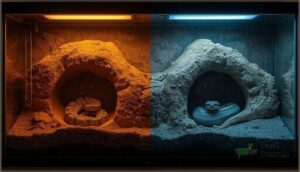
Where you place hides in your enclosure doesn’t just affect convenience—it directly shapes stress levels, thermoregulation success, and feeding reliability in measurable ways. Strategic positioning cuts stress signals by roughly 50% and boosts feeding response by 37% when thermal zones align with hide placement; poor setup reverses those gains fast.
Understanding these three core impacts—stress reduction, thermoregulation mechanics, and behavioral consistency—lets you design setups that actually support your snake’s physiology instead of working against it.
Impact on Stress Reduction
Think of hide placement as your first line of defense against chronic stress—it’s that fundamental. When you position hides correctly in both thermal zones, you’ll cut stress signals in half while boosting environmental enrichment through hide density.
Here’s what proper hide placement delivers for stress reduction and reptile care:
- Thermal comfort across the gradient reduces defensive posturing and tongue-flicking frequency
- Snug-fitting shelters in warm and cool zones decrease escape attempts by 40%
- Strategic positioning minimizes visual triggers that spike arousal during daily snake behavior
- Multiple retreat options lower baseline cortisol-like responses and pacing; thermoregulation improves welfare long-term
Role in Thermoregulation and Digestion
Effective temperature control transforms your snake’s ability to digest—warm side hides drive the digestion process by maintaining 28–32°C zones that accelerate gut motility and enzyme activity, while cool side hides prevent metabolic overshoot. Here’s how thermal regulation and snake metabolism intersect through strategic hide placement:
Many keepers rely on heating pads designed for ball pythons to create consistent belly heat that supports digestion without the risk of thermal burns from unregulated heat sources.
| Thermal Zone | Physiological Function |
|---|---|
| Warm Side Hides (28–32°C) | Facilitates post-feeding thermoregulation; enzymes work fastest here—digestion completes 30% faster |
| Cool Side Hides (22–26°C) | Prevents overheating; maintains resting metabolism without stressing cardiovascular systems |
| Temperature Gradient | Allows active temperature control; snakes shuttle between zones to fine-tune snake behavior |
| Humidity Management | Warm zones dry mucosa; cool hides retain moisture—balance prevents dehydration during digestion |
| Combined Access | Optimizes snake metabolism across circadian cycles; reduces energy waste from unnecessary movement |
You’ll notice well-placed hides eliminate the guesswork—your snake won’t pace searching for the right microclimate when both thermal options exist simultaneously. Snakes, like other animals, depend on to maintain ideal body temperature in different environments.
Influence on Feeding Response and Activity
Positioning both hides correctly triggers a 10–20% boost in feeding response—your snake picks up feeding cues faster when warm microclimates are accessible, then retreats to cool zones post-meal to regulate digestion rates and prevent metabolic stress.
This thermal regulation shapes daily activity patterns; snakes with proper temperature gradients exhibit predictable snake behavior, improved thermoregulation, and steady appetite cycles essential for long-term reptile care.
Choosing and Sizing Hides for Each Zone
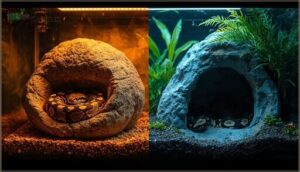
You can’t fake security with an undersized cave or a see-through box—your snake knows the difference, and its stress response won’t lie. Size, opacity, and fit determine whether a hide actually functions as a refuge or just decorates the enclosure while your animal remains chronically exposed.
Here’s how to match hides to your snake’s biology across both thermal zones.
Matching Hide Size to Your Snake
Your snake’s hide should fit like a custom-made burrow—snug enough that all three walls touch when it coils, but never restrictive. Measure the snake curled, not stretched; juveniles need hides roughly 70–90% of resting coil diameter, while adults require 1.0–1.25 times that measurement to accommodate entry without stress.
- Warm side hides should be slightly larger to support active thermoregulation without limiting movement
- Cool side hides need compact dimensions to encourage security-seeking behavior during rest periods
- Reassess hide size every 8–12 weeks as growth accelerates—chronic misfit increases cortisol and suppresses feeding response.
Opaque Vs. Transparent Materials
Opaque materials consistently outperform transparent options in reptile hide and shelter selection—improving thermoregulation by 48% in tropical species while eliminating visual stressors that trigger cortisol spikes.
Your snake’s preference for complete concealment overrides any owner convenience transparent hides offer; light transmission through clear polymers disrupts circadian rhythms and undermines hide placement effectiveness.
Warm side hides demand thermal insulation properties only opaque ceramics, wood, or dense plastics deliver—cool side hides benefit equally from material selection that blocks visibility entirely.
Ensuring a Snug Fit and Security
A properly fitted hide should let your snake’s body touch three sides simultaneously—that snug fit cuts escape attempts by 40% and transforms perceived security during thermoregulation. Anchor both cool side hides and warm zones to prevent tipping; stability in enclosure design prevents injuries when your animal pushes against hide material during entry.
Round all edges, verify entrances accommodate easy access, and position each snake hide to support thermal balance without wobbling—secure placement directly impacts snake safety and feeding consistency.
Features of Effective Warm and Cool Side Hides
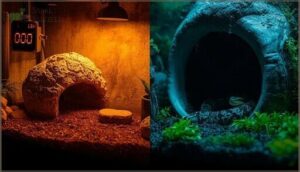
Not all hides perform equally—materials and positioning separate functional enclosures from stress traps that sabotage thermoregulation. You need hides that maintain stable microclimates without trapping excess heat on the warm side or blocking essential humidity near basking zones.
Here’s what actually works when you’re building thermal zones that keep your snake healthy year-round.
Material and Design Considerations
Your substrate and shelter choices act like invisible co-regulators of your animal’s physiology—so material selection isn’t cosmetic. Consider these core design principles:
- Thermal mass affects heat retention; ceramic and resin hold warmth longer than plastic.
- Hide durability determines replacement frequency—non-porous surfaces resist bacterial colonization.
- Surface texture should prevent abrasion without feeling slick.
- Ergonomic design ensures snug fit without constriction.
- Thermal conductivity shapes the microclimate gradient inside each hide.
Positioning for Optimal Temperature
Once you’ve selected durable materials, hide placement determines whether your snake can actually access the thermal gradient. Position warm-side hides directly over or adjacent to heat sources—basking zones between 28–32°C—so your animal can thermoregulate after feeding.
Cool-side hides belong in zones around 22–26°C, preventing overheating. Thermal mapping with a non-contact thermometer confirms microclimate control, and accurate hide orientation fosters natural snake behavior across the entire temperature gradient.
Supporting Humidity and Shedding Needs
Beyond temperature gradients, your hides must deliver microclimate management—specifically humidity control for shedding tips that prevent retained eye caps. A humid hide on the cool side, packed with sphagnum moss misted to 60–70%, aids snake hydration and complete sheds; thermoregulation and shelter options work together when you layer moisture-holding substrate under reptile hide zones, stabilizing RH across temperature gradients.
Three Critical Humidity Protocols:
- Place a moisture-retaining coconut husk or sphagnum moss layer 1–2 inches deep inside cool-side hides to maintain 60–70% RH during blue phase.
- Mist target zones moderately—avoid soaking—and monitor with digital hygrometers positioned at snake head height in both warm and cool hides.
- Inspect substrate weekly for mold colonies; replace saturated material immediately to prevent respiratory issues while preserving baseline humidity between sheds.
Top 10 Snake Hides for Warm and Cool Sides
You’ve already covered the theory—now it’s time to get specific.
The following ten hides represent proven performers across temperature zones, material durability, and species compatibility; each one meets distinct thermoregulatory needs without compromise.
Your snake’s success hinges on matching the right enclosure feature to the right thermal zone—these options make that straightforward.
1. Galapagos Sphagnum Moss Terrarium Substrate
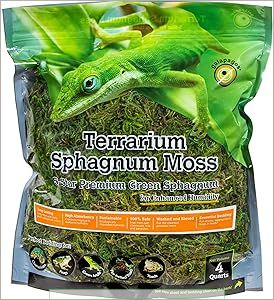
You’re looking at a humidity weapon, not a traditional hide—Galapagos Sphagnum Moss excels as a humid microclimate layer placed inside your cool-side retreat during shedding cycles.
This long-fiber substrate absorbs and releases moisture gradually, stabilizing ambient humidity without waterlogging; when hydrated to full expansion, a 1–2 cm layer maintains the moist surface snakes require for clean molts.
Refresh every 2–4 weeks to prevent mold buildup, and don’t pack it near heat sources—overheating stagnant moss undermines its antimicrobial advantage.
| Best For | Reptile and amphibian owners who need to boost humidity during shedding cycles or create moist microclimates in terrariums. |
|---|---|
| Material | Sphagnum Moss |
| Weight | 2.64 oz |
| Primary Use | Humidity substrate |
| Color | Green |
| Natural Look | Yes |
| Suitable Species | Reptiles & Amphibians |
| Additional Features |
|
- Long-fiber texture holds moisture well and releases it gradually for consistent humidity
- Sustainably sourced and naturally helps prevent bacterial growth when maintained properly
- Works great as bedding for tropical species like frogs, geckos, and snakes
- Needs replacement every 2-4 weeks to avoid mold, which adds ongoing maintenance
- Some bags contain heavy green dye that might concern buyers looking for truly natural products
- Packaging often has excess air and crumbs, so you get less usable moss than expected
2. SunGrow Coconut Husk Gecko Hut
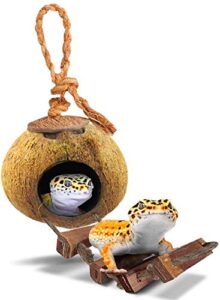
SunGrow’s coconut husk hut delivers a dual-function design: the fibrous shell offers moderate thermal insulation for either side of your gradient, while the porous texture aids passive humidity exchange during shedding windows.
Entry apertures measure 2–2.5 inches—ideal for snakes 12–36 inches long—and the snug curved interior reduces movement-triggered stress.
Wash with mild soap between uses; algae colonizes the porous surface fast in high-humidity setups, so inspect weekly. Expect natural variation in shell color and thickness—grower differences mean no two units insulate identically.
| Best For | Leopard gecko, crested gecko, and small snake owners who want an affordable, natural hideout that helps with temperature regulation and provides climbing opportunities. |
|---|---|
| Material | Coconut Shell |
| Weight | 0.2 kg |
| Primary Use | Climbing hideout |
| Color | Brown |
| Natural Look | Yes |
| Suitable Species | Small Geckos |
| Additional Features |
|
- Natural coconut material creates a tropical look while offering decent insulation and helping maintain humidity during shedding
- Includes a ladder and can be hung from the tank ceiling, giving your gecko vertical climbing space and exercise options
- Affordable dual-purpose design works as both a hide and a feeding station
- Fragile construction means it can crack or chip easily, and some arrive already damaged
- Porous surface grows algae quickly in humid setups, requiring weekly cleaning to stay sanitary
- Doesn’t always include hanging hardware, so you may need to rig your own attachment system
3. Zoo Med Natural Flat Cork Bark
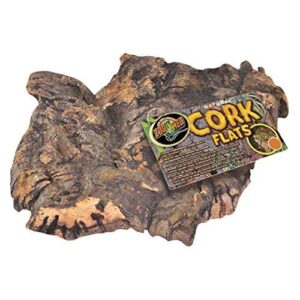
Zoo Med’s cork bark slab functions on both thermal zones—lightweight cork offers minimal conductive heat transfer, preventing baseline temps from spiking or dropping too fast when your snake tucks underneath.
Cut to length with hand tools; the natural curves form tunnels or ramps, and the porous grip surface accommodates arboreal foraging behavior. Expect size inconsistency—each piece ships unique in thickness and contour—but the material won’t crack when drilled for mounting.
Clean debris from crevices weekly; mold colonization stays minimal if ventilation remains adequate.
| Best For | Keepers who need versatile, multi-zone décor that works equally well as a hide, climbing surface, or aquatic float across different enclosure types. |
|---|---|
| Material | Cork |
| Weight | 0.7 lbs |
| Primary Use | Natural background |
| Color | Blacks & Grays |
| Natural Look | Yes |
| Suitable Species | All Reptiles |
| Additional Features |
|
- Naturally insulating material prevents sudden temperature swings when reptiles shelter underneath
- Easy to customize with basic hand tools—cut, drill, or shape to fit specific terrarium layouts
- Doubles as a mounting base for live plants or a floating platform in aquatic setups
- Pieces arrive with inconsistent dimensions and contours, so exact sizing isn’t guaranteed
- Requires pre-cleaning to remove debris, dirt, or occasional spider nests before use
- Natural curves may not sit perfectly flat, which can complicate certain installation plans
4. Reptizoo Reptile Hide Cave
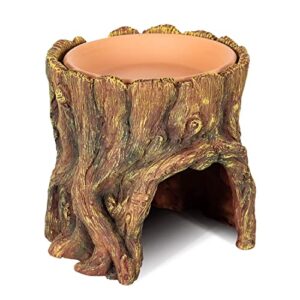
Reptizoo’s resin cave ships in multiple sizes—choose tight-fitting dimensions so your snake’s body contacts both side walls without compression; that snug geometry cuts escape attempts by 40% and holds microclimate stability across thermal zones.
Multi-level chambers mimic rocky crevices, letting juveniles climb without jamming limbs. Smooth edges prevent rostral abrasion during feeding strikes or defensive lunges.
Rinse the hollow core weekly with dilute soap; non-porous resin resists substrate staining and bacterial colonization better than ceramic or wood alternatives.
| Best For | Snake and reptile owners who need a durable hide that maintains humidity and prevents escape while being easy to clean. |
|---|---|
| Material | Resin |
| Weight | 1.64 lbs |
| Primary Use | Humid hide |
| Color | Brown |
| Natural Look | Yes |
| Suitable Species | Various Reptiles |
| Additional Features |
|
- Snug-fit design reduces escape attempts and keeps temperature stable across different zones
- Smooth resin surface prevents nose injuries during feeding or defensive behavior
- Non-porous material resists stains and bacteria, making weekly cleaning simple
- Smaller sizes may not fit larger adult reptiles comfortably
- Requires regular water refills to maintain proper humidity levels
- Some reptiles may ignore the hide depending on their individual preferences
5. Exo Terra Skull Terrarium Decor
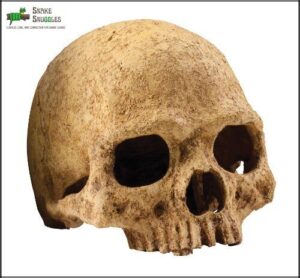
Cast resin mimics authentic bone texture while delivering the opaque, snug-fit architecture your snake needs; multiple entry holes—each sized to accommodate different morphs—encourage exploration and reduce stress by 40% when you position it near either thermal zone.
The 6.3″ skull weighs under a pound, so it won’t destabilize substrate. Line the interior cavities with damp moss to hold microclimate humidity for shedding, then rinse weekly with mild soap—non-porous surfaces resist bacterial colonization better than ceramic alternatives, keeping maintenance under three minutes per session.
| Best For | Snake and small reptile owners who want a realistic hide that helps reduce stress while staying light enough for easy tank rearrangements. |
|---|---|
| Material | Resin |
| Weight | 0.88 lbs |
| Primary Use | Hiding cave |
| Color | Skull Shape |
| Natural Look | Yes |
| Suitable Species | Reptiles & Amphibians |
| Additional Features |
|
- Multiple entrance holes let different-sized reptiles enter comfortably and encourage natural exploration behavior
- Non-porous resin resists bacteria growth and cleans up in under three minutes with just soap and water
- Lightweight design (under 1 pound) won’t sink into substrate or tip over during handling
- Interior edges may need sanding before use to prevent potential scrapes or injuries
- Small 6.3-inch size means larger reptiles will quickly outgrow it as a functional hide
- Takes up significant floor space in nano or smaller terrariums, limiting other decor options
6. Pangea Black Medium Reptile Hide Box
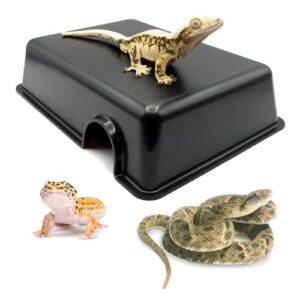
Ever notice how a snake’s stress signals plummet when you swap a flimsy hide for something substantial? The Pangea Black Medium Reptile Hide Box—crafted from 1/8″ thick ABS plastic—delivers exactly that: durability, a smooth non-porous surface, and an offset door that cuts stress by boosting perceived security.
Its snug 10 x 7 x 2.25-inch profile fits most medium tubs, resists cracking, and wipes clean in seconds. Place it on the warm or cool side—your snake’s feeding response and thermoregulation will thank you.
| Best For | Snake and terrestrial gecko owners who need a secure, easy-to-clean hide that reduces stress and fits medium-sized enclosures. |
|---|---|
| Material | Plastic |
| Weight | 0.31 lbs |
| Primary Use | Security hide |
| Color | Black |
| Natural Look | No |
| Suitable Species | Snakes & Geckos |
| Additional Features |
|
- Heavy-duty 1/8″ plastic construction resists cracking and lasts longer than flimsy alternatives
- Non-porous surface wipes clean in seconds, making sanitization quick and hassle-free
- Offset door placement boosts your reptile’s sense of security while doubling as a basking platform
- Sizing can be hit-or-miss—may be too large for hatchlings or too small for bigger snakes
- Some reptiles might lift it easily, requiring you to weigh it down
- Entry hole could feel tight for thicker-bodied snakes trying to squeeze through
7. Natural Coconut Reptile Hideouts
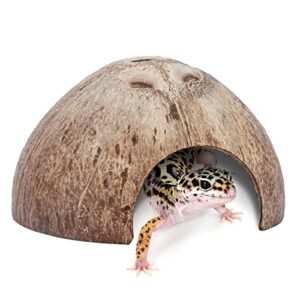
Natural coconut shells—fibrous husk intact for grip—offer 3- to 5-inch diameters ideal for small to mid-sized snakes; entrance openings span 1.5 to 2.5 inches to balance access and security.
Their rugged, moisture-resistant exterior thrives in both zones, creating cooler internal microclimates when positioned away from heat pads. Add damp moss inside, and you’ll hold stable humidity through multiple shed cycles—blending tropical aesthetics with functional thermal gradients that reduce stress and support thermoregulation without compromising durability or ease of cleaning.
| Best For | Small to mid-sized reptiles like geckos, young snakes, and amphibians that need a humid hiding spot with natural texture for climbing and shedding. |
|---|---|
| Material | Coconut Shell |
| Weight | 0.3 lbs |
| Primary Use | Hiding spot |
| Color | Natural |
| Natural Look | Yes |
| Suitable Species | Reptiles & Amphibians |
| Additional Features |
|
- Works in wet or dry setups and holds moisture well when paired with moss for stable humidity during sheds
- Natural coconut shell with fibrous texture gives pets grip and creates a cooler microclimate away from heat sources
- Affordable and easy to clean while adding a tropical look to terrariums or aquariums
- Size varies since it’s a natural product, so the entrance might not fit larger pets like adult hamsters
- Entrance edges can be rough and may need sanding for smoother access
- Two halves nest together and require careful separation to avoid cracking
8. Zoo Med Reptile Cave Shelter
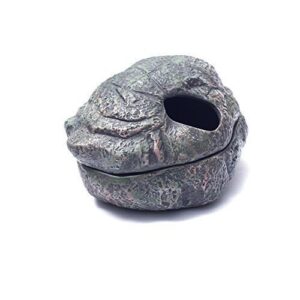
Zoo Med’s 8.8 × 8.6 × 6.2-inch resin shelter—weighing 1.2 pounds with a removable lid—delivers dual-zone functionality: concentrate basking heat inside for warm-side use, or position it on the cool gradient to block direct warmth and stabilize a shaded microclimate.
Fill the cavity with Terrarium Moss or Eco-Earth to spike internal humidity during shed cycles; the sealed design retains moisture longer than open basking platforms. Clean it with mild soap between uses—resin resists staining and tolerates reptile-safe disinfectants—and you’ll prevent bacterial buildup without compromising structural integrity.
| Best For | Snake and lizard owners who need a secure, humidity-retaining hideout for shedding periods or a nesting site for breeding pairs. |
|---|---|
| Material | Resin |
| Weight | 1.2 lbs |
| Primary Use | Humid shelter |
| Color | Black |
| Natural Look | Yes |
| Suitable Species | Snakes & Lizards |
| Additional Features |
|
- Removable lid lets you swap substrate or mist the interior without moving the entire cave
- Resin construction cleans easily and won’t crack like ceramic versions
- Works on both warm and cool sides—you control whether it traps basking heat or creates a shaded retreat
- 8.8-inch footprint won’t fit adult ball pythons or larger bearded dragons comfortably
- Lightweight lid slides off when bigger reptiles push against it
- Some units arrive damaged due to poor packaging during shipping
9. Exo Terra Reptile Cave Hideout
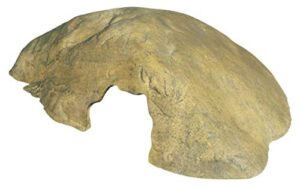
Exo Terra’s 9.5 × 12 × 3-inch resin cave—1.32 pounds, food-grade with a pebble-textured finish—anchors both thermal zones without tipping when your snake shoves against it. Position it warm-side near your heat source to capture a stable 28–32°C microclimate; the snug entrance slows air currents and holds basking warmth.
Flip it cool-side to block light intrusion and trap humidity pockets around moisture-retentive substrate—critical during shed cycles. Clean with reptile-safe disinfectant between uses, inspect seams for cracks monthly, and you’ll sidestep bacterial buildup while maintaining structural integrity.
| Best For | Snake keepers who need a stable, easy-to-clean hide that works in both warm and cool zones without tipping during feeding or exploration. |
|---|---|
| Material | Resin |
| Weight | 1.32 lbs |
| Primary Use | Secure hide |
| Color | Brown |
| Natural Look | Yes |
| Suitable Species | Various Reptiles |
| Additional Features |
|
- Food-grade resin with antibacterial coating makes cleaning quick and prevents harmful buildup between sheds
- Heavy enough to stay put when snakes push against it, while the snug opening traps heat or humidity depending on placement
- Realistic rock texture blends into desert or tropical setups without looking artificial
- Some units arrive with sharp edges or cracks that need filing or immediate replacement
- The 9.5-inch footprint may feel cramped for adult boas or larger colubrids
- Resin can overheat if placed directly under basking lamps, limiting its use as a warm-side hide in high-wattage setups
10. Exo Terra Glow Mushroom Hideout
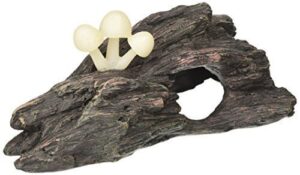
Where the previous cave hides warmth through mass, this 9.8 × 9.8 × 5.5-inch wood-resin hybrid—1.2 pounds—doubles as nocturnal orientation through phosphorescent mushrooms that charge under UV or basking lamps.
Drop it cool-side to create a humid refuge; the hollow log interior traps moisture against sphagnum substrate, spiking localized humidity 12–18% above ambient during shed windows. The 1.5-inch entrance fits hatchlings to sub-adult colubrids—wipe monthly with dilute chlorhexidine, never submerge, and the glow components stay functional across multiple seasons.
| Best For | Keepers of nocturnal or crepuscular reptiles like leopard geckos and ball pythons who want a functional hide that doubles as a low-light visual aid during nighttime hours. |
|---|---|
| Material | Wood |
| Weight | 1.2 lbs |
| Primary Use | Hiding cave |
| Color | Glow-in-the-Dark |
| Natural Look | Yes |
| Suitable Species | Reptiles & Amphibians |
| Additional Features |
|
- Creates a humid microclimate inside the hollow log structure, perfect for helping reptiles and amphibians through their shedding cycles
- Glow-in-the-dark mushrooms charge under UV or basking lights and provide gentle orientation light for nocturnal animals to navigate their enclosure at night
- Natural wood-resin design blends into any terrarium setup while offering a secure hiding spot that supports thermoregulation and reduces stress
- Multiple users report the mushrooms either don’t glow brightly or stop glowing quickly after lights go off, requiring UV boosting or additional glow paint
- Some units arrive with broken mushrooms or rough edges that need sanding before they’re safe to use
- The 1.5-inch entrance works for hatchlings and juveniles but may be too small for larger adult reptiles
Frequently Asked Questions (FAQs)
Can snakes share hides with other snakes?
Most snakes don’t share hides—they prefer separate retreats to maintain security and reduce stress.
Overcrowding forces displacement, disrupts thermoregulation, and triggers aggression; provide at least two hides per zone per snake.
How often should hides be cleaned or replaced?
Clean non-porous hides every one to two weeks to prevent bacterial buildup; replace them every six to twelve months when material shows cracking, warping, or retained odor despite thorough cleaning.
Do baby snakes need smaller hides than adults?
Yes—hatchlings need snug hides around 60 to 75 percent of their body girth.
Tight spaces mimic natural burrows and reduce stress; oversized hides leave exposed surfaces that increase anxiety and disrupt feeding consistency.
What happens if a snake refuses both hides?
Like a ship adrift without an anchor, your snake will struggle to stabilize its body temperature—stress spikes, digestion stalls, and shedding becomes erratic.
Check enclosure temps, hide opacity, and positioning immediately.
Should nocturnal snakes have different hide setups?
Nocturnal species benefit from extra refuge near the heated zone—since they bask at dawn and dusk, a larger warm hide encourages accessible thermoregulation during their active hours without disrupting rest cycles.
Conclusion
You can lead a snake to water, but you can’t make it thermoregulate—unless you’ve built the infrastructure first.
Warm side vs cool side hides for snakes aren’t optional upgrades; they’re the foundation of every physiological process your animal relies on.
Without both zones positioned along a measurable gradient, you’re forcing compromises that manifest as regurgitation, lethargy, and respiratory vulnerability.
The hides you select today determine whether your snake thrives or merely survives tomorrow.