This site is supported by our readers. We may earn a commission, at no cost to you, if you purchase through links.
A defensive snake coiled in the corner of its enclosure isn’t being aggressive—it’s terrified. Most feeding strikes happen because your snake can’t distinguish between your hand and dinner, or because something in its environment has triggered its survival instincts.
The good news? Preventing snake feeding aggression isn’t about taming a wild animal; it’s about working with biology instead of against it. When you understand what your snake’s sensory system is telling it and adjust your approach accordingly, those heart-stopping lunges become predictable, manageable events.
The difference between a confident handler and someone nursing bite wounds often comes down to a few deliberate changes in technique and environment.
Table Of Contents
- Key Takeaways
- Causes of Feeding Aggression in Snakes
- Optimizing The Snake’s Feeding Environment
- Safe and Effective Feeding Techniques
- Establishing Consistent Feeding Routines
- Handling Practices to Prevent Aggression
- Frequently Asked Questions (FAQs)
- How to make a snake less aggressive?
- Do snakes get aggressive when hungry?
- Why is my snake aggressive after eating?
- Can feeding aggression develop suddenly in adult snakes?
- Do vitamin supplements affect snake feeding behavior?
- How does breeding season impact feeding responses?
- Should multiple snakes be fed in separate areas?
- Can lighting schedules influence feeding aggression patterns?
- Conclusion
Key Takeaways
- Snake feeding aggression stems from hardwired survival instincts—your snake can’t distinguish between your hand and prey when scent cues, movement patterns, or environmental stress trigger its ambush response.
- Using feeding tongs (12-24 inches), establishing separate feeding areas, and presenting prey at an angle with slow, deliberate movements dramatically reduce strike risk by working with your snake’s sensory system instead of against it.
- Consistent feeding schedules paired with tap training create predictable boundaries that teach your snake to differentiate feeding time from handling time, eliminating the confusion that causes defensive strikes.
- Environmental security—including multiple hides, stable temperatures, proper lighting cycles, and minimal visual stressors—reduces baseline anxiety that amplifies feeding aggression across all snake species.
Causes of Feeding Aggression in Snakes
When your snake strikes at you during feeding time, it’s not being mean—it’s just doing what millions of years of evolution programmed it to do.
If your snake suddenly refuses food or acts defensive around mealtime, check out common reasons why snakes stop eating to rule out health or husbandry issues.
Understanding why this happens is the first step toward safer feeding sessions for both of you. Let’s break down the main triggers that turn your otherwise calm pet into a food-focused predator.
Defensive Instincts and Hunting Behavior
Your snake’s lightning-fast strike isn’t aggression—it’s instinct. Snake sensory systems detect heat and movement, triggering ambush tactics honed over millions of years. When prey enters striking range, hunting strategies override everything else.
When prey enters striking range, millions of years of evolution override everything else in your snake’s brain
Defensive postures and food aggression often overlap because defensive behavior protects the meal. Understanding snake behavior and body language helps you recognize when predator avoidance reflexes blur into aggressive snake feeding, making safe snake feeding techniques essential.
Recognizing the components of animal behavior provides deeper insight into these instinctual responses.
Environmental Stress Triggers
Environmental Factors beyond feeding cues can turn calm snakes into defensive strikers. Temperature Fluctuations trigger agitation—rapid shifts cause startled strikes as your snake attempts to regulate body heat.
Inconsistent Lighting Cycles disrupt natural rhythms, while Noise Pollution from nearby rooms elevates baseline stress. Poor Enclosure Security and unstable Humidity Levels intensify tension.
Recognizing these Stress in Snakes patterns through careful observation of Snake Behavior and Body Language allows for targeted Stress Reduction and thoughtful Environmental Enrichment. Understanding how environmental stress can impact health provides vital insight into managing a snake’s well-being.
Species-Specific Feeding Responses
Beyond environmental triggers, individual species bring hardwired prey preferences and hunting strategies to every feeding session. Ball pythons hesitate with unfamiliar prey scents, while corn snakes adapt quickly to varied prey types.
Recognizing these species traits helps you match feeding cues to natural behaviors—pythons ambush in darkness, colubrids pursue lizards, vipers target warm-bodied rodents—reducing defensive responses and aggressive snake feeding incidents.
Optimizing The Snake’s Feeding Environment

Your snake’s enclosure isn’t just a glass box—it’s the foundation of safe feeding behavior. When the environment feels secure and predictable, defensive instincts settle down, and feeding aggression drops dramatically.
A well-chosen hide box creates that sense of security—choosing the right snake hide can make all the difference in reducing stress and aggression during feeding time.
Let’s walk through the essential elements that transform a basic setup into a stress-reducing feeding space.
Enclosure Setup and Security
A well-designed snake enclosure acts like a fortress—it protects your pet while reducing stress-driven aggression. Secure lids prevent escape and unauthorized access, while proper ventilation systems maintain air quality without drafts. Temperature control keeps your snake comfortable, eliminating environmental stressors that trigger defensive behavior.
Strategic habitat design for reptiles, incorporating environmental enrichment elements, transforms a basic container into a stress-reduction tool that fosters calmer feeding responses.
Importance of Hides and Microhabitats
A network of hides creates essential thermal gradients and microclimate control zones throughout your snake enclosure. Strategic hide placement offers sensory shielding—those covered retreats reduce visual triggers that spark feeding mode.
Microhabitat design isn’t decoration; it’s functional reptile ecology that promotes stress reduction in animals. Multiple refuge options let your snake self-regulate, curbing baseline anxiety that fuels aggressive strikes during meal time.
Reducing Visual and Physical Stressors
Thoughtful handling of lighting comfort and enclosure cues helps maintain low-stress snake management throughout feeding sessions. Implement these strategies to support stress reduction in animals:
- Use soft, diffuse lighting at 5000K to prevent glare-related startle responses
- Keep substrate texture smooth and light-colored for predictable locomotion
- Present prey slowly with feeding tongs to reduce reflex strikes
- Maintain movement predict through calm, steady approaches near the feeding environment
- Minimize competing visual stimuli around the feeding area
Safe and Effective Feeding Techniques
The right feeding technique makes all the difference between a calm meal and a defensive strike. How you present food, where you feed, and what tools you use directly shape your snake’s response during feeding time.
Let’s look at three core techniques that keep both you and your snake safe.
Using Feeding Tongs and Tools
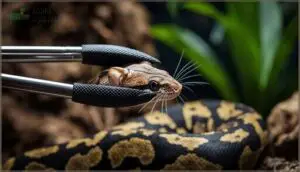
Feeding tongs are your first line of defense against aggressive snake feeding. Choose stainless steel models with 12-24 inch reach and soft-coated tips to protect both you and your snake.
Tong safety depends on equipment selection—ergonomic grips prevent hand fatigue, while textured surfaces maintain feeding precision even with wet hands.
Clean your tools after every feeding session, inspecting tips for wear that could compromise prey handling or snake handling during strikes.
Feeding Bin Vs. Enclosure Feeding

Your choice between bin and enclosure feeding shapes safe feeding practices and behavioral response patterns. Bins cut substrate ingestion risks and simplify scent management, keeping aggressive snake feeding contained. Enclosure feeding reduces handling interference and transport stress but can blur feeding response boundaries.
Both methods work—consistency matters more than location. Match your setup to your snake’s temperament and your confidence level with snake handling during feeding sessions.
Presenting Prey to Minimize Strikes
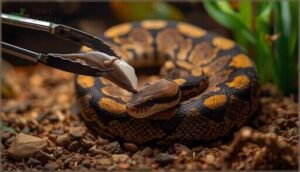
Your prey presentation technique determines whether you’ll face a calm feeding response or a defensive strike. Present prey at a slight angle—not straight-on—to reduce direct eye contact and lower strike intensity.
Move slowly in a continuous gliding motion, keeping tools at least 15 centimeters from the snake’s mouth until it commits. Slow, deliberate twitching mimics natural prey movement while preventing aggressive snake feeding responses triggered by erratic jerks.
Establishing Consistent Feeding Routines

Building a predictable feeding schedule is one of the most effective ways to reduce aggression in your snake. When your snake knows what to expect and when to expect it, you eliminate confusion between feeding time and handling time.
Let’s walk through the three core elements that transform chaotic feeding sessions into calm, controlled routines.
Scheduling and Prey Size Selection
A steady feeding schedule does more than prevent hunger—it calms aggressive snake feeding by setting clear expectations. Match prey sizing to your snake’s girth (usually 6–10% of body mass), and space feeding intervals according to digestion rates.
Track growth monitoring weekly; meal frequency adjusts as your snake matures. Consistent feeding time trains the feeding response, reducing reactivity and supporting ideal snake feeding and nutrition.
Frozen-Thawed Vs. Live Prey Safety
Switching to frozen-thawed prey cuts injury risk for both you and your snake. Live prey can bite back, leaving wounds that invite infection.
Thaw prey completely and warm it to room temperature before presentation—cold meals dampen the feeding response.
Wear gloves during prey handling, wash hands thoroughly afterward, and store frozen stock separately to maintain feeding hygiene and prevent contamination.
Recognizing and Responding to Stress Signs
Stress in snakes shows up fast—watch for rapid breathing, gaping mouth, or defensive postures like coiled readiness. Stress signal detection is your first line of defense.
Since biting and thrashing usually mean a snake feels unsupported rather than aggressive, reviewing proper reptile handling safety before any contact makes a huge difference.
Elevated corticosterone levels spike within hours, suppressing appetite and immune function. Snake behavior analysis reveals pacing, excessive hiding, or refusal to settle.
Respond by minimizing handling, offering secure hides, and maintaining consistent temperatures to support animal welfare and aggression prevention strategies.
Handling Practices to Prevent Aggression

How you handle your snake matters just as much as what you feed it. The wrong timing or approach can blur the line between “it’s dinner time” and “it’s just me,” turning even calm snakes defensive.
For anyone dealing with a defensive or potentially dangerous snake, these ethical snake handling considerations cover the safety protocols and relocation practices that keep both you and the animal out of harm’s way.
Let’s cover three handling strategies that keep feeding aggression in check and make every interaction safer for both of you.
Tap Training and Handling Separation
Teaching your snake to distinguish feeding time from handling time starts with a simple tap training routine. Gently tap the enclosure wall twice before opening—this cue signals non-feeding intent and reduces defensive behavior.
Keep feeding and handling physically separate: use different rooms or bins for meals, then wait at least 48 hours before handling. Consistency rewires defensive responses, transforming stress into trust.
Protective Equipment for Safe Handling
Even with tap training mastered, protective gloves and a quality snake hook serve as your safety net during snake handling. Hand protection shields against accidental strikes, while eye shields guard your face when working with defensive species.
- Leather handling gloves: Offer bite resistance without sacrificing dexterity for animal handling and safety
- Snake hooks (24-36 inches): Maintain distance while gently supporting your snake’s body weight
- Body armor aprons: Protect your torso during cage maintenance and close-contact sessions
Timing Handling Around Feeding Sessions
Proper timing between handling and feeding separates confident keepers from those sporting bite marks. Following a 24-hour rule—no handling within a full day before feeding time—prevents stress accumulation that triggers defensive behavior. Post-feed handling demands even more patience; wait 48 to 72 hours so your snake digests without triggering regurgitation or food-protective strikes.
If you’re unsure why your snake seems unusually still after a meal, understanding the snake digestion process after feeding can help you tell normal sluggishness from a genuine health concern.
| Feeding Window Management | Pre-Feed Preparation | Post-Feed Handling |
|---|---|---|
| Limit handling 24 hrs before | Dim lights 10-15 min early | Wait 48-72 hrs minimum |
| Set consistent feed times | Reduce vibrations near cage | Monitor for stress signs |
| Avoid enclosure changes | Turn off excess heat briefly | Keep hides undisturbed |
| Schedule nonessential tasks after | Use quiet room during feeding | No weight checks for 3 days |
| Track feeding response patterns | Present prey within 1-2 seconds | Resume gentle handling slowly |
Feed timing optimization protects both handler and snake. Schedule your handling sessions during the snake’s calm periods—mid-week mornings work well—and reserve feeding time for evenings when natural hunting instincts peak. This rhythm teaches your snake to distinguish between interaction modes, reducing confusion that triggers feeding response mistakes.
Frequently Asked Questions (FAQs)
How to make a snake less aggressive?
Patience truly is a virtue when working with defensive reptiles.
Reducing snake temperament issues requires stress management through consistent gentle handling, separate feeding routines, and environmental adjustments that minimize defensive behavior while promoting calming techniques for long-term aggression reduction.
Do snakes get aggressive when hungry?
Yes—hungry snakes often show heightened prey-oriented behavior, tracking motion and heat signatures more actively. This hunting drive can trigger defensive strikes at hands or objects that resemble food, especially in high-stress environments.
Why is my snake aggressive after eating?
Your snake’s in “food mode”—heightened feeding triggers linger hours after a meal. Digestion-related sensory stress, defensive posture, and reduced agility post meal stress combine, making sudden movements or handling during the digestion process spark aggressive behavior.
Can feeding aggression develop suddenly in adult snakes?
Adult snake behavior can shift unexpectedly when digestion hormones linger, enclosure conditions change, or prey triggers intensify.
Feeding aggression prevention requires monitoring stress signs and adjusting handling routines to support consistent snake stress management.
Do vitamin supplements affect snake feeding behavior?
Like adding salt to a perfectly seasoned dish, vitamin supplements rarely improve snake nutrition and won’t directly alter feeding behavior. However, Vitamin Deficiency or supplement overdose can trigger Feeding Disorders, disrupting Nutrient Balance and normal Feeding Behavior patterns.
How does breeding season impact feeding responses?
Hormonal shifts during breeding season heighten appetite modulation and alter prey preference.
Activity patterns change as energy demands spike, often intensifying feeding response and triggering more aggressive behavior, especially in competitive social contexts.
Should multiple snakes be fed in separate areas?
Yes—separate feeding zones reduce cross-contamination of scent trails that trigger feeding responses in nearby snakes.
Snake isolation during feeding time prevents accidental bites, ensures safe handling, and helps you monitor each animal’s intake without interference.
Can lighting schedules influence feeding aggression patterns?
Consistent light cycles align your snake’s circadian rhythm with predictable feeding times, reducing stress-driven aggression.
Feeding during peak activity windows and avoiding abrupt visual triggers help create calmer, more controlled prey presentation moments.
Conclusion
The same instinct that makes your snake a successful predator—lightning-fast reflexes triggered by movement and scent—is exactly what you’re managing when preventing snake feeding aggression. You’re not changing its nature; you’re simply giving its brain clearer information.
Feeding tongs, consistent schedules, and environmental security work because they respect how your snake processes threats versus food. Master these fundamentals, and those defensive strikes transform into predictable, controllable responses you can anticipate every time.
- https://doi.org/10.5066/p9ad7kko
- https://scholar.google.com/scholar_lookup?journal=Journal%20of%20Herpetology&title=Thermoregulation%20in%20a%20nocturnal,%20tropical,%20arboreal%20snake&author=N.%20L.%20Anderson&author=T.%20E.%20Hetherington&author=B.%20Coupe&author=G.%20Perry&author=J.%20B.%20Williams&volume=39&publication_year=2005&pages=82-90&doi=10.1670/0022-1511(2005)039[0082:TIANTA]2.0.CO;2&