This site is supported by our readers. We may earn a commission, at no cost to you, if you purchase through links.
A snake keeper’s worst nightmare isn’t the escape or the feeding mishap—it’s watching their beloved animal develop mysterious respiratory symptoms from the very substrate designed to keep them healthy. Cypress mulch has long been a staple in reptile care, praised for its moisture retention and natural appearance, yet this popular bedding material carries hidden risks that many snake owners discover only after their pet shows signs of distress.
The essential oils that give cypress its distinctive scent can trigger skin irritation and breathing problems, while the substrate’s tendency to break down into fine dust creates additional hazards. Understanding what cypress mulch actually does in your snake’s enclosure—both the benefits it provides and the dangers it poses—helps you make informed decisions about whether this substrate belongs in your setup or whether safer alternatives better serve your animal’s needs.
Table Of Contents
- Key Takeaways
- What is Cypress Mulch for Snakes?
- Benefits of Cypress Mulch as Snake Substrate
- Risks and Drawbacks of Cypress Mulch
- Safe Alternatives to Cypress Mulch
- Maintenance and Safety Guidelines for Cypress Mulch
- Frequently Asked Questions (FAQs)
- What mulch is best for snakes?
- Is Cyprus safe for snakes?
- Why not use cypress mulch?
- Can corn snakes burrow in cypress mulch?
- Can cypress mulch be composted after use?
- How much cypress mulch per enclosure size?
- Does cypress mulch repel mites or parasites?
- Is cypress mulch safe for breeding snakes?
- Where to buy chemical-free cypress mulch?
- Conclusion
Key Takeaways
- Cypress mulch retains moisture effectively for humidity control but contains essential oils that can trigger respiratory problems, skin irritation, and toxic reactions in snakes through direct contact or inhalation.
- Ingestion of cypress mulch during feeding creates life-threatening impaction risks, particularly for juvenile snakes with smaller digestive systems, while fine dust particles pose ongoing respiratory hazards during routine maintenance.
- Safer alternatives like aspen mulch offer comparable burrowing opportunities without aromatic oils for dry-climate species, while sphagnum moss provides superior humidity retention for tropical snakes requiring 60-90 percent moisture levels.
- If you choose cypress mulch despite the risks, daily spot cleaning, biweekly partial substrate replacement, and precise digital monitoring of humidity and temperature at snake level become essential safety protocols.
What is Cypress Mulch for Snakes?
Cypress mulch comes from the shredded bark and wood of cypress trees, processed into various sizes for use in reptile enclosures. You’ll find it sold as chips, shreds, or nuggets, each offering different textures and moisture-holding capabilities.
This substrate works especially well in tanks that meet proper ball python enclosure dimensions, where maintaining consistent humidity levels becomes easier.
Understanding what makes this substrate appealing to snake keepers—and what sets it apart from other bedding options—starts with examining its composition, popularity, and natural aesthetic qualities.
Composition and Forms of Cypress Mulch
Cypress mulch for snakes comes from bald or pond cypress trees, processed into chunky chips or coarse shreds that create loose bedding layers. You’ll find reptile-specific products labeled as 100 percent cypress with no added pine or cedar, often heat-treated to kill pests and sieved to remove fine dust.
These wood source materials offer high moisture absorbency while maintaining particle size large enough to minimize respiratory irritation.
For a broader understanding of substrate options, you can explore humidity requirements for reptiles.
Why Cypress Mulch is Popular Among Snake Keepers
You’ll find this substrate at the top of snake keeper preferences because it checks several boxes at once. Reptile enthusiasts value its dual role in humidity management and substrate versatility, keeping moisture levels stable without creating soggy conditions.
The warm brown tones support snake habitat creation while the loose texture encourages burrowing, making it a go-to choice for reptile care focused on wellness. However, some snake keepers should be aware of potential risks, as detailed in this discussion of cypress mulch health concerns.
Natural Appearance and Habitat Simulation
Beyond function, this substrate transforms your enclosure into a convincing forest floor scene. The irregular brown grain and mixed particle sizes deliver visual realism that habitat design experts recognize instantly.
You’ll notice how the warm tones complement snake color palettes while creating environmental aesthetics through naturalistic landscaping. Substrate textures settle around hides and branches, supporting reptile enclosure design and management with authentic depth and shadow play.
Benefits of Cypress Mulch as Snake Substrate
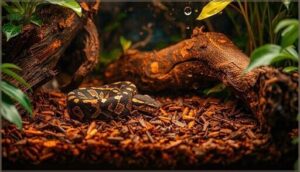
Cypress mulch offers several practical advantages that explain its widespread use in snake enclosures. Understanding these benefits helps you evaluate whether this substrate matches your snake’s specific environmental needs.
The following sections examine the three primary reasons keepers choose cypress mulch for their reptiles.
Moisture Retention and Humidity Control
When you’re managing your snake’s shedding success, moisture management makes all the difference. Cypress mulch excels at humidity retention through several mechanisms:
If your snake is spending excessive time in its water bowl, addressing the underlying humidity issue becomes essential for preventing dehydration and stuck shed.
- Substrate depth of 2-3 inches creates a moisture reservoir that sustains humidity levels for hours after misting
- Evaporation rates drop 15-25% compared to bare substrate, moderating surface drying
- Microclimate control develops humidity gradients between damp substrate and drier upper zones
- Porous fibers trap moisture, enabling gradual diffusion into your enclosure’s air space
This consistent humidity control method reduces rapid swings and supports stable conditions.
Temperature Regulation Properties
You’ll find that thermal buffering becomes a reliable ally in your snake’s enclosure. Cypress mulch’s insulation effects slow heat transfer, maintaining steadier substrate temperatures during nighttime cooling and daytime warming.
This creates predictable temperature gradients—warmer basking zones alongside cooler retreats—that support natural thermoregulation. The mulch’s heat retention properties, combined with humidity control, establish stable microclimate conditions your snake needs for ideal health.
Creating Hiding Places and Natural Environments
Microhabitat creation transforms your snake’s enclosure from a bare container into a functional refuge. When you layer cypress mulch with thoughtful terrain design, you’re building authentic environmental enrichment.
This approach includes several key features:
- Dense leaf litter clusters form natural camouflage zones where snakes observe their surroundings undetected
- Irregular substrate depths create gentle elevation changes with shaded pockets for concealment
- Damp zones near water features establish humidity retention microhabitats mimicking marshy environments
- Varied hideout materials like bark and moss blend seamlessly with cypress mulch textures
- Randomized placement breaks uniform sightlines, encouraging natural exploration behaviors
This habitat design and construction approach fosters both physical comfort and psychological security.
Risks and Drawbacks of Cypress Mulch
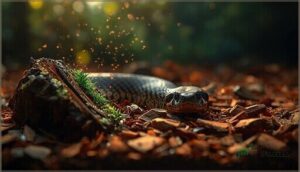
While cypress mulch offers certain benefits, it presents several serious health risks that you need to understand before using it in your snake’s enclosure.
The natural oils and chemical composition can trigger toxic reactions, while the physical properties create hazards ranging from digestive blockages to breathing difficulties. Let’s examine each major concern so you can make an informed decision about your snake’s substrate.
Toxicity Concerns and Natural Oils
Cypress mulch contains essential oils that pose genuine toxicity risks to your snake. These natural compounds can trigger skin irritation and respiratory issues when your pet encounters chemical exposure through direct contact or inhalation.
The oils affect humidity effects within the enclosure, creating an environment where toxic substrates and their effects become apparent through symptoms like wheezing, redness, or lethargy—clear warnings of substrate safety concerns.
Impaction Risk From Ingestion
Your snake might accidentally swallow cypress mulch during feeding, creating dangerous gut blockage that threatens its life.
Accidental ingestion of cypress mulch during feeding can cause life-threatening gut blockage in snakes
Ingestion hazards arise when coarse chips lodge in the digestive tract, causing impaction within hours. Particles larger than 5 millimeters substantially increase substrate toxicity risks, while juveniles face heightened feeding risks due to smaller digestive systems.
These digestive issues demand immediate veterinary attention to protect snake health.
Respiratory Problems and Skin Irritation
Fine dust particles from cypress mulch often become airborne during habitat maintenance, triggering respiratory issues like wheezing and labored breathing in your snake. Toxicity effects from terpenes and essential oils create skin lesions and dermatitis along ventral scales where contact is greatest.
These irritation causes pose serious health risks to reptile health and wellness, particularly in sensitive species experiencing chronic substrate exposure.
PH Levels and Environmental Acidity
Your snake’s enclosure can shift toward dangerously acidic environments when cypress mulch decomposes, disrupting the pH balance critical for ecological balance and water quality in humid setups.
Environmental impact of cypress mulch includes:
- Soil acidity increases from decomposing oils, affecting ventral scale health and toxicity levels
- Water quality degrades as organic acids leach into bowls and substrate moisture
- Ecological impact compounds when acidity stresses already sensitive species requiring environmental enrichment for snakes
Safe Alternatives to Cypress Mulch
If cypress mulch doesn’t feel right for your snake’s enclosure, you’re not out of options. Several substrates offer similar benefits without the toxicity risks or pH concerns that make cypress problematic.
Let’s look at the most reliable alternatives that experienced keepers recommend for different snake species and habitat needs.
Aspen Mulch for Snake Habitats
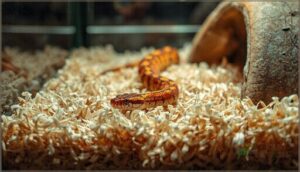
Hardwood bedding made from shredded aspen wood offers a safer choice for your snake habitats, particularly for species that prefer drier conditions. Unlike cypress mulch, aspen contains no aromatic oils or phenols that might harm reptile health. You’ll find it easy to maintain proper substrate depth for burrowing behavior while managing humidity levels effectively.
| Feature | Aspen Mulch Benefits |
|---|---|
| Absorbency | Soaks up 191% of its weight in liquid |
| Safety | Free from toxic oils and chemicals |
| Visibility | Light color shows waste and shed skins |
| Enrichment | Fluffy texture aids natural burrowing |
The high absorbency keeps enclosures dry, which works well for corn snakes and other colubrids. However, you should avoid using aspen as an alternative habitat material for tropical species that need constant moisture retention, since it can contribute to incomplete sheds in high-humidity environments.
Sphagnum Moss and Humidity Retention
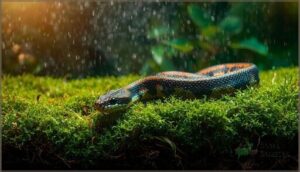
When your snake needs higher humidity retention than aspen can provide, sphagnum moss becomes an outstanding reptile substrate option.
This natural material holds up to its own weight in water, releasing moisture slowly to maintain 60 to 90 percent humidity for successful shedding cycles.
You can layer it over cypress mulch or mix it with other substrates, creating stable microclimate management that aids moisture regulation without waterlogging your enclosure.
Reptile Carpet and Paper-Based Substrates
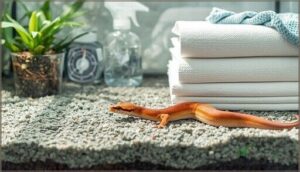
If you want something even easier to maintain, reptile carpet and paper-based substrates offer practical solutions for snake care and maintenance. Reptile carpet provides a washable surface you can sanitize with approved cleaning methods, while paper towels work well for species compatibility needs with minimal impaction risk.
Both substrate materials simplify humidity control and support reptile health through frequent replacement schedules that reduce bacterial buildup.
Maintenance and Safety Guidelines for Cypress Mulch
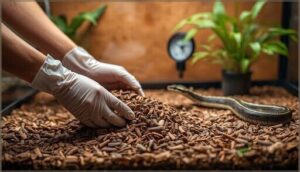
If you choose to use cypress mulch despite the risks, proper maintenance becomes your most important defense against health problems.
Your snake’s safety depends on consistent cleaning routines and careful environmental monitoring.
Let’s look at the specific schedules and practices that keep cypress mulch substrates as safe as possible.
Cleaning Schedule and Substrate Replacement
Regular substrate monitoring keeps your snake’s enclosure safe and healthy. You’ll want to establish a reliable maintenance rhythm that balances cleanliness with cost.
- Spot clean daily using proper cleaning tools to remove feces and prevent ammonia buildup
- Refresh 20 percent of substrate every 2-4 weeks depending on humidity levels
- Replace entirely when persistent odor or mold appears despite routine waste management
Monitoring Humidity and Temperature
Accurate environmental monitoring requires both humidity sensors and temperature control equipment placed at snake level to reflect true microclimate conditions. Digital sensors usually offer plus or minus 3-5 percent accuracy across 20-80 percent RH ranges, making them reliable for tracking moisture retention.
Data logging helps you identify patterns, while sensor calibration with saturated salt solutions ensures your humidity control methods remain precise over time.
Frequently Asked Questions (FAQs)
What mulch is best for snakes?
Aspen Mulch stands out as the champion for snake health and safety—it’s dust-free, non-toxic, and resists mold while supporting humidity control.
Reptile Substrates like Sphagnum Moss offer excellent moisture retention for tropical species.
Is Cyprus safe for snakes?
Cyprus offers relatively safe conditions for snakes, with most species avoiding human contact.
However, the blunt-nosed viper presents toxicity and safety concerns in rural encounters, requiring awareness of venomous species in snake habitat safety protocols.
Why not use cypress mulch?
Cypress mulch contains natural oils that pose toxicity risks to reptiles, and ingested particles can cause substrate impaction.
Respiratory problems from dust and environmental pH imbalances make mulch alternatives safer for snake health.
Can corn snakes burrow in cypress mulch?
Corn snakes can burrow in cypress mulch, creating shallow tunnels up to several inches deep if the substrate depth is adequate.
Fine-grade mulch promotes better tunnel stability than chunky varieties, though impaction risks remain a concern.
Can cypress mulch be composted after use?
You can safely compost used cypress mulch, though the decomposition rate is slower than softer woods. The composting process breaks down wood fibers gradually, enriching soil while managing waste responsibly.
How much cypress mulch per enclosure size?
You’ll need 1 to 2 inches of substrate depth for small enclosures under 20 gallons, while medium tanks require 2 inches, and larger habitats benefit from 2 to 3 inches for ideal humidity control.
Does cypress mulch repel mites or parasites?
Many keepers hope natural oils will shield their pets from trouble, yet cypress mulch offers limited mite repellent properties.
Substrate safety depends more on hygiene than cypress oil effects for parasite control methods.
Is cypress mulch safe for breeding snakes?
Breeding snakes face heightened substrate risks due to stress sensitivity and vulnerable eggs.
Cypress mulch’s natural oils may irritate delicate tissues, while moisture fluctuations invite mold growth that threatens both adults and developing offspring.
Where to buy chemical-free cypress mulch?
Local garden centers and online retailers like The Yard Depot carry 100 percent cypress bark mulch with no added dyes or preservatives.
Verify bulk pricing and product data sheets confirming untreated reptile substrate options.
Conclusion
The theory that cypress mulch for snakes offers universal safety doesn’t hold up under scrutiny—while it excels at humidity control, the respiratory risks and potential toxicity demand careful consideration.
Your snake’s health depends on matching substrate choice to species requirements rather than following popular trends. Whether you choose cypress mulch with proper precautions or opt for safer alternatives like aspen or paper-based options, informed decisions protect your animal from preventable harm while maintaining the environmental conditions they need.