This site is supported by our readers. We may earn a commission, at no cost to you, if you purchase through links.

Most snake owners spend years swapping out bedding, scooping waste, and battling humidity swings—but there’s a setup that manages much of that work on its own.
A bioactive substrate for snakes isn’t just dirt and bugs thrown together; it’s a mini ecosystem where microbes, tiny invertebrates, and layers of natural material team up to break down waste and stabilize moisture. It mirrors what happens on a forest floor or desert scrubland, keeping your snake’s world cleaner and more vibrant without constant scrubbing.
Getting it right means understanding how each ingredient—from springtails to coco coir—plays a role in the balance, and how to match that balance to your snake’s specific needs.
Table Of Contents
- Key Takeaways
- What is Bioactive Substrate for Snakes?
- Choosing The Right Bioactive Substrate Mix
- Essential Elements for a Successful Bioactive Setup
- Top Bioactive Substrates for Snake Enclosures
- Frequently Asked Questions (FAQs)
- Is bioactive better for snakes?
- Can snakes live in a bioactive terrarium?
- What is the best substrate for bioactive ball pythons?
- Can bioactive substrates work for venomous snake species?
- How often should you replace bioactive substrate completely?
- What causes mold overgrowth in bioactive snake enclosures?
- Can you mix commercial substrates with homemade components?
- Conclusion
Key Takeaways
- A bioactive substrate creates a self-sustaining mini ecosystem where springtails, isopods, and beneficial microbes break down waste and stabilize humidity, reducing your cleaning workload while mimicking your snake’s natural habitat.
- The right substrate mix depends on your snake species—ball pythons need moisture-rich coco coir blends, corn snakes prefer looser textures for burrowing, and desert species require sand-heavy mixes that prevent mold.
- A successful bioactive setup requires 2-4 inches of layered substrate, a drainage system to prevent bacterial growth, and a cleanup crew of springtails and isopods working alongside safe live plants like pothos or snake plant.
- Most bioactive substrates need complete replacement every 6-12 months, and problems like mold overgrowth happen when poor ventilation and overwatering create stagnant conditions your cleanup crew can’t handle.
What is Bioactive Substrate for Snakes?
Bioactive substrate is the living foundation of your snake’s enclosure — a mix of natural materials that work together to break down waste, regulate moisture, and keep things healthy without you having to clean constantly.
If you’re exploring options, our guide to the best substrate for snake terrariums covers bioactive setups alongside traditional choices.
Think of it as building a tiny ecosystem right inside the tank. Here are some of the best bioactive substrate options you can grab today to get started.
Definition and Key Components
Think of bioactive substrate as a living floor for your snake’s enclosure. It’s a soil-based mix that hosts real organisms — tiny helpers that break down waste and keep things balanced on their own. Substrate science meets ecosystem dynamics right beneath your snake’s scales.
Bioactive substrate is a living floor—a soil-based mix of organisms that break down waste and balance your snake’s ecosystem naturally
- Coco coir and topsoil form the structural base, retaining moisture and feeding microbial colonies
- Springtails and isopods act as a natural clean-up crew, processing waste through microbe balance
- Fungal networks quietly stabilize nutrients, supporting bioactive principles and long-term ecosystem balance
How Bioactive Substrates Mimic Natural Habitats
Those tiny helpers mentioned earlier? They’re the reason bioactive substrate goes beyond just looking nice. The mix replicates real snake habitat by layering microbial balance, substrate ecology, and ecosystem dynamics together.
Naturalistic environments work because each component — soil, fungi, moisture — mirrors what happens outdoors. It’s habitat replication in action: terrarium design that lets ecosystem balance do the heavy lifting, naturally.
Many reptile keepers choose these setups due to the benefits of nutrient-rich substrate options that support plant growth and ecosystem health.
Benefits for Snake Health and Behavior
All that ecosystem balance we just talked about? It pays off directly in your snake’s well-being. A naturalistic environment doesn’t just look good—it actively promotes snake health across the board.
Here’s what bioactive substrate brings to reptile care:
- Immune Boost — Beneficial microbes in the substrate strengthen your snake’s natural defenses
- Skin Health — Moisture pockets and gentle abrasion make shedding smoother and cleaner
- Behavioral Enrichment — Complex textures encourage digging and exploring, keeping your snake curious
- Respiratory Care — Drainage channels and microfauna keep air fresh and waste-free
- Stress Reduction — Olfactory cues and visual variety calm nerves naturally
Providing environmental enrichment for snakes has been shown to improve their welfare in human care.
Choosing The Right Bioactive Substrate Mix
Getting the substrate mix right is one of the most important decisions you’ll make for your bioactive setup.
The right blend depends on your snake’s species, the moisture it needs, and how deep you want it to be able to burrow.
Here’s what to look for when building yours.
Essential Ingredients (Coco Coir, Topsoil, Sand)
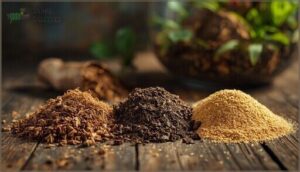
Think of your bioactive substrate as a three-ingredient recipe — each one earns its place. Coco Coir Benefits include strong moisture retention and natural aeration, keeping things damp without drowning your setup. Topsoil Composition adds organic matter and nutrients that feed microbial life. Sand Texture opens up drainage and aids burrowing. Good Substrate Blending ties them together for smart Moisture Management.
Once your substrate is layered and settled, regular maintenance without harsh chemicals keeps the microbial balance intact and your cleanup crew thriving.
| Ingredient | Primary Role | Why It Matters |
|---|---|---|
| Coco Coir | Moisture retention & aeration | Keeps humidity steady without waterlogging |
| Topsoil | Nutrients & microbial support | Feeds the living cleanup crew below the surface |
| Sand | Drainage & structure | Prevents compaction, facilitates natural burrowing |
The right reptile substrate selection starts here — with understanding what each component actually does inside your bioactive terrarium. These substrate options form the foundation of solid reptile care.
Matching Substrate to Snake Species

Your snake’s natural home tells you everything you need to know about substrate selection. Species Research and Habitat Replication guide every choice — ball pythons need moisture-retaining coco coir mixes, while corn snakes thrive in looser blends that support their Burrowing Needs.
- Ball pythons prefer moisture-rich substrates mimicking rainforest floors
- Corn snakes benefit from looser textures enabling shallow exploration
- Kingsnakes tolerate leaf litter-enriched mixes with varied moisture zones
- Desert species require drier sand-heavy blends preventing mold growth
- Arboreal snakes need lighter, fast-draining substrates reducing excess humidity
Matching bioactive substrate to snake species isn’t guesswork — it’s reading the blueprint nature already wrote.
Determining Proper Depth and Texture
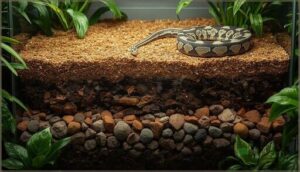
Depth and texture shape your snake’s entire environment. You’ll want 2 to 4 inches of bioactive substrate—enough for burrowing needs and drainage layer function, yet shallow enough for cleanup crews to work. Substrate depth affects thermal banding and moisture gradients throughout your bioactive terrarium.
| Layer | Depth & Purpose |
|---|---|
| Top | 0.5–1 inch: fine particles for traction |
| Middle | 1–2 inches: cushioning, heat distribution |
| Bottom | 1–2 inches: drainage, beneficial microbes |
Texture analysis reveals what your snake actually needs—fine to medium particles prevent slipping while coarser mixes aid heat transfer and support a self-sustaining ecosystem.
Maintaining Moisture and Humidity Levels
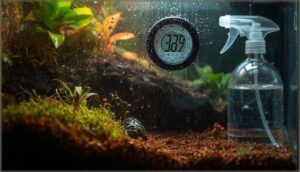
Regularly checking your bioactive substrate with a digital hygrometer keeps humidity between 40 and 60 percent—the sweet spot for healthy shedding and respiratory function. Humidity sensors track real-time moisture levels, while water cycling through substrate and thermal gradients influences evaporation rates across your enclosure.
- Lightly press the top layer weekly to confirm surface dampness without pooling
- Position sensors away from heating elements to avoid skewed humidity readings
- Use distilled water for top-ups to prevent mineral buildup and mold risks
- Monitor nighttime swings when temperature drops shift humidity control needs
Essential Elements for a Successful Bioactive Setup
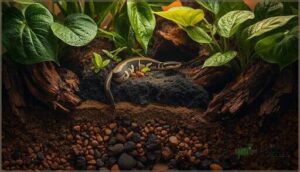
You’ve got your substrate sorted, but a bioactive setup won’t thrive on dirt alone.
The magic happens when you bring in the right crew of tiny cleaners, add living plants that can handle a snake’s lifestyle, and nail down the physical layers that keep everything running smoothly. Let’s look at the four key pieces that turn a basic enclosure into a thriving, self-sustaining ecosystem.
Role of Clean-Up Crews (Springtails, Isopods)
Think of your cleanup crew as the invisible maintenance team working around the clock in your bioactive substrate.
Springtails devour mold and fungal spores, while isopods munch through waste and uneaten food, turning it into nutrient-rich castings.
Together, these microfauna keep fungal balance in check, aerate the soil as they move, and maintain a healthier, cleaner environment for your snake.
Selecting Safe Live Plants for Snakes
Not every plant belongs in your bioactive substrate—plant toxicity and leaf structure matter. Choose species like pothos or snake plant that tolerate your enclosure’s moisture levels without wilting or rotting.
Smooth, sturdy leaves won’t injure your snake during exploration, and strong root health keeps plants anchored when your animal burrows. Proper plant selection transforms live plants into safe, functional elements of thoughtful reptile husbandry.
Creating Effective Drainage and Thermal Gradients
Without solid drainage systems and thermal gradients, your bioactive substrate can’t function—standing water breeds bacteria and uneven heat stresses your snake. Good water management starts with layering and ends with consistent temperature control.
- Place a 2–4 inch drainage layer of gravel or clay beneath a filter fabric to prevent clogging
- Build substrate layering with distinct zones for moisture retention and airflow
- Install heating elements to create temperature gradients of 2–6°C across the enclosure
- Monitor humidity levels between 50–70% using sensors at multiple depths
- Check for pooling weekly to maintain gradient integrity and prevent anaerobic pockets
Supporting Fungal and Microbial Balance
Once your drainage and heat are dialed in, fungal networks and bacterial balance take over the heavy lifting.
Beneficial organisms—springtails, isopods, and saprophytic fungi—break down waste and recycle nutrients when you keep humidity between 60 and 80 percent.
Substrate monitoring catches stagnant pockets early, so microfauna management and ecosystem stability stay on track without constant intervention.
Top Bioactive Substrates for Snake Enclosures
Now that you understand the building blocks of a bioactive setup, it’s time to look at what you’ll actually put in your enclosure.
The right substrate makes or breaks your system—it needs to hold moisture without getting soggy, support your clean-up crew, and match your snake’s natural habitat. Here are five solid options that work well for different species and setups.
1. Bio Dude Terra Firma Reptile Substrate
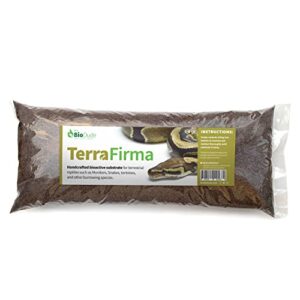
Terra Firma takes care of the hard work of maintaining a thriving bioactive setup. This handcrafted blend is built for terrestrial snakes like ball pythons, kingsnakes, and monitors that love to burrow.
You won’t need a drainage layer, and it holds tunnels without collapsing—perfect for curious diggers. It retains moisture to stabilize humidity, aids natural shedding, and fosters root growth for live plants.
At $24.95 for 6 quarts, it’s a solid starter option that works seamlessly with cleanup crews and automatic misting systems.
| Best For | Reptile keepers with burrowing species like ball pythons, kingsnakes, and monitors who want a low-maintenance bioactive substrate that holds humidity and supports live plants. |
|---|---|
| Material Type | Organic blend |
| Moisture Retention | High |
| Primary Use | Bioactive terrarium |
| Odor Control | Standard |
| Maintenance Level | Moderate |
| Volume/Weight | 6 quarts |
| Additional Features |
|
- No drainage layer needed, which simplifies setup and saves space in your enclosure
- Holds burrows and tunnels without collapsing, so your snake can dig naturally
- Works with automatic misting systems and cleanup crews for easy maintenance
- Contains wood pieces of varying sizes that might need sorting or removal
- Requires ongoing maintenance to keep aeration and drainage working properly
- May not work well for all reptile species or terrarium types
2. ReptiChip Coconut Reptile Substrate Bedding
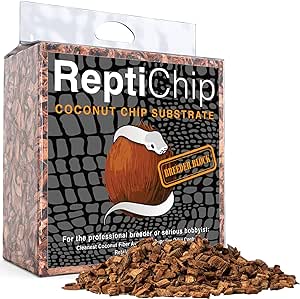
ReptiChip offers a different approach: 100% organic coconut chips that expand from a compressed brick into 10 pounds of loose, fluffy bedding. You’ll get about 2.5 cubic feet of substrate from one 72-quart block, which is ideal for larger enclosures or multiple setups.
It retains humidity beautifully without turning soggy, stays dust-free to protect your snake’s respiratory system, and naturally absorbs odors. The porous structure fosters beneficial microbes while remaining easy to spot-clean—a practical choice for both bioactive builds and simpler maintenance routines.
| Best For | Reptile owners who need a humidity-retaining, low-dust substrate for larger enclosures or bioactive setups with species like ball pythons and other tropical reptiles. |
|---|---|
| Material Type | Coconut fiber |
| Moisture Retention | Excellent |
| Primary Use | General bedding |
| Odor Control | Excellent |
| Maintenance Level | Easy |
| Volume/Weight | 72 qt (10 lbs) |
| Additional Features |
|
- Expands into 10 pounds of substrate from one compressed brick, covering large enclosures efficiently
- Retains humidity well without becoming waterlogged, ideal for tropical species
- Naturally absorbs odors and stays dust-free to protect respiratory health
- Higher price point compared to standard substrate options
- Can take time to fully hydrate if you don’t use a hose or pressurized water
- Not ideal for reptiles that need deep burrowing substrate due to the chip texture
3. BNOSDM Reptile Soil Substrate
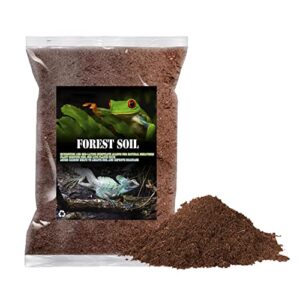
BNOSDM Reptile Soil Substrate takes a natural route with processed earth that encourages your snake to dig and burrow just like they would in the wild. This loose, organic bedding holds moisture without getting waterlogged, so you can dial in stable humidity for tropical or temperate species.
The fine organic matter breaks down gradually, creating a mild bioactive environment when you add springtails and isopods. At 5 liters per bag, it works well for smaller to mid-sized enclosures.
| Best For | Snake owners who want to recreate natural burrowing conditions while maintaining steady humidity levels in small to medium enclosures. |
|---|---|
| Material Type | Coconut fiber |
| Moisture Retention | Excellent |
| Primary Use | General bedding |
| Odor Control | Good |
| Maintenance Level | Moderate |
| Volume/Weight | 5 liters |
| Additional Features |
|
- Encourages natural digging behavior and holds moisture well without becoming soggy
- Breaks down over time to support a bioactive setup with cleanup crew
- Made from organic material that can be composted or reused as fertilizer
- Five-liter bags may require multiple purchases for larger terrariums
- Needs replacement every few months, which can add up in cost
- May need mixing with sand or other substrates to get the right consistency for certain species
4. Zilla Reptile Bedding Substrate
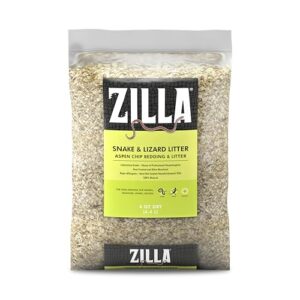
Zilla Reptile Bedding Substrate offers aspen-chip and alfalfa-based options that absorb moisture well without triggering respiratory issues. The aspen variant ships as heat-treated chips free from aromatic oils, so you won’t stress out sensitive snakes.
At 4 quarts, it’s sized for small to mid-range setups and allows easy spot cleaning when your snake leaves waste behind. While it won’t build elaborate burrows, it stays dry enough to prevent mold and facilitates light bioactive activity when paired with a modest clean-up crew.
| Best For | Snake owners and reptile keepers who need a hypoallergenic, moisture-absorbing substrate that’s easy to spot-clean and safe for burrowing species. |
|---|---|
| Material Type | Aspen chips |
| Moisture Retention | Low |
| Primary Use | Burrowing species |
| Odor Control | Standard |
| Maintenance Level | Easy spot cleaning |
| Volume/Weight | 4 quarts |
| Additional Features |
|
- Heat-treated aspen chips are free from harmful aromatic oils, making them safe for respiratory-sensitive reptiles
- Absorbs moisture effectively while staying dry enough to prevent mold growth
- Easy to spot-clean thanks to the larger chip size, and suitable for light bioactive setups
- Won’t hold tunnels or burrows as well as denser substrates, limiting its use for heavy burrowers
- Small chip size can be messy and scatter outside the enclosure during cleaning or movement
- Not recommended for young or wild-caught reptiles that may accidentally ingest the substrate
5. Sukh Sphagnum Moss for Reptiles
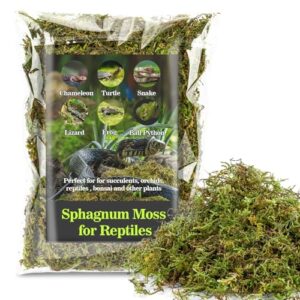
Sukh Sphagnum Moss works as a humidity boost rather than a stand-alone substrate. You’ll appreciate its absorbent nature when you tuck damp clumps into hide boxes or layer them over a bioactive base—perfect for snakes that need extra moisture during shedding cycles.
At 5 ounces, it won’t fill a large enclosure alone, but it stabilizes humidity between mistings and creates soft burrowing pockets. Just watch for mold if you leave it soaking wet, and replace sections that start breaking down into powder.
| Best For | Reptile owners who need a supplemental humidity layer for hide boxes, shedding assistance, or bioactive enclosures rather than a primary substrate. |
|---|---|
| Material Type | Sphagnum moss |
| Moisture Retention | Very high |
| Primary Use | Humidity supplement |
| Odor Control | Minimal |
| Maintenance Level | Regular replacement needed |
| Volume/Weight | 5 ounces |
| Additional Features |
|
- Holds moisture exceptionally well and keeps humidity stable between mistings
- Creates soft, natural spots for burrowing and helps reptiles shed more easily
- Works as a versatile addition—substrate booster, nesting material, or even plant nutrient
- Too small (5 oz) to use as the main substrate in larger enclosures
- Breaks down into dusty powder over time and needs regular replacement
- Not safe for reptiles that nibble plants or lick surfaces since it can cause digestive issues
Frequently Asked Questions (FAQs)
Is bioactive better for snakes?
Bioactive setups can improve shedding and odor when humidity stays balanced.
However, some species thrive better with simpler substrates, and poor drainage may cause fungal issues affecting skin and respiratory health.
Can snakes live in a bioactive terrarium?
Yes, many common pet snakes thrive in bioactive terrariums when temperature and humidity match their natural range, and you let the setup stabilize for several weeks before adding your snake.
What is the best substrate for bioactive ball pythons?
A blend of 80% organic topsoil and coco coir with 20% play sand works best. Add leaf litter on top and keep the substrate depth at 3–4 inches for ideal humidity.
Can bioactive substrates work for venomous snake species?
They can, but they pose serious risks. Handling dangers and containment demands make manual cleaning safer.
If you still choose bioactive, prioritize secure enclosures, dust-free substrates, and strict quarantine protocols to protect yourself and others.
How often should you replace bioactive substrate completely?
Most keepers refresh the entire substrate every six to twelve months.
Watch for lingering odors, visible mold, or compacted texture—these signs tell you it’s time for a full reset to restore balance.
What causes mold overgrowth in bioactive snake enclosures?
Mold blooms when moisture lingers too long without proper airflow.
Poor ventilation, overwatering, and too much decaying organic matter create the damp, stagnant conditions fungi love—especially if your cleanup crew can’t keep pace.
Can you mix commercial substrates with homemade components?
Yes, you can mix them to fine-tune texture and humidity. Start with a 50/50 blend, test a small batch first, and guarantee uniform distribution to avoid moisture hotspots or pathogen introduction.
Conclusion
Here’s the reality: a well-built bioactive substrate for snakes won’t eliminate maintenance entirely, but it cuts the grind in half while giving your snake a richer, more natural life.
The trick is matching the right mix—coco coir, drainage, cleanup crew—to your species’ needs, then letting the system settle. Once it clicks, you’ll spend less time scrubbing and more time watching your snake thrive in an environment that actually works with you.