This site is supported by our readers. We may earn a commission, at no cost to you, if you purchase through links.
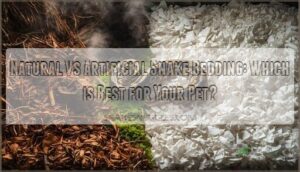
Walk into any reptile expo and you’ll spot the divide instantly: naturalists clutching bags of cypress mulch and coconut fiber, while the practical crowd loads up on paper bedding and reptile carpet. The natural vs artificial snake bedding debate isn’t just about aesthetics—it’s about matching substrate properties to your snake’s biology.
Humidity-dependent species like ball pythons need moisture-retaining materials that artificial options can’t replicate, yet those same natural substrates harbor mold if you’re not vigilant about spot-cleaning. Your choice affects everything from your snake’s respiratory health to how often you’re elbow-deep in enclosure maintenance. The right bedding balances your pet’s environmental needs against your realistic care capacity—and understanding the tradeoffs means you’ll stop second-guessing every substrate switch.
Table Of Contents
- Key Takeaways
- Key Differences Between Natural and Artificial Bedding
- Benefits of Natural Snake Bedding
- Advantages of Artificial Snake Bedding
- Health and Safety Considerations
- Choosing The Right Bedding for Your Snake
- Expert Tips for Bedding Selection and Use
- Frequently Asked Questions (FAQs)
- What not to use for snake bedding?
- How often does snake bedding need to be changed?
- Can snakes eat bedding materials accidentally during feeding?
- How often should bedding be completely replaced?
- What bedding works best for baby snakes?
- Does bedding type affect shedding success rates?
- Can different bedding types be layered together?
- Conclusion
Key Takeaways
- Natural bedding like coconut fiber and cypress mulch retains moisture essential for humidity-dependent species like ball pythons, but requires vigilant spot-cleaning to prevent mold growth that threatens respiratory health.
- Artificial substrates cut maintenance time by up to 70% and resist bacterial growth by 99% within 24 hours through antimicrobial coatings, making them ideal for keepers prioritizing sanitation over naturalistic aesthetics.
- Cedar and pine shavings release toxic aromatic hydrocarbons that irritate snake airways, while paper-based substrates work best for baby snakes because they’re dust-free and prevent accidental ingestion during feeding.
- Your snake’s biological response—respiratory function, skin quality during sheds, and behavioral changes—tells you within two weeks whether your substrate choice is working better than any online debate.
Key Differences Between Natural and Artificial Bedding
You’re standing in the reptile aisle staring at bags of aspen shavings next to rows of plastic mats, wondering what your ball python actually needs.
Before you grab the first bag, check out this guide to reptile substrates for ball pythons to see how aspen stacks up against other options.
Natural and artificial bedding look different, feel different, and behave completely differently inside your snake’s enclosure. Here’s what separates bark chips from polymer pellets—and why it matters for your snake’s health.
Material Composition and Sources
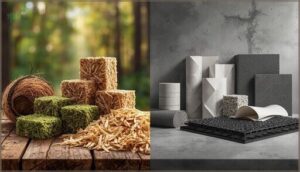
Natural snake hides and reptile bedding options originate from renewable, eco-friendly sources—wood fiber from sawmill byproducts, eco coconut fiber from processed husks, and peat moss from regulated bogs.
Artificial substrate selection and maintenance relies on manufactured materials: aspen processed in mills, paper pulp from recycled newsprint, and reusable mats fabricated specifically for reptile substrates. Understanding raw material supply chains helps you choose sustainable resources that match your values.
Appearance and Terrarium Aesthetics
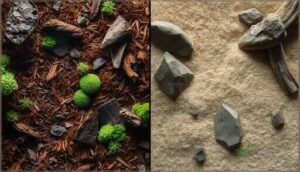
Beyond raw materials, your terrarium design tells a story—and bedding choices set the stage. Color schemes in natural snake hides shift from pale beige to rich brown, creating Texture Variety through fibrous plant matter and cork bark. Artificial substrates offer uniform neutrals with Visual Depth enhanced by dragon stones or driftwood silhouettes. Lighting Effects warm natural tones while Aesthetic Balance demands proportional plants and strategic hide placement for showroom terrarium aesthetics or wild reptile habitat vibes.
- Natural substrates use layered particle sizes to simulate foreground, midground, and background terrain
- Moisture darkening creates contrast between damp pockets and dry zones for realistic depth
- Artificial bedding maintains consistent color under all lighting, simplifying visual planning
- Strategic moss placement and buried wood guide your eye toward focal rock features or logs
Durability and Lifespan
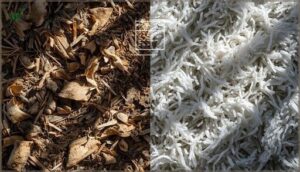
While aesthetics catch your eye, Material Longevity keeps your wallet happy. Natural bedding fibers compress over time—reducing airflow by 20 to 40 percent—so you’ll replace aspen or mulch every 2 to 4 weeks.
Artificial options resist Compaction Rates better, maintaining Fiber Durability and Moisture Resistance for 6 to 12 months. Replacement Cycles matter when choosing reptile bedding options for substrate selection and maintenance that promotes reptile health and snake behavior.
Benefits of Natural Snake Bedding
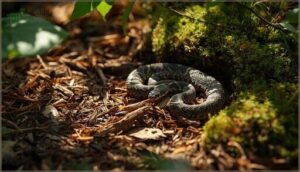
Natural bedding brings something artificial materials can’t replicate: the textures, smells, and moisture dynamics your snake would encounter in the wild.
Natural bedding replicates the wild textures, scents, and moisture dynamics that artificial materials simply cannot mimic
These substrates do more than look good—they actively shape how your pet behaves, thermoregulates, and stays hydrated. Here’s what makes natural bedding worth considering for your setup.
If your reptile has delicate skin or allergies, you’ll want to explore reptile substrates designed for sensitive skin to avoid irritation.
Humidity Control and Moisture Retention
Organic substrates act like living sponges, holding several times their weight in water vapor and creating stable microclimates your snake needs for healthy shedding. Here’s what you should monitor:
- Coconut fiber retains moisture exceptionally well, supporting reptile substrate selection for tropical species
- Sphagnum moss creates high-RH pockets perfect for humidity control during shed cycles
- Humidity gauges track condensation risk at multiple enclosure heights
- Substrate thickness adjusts evaporation rates naturally
- Regular misting maintains moisture levels between 40-60% RH for ideal skin health
Proper snake enclosure care ties in closely with maintaining, which protects both your pet’s health and the enclosure materials.
Behavioral Enrichment and Natural Instincts
Sensory stimulation transforms static tanks into living puzzles your snake actively solves. Natural substrates deliver olfactory cues—earth, moss, leaf litter—that boost exploration time by 40% and trigger authentic foraging enrichment instincts.
Environmental complexity through varied textures and deep burrowing behavior layers promotes thermoregulatory movement and natural locomotion. Naturalistic enclosures with multiple hides encourage shelter-seeking behaviors, supporting animal welfare through behavioral enrichment grounded in herpetology and environmental enrichment principles.
To fully support your snake’s wellbeing, it’s essential to take into account the importance of natural instincts in their habitat design.
Suitable Species and Habitat Types
Tropical habitats housing ball pythons and green tree pythons demand coconut fiber and cypress mulch for 70–80% humidity control, while desert species like sand boas require aspen shavings that won’t trap excessive moisture.
Arboreal snakes benefit from bark substrates that support climbing and microclimates, whereas burrowing behavior in king snakes needs 6–8 inches of loose material for natural digging and secure shelter-seeking in their snake habitat.
Advantages of Artificial Snake Bedding
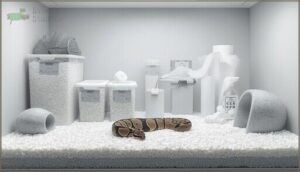
Artificial bedding doesn’t try to mimic the forest floor—it prioritizes control and consistency, and your sanity during cleaning day.
If you’re managing multiple enclosures or simply value predictable maintenance over naturalistic aesthetics, these materials offer distinct advantages that can simplify your routine without compromising your snake’s health.
Here’s what makes artificial substrates worth considering.
Ease of Cleaning and Maintenance
Artificial bedding slashes your workload by up to 70% compared to natural substrates. Smooth surface materials like plastic grid mats and reusable fabric liners resist staining, so you’ll spend less time scrubbing and more time handling your snake.
Sanitation methods are straightforward—wipe down or machine wash—while maintenance schedules stretch longer between full changes. Cleaning tools? Just soap, water, and common disinfectants work perfectly for waste management and odor control.
Mold and Bacteria Resistance
You won’t worry about hidden spores when antimicrobial coatings on artificial substrates reduce viable bacteria by 99 percent within 24 hours. Copper and silver infused materials function as bacterial inhibitors and fungal barriers, cutting mold growth by over 80 percent in humid conditions.
Moisture control becomes predictable, and sanitation methods stay simple—your snake’s substrate safety improves while environmental enrichment remains intact.
Custom Sizing and Enclosure Flexibility
Your reptile enclosure setup gets a significant upgrade when you can trim panels to the exact millimeter or drill precision cutouts for cables and vents. Modular enclosures and adjustable panels let you:
- Add or remove sections for future upgrades
- Reposition mounting rails for oddly spaced equipment
- Specify custom mounting points within 0.5 mm tolerance
- Reconfigure flexible layouts with adjustable shelves
- Match your snake enclosures to irregular footprints
This adaptability transforms reptile habitat design into a customized solution.
Health and Safety Considerations
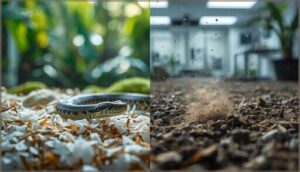
No bedding is worth risking your snake’s health risk. Whether you choose natural substrates or artificial materials, you need to understand the hidden dangers lurking in poorly selected or improperly maintained bedding.
Let’s break down the critical safety factors that separate a safe enclosure from a veterinary emergency.
Toxicity and Material Safety
Not all bedding is created equal in terms of Material Toxicity and Chemical Risks. Pine and cedar shavings release aromatic hydrocarbons that irritate airways, while treated woods off-gas volatile organic compounds.
You’ll also face Allergen Exposure from pesticide residues on outdoor-sourced substrates and heavy metals in soil-enriched options. Safe Handling means quarantining new bedding, checking supplier certifications, and storing materials in sealed containers—essential Contaminant Control for substrate safety and reptile health.
Dust, Odor, and Respiratory Risks
Organic dust in your terrarium contains bacteria, fungi, and pollen that irritate nasal and throat passages—in you and your snake. Poor Air Quality Control from dusty substrates triggers coughing, wheeze, and reduced activity.
Here’s what you need for Respiratory Health:
- Use Dust Reduction substrates that minimize airborne particles
- Maintain stable humidity to prevent particle suspension
- Implement Ventilation Systems with appropriate airflow
- Practice routine Odor Management through timely substrate replacement
Strong smells signal microbial buildup—volatile compounds that trap respiratory irritants and threaten animal welfare.
Mold Prevention and Sanitation
Fungal spores love damp corners—but you can stop them. Mold Detection starts with weekly visual checks and a moisture meter reading below 20 percent.
Pair Humidity Control with Ventilation Systems that exchange air at least twice daily. Use EPA-registered Decontamination Techniques on hard surfaces, rinse thoroughly, and replace any porous reptile substrate showing visible growth.
Your snake habitat stays healthy when Sanitation Methods become routine.
Choosing The Right Bedding for Your Snake
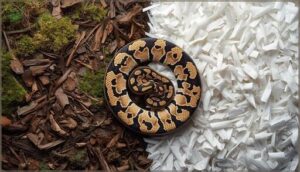
There’s no one-size-fits-all bedding for snakes—what works for a ball python won’t cut it for a corn snake or a boa.
The right choice depends on your snake’s species, natural behaviors, and your own ability to keep up with maintenance. Let’s break down the key factors you need to weigh before making a decision.
Species-specific Bedding Needs
Your snake’s species dictates bedding basics—don’t guess. Humidity-loving pythons thrive on coconut coir that holds moisture without becoming a mold factory, while corn snakes prefer aspen’s dryness.
Substrate texture matters for burrowing species; fine pulp prevents nest compaction that traps heat. Check your snake’s natural habitat needs, then match substrate selection to those thermal gradients and moisture requirements.
Reptile care starts with species-specific choices, not one-size-fits-all guesses.
Burrowing, Hiding, and Thermoregulation
Thermal gradients drive daily snake behavior—you can’t fake that need with pretty décor alone. Substrate depth facilitates burrowing instinct to create stable burrow microclimates that buffer heat swings during digestion cycles.
Loose coconut husk or cypress mulch fosters tunnel formation, while hide diversity across warm and cool zones lets your snake thermoregulate without stress. Environmental enrichment starts with functional, temperature-responsive snake habitat design.
Owner Lifestyle and Maintenance Preferences
Your daily routines and cleaning schedules matter as much as your snake’s biology. Busy schedules favor artificial substrates—quick wipe-downs cut maintenance costs and fit tight time windows.
Natural bedding demands frequent spot-cleaning and substrate replacement every 2–4 weeks. Pet owner preferences vary: some prioritize low maintenance efficiency, others value enrichment over convenience. Match your reptile care commitment to realistic weekly bandwidth.
Expert Tips for Bedding Selection and Use
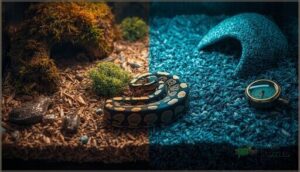
You’ve already picked your bedding type, but the real work starts when you layer it in the enclosure and watch how your snake responds.
Many keepers find success combining natural materials and artificial materials to balance humidity control with easy cleaning. Here’s how to fine-tune your setup and spot the warning signs that something’s not working.
Mixing Natural and Artificial Substrates
You don’t have to pick one camp—mixed bedding blends natural substrates like coconut coir with paper-based layers for humidity balance and easier cleanup.
Substrate layering creates thermal gradients while supporting burrowing dynamics, giving you environmental enrichment without sacrificing safety. Just keep the base loose and breathable, avoid pine or cedar, and turn damp pockets weekly to prevent mold in your reptile habitat.
Signs of Unsuitable Bedding
Moisture Signs and persistent musty smells—especially after you’ve just cleaned—flag substrate failure before your snake shows symptoms. Visual deterioration like clumping or dark staining tells you mold’s already moved in, compromising both Odor Control and animal welfare.
- Fraying fibers or rough texture signals Tactile Degradation that can irritate scales
- Ammonia odors indicate waste saturation and Safety Risks for reptile health
- Discoloration persisting after washing means embedded microbial contamination
Frequently Asked Questions (FAQs)
What not to use for snake bedding?
Avoid cedar and pine—toxic woods irritate airways. Skip reptile carpets that trap bacteria, sand causing impaction, and mineral substrates with poor absorption.
Safe reptile bedding options prevent these substrate safety pitfalls in reptile substrate selection.
How often does snake bedding need to be changed?
You’ll need to replace snake bedding every one to two months with full substrate changes, but spot clean daily to remove waste and maintain humidity control for ideal snake health.
Can snakes eat bedding materials accidentally during feeding?
Can your snake swallow bedding with its prey? Yes—accidental substrate ingestion happens during feeding strikes.
Feeding safety improves when you use plates or containers, reducing bedding hazards and protecting snake digestion from impaction risks.
How often should bedding be completely replaced?
Most moderate-use enclosures need full bedding replacement every 6 to 12 months, but high-waste setups or small spaces may require renewal every 3 to 6 months for ideal sanitation frequency and material durability.
What bedding works best for baby snakes?
Paper-based substrates like shredded newspaper work perfectly for baby snake care—they’re dust-free for delicate lungs, let you monitor waste easily, and won’t get accidentally swallowed during those enthusiastic feeding sessions.
Does bedding type affect shedding success rates?
Yes—substrate selection and maintenance drives Shedding Cycles and Skin Health.
Humidity Control through proper Moisture Levels facilitates complete sheds, while Burrowing Behavior in suitable reptile bedding options reduces stress, directly impacting animal welfare and reptile health outcomes.
Can different bedding types be layered together?
Think of layered reptile substrates as a sandwich—each layer plays a role.
You can combine bedding types, but moisture control and ventilation systems are critical to prevent mold risks in your snake’s enclosure.
Conclusion
A client recently switched her ball python from newspaper to cypress mulch and watched the snake’s chronic shed issues disappear within two cycles—proof that natural vs artificial snake bedding choices have measurable biological consequences.
Your decision hinges on matching substrate properties to your snake’s humidity requirements and your cleaning habits. Don’t overthink it: monitor your snake’s respiratory function, skin quality, and behavior for two weeks after any substrate change. Those indicators tell you everything a forum debate can’t.