This site is supported by our readers. We may earn a commission, at no cost to you, if you purchase through links.
Most snake bites don’t happen during careful encounters—they happen when someone reaches too fast, grabs the wrong spot, or misreads a coiled body as calm. Snakes don’t attack out of malice. They strike when they feel cornered, surprised, or mishandled.
If you know what their body is telling you before you move, picking up a snake becomes straightforward. A loose curve means relaxed. An S-shape near the head means get your hands somewhere else. The difference between a safe lift and a defensive strike often comes down to where you place your hand and how you read the moment before contact.
Table Of Contents
- Key Takeaways
- How to Read a Snake’s Body Language First
- Step-by-Step: How to Pick Up a Snake Safely
- How to Pick Up a Garter Snake or Wild Snake
- How to Prevent Getting Bitten by a Snake
- Choosing and Using Snake Hooks and Tongs
- What to Do if You Get Bitten by a Snake
- Frequently Asked Questions (FAQs)
- Conclusion
Key Takeaways
- Reading a snake’s body language before you touch it—loose curves mean calm, S-shaped neck means strike loading—is the most reliable way to avoid getting bitten during handling.
- Most bites happen because of bad hand placement; support the snake’s mid-body from the side with your palm, never grab near the head or approach from above where you look like a predator.
- Wild snakes and pet snakes behave completely differently because wild ones see every human as a threat, so you need more caution, proper tools like hooks or tongs, and the judgment to walk away when defensive postures appear.
- If a snake bites you, stay still, call emergency services immediately, keep the limb at heart level, and get to the ER fast—accurate species identification determines which antivenom works, and waiting for symptoms to worsen wastes critical treatment time.
How to Read a Snake’s Body Language First
Before you ever reach for a snake, you need to know what it’s already telling you. Snakes can’t talk, but their body language is loud if you know what to look for.
Learning to read these warning signs before handling your snake helps you avoid stress for both of you.
Here’s what to watch before you make your move.
Signs a Snake is Calm and Ready to Handle
A calm snake tells you everything if you know what to look for. Its body stays in loose, easy curves — no tight coils, no stiff angles. Tongue flicks are slow and steady. Movement is unhurried, almost exploratory.
These calm behavior signs are your green light. That relaxed awareness means it’s not reading you as a threat — and safe handling starts right there. For more details on relaxed body language signals, recognizing these cues can greatly minimize risk during handling.
Warning Signs Your Snake May Bite
Not every snake is sending mixed signals — warning signs are loud and clear once you know them. An S-curved neck means a strike is loading.
Tail vibration, hissing sounds, and flattened defensive body language are all warning behaviors saying back off now. These defensive postures, combined with sudden musking, tell you snake behavior and body language has shifted from curious to cornered.
Recognizing key indicators of stress in snake body language can help you interpret their intentions more accurately.
How Stress Affects Snake Behavior
Stress doesn’t just make snakes nervous — it rewires their behavior entirely. Acute stress responses can flip a calm snake into full defensive behavior fast, especially if environmental factors like loud noise or sudden movement are involved.
Snake anxiety builds over time too. Chronic stress from poor handling techniques or a bad enclosure changes snake body language in subtle ways, making even venomous snake safety harder to predict.
Step-by-Step: How to Pick Up a Snake Safely
Picking up a snake correctly comes down to a few simple moves done in the right order. Get one step wrong and you’re more likely to stress the snake — or get tagged.
Here’s exactly what to do.
Approaching The Snake Slowly and Calmly

Stop one to two body lengths away before you do anything else. That distance keeps you outside striking range and gives the snake time to clock your presence — no surprises.
From there, close the gap with slow, even steps. Snake awareness methods work because snakes read motion, not intent. Smooth, steady movement is your best gentle handling tip.
Where to Place Your Hands on The Body
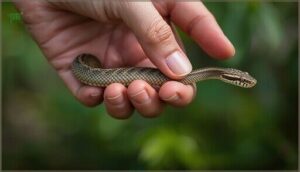
Hand placement is where most bites actually happen. When you pick up a snake, aim for the mid body — that thick, muscular section in the middle third. Slide your hand in from the side, palm up, and lift smoothly.
A quality snake hook for beginners makes this process much safer, especially while you’re building confidence with your technique.
Proper hand placement means your palm cradles the underside, not a pinch grip. Stay one to two head-lengths back from the skull.
Supporting The Snake’s Weight Properly

Weight is the thing most beginners forget. When you pick up a snake, spread that load across both hands and forearms — never let the body dangle.
- Even weight distribution prevents spinal strain
- Body support across multiple points = snake balance
- Gentle lifting means no sudden jerks
- Safe handling starts with open palms, not pinching
- Proper protection for the snake means supporting its full mid-length
That’s the foundation of smart snake handling techniques.
Reaching From The Side, Not Above

From a snake’s perspective, a hand dropping from above looks exactly like a hawk. That’s why the side approach changes everything when you pick up a snake.
| Side Approach Benefits | Snake Vision Response | Safe Handling Tips |
|---|---|---|
| Reduced Stress | Avoids overhead threat zone | Slide in at mid-body |
| Fewer Defensive Postures | Recognizes handler movement | Keep hand low and steady |
| Lower bite risk | Processes motion clearly | Pair with snake hooks first |
Master these snake handling techniques, and handling your snake becomes routine, not risky.
How to Pick Up a Garter Snake or Wild Snake

Wild snakes don’t play by the same rules as the one in a glass tank. A garter snake you spot in the yard has never been handled — and it’ll let you know. Here’s what you need to know before you reach down.
Handling Non-Venomous Wild Snakes Confidently
Wild snake handling techniques demand more respect than most people expect. Calm, deliberate movement is your real protection — not speed. Snake safety starts before your hands ever touch it.
When you pick up a non-venomous snake in its natural snake habitat, you’re entering its world uninvited. Approach low and slow, place your first hand at the midbody, and support the rest immediately.
Why Wild Snakes React Differently Than Pet Snakes
Every wild snake you meet sees you as a predator — full stop. That’s not drama; it’s survival instinct. Pet snakes develop snake habituation through repeated, gentle contact, so wild snake behavior feels jarring by comparison.
To a wild snake, every human is a predator—until trust is built, your presence triggers pure survival instinct
Wild snake stressors like unfamiliar handling trigger surging stress hormones and defensive strikes. Understanding these captivity effects and environmental factors sharpens your snake handling techniques before trouble starts.
When to Leave a Wild Snake Alone
Sometimes the smartest snake safety tip is simple: walk away.
If a wild snake shows any of these signs during wild snake encounters, leave it alone:
- Defensive postures like coiling tight, flattening its body, or raising its head
- Active striking, rattling, or tracking your movements with focused eyes
- Any venomous species you can’t confidently identify from 10 feet away
Snake bites happen most when people interfere unnecessarily. Your best snake safety precautions and emergency protocols start before you ever reach down.
How to Prevent Getting Bitten by a Snake

Most snake bites don’t just happen — they happen because someone skipped a step.
The good news is that a few simple habits can keep you out of striking range almost every time. Here’s what actually works.
Wear Appropriate Clothing and Protective Gear
Your gear is your first line of defense. Snake Proof Boots covering at least 16 inches up the leg, Protective Gaiters, and Bite Resistant Gloves dramatically cut your risk before you take a single step.
Pair those with Durable Outdoor Pants — thick denim or canvas — and a long-sleeved shirt. Don’t skip Safety Headgear in tall brush. Layered protective clothing simply works.
Use The Right Tools Like Hooks and Tongs
Clothing gets you close — the right tools keep you safe once you’re there. Snake hooks let you lift and guide a snake without gripping it, which is exactly what you want when you’re uncertain about its temperament.
For venomous snake safety, tongs around 1.5 meters give you reaction distance. Match your tool selection to the situation, keep equipment maintenance consistent, and you’re already ahead.
Keep Calm and Avoid Sudden Movements
Tools help, but your mindset matters just as much. Snake perception is sharp — a sudden grab reads like a predator attack.
Calm approach and movement control are your real protection against snake bites. Breathe slow, move steady, and let gentle handling do the work. Snakes respond to stress reduction just like you do.
Respect their defensive body language, and most snake handling procedures go smoothly.
Give Out a Warning Before Approaching
Before you step into a snake’s space, give a warning — to both people and the animal. Verbal cues like “Snake here” protect others from stumbling into strike range. Audible signals matter too: tap a stick on the ground so vibrations alert the snake to back off.
Visual alerts, like pointing or raising a hand, help your group spot danger fast. These warning protocols and safety precautions reduce defensive body language and keep venomous snake safety in check when you’re applying proper snake handling techniques.
Don’t Travel Alone in Snake-Prone Areas
In snake country, a buddy system beats going solo every time. If a venomous snake bites you, your partner calls for help, keeps you calm, and improvises emergency plans while you stay still.
Group awareness means someone spots danger before you step into it.
Shared safety precautions and wildlife conservation habits protect everyone—and make wild snake safety and snake removal methods work when animal safety precautions matter most.
Choosing and Using Snake Hooks and Tongs
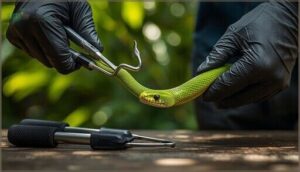
You don’t always need to pick up a snake with your bare hands, and frankly, you shouldn’t if you can avoid it. Snake hooks and tongs give you distance, control, and a much lower chance of getting nailed.
Here’s how to choose the right tool and use it without stressing out the snake or yourself.
Choosing The Right Snake Hook for The Job
Hook length matters more than you might think—reach keeps you clear of a strike zone. If you’re working with small pet snakes, a 24-inch hook gives enough control. Defensive species need 50 inches or more. When choosing, weigh these factors:
- Hook materials like aircraft-grade aluminum stay light during long sessions
- Snake size determines whether you need reinforced tubing or standard shafts
- Handle comfort with textured grips prevents slips when your palms sweat
- Safety features such as wide U-shaped tips support heavy-bodied constrictors securely
How to Use Tongs Without Harming The Snake
Squeeze just hard enough to prevent slipping—too much pressure crushes ribs, too little lets the snake slide through. Practicing on your own finger helps you find the sweet spot. Aim for the middle third of the body; grabbing near the neck or tail causes panic and injury.
| Tong Safety Tips | Why It Matters |
|---|---|
| Wide, soft jaws | Spread pressure, prevent rib fractures |
| Mid-body grip | Reduces spine stress, limits thrashing |
| Horizontal lift | Distributes weight, protects vertebrae |
| Slow approach | Prevents defensive strikes, calms snake |
| Brief contact | Minimizes crush risk, faster transfer |
Move slowly when you bring tongs toward any snake—quick lunges trigger strikes. Use both hands on the shaft for control, lift only high enough to clear the ground, then guide the animal straight into a secure container. If it starts climbing toward you, shake gently or set the tongs down.
For heavy constrictors, pair tongs with a hook so the spine isn’t stressed by hanging weight. Never pin a head to the ground—that concentrates force on the neck and can be fatal. Tongs work best for brief restraint and transfer, not long wrestling sessions.
Knowing When to Seek Expert Help
If you can’t confidently identify whether the snake is a venomous species, step back and call wildlife experts. Misidentification leads to bites.
When emergency protocols matter most—tight crawl spaces, multiple animals, or any rattlesnake or copperhead—professional snake removal keeps you safe.
Safety precautions include knowing your limits: lack of tools, shaky hands, or legal restrictions all justify expert help over improvised snake handling techniques.
What to Do if You Get Bitten by a Snake

Even with the best technique, bites can happen—especially if you’re working with wild snakes or handling in less-than-ideal conditions. What you do in the first few minutes matters more than most people realize.
Here’s how to respond if a snake gets you.
Immediate First Aid Steps After a Snake Bite
Call your local emergency number the moment fangs break skin—even if you’re not sure it was venomous.
Stay still, keep the bitten limb at heart level, and remove rings or tight clothing before swelling starts. Don’t cut the wound, suck out venom, or apply ice.
Clean gently with soap and water if you can, then wrap with a clean bandage while help arrives.
Why Accurate Snake Identification Matters for Treatment
Doctors match antivenom to the species that bit you—so knowing whether it was a rattlesnake or a copperhead can mean the difference between the right vial and a wasted one.
Accurate snake identification for treatment also tells the team which venom effects to watch for, whether that’s bleeding, paralysis, or tissue damage, and helps them skip harmful steps when the bite came from a non‑venomous species.
When to Go to The Emergency Room
Once you know what bit you, the next question is when to get medical help. Any bite from an unknown or venomous snake means calling 911 and heading straight to the ER—even if symptoms look mild at first.
Here’s when seeking medical help matters most:
- Unknown or venomous bites – Treat every unidentified snake bite as a medical emergency; emergency procedures demand urgent care because venom effects can escalate fast.
- Rapid swelling or pain – If the bitten area becomes tense, bruised, or extremely painful within minutes, that’s your body signaling tissue damage.
- Breathing trouble or shock – Throat tightness, weakness, confusion, or a racing pulse after a venomous snake bite means your system is failing and you need immediate medical response.
Children, pregnant women, and anyone on blood thinners should go to the ER after any snakebite. Don’t wait to see if snakebite symptoms worsen—antivenom and first aid work best when started early.
Frequently Asked Questions (FAQs)
Will snakes bite if you pick them up?
Yes, snakes often bite when picked up—especially wild ones that see you as a threat.
Even calm pet snakes may strike if startled, hungry, shedding, or misreading your hand as prey.
Should you grab a snake by the tail or head?
Neither. Grabbing a snake by the tail or head increases bite risk and can injure the animal. Instead, support its body with both hands near the middle for safe snake handling.
Is there a guy who is immune to snake venom?
Some snake handlers repeatedly expose themselves to venom, developing partial resistance. Tim Friede survived over 200 bites through self-immunization, but no one is fully immune to all snake venom.
Can you pick up a snake after feeding?
Wait at least 48 hours after feeding before handling your snake.
Post-feeding care matters—moving your pet too soon stresses digestion, triggers regurgitation risks, and raises bite chances while it’s still in feeding mode.
How often should you handle pet snakes?
Most pet snakes do well with handling your snake one to three times per week. This handling frequency keeps them used to people without overwhelming them.
Adjust based on stress signals and feeding schedules for proper animal stress management.
What temperature is safe for handling snakes?
Your snake needs warmth to stay safe, yet most bites happen when handlers ignore temperature. Ideal temp range sits between 75 and 82 degrees Fahrenheit—cold handling risks sluggish defenses, hot handling dangers trigger panic.
Should you handle a shedding snake differently?
Yes. During the shedding phase, your snake’s vision gets cloudy and its skin loosens, making it more defensive. Limit handling techniques to essential moves only, support its full body gently, and resume normal reptile handling after the shed finishes.
Conclusion
The snake doesn’t care how much you’ve read if your hand lands in the wrong spot. Picking up a snake without bites comes down to reading tension before you reach, supporting weight without pinning, and knowing when to back off.
Most bites happen in the second before contact—when you assume instead of observe. Stay deliberate. Stay patient. The difference between confidence and a strike is usually just one careless move.