This site is supported by our readers. We may earn a commission, at no cost to you, if you purchase through links.

You reach into the enclosure, and your ball python immediately coils into a tight ball—classic defensive posture. Most handling mistakes happen in these first five seconds, when your movements trigger the snake’s instinct to protect itself.
The best way to pick up a snake isn’t about speed or confidence alone; it’s about reading body language and using techniques that work with the animal’s natural behavior, not against it.
Whether you’re a new reptile owner or helping a friend with their pet, understanding proper support and approach transforms a stressful encounter into a calm interaction. A few simple adjustments to where you position your hands and how you distribute the snake’s weight make all the difference between a smooth pickup and a defensive strike.
Table Of Contents
- Key Takeaways
- Preparing to Pick Up a Snake
- Approaching Your Snake Safely
- Supporting The Snake’s Body Correctly
- Essential Equipment for Safe Handling
- Common Mistakes and Safety Tips
- Frequently Asked Questions (FAQs)
- What is a snakes greatest weakness?
- What snake species are safest for beginners?
- How do you identify venomous versus non-venomous snakes?
- What should you do if bitten by snake?
- How do you release a snake safely?
- When is the best time to handle snakes?
- Can I handle my snake during shedding process?
- What temperature is too cold for handling snakes?
- How do I safely return snake to enclosure?
- Should I handle multiple snakes in one session?
- Conclusion
Key Takeaways
- Proper snake handling relies on reading body language first—defensive signals like coiling, S-curves, or raised heads mean you pause and wait rather than forcing contact.
- Support the snake’s weight from the mid-body with both hands, never grabbing by the head or tail, which distributes pressure evenly and prevents defensive strikes or injury.
- Start with brief 5-15 minute sessions once or twice weekly, always waiting 48-72 hours after feeding to avoid regurgitation and stress.
- Slow, deliberate movements from the side or rear reduce bite risk by nearly 40%, while quick overhead approaches trigger the snake’s predator-defense instincts.
Preparing to Pick Up a Snake
Before you even reach for your snake, there’s some groundwork to cover. Getting things right from the start makes handling safer for both of you and helps build trust over time. Here’s what you need to do before that first touch.
If you’re planning to give medication, check out this guide on handling snakes for medication purposes to learn the specific prep steps that keep stress low.
Washing Hands and Hygiene
Before you reach for your snake, take a moment at the sink. Washing hands is your first line of defense in safe snake handling. Proper hygiene protects both you and your reptile from harmful microbes.
A solid corn snake care guide for beginners will walk you through the full hygiene routine, including when and how to wash up during every interaction with your pet.
- Wash with soap and water for at least 20 seconds to remove 90-99% of bacteria
- Use hand sanitizers with 60% alcohol when soap isn’t available for effective microbe removal
- Dry hands completely before reptile handling to prevent slipping
- Keep nails short and clean to avoid scratching your snake
- Always wash after animal handling to prevent cross-contamination
Creating a Calm Environment
Now that your hands are clean, turn your attention to the space around you. Snakes respond to quiet spaces and environmental control more than you might expect. Keep the enclosure free from loud noises and sudden movements that trigger stress responses.
Maintaining a calm environment goes hand-in-hand with proper hygiene after feeding sessions, creating a stable routine that minimizes stress throughout your snake’s care.
Maintain ambient temperature within your species’ comfort zone—usually 70-75°F—to encourage snake relaxation. Calm enclosures mean safer snake handling. Dim bright lights and remove reflective surfaces that might spook your snake.
Regular, predictable interactions help your reptile recognize your presence, making snake body language easier to read and reducing defensive snake behavior over time.
Observing Snake Body Language
Before you reach into the enclosure, watch how your snake moves. A coiled posture with a raised head shows alertness—pause and give it a moment.
Look for flattened body alignment pressed to the ground, tail vibrations, or that telltale S-curve; these defensive signs mean agitation cues you shouldn’t ignore. Calm, steady movement signals comfort.
Reading snake body language keeps both you and your snake safe during handling.
Watching for signs like hissing, coiling, or rapid tongue flicks helps you recognize stress early and adjust your snake social interaction tips accordingly.
Removing Distractions and Pets
Once you’ve read your snake’s mood, clear the stage. Your pet snake needs a calm environment free from chaos—and that means addressing the usual culprits.
- Minimizing Noise: Keep the room quiet by avoiding hard clangs or abrupt sounds that provoke defensive reactions.
- Pet Removal: Remove household pets to prevent sudden movements that could startle your snake.
- Visual Clutter: Reduce bright reflections and cluttered surfaces for snake safety.
- Electromagnetic Interference: Turn off nearby devices emitting high-frequency signals during reptile handling safety sessions.
Timing and Frequency of Handling
Consistency builds trust with your snake. Start with 1–2 brief handling schedules per week, keeping sessions between 5 and 15 minutes. This allows proper snake acclimation without overwhelming your pet. Watch for stress signals like hissing or tail whipping—they’re your cue to stop. Frequency adjustments depend on individual temperament and health monitoring. Document each session to track snake behavior modification and improve your reptile handling approach.
| Session Element | Recommended Practice |
|---|---|
| Duration | 5–15 minutes per session |
| Frequency | 1–2 times weekly |
| Progression | Increase by 2–3 minutes gradually |
Approaching Your Snake Safely

How you approach your snake makes all the difference between a smooth pickup and a defensive strike. Your movements and positioning tell your snake whether you’re a threat or a trusted handler.
Let’s walk through the three key techniques that keep both you and your snake calm during every interaction.
Moving Slowly and Calmly
Think of your approach like lowering yourself into a cool pool—gradual, controlled, never rushed. Slow movements are your secret weapon for stress reduction in snake handling.
Quick, jerky motions can spike your snake’s stress levels, so keep your distance during feeding time and understand safe feeding practices to avoid triggering a defensive response.
When you move deliberately, your snake’s body language stays relaxed instead of defensive. This applies to every species, from harmless corn snakes to venomous snake handling with a snake hook.
Pausing when your snake tenses? That’s reading the room, snake-style.
Approaching From The Side or Rear
Position yourself alongside the snake’s midline—this side approach cuts perceived threat in half. For rear handling, align with the snake’s natural travel axis instead of blocking its path.
Keep a low stance and let your movements stay smooth as silk. Whether you’re using a snake hook for venomous snake handling or bare hands for a corn snake, snake alignment with calm movement beats rushing every time.
Avoiding Predator-Like Movements
Your shadow looming from above screams “hawk attack” to a snake’s ancient brain. Slow movement and calm posture signal you’re not hunting—sudden jerks do the opposite. A gentle approach from the side, using a snake hook if needed, keeps threat reduction front and center.
This applies whether you’re mastering basic snake handling and safety or venomous snake identification. Snake perception filters every motion you make.
Supporting The Snake’s Body Correctly
Once you’ve got a good grip on your snake, the real work begins. How you support its body makes all the difference between a calm, confident snake and one that feels like it’s about to fall.
Let’s walk through the four essentials that’ll keep both you and your snake comfortable.
Lifting From The Mid-Body

When you reach for your snake, aim for the middle third of its body. This distributes weight evenly across multiple ventral scales and prevents strain on the neck or tail.
Mid-body support aligns with natural snake biomechanics, reducing defensive thrashing and bite risk.
Proper lift techniques engage the snake’s core musculature naturally, making the shift smooth for both of you during safe reptile handling.
Gentle, Even Support

Once you’ve lifted your snake from the mid-body, distribute pressure across your palm and fingers like cradling a delicate sculpture. Gentle touch prevents muscle strain and defensive coiling.
Support techniques for proper body alignment involve shifting your hands as the snake moves, maintaining snake balance through every curve.
This handling posture builds trust during reptile handling and reinforces snake safety with each session of snake care and handling.
Never Lifting by Head or Tail
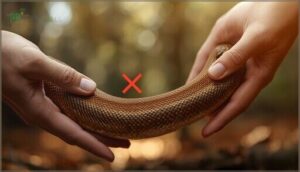
Never grab a snake by the head or tail—you’ll trigger defensive strikes or violent thrashing. Handling techniques that focus on body support distribute weight evenly, cutting injury risk for both you and the snake.
Whether you’re catching snakes with a snake hook or bare hands, venomous species especially demand safe lifting methods that start mid-body. This snake injury prevention rule protects tissue and builds trust in your snake care and handling routine.
Allowing Natural Movement

Once you’ve got mid-body support, let your snake glide freely across your hands. Gentle restraint beats a death grip—snakes that can shift posture show fewer stress signs like tail rattling or gaping.
This body support strategy pairs snake safety with stress reduction, keeping both of you calm. Good handling techniques mean you’re a stable perch, not a cage, allowing natural snake movement that builds trust in your reptile care routine.
Essential Equipment for Safe Handling

The right gear makes handling safer for both you and your snake. You don’t need an entire arsenal, but a few essential tools can prevent bites and give you better control during handling sessions.
Let’s look at the equipment that’ll help you handle your snake with confidence.
Using Snake Hooks and Tongs
Snake hooks and tongs give you the distance and control you need when handling venomous snakes or defensive wild species. A good snake hook lets you lift from mid-body while staying about 1.5 meters away from the strike zone. Tongs offer firmer restraint but require a gentle touch—too much pressure crushes ribs.
- Use hooks for less stressful, smoother lifts with better weight distribution
- Choose tongs with wide jaws to reduce panic and spread contact pressure
- Select 1–1.8 meter tools matched to your snake’s size and strike range
When handling snakes, it’s vital to follow proper snake handling techniques to guarantee safety.
Wearing Protective Gloves
Thick gloves offer another layer of hand safety when you’re working with venomous snakes or unfamiliar species. Look for glove materials rated for needle puncture resistance—SuperFabric or heavy Kevlar blends distribute bite force and block most fangs up to 70 cm.
While no protective gear guarantees venom resistance, quality gloves greatly cut your risk when combined with snake hooks and proper technique. The use of snake handling gloves is highly recommended for professionals.
Choosing The Right Tools for Snake Size
Your tool selection hinges on the snake species in front of you. For beginners, 1.5 m snake tongs safely handle most venomous snakes up to 30 cm. Longer 2 m options work better when you’re extracting larger individuals from tight spots.
Snake hooks between 61–112 cm let you adjust for body size—shorter for lightweight hatchlings, longer for defensive adults requiring extra distance.
Common Mistakes and Safety Tips

Even experienced handlers make mistakes that can stress their snake or lead to bites. Knowing what to avoid is just as important as mastering proper technique.
Here are the most common pitfalls and how to keep both you and your snake safe during every interaction.
Avoiding Handling After Feeding
After feeding your pet snake, patience is your best friend. Wait 48 to 72 hours before handling to prevent snake regurgitation and post-feeding stress. Your snake’s digestion needs time without disruption.
Watch for signs like sluggish movement or lingering fullness—these tell you handling risks are still high.
Proper feeding schedules protect snake health and make reptile care and maintenance safer for everyone involved.
Recognizing Signs of Stress or Illness
Recognizing behavioral changes and physiological signs early keeps your snake healthy. Watch for persistent escape attempts, excessive hiding outside normal patterns, or sudden appetite loss—these are stress indicators signaling poor reptile health and disease prevention needs.
Open-mouth breathing, neurological issues like head tilts, or lethargy point to illness requiring immediate attention.
Understanding snake behavior and animal behavior and psychology helps you catch problems before they escalate, protecting overall pet health and wellness.
Minimizing Bite Risk
Around 70 percent of bites happen during rushed grabs or poor timing. You can cut bite risk by 40 percent with slower, deliberate movements. Here’s how to protect yourself:
Most snake bites stem from rushed handling—slow, deliberate movements cut your risk nearly in half
- Use a snake hook or tongs to reduce direct contact by 25–35 percent during first approach.
- Wait 72 hours after feeding—digestion spikes defensive behavior.
- Keep room temperature stable and vibrations low.
- Wear protective gloves rated for venomous species.
Gradually Increasing Handling Duration
Start with five-minute handling sessions, then watch your snake’s behavioral cues—tense muscles or repeated escape attempts signal you’ve crossed its stress threshold.
Gradual desensitization works best: increase duration only after your snake stays relaxed. Most keepers cap sessions at 15–30 minutes to avoid physiological impacts from prolonged restraint.
Respect these handling session limits, and you’ll build trust without triggering defensive responses.
Frequently Asked Questions (FAQs)
What is a snakes greatest weakness?
Your snake’s greatest weakness? Snake vision works poorly in low light, and scale damage from rough handling creates infection risks.
Environmental stress from incorrect temperatures also compromises their immune systems, making venomous snakes and other reptiles vulnerable.
What snake species are safest for beginners?
Corn snakes, ball pythons, and king snakes top most beginner species lists because of their calm temperament, manageable size under five feet, straightforward feeding habits, and simple enclosure needs—key factors in safe reptile keeping and maintenance.
How do you identify venomous versus non-venomous snakes?
You might assume head shape alone reveals venom signs, but many harmless snakes flatten their heads when threatened.
For reliable snake identification, learn your region’s venomous species—pupil shape and color patterns vary too much globally.
What should you do if bitten by snake?
If a snake bites you, stay calm and still to slow venom spread. Call emergency services immediately, remove tight jewelry before swelling starts, and get to a hospital for antivenom treatment—never cut or suck the wound.
How do you release a snake safely?
Release the snake within 1 mile of capture, in natural habitat with cover like rocks or vegetation.
Choose moderate temperatures (50–80°F) to minimize thermal stress.
Use controlled handling precautions, releasing gently at mid-body to guarantee relocation safety.
When is the best time to handle snakes?
Timing is critical for snake safety and stress reduction. Handle your snake two to three times weekly, ideally during their rest period—avoiding feeding days, shedding cycles, and illness for best reptile care.
Can I handle my snake during shedding process?
It’s best to skip handling during shedding phases. Your pet snake experiences heightened snake stress and reduced vision, increasing handling risks.
This shedding care practice protects snake health, reptile behavior, snake safety, and overall animal welfare.
What temperature is too cold for handling snakes?
Don’t handle your pet snake when ambient temperatures drop below 70°F (21°C). Cold stress effects compromise their immune function and activity levels, making handling risky outside proper thermal safety zones in their snake enclosure.
How do I safely return snake to enclosure?
Lower your snake into its enclosure from the side opening, supporting its body with both hands. Let it glide in naturally without forcing placement, then observe for stress signs over the next day.
Should I handle multiple snakes in one session?
Quality over quantity, they say—and it rings true for snake handling. Multiple snake handling in one session ramps up stress factors and injury risks.
Stick with single-snake sessions to monitor behavior patterns and minimize handling session risks effectively.
Conclusion
Think of handling as a conversation—your snake tells you when it’s ready, and your hands respond with patience and respect. The best way to pick up a snake isn’t a rigid formula; it’s a skill you improve each time you approach the enclosure.
Support the body, move with intention, and let the animal guide the pace. With practice, those defensive coils soften, and what once felt uncertain becomes second nature.