This site is supported by our readers. We may earn a commission, at no cost to you, if you purchase through links.
A python that’s just swallowed a rabbit can’t outrun a determined predator—and it knows this. Within minutes of finishing a meal, something striking shifts inside the animal: metabolism accelerates up to 44 times its resting rate, blood reroutes toward the gut, and the snake’s entire physiology reorganizes around one priority—digestion.
Snake behavior after eating prey isn’t sluggishness or laziness; it’s a precisely coordinated biological response, one that temporarily trades speed and agility for survival of a different kind. This physiological pivot ensures energy is directed solely toward processing the massive intake, leaving the snake vulnerable but functionally optimized for digestion.
Understanding what’s actually happening beneath that visible bulge changes how you care for a captive snake and how you read a wild one. Recognizing this natural process fosters better husbandry practices and dispels misconceptions about post-feeding "laziness," replacing them with respect for the snake’s remarkable adaptive strategy.
Table Of Contents
- Key Takeaways
- What Snakes Do After Eating Prey
- Physical Changes During Digestion
- Post-Feeding Movement Changes
- Digestion, Heat, and Energy Use
- Safety, Stress, and Regurgitation Risks
- Frequently Asked Questions (FAQs)
- How do snakes act after they eat?
- How do snakes act after eating?
- How do you know if a snake is stressed out?
- Do snakes get defensive after eating?
- How long should I not handle my snake after eating?
- Do snakes sleep differently after eating meals?
- Can snakes drink water while digesting food?
- How do snakes breathe with large prey?
- Do pregnant snakes behave differently when feeding?
- Can multiple snakes share feeding spaces safely?
- Conclusion
Key Takeaways
- A snake’s metabolism surges up to 44 times its resting rate after swallowing prey, rerouting blood toward the gut and triggering rapid organ growth — digestion is anything but passive.
- The prey bulge physically rewires movement, shifting the center of gravity forward, cutting crawling speed by up to 40%, and making climbing genuinely dangerous until digestion is complete.
- Post-meal stillness and hiding aren’t laziness — they’re a precisely coordinated survival strategy that minimizes predation risk during the 48–72 hour window of peak vulnerability.
- Handling your snake too soon after feeding, or letting enclosure temperatures drop, is the leading preventable cause of regurgitation and digestive stress.
What Snakes Do After Eating Prey

The moment a snake finishes a meal, its entire world shifts — internally and externally.
Everything from digestion to behavior changes in ways that proper post-feeding snake care can make or break your snake’s health.
Understanding what’s actually happening helps you read your snake’s behavior with confidence rather than concern.
Here’s what to expect across five key areas after feeding.
Immediate Post-Feeding Behavior
Once prey is fully swallowed, your snake’s behavioral priorities shift completely — digestion takes the wheel. You’ll notice it retreating immediately to a secure hide. Microhabitat choice becomes deliberate: warmth, concealment, stillness. Sensory dulling and hormonal quiescence suppress exploratory drive.
Postfeeding inactivity — lasting two to eight hours — reflects the body’s total redirection toward digestion. The snake adopts a coiled posture that minimizes postprandial locomotion and conserves thermal energy.
You should provide a temperature gradient to aid its digestion.
Why Snakes Become Less Active
That retreat isn’t random—it’s driven by neuroendocrine signaling that triggers hormonal suppression of exploratory behavior. Postprandial lethargy sets in as your snake’s circadian rhythm effectively pauses foraging drives, redirecting every available resource toward digestion.
The metabolic cost of digestion alone can spike oxygen consumption fourfold, leaving little energy for postprandial locomotion.
Staying still isn’t laziness—it’s energy conservation that directly reduces predation risk during digestion.
How The Prey Bulge Changes Movement
The prey bulge does not just look dramatic — it fundamentally rewires how your snake moves. Balance disruption occurs as the swollen midsection shifts the center of gravity anteriorly, creating turning constraints that slow abrupt directional changes.
Substrate traction loss worsens on wet surfaces under the added vertical load, while energy cost increases 30–40%. These biomechanical inefficiencies compound post-feeding locomotion challenges.
Burrow entry difficulty rises sharply, further compounding predation risk during critical post-feeding periods.
Normal Resting and Hiding Patterns
Once movement becomes costly, microhabitat selection takes over. Your snake isn’t being lazy — it’s running a masterclass in energy management.
Postprandial activity drops sharply as cryptic behavior kicks in: coiled heat absorption against warm substrate drives digestion, while nighttime concealment and refugium use minimize predator exposure.
Seasonal shelter preference and substrate temperature regulation guide exactly where your snake settles.
This makes postfeeding microhabitat selection in snakes a genuinely purposeful, biologically precise process.
When Post-Meal Behavior Looks Unusual
Surprising nocturnal activity, unexpected burrowing depth, or irregular tail thrashing shortly after feeding often signals genuine distress rather than routine postfeeding activity. These behaviors, distinct from typical quiescence period behavior, warrant attention.
Watch for uncommon vocalizations, abnormal shedding timing, or repeated postfeeding yawning beyond normal jaw realignment after feeding. Such deviations from expected postfeeding patterns may indicate underlying issues.
Postfeeding locomotion changes in snakes, combined with irregular postfeeding microhabitat selection, further justify closer observation—and sometimes a veterinary call. Monitoring these combined indicators ensures timely intervention for potential health concerns.
Physical Changes During Digestion
When a snake swallows a large meal, the changes happening inside — and outside — its body are genuinely striking. You can actually see the transformation unfold, from the obvious prey bulge to subtler shifts in how the snake holds itself and moves.
Here’s a closer look at the physical changes that take place during digestion.
Visible Body Swelling After Eating
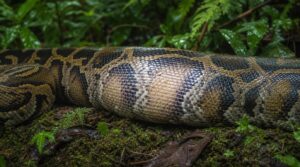
What you’re witnessing when a snake’s midsection expands dramatically isn’t discomfort — it’s anatomy doing exactly what it evolved to do. That visible bulging of the abdomen reflects genuine body morphology changes: the prey bulge stretches skin, muscle, and gastric tissue simultaneously.
Unlike mammalian Sodium Edema, Lactose Bloat, Fructose Malabsorption, or Allergic Angioedema, which cause Facial Puffiness and distended abdomen, snake post-meal swelling is purely mechanical — structured, purposeful, and temporary.
Jaw, Skin, and Stomach Flexibility
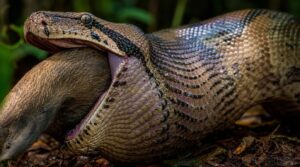
Ligamentary Jaw Kinetics and Quadrate Joint Mobility enable flexible jaws to expand beyond normal gape width. This mechanism allows for exceptional oral cavity enlargement during ingestion.
Elastic Connective Tissue and Scale Sliding Mechanics facilitate skin movement over underlying tissues, preventing tearing. This system ensures integumentary flexibility during rapid anatomical expansion.
Stomach Rugae Unfolding increases gastric surface area as stretch muscles relax, enabling digestive tract dilation. This process directly causes the observable abdominal bulging associated with swallowing large prey.
Center of Gravity Shifts

When a snake swallows large prey, its center of gravity does not remain in place—it shifts forward, resulting in an anterior mass shift that fundamentally alters how the animal balances and moves. The pelvic region bears disproportionate load, while tail leverage loss reduces propulsive efficiency.
Here’s what that means mechanically:
- The belly expands outward, displacing the balance point anteriorly by several centimeters.
- Pelvic load increase tightens spinal musculature, compensating for the heavier midsection during slow movement.
- Substrate grip dependence intensifies, as rough surfaces become critical for offsetting locomotor constraints due to prey bulge.
These balance compensation tactics are a snake’s way of managing locomotor impairment—but the physiological impacts of food bulge on snake movement also increase predation risk associated with reduced mobility considerably.
Reduced Body Curvature

After swallowing large prey, observers will notice the body straightens rather than curls—a process called Spinal Straightening, driven by Thoracic Flattening and Midsection Linearization, where dorsal curvature decreases 5–15% at peak distension.
Vertebral Tension Relief relaxes mid-trunk musculature, improving Postural Stability on varied substrates. This reduced speed and mobility compounds locomotor impairment, as locomotion constraints due to the prey bulge limit the snake’s typical weaving movement patterns considerably.
How Prey Size Affects Comfort
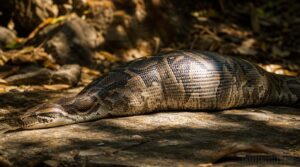
Prey size relative to body mass quietly dictates how comfortable a snake feels throughout digestion. Consider these cascading effects:
- Small prey minimizes Scale Pressure and preserves Coiling Comfort.
- Medium prey balances Thermal Load without triggering Digestive Fatigue.
- Large prey bulge intensifies locomotor constraints due to prey bulge.
- Handling Sensitivity peaks within 48–72 hours post-ingestion.
- Post-feeding microhabitat selection in snakes and behavioral thermoregulation following prey ingestion improve measurably with appropriately sized meals.
Post-Feeding Movement Changes

A snake that just swallowed a large meal moves like it’s carrying a backpack it can’t put down — because, in a sense, it’s. That bulge changes everything from how fast it crawls to whether it can climb at all.
Here’s what actually shifts in a snake’s movement after feeding.
Slower Crawling and Reduced Escape Speed
Once digestion begins, a striking active gait shift occurs as locomotor inertia takes hold: maximum crawling speed drops by up to 40 percent, and escape latency increases measurably.
Abdominal distension introduces biomechanical trade-offs: neuromuscular delay impairs rapid directional changes, while the prey bulge redistributes mass, further disrupting agility. These locomotor constraints compound the energy costs of movement during digestion, heightening predation vulnerability.
To mitigate postprandial risks, behavioral compensation becomes critical, as the organism adapts to these physiological and mechanical challenges.
Limited Climbing After Large Meals
Climbing compounds these locomotor constraints markedly. Abdominal pressure impacts core stability, making vertical ascent genuinely dangerous—a climbing muscle trade-off that diverts blood flow from grip strength to the gut.
Vertical stability loss shifts the center of gravity rearward, while habitat complexity effects worsen balance on narrow branches.
Warmer microclimates help reduce thermal climbing delay, accelerating digestion and restoring arboreal confidence.
Aquatic Versus Terrestrial Movement
Where terrestrial locomotion becomes genuinely compromised post-meal, aquatic environments offer a meaningful reprieve. Buoyancy assistance offsets gravitational load on the distended midsection, while drag mitigation reduces the muscular demand of forward propulsion — effectively redistributing locomotor constraints due to ingestive bulge across the water column rather than against solid substrate.
- Neural coordination shift favors whole-body undulation over limb loading contrast
- Aquatic movement adaptations allow sustained propulsion despite specific kinetic action SDA demands
- Fin-driven propulsion mechanisms remain largely unaffected by abdominal distension
- Habitat selection after feeding often reflects this aquatic versus terrestrial snake movement advantage
Rectilinear Movement During Digestion
When lateral undulation isn’t practical — your snake’s midsection simply won’t bend efficiently around that prey bulge — rectilinear progression takes over. Ventral scale anchoring and muscle wave sequencing drive a slow, straight-line crawl that keeps the digestive tract aligned and minimizes locomotor constraints due to the prey bulge.
Thermal muscle assistance from digestion-generated heat facilitates energy-efficient movement, reducing the metabolic cost of movement within an already taxed energy budget during digestion and specific metabolic action SDA demands. Burrow navigation becomes surprisingly manageable through this mode.
Species-Specific Locomotion Differences
Not every snake manages that post-meal bulge the same way — and species-specific locomotor strategies following a meal reveal striking diversity.
- Viperine undulation becomes tighter and lower-amplitude, preserving ground contact
- Arboreal gait slows dramatically, prioritizing grip over speed
- Desert wave shortens to reduce sinking on loose substrate
- Fossorial burrowing species shift seamlessly to rectilinear crawling
Locomotion constraints due to post-meal bulge are negotiated in diverse ways, reflecting adaptations to body plan and habitat.
When Movement Returns to Normal
Recovery Timeline varies considerably by meal size: after small prey, movement recovery takes just 2–3 days, while recovery period after large prey can extend 7–14 days.
As specific metabolic action (SDA) winds down, Locomotor Energy Shift returns, muscle stiffness eases, and Post-Digestion Gait normalizes.
Muscle Reflex Restoration follows, accompanied by Behavioral Vigilance Increase — your snake’s awareness sharpens as the postfeeding activity quiescence period ends and Locomotor constraints due to prey bulge are fully resolved.
Digestion, Heat, and Energy Use

Once a snake finishes a meal, its body shifts into a kind of biological overdrive that most people never think about.
Digestion isn’t passive — it demands serious energy, precise heat management, and an astonishing internal reorganization. Here’s what’s actually happening beneath the surface.
Post-Feeding Metabolic Surge
What happens inside a snake after it swallows a large meal is nothing short of remarkable. Specific metabolic action (SMA) drives metabolic changes after a large meal to 44× the resting rate, triggering a hormonal cascade of gastrin, insulin, and neuropeptides.
After swallowing a meal, a snake’s metabolism surges to 44 times its resting rate
This oxygen surge, paired with blood redistribution toward the gut, enables rapid organ hypertrophy—heart, liver, and intestine each expanding 40–100%.
These adaptations reflect the steep metabolic costs of prolonged digestion and increased energy expenditure.
Why Snakes Seek Warm Areas
After the metabolic surge of specific dynamic action (SDA) kicks in, thermal microhabitats become essential—not optional. These warm refuges provide an enzyme temperature boost, accelerating gastric chemistry without risking overheating.
Behavioral thermoregulation enables snakes to actively "manage" digestion by selecting heat sources. This strategy ensures efficient metabolic processes while avoiding thermal stress.
For keepers wondering how this plays out in captivity, a closer look at snake digestion after feeding breaks down the thermal and physiological details step by step.
Species-specific thermoregulation dictates distinct preferences: desert snakes prioritize intense solar heat, aquatic species exploit warm shallows, and arboreal snakes utilize elevated basking sites. Seasonal shifts further refine these choices, aligning heat-seeking behaviors with fluctuating environmental conditions.
Ultimately, these adaptations support metabolic surge management and passive predator evasion through concealment, demonstrating how thermoregulation integrates survival imperatives with physiological demands.
Basking Behavior After Eating
Basking isn’t passive sunbathing—it’s precision thermal regulation in action. Through behavioral thermoregulation, a snake actively aids digestion by strategically positioning itself.
To achieve this, the snake aligns its coils on high-substrate heat conductivity surfaces, such as flat rock or slate, directly targeting the digestive area. Thermal gradient selection enables fine-tuned temperature control, while shifts in basking posture further optimize surface exposure.
Post-meal basking duration typically extends for several hours, actively driving specific metabolic action SDA and managing metabolic surges. This prolonged exposure ensures sustained metabolic efficiency.
Energy Conservation During Digestion
While digestion demands an enormous metabolic investment—specific dynamic action (SDA) can spike energy use up to 44× resting levels—snakes deploy exceptional energy conservation strategies to offset that cost. Gut motility costs, nutrient transport energy, and the protein thermic effect all draw from finite reserves.
To compensate for postprandial vulnerability, snakes activate behavioral adjustments: reduced movement, a coiled posture, and a metabolic pathway allocation that shifts resources entirely toward digestion.
How Temperature Affects Digestion Speed
Temperature is fundamentally the throttle on your snake’s digestive engine. Enzyme activity peaks near the thermal optimum—generally 28–32°C for most species—where temperature-dependent digestion runs efficiently and specific metabolic action (SDA) reaches full intensity.
Drop below that range, and cold digestion delay sets in, slowing peristalsis and extending gut passage time considerably.
Thermoregulation during digestion isn’t passive; it’s a calculated thermal regulation strategy after a large meal. However, heat stress effects at extremes can compromise the process entirely.
Small Prey Versus Large Prey Timelines
Prey size reshapes the entire digestive timeline. A small meal clears in 2–3 days, with behavioral latency fading and feeding frequency resuming almost immediately. Large prey, however, extends postfeeding activity quiescence for up to two weeks—driving greater thermal demand, heavier metabolic costs of prolonged digestion, and measurable impact of prey size on snake metabolism. Metabolic recovery simply can’t be rushed.
Safety, Stress, and Regurgitation Risks

A snake that’s just eaten isn’t just full — it’s vulnerable, and how you respond to that matters. The next few days carry real risks, from stress-triggered regurgitation to missed warning signs that something’s gone wrong.
Keeping your snake safe during that critical post-meal window requires attention. Here’s what you need to know about safeguarding them through this delicate period.
Why Fed Snakes Hide More
After a meal, your snake isn’t being antisocial — it’s executing precise behavioral compensation for postprandial vulnerability. Digestive protection demands stillness: movement drops up to 50 percent, and energetic constraints redirect resources entirely toward metabolic processing.
Thermal refuge selection and camouflage selection reinforce predator avoidance, while a secure hiding place minimizes disturbance.
This isn’t laziness — it’s survival intelligence operating exactly as evolution designed it.
Predation Risk After Eating
Your snake’s postfeeding vulnerability to predators peaks within the first 48–72 hours — escape speed drops up to 40 percent, making concealment non-negotiable.
Predator avoidance strategies while digesting rely on vibration dampening through substrate contact, thermal stealth via stable basking refugia, and camouflage enhancement through shelter selection in dense cover.
Behavioral compensation for postprandial vulnerability, not instinct alone, drives this habitat selection for safe digestion.
Handling Risks After Feeding
Handling your snake too soon after feeding is one of the most preventable causes of regurgitation. Respect the post‑meal handling window — usually 48–72 hours — and you’ll sidestep most problems.
Four non-negotiables during this period:
- Apply gentle restraint techniques only if movement is absolutely necessary
- Focus on avoiding enclosure vibrations from foot traffic or nearby equipment
- Commit to minimizing temperature fluctuation inside the enclosure
- Practice monitoring hydration levels, since digestion elevates fluid demand
Behavioral compensation for postprandial vulnerability means your snake is already working hard. Don’t add to that load.
Signs of Stress or Discomfort
Your snake’s body rarely lies. During the postprandial window, tail twitching, a flattened body, and excessive hissing signal elevated stress vulnerability that demands your attention.
Repeated flicking paired with mouth gaping may indicate jaw stress or respiratory clearance attempts — not postprandial yawning in snakes, which is normal. These behavioral changes, when clustered, tell you the animal’s tolerance threshold is genuinely compromised.
Regurgitation Causes and Prevention
Regurgitation isn’t random — it reflects real physiological tradeoffs during the postprandial phase. Sphincter dysfunction, postural pressure, and stress vulnerability all converge to trigger it.
Preventing digestive complications and regurgitation means controlling the environment carefully:
- Avoid handling for 48–72 hours post-feeding
- Maintain ideal ambient temperatures
- Eliminate trigger foods or incompatible prey sizes
- Minimize vibration and disturbance near the enclosure
- Address medical comorbidities with a reptile specialist promptly
When to Contact a Reptile Veterinarian
Even experienced keepers sometimes miss early warning signs — here’s when you can’t afford to wait.
| Symptom | Urgency Level | Action |
|---|---|---|
| Open‑mouth breathing, cloacal prolapse | Emergency | Contact vet immediately |
| Blood in stool, unresponsive to stimuli | Urgent | Same-day appointment |
| Persistent lethargy, slow digestion, regurgitation | Monitor closely | Vet within 48 hours |
Postprandial yawning is normal; jaw problems, digestive complications, or breathing distress aren’t.
Frequently Asked Questions (FAQs)
How do snakes act after they eat?
After ingesting prey, you’ll notice your snake enter a postfeeding activity quiescence period — a hormonally-driven shutdown.
This period is marked by sensory dulling, social avoidance, immune activation, and deliberate thermoregulatory behavior following prey ingestion.
How do snakes act after eating?
After a meal, snakes virtually vanish — entering a postprandial period of near-total stillness driven by specific active action (SDA), thermal preference shift, and postfeeding activity quiescence that can last days.
How do you know if a snake is stressed out?
Stress shows up fast — elevated breathing, color darkening, frequent nose rubbing, reduced tongue flicking, or abnormal coiling all signal distress. Behavioral thermoregulation disruptions and display behavior shifts confirm something’s wrong.
Do snakes get defensive after eating?
Not exactly. A defensive posture after eating is more about postprandial caution than true aggression. Threat perception shifts — most snakes retreat or freeze rather than strike, prioritizing digestion over an aggressive response.
How long should I not handle my snake after eating?
Wait at least 48 hours before handling — 72 for larger prey. Your snake’s digestion demands stillness, warmth, and zero disturbance. Respect that window, and you’ll avoid regurgitation entirely.
Do snakes sleep differently after eating meals?
Digestion-induced lethargy triggered by specific metabolic action (SDA) drives a postfeeding activity quiescence period. Energy conservation during digestion shifts snakes toward prolonged rest, mimicking deeper, extended sleep phases rather than normal cycling.
Can snakes drink water while digesting food?
Snakes can and do drink water while digesting, following thirst cues triggered by the physiological demands of specific activities. Hydration is essential for enzyme efficiency, maintaining scale moisture, and supporting metabolic water production that fuels digestion.
How do snakes breathe with large prey?
Protractible glottis functions like a snorkel, maintaining airflow beside the prey.
Segmented rib ventilation and rear lung bellows action enable continued oxygen consumption, ensuring uninterrupted respiration during activity.
Asymmetrical lungs and airflow coordination prevent ventilatory pause strategy failures, optimizing respiratory efficiency.
Do pregnant snakes behave differently when feeding?
Pregnant snakes don’t follow the same feeding script. Appetite fluctuations tied to embryonic nutrient demand and gestation stage anorexia significantly disrupt normal patterns.
Defensive concealment and heightened handling stress further complicate their feeding behavior during reproduction.
These factors collectively make reproductive tradeoffs a defining influence on their postprandial physiology.
Can multiple snakes share feeding spaces safely?
Shared feeding spaces aren’t safe — scent transfer triggers competition, hierarchy dynamics escalate aggression, and cross-contamination spreads pathogens. Use separate enclosures, stagger feeding times 24–48 hours apart, and sanitize thoroughly between sessions.
Conclusion
A snake’s metabolic rate can spike up to 44 times its resting baseline after a single meal—a physiological feat most vertebrates simply can’t replicate.
Snake behavior after eating prey isn’t passivity; it’s the body executing a finely tuned biological protocol that temporarily rewires circulation, organ function, and locomotion.
Recognizing this transforms how you observe and care for these animals. What looks like stillness is actually the body working at full capacity, just invisibly.