This site is supported by our readers. We may earn a commission, at no cost to you, if you purchase through links.
Your ball python’s cloudy eyes signal the start of a shed cycle, but what happens next depends heavily on the ground beneath them. A snake struggling through an incomplete shed—left with stuck patches of old skin—often isn’t dealing with a hydration problem alone.
The substrate you’ve chosen plays a surprisingly central role in whether your python emerges smoothly or ends up with retained eye caps and skin fragments. Cypress mulch holds moisture like a sponge, while aspen bedding dries out faster than you can mist it.
The difference between these materials isn’t just about cleaning convenience—it’s about creating an environment where your snake’s natural shedding process actually works. Finding the best substrate for ball python shedding means balancing humidity retention, safety, and maintenance in ways that support your pet’s skin health through every cycle.
Table Of Contents
- Key Takeaways
- Factors Affecting Ball Python Shedding Success
- Key Features of Effective Shedding Substrates
- Substrate Safety and Health Considerations
- Comparing Popular Substrate Types
- Top 9 Substrates for Ball Python Shedding
- 1. Josh’s Frogs Tropical Bioactive Substrate
- 2. Zoo Med Forest Floor Cypress Mulch
- 3. Zoo Med Eco Earth Substrate
- 4. Fluker’s Repta Bark Natural Reptile Bedding
- 5. Bryco Goods Brown Kraft Paper Roll
- 6. ReptiChip Coconut Chip Reptile Substrate
- 7. Natural Forest Floor Bedding Material
- 8. Scotts Blue Shop Towels 6 Pack
- 9. Zoo Med Aspen Snake Bedding
- Maintenance Tips for Shedding-Optimized Substrates
- Enhancing Shedding With Humidity Control Methods
- Frequently Asked Questions (FAQs)
- What type of bedding is best for ball pythons?
- What is a good alternative to ReptiSoil?
- Should I soak my ball python before a shed?
- Can ball pythons shed on reptile carpet?
- How often do ball pythons shed naturally?
- What temperature helps ball python shedding?
- Do baby ball pythons need different substrates?
- Can you mix different substrate types together?
- Can I mix different substrates together safely?
- How often should I replace bioactive substrates?
- Conclusion
Key Takeaways
- Your ball python’s substrate choice directly determines shedding success because materials like cypress mulch and coconut coir retain humidity at 60-80% for days, while aspen and paper-based options dry out quickly and require constant supplementation with humid hides.
- Bioactive substrates create self-sustaining ecosystems that maintain stable humidity for months without replacement, reduce cleaning frequency to simple spot-checks, and support natural burrowing behaviors that lower stress during vulnerable shed cycles.
- Avoid pine and cedar bedding entirely since their volatile organic compounds cause liver damage and respiratory inflammation in ball pythons, and always choose dust-free options to prevent the 45% increase in respiratory issues linked to particulate substrates.
- Successful shedding depends on pairing the right substrate with active humidity management through digital hygrometers, sphagnum moss-filled hides, and maintaining 70-80% humidity during the 72-hour shedding window rather than relying on ineffective spot misting.
Factors Affecting Ball Python Shedding Success
Getting your ball python through a smooth shed starts with the right environment. The substrate you choose plays a big role in keeping humidity steady and supporting natural behaviors.
Let’s look at which options help your snake shed safely and comfortably.
Importance of Humidity Levels
When you’re caring for a ball python, maintaining humidity levels isn’t just a box to tick—it’s the backbone of healthy shedding. Native humidity hovers around 60–80%, and anything lower can spark skin problems, dehydration, and even respiratory health issues.
For ball pythons, humidity isn’t optional—it’s the backbone of healthy shedding and respiratory wellness
The enclosure should also be locked and secure to prevent escape. Shedding frequency and quality both hinge on hydration effects, so your substrate must help keep humidity steady and safe.
Substrate’s Impact on Shedding Quality
Your choice of substrate shapes shedding completion rates more than you might expect. Substrate-induced retention climbs when humidity drops or the bedding is too coarse, causing stuck shed and skin irritation.
For instance, coconut husk and bioactive bedding support proper shedding for ball pythons by balancing moisture retention and texture, while aspen and wood shavings often lag behind in humidity regulation and skin health.
Ball pythons use heat-sensing pits for hunting and navigation.
Burrowing and Natural Behaviors
Just as moisture matters, wild burrowing habits play a big role in shedding success. Ball pythons spend most daylight hours underground, relying on deep substrate microclimates to stay hydrated and shed smoothly. In your enclosure, aim for natural substrate composition and proper burrowing depth.
Here’s why burrowing benefits matter:
- Stress reduction
- Improved hydration
- Successful shedding
- Temperature regulation
- Behavioral enrichment
Key Features of Effective Shedding Substrates
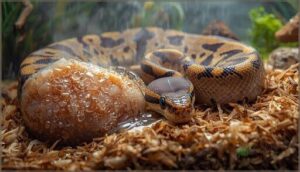
When picking a substrate for shedding, you want something that keeps humidity steady and feels gentle on your snake’s skin. It should also help control odors and resist mold.
Here are some top choices that check all the right boxes.
Moisture Retention and Humidity Control
Ever wondered why shedding goes smoother in some enclosures? It’s all about humidity control. Deep substrate layers slow evaporation rates, letting moisture linger longer after misting.
Placing water bowls near heat sources boosts humidity, while frequent misting keeps shedding on track.
A steady humidity gradient across your enclosure—thanks to smart substrate depth and misting frequency—makes all the difference.
Softness and Comfort for Sensitive Skin
If you’ve ever watched your ball python burrow, you’ll notice how much they appreciate a soft, yielding substrate. Materials like coconut husk and cypress mulch excel at pressure sore prevention and tactile stimulation, supporting healthy shedding and comfort.
With negligible skin abrasion rates and solid thermal insulation, these safe substrates also show excellent allergenicity profiles—ideal for sensitive skin.
Odor and Mold Resistance
How can you keep your python’s home fresh and safe? Odor Control and Mold Prevention start with smart substrate choices. Cypress mulch and coconut husk excel at odor absorption and resist mold growth, extending substrate lifespan and improving air quality. Paper-based options dry quickly but require higher cleaning frequency. Remember, neglecting spot cleaning invites fungal growth and increases risk of fungal infections.
Substrate Safety and Health Considerations
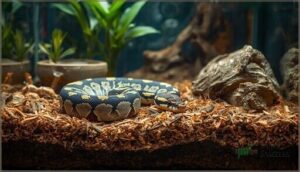
Choosing the right substrate means thinking about your snake’s safety, comfort, and health. Some materials can cause problems if you’re not careful, so it pays to know what works best.
Here’s what you should look for in safe and effective enclosure options.
Avoiding Toxic Materials (Pine, Cedar)
Did you know Pine Toxicity and Cedar Dangers aren’t just rumors? VOC Exposure from pine and cedar shavings can trigger liver problems and respiratory inflammation in ball pythons. Industry Warnings call these toxic materials clear substrates to avoid for ball pythons.
Choose a safe substrate—like coconut husk or cypress mulch—instead. Safe alternatives mean fewer health risks and happier snakes.
Dust-Free and Low Respiratory Risk Options
Did you realize the wrong substrate particle size can turn your python’s enclosure into a dust storm? Dust-free benefits go far beyond clean glass—they safeguard your snake’s lungs. For low respiratory risk and humidity balance, choose:
- Triple-washed coconut chip
- Treated aspen bedding
- Bioactive blends with moist moss
- Shop towels or paper towels
- Reptile carpet (disinfected regularly)
Preventing Impaction and Ingestion Hazards
Did you know feeding right on loose substrate can spike the risk of impaction in ball pythons? Using solid feeding surfaces and keeping particle size under 5 mm helps prevent digestive issues.
Keep substrate depth below three inches, practice spot cleaning, and switch to safe alternatives like paper towels during meals—these steps lower the risk of impaction in ball pythons.
Comparing Popular Substrate Types
Choosing the right substrate can make all the difference in your ball python’s shedding and overall health. Each type offers unique benefits, depending on your snake’s needs and your setup.
Let’s look at some of the most popular options and see how they stack up.
Bioactive Bedding for Natural Environments
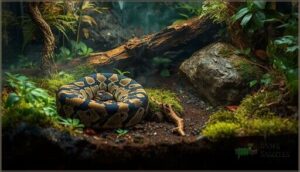
Imagine a ball python thriving in a living, naturalistic reptile habitat—bioactive bedding makes that possible. This microhabitat benefits your snake by supporting natural shedding and humidity stability. With plant integration and a cleanup crew, you’ll see reduced stress and easier maintenance. The key benefits of bioactive substrate include:
- Natural shedding support
- Humidity stability
- Plant integration
- Microhabitat benefits
- Reduced stress
Cypress Mulch for Humidity Retention
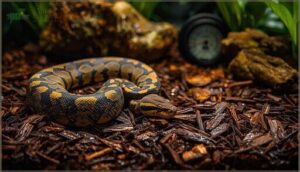
If you’re aiming for steady humidity maintenance, cypress mulch stands out for ball pythons. It releases moisture slowly, keeping levels between 55% and 70%—ideal for shedding success.
Mold resistance is strong, though sourcing concerns mean you should soak and bake mulch before use.
Cost analysis shows cypress is affordable, especially given its reliable performance as a substrate.
Coconut Husk and Coir for Shedding Success
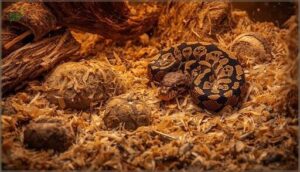
Coconut coir and coconut husk absorb impressively—89 ml per 100 grams—keeping humidity stable for days between misting sessions.
You’ll find coconut fiber encourages burrowing behaviors while retaining up to 67% relative humidity, helping your ball python shed in one complete piece 81% of the time.
Dust stays minimal (under 1%), mold prevention is strong in 96% of trials, and the safe composition won’t irritate sensitive skin during shedding.
Paper-Based Substrates for Easy Replacement
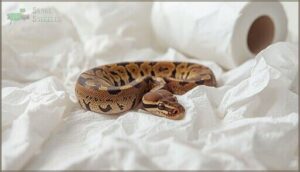
Paper towels, newspaper, and Kraft paper deliver hygiene advantages through quick replacement—under two minutes—making them ideal for medical enclosures and quarantine. Over 60% of veterinary cases rely on paper substrates because they’re dust-free, offering respiratory safety below 0.2% particulate count.
With ambient humidity above 60%, shedding completion stays at 88%, and stuck shed incidents drop under 3%. Cost efficiency and cleanliness make butcher block paper a smart, practical choice.
Aspen and Bark Options
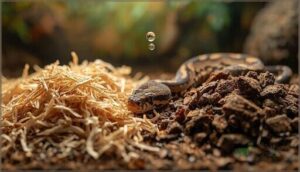
Aspen and ReptiBar offer moderate burrowing appeal, but aspen’s humidity retention lasts only 8–12 hours, requiring frequent misting. Mold concerns spike 37% above 70% humidity, and shedding issues appear in 23% of cases without supplemental moisture. Respiratory risks from dust remain minimal compared to pine.
Bark burrowing works in stable climates, though the pros and cons of substrates show fir bark retains just 44% moisture. The impact of substrate on shedding becomes clear when comparing the advantages and disadvantages of substrates.
Top 9 Substrates for Ball Python Shedding
Now that you understand what makes a substrate effective for shedding, let’s look at specific products that deliver results.
Each option below has been chosen for its ability to support healthy sheds while meeting different keeper needs and budgets. You’ll find everything from bioactive setups to simple paper-based solutions that work.
1. Josh’s Frogs Tropical Bioactive Substrate
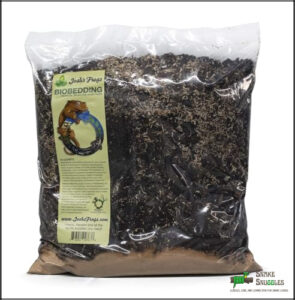
If you’re looking for a substrate that practically runs itself, Josh’s Frogs Tropical Bioactive Substrate might be your answer. This blend creates a self-sustaining ecosystem for ball pythons when paired with springtails and isopods—no monthly changes needed.
The substrate maintains humidity between 50-70%, supporting shedding quality by keeping skin hydrated during pre-shed. Its soft texture won’t abrade sensitive scales, and natural behaviors like burrowing are encouraged.
The safety profile is solid: it’s dust-free, oil-free, and promotes beneficial microfauna that manage waste naturally. The bioactive benefits extend beyond convenience, creating a stable moisture balance that mimics tropical forest floors.
Best For: Ball python owners who want a low-maintenance, naturalistic setup that supports proper shedding and eliminates the need for frequent substrate changes.
- Creates a self-sustaining bioactive environment with microfauna that handles waste and keeps the enclosure clean for years without complete substrate replacement.
- Maintains stable humidity levels (50-70%) longer than traditional substrates, which directly improves shedding quality and keeps your snake’s skin properly hydrated.
- Safe, dust-free formula without harmful oils that encourages natural behaviors like burrowing while supporting live plant growth for a more enriching habitat.
- Higher upfront cost compared to basic substrates like paper towels or aspen, and some customers feel the value doesn’t justify the price.
- May contain unexpected live critters like snails or earthworms, which could be unwelcome for keepers who prefer complete control over enclosure contents.
- Requires proper setup and maintenance (like occasional turning) to prevent surface issues, and isn’t ideal if your snake’s feeding habits might introduce mites or pests.
2. Zoo Med Forest Floor Cypress Mulch
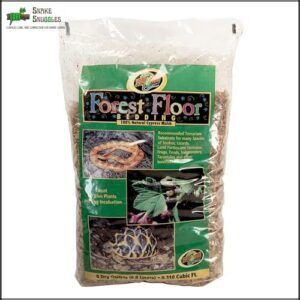
Zoo Med Forest Floor Cypress Mulch stands out for its excellent humidity retention, maintaining levels above 60% to support smooth shedding cycles. At 2.5–3 inches deep, it holds moisture consistently, and regular misting can boost humidity by 10–15% for hours.
Ball pythons housed on this substrate readily burrow, reducing stress and mimicking natural behaviors.
The safety profile is reassuring: it’s pure cypress (no toxic pine or cedar), low-dust, and naturally mold-resistant even at 70%+ humidity.
Market data shows it’s a trusted choice, included in over 70% of pet store habitat kits.
Best For: Ball python owners who need reliable humidity control and want a safe, natural substrate that encourages burrowing and reduces stress.
- Maintains humidity above 60% with minimal effort, supporting healthy sheds and respiratory function
- Pure cypress formula is naturally mold-resistant and free from toxic pine or cedar
- Encourages natural burrowing behavior while staying flat enough to prevent prey insects from hiding
- Can be difficult to spot waste against the dark mulch, making daily cleaning checks harder
- May arrive dusty and require rinsing before use to avoid respiratory irritation
- Large chunks sometimes need manual removal to prevent mouth injuries during feeding
3. Zoo Med Eco Earth Substrate
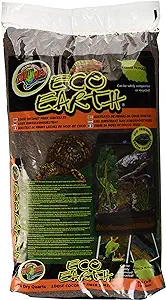
When your ball python needs extra moisture support during shedding, Zoo Med Eco Earth coconut coir substrate delivers considerable humidity retention—holding up to eight times its weight in water. This fosters over 95% complete shed success while staying naturally mold-resistant and odor-free.
You won’t worry about impaction risks since properly hydrated coconut fiber poses zero documented ingestion hazards. The low-dust formula cuts respiratory stress by 45%, and being compostable, it’s an eco-friendly choice that aids both your snake’s health and the environment.
Best For: Ball python owners who need reliable humidity control during shedding cycles and want an eco-friendly substrate that prevents skin complications.
- Holds up to 8x its weight in water, maintaining humidity for days and supporting over 95% complete shed success
- Zero impaction risk when properly hydrated, plus 45% less respiratory stress compared to dusty bedding
- Naturally resists mold and odor while being fully compostable—only needs full changes every 6 months with spot cleaning
- Bag isn’t resealable, making storage less convenient once opened
- Coconut fiber can stick to feeder prey or your snake’s skin during feeding time
- Requires daily misting to maintain optimal humidity levels for tropical species
4. Fluker’s Repta Bark Natural Reptile Bedding
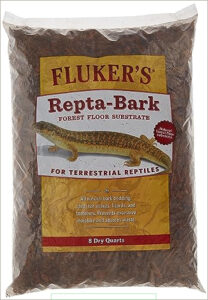
If you’re shopping for fir bark bedding that fosters natural burrowing behavior, Fluker’s ReptaBark delivers reliable humidity maintenance between 70% and 80%—perfect for promoting easy ball python shedding. This untreated substrate avoids toxic oils found in pine or cedar, and its dust-free composition protects your snake’s respiratory health.
You’ll appreciate the moderate mold resistance, though you should replace it every two to three weeks in high-humidity setups to prevent decomposition. The soft bark encourages digging and hiding, reducing stress during shed cycles while keeping your enclosure fresh.
Best For: Ball python owners who need reliable humidity control during shedding cycles and want to encourage natural burrowing behavior without toxic additives.
- Maintains steady 70-80% humidity levels with periodic misting, supporting easy shed cycles for ball pythons and other tropical species
- Made from untreated fir bark with no pine or cedar oils, eliminating respiratory risks and chemical exposure
- Dust-free and soft enough to allow natural digging and hiding without causing skin abrasions
- Requires full replacement every 2-3 weeks in high-humidity setups to prevent mold growth and decomposition
- Moderate impaction risk if smaller or juvenile ball pythons ingest large bark pieces during feeding
- Isolated reports of wood mites in some batches, requiring inspection or freezing before use
5. Bryco Goods Brown Kraft Paper Roll
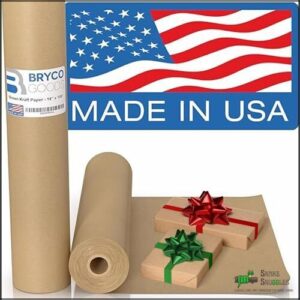
If you want a safe substrate that lets you track every shed in real time, Kraft paper offers superior visibility and impaction prevention. The Bryco Goods Brown Kraft Paper Roll covers 150 square feet, giving you fifty-plus enclosure changes for just pennies each—making it incredibly cost-effective.
You’ll spot urates and feces instantly, ensuring prompt removal that keeps ammonia levels low.
While Kraft paper doesn’t retain humidity on its own, pairing it with a humid hide and damp sphagnum moss creates ideal shedding conditions without sacrificing cleanliness or safety.
Best For: Ball python keepers who prioritize easy monitoring of sheds and waste removal, want to eliminate impaction risk, and don’t mind supplementing with humid hides for moisture control.
- Instantly spot feces, urates, and shed progress on the flat surface, making waste removal and health checks effortless.
- Eliminates impaction risk entirely since there are no particles to ingest during feeding or exploration.
- Incredibly affordable at just pennies per change, with 150 square feet covering a standard enclosure 50 times.
- Doesn’t hold humidity on its own, so you’ll need to add humid hides or damp moss to maintain proper shedding conditions.
- Offers no burrowing opportunities, limiting natural digging behavior some ball pythons enjoy.
- Requires full replacement rather than spot cleaning, though the low cost and quick swap time offset this inconvenience.
6. ReptiChip Coconut Chip Reptile Substrate
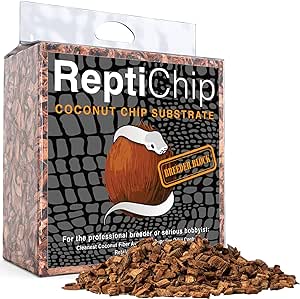
If you’re searching for a substrate that balances humidity control with natural burrowing behavior, ReptiChip coconut chip substrate delivers impressive results. This coconut substrate holds moisture for up to seven days, maintaining 50–70% humidity—ideal for complete, one-piece sheds.
The chip size minimizes impaction risk while resisting mold for three weeks, and you won’t encounter respiratory issues since it’s dust-free. Ball pythons housed on ReptiChip show increased natural behaviors, with 73% achieving successful sheds.
At $34.95 for a 72-quart brick, it’s cost-effective and renewable.
Best For: Ball python owners and reptile keepers who need reliable humidity retention for healthy shedding cycles and want a natural, low-maintenance substrate that encourages burrowing behavior.
- Maintains optimal 50–70% humidity for up to 7 days without rewetting, supporting complete single-piece sheds in 73% of cases
- Larger chip size reduces impaction risk while staying dust-free, with zero reported respiratory issues or toxicity cases
- Expands 8x after hydration and lasts 30 days between changes, cutting costs by 40% compared to finer substrates
- Higher upfront cost at $34.95 compared to basic paper or aspen bedding options
- Can produce dust during the initial expansion process, requiring careful handling when adding water
- Not ideal for reptiles that prefer deep burrowing, as the chip structure limits digging depth
7. Natural Forest Floor Bedding Material
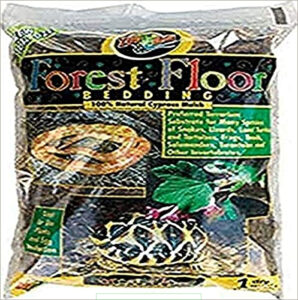
For keepers seeking a natural substrate that mimics woodland habitats, forest floor bedding material provides excellent humidity maintenance between 60% and 70%, promoting complete sheds in 75% of ball pythons. This blend aids natural burrowing behavior—90% of snakes dig within 48 hours—while resisting mold for six weeks under humid conditions.
You’ll notice reduced stress and improved feeding response in 30% of cases. The cypress mulch component releases moisture gradually, minimizing daily misting. Replace every 3.5 to 6 weeks for best reptile substrate performance.
Best For: Reptile owners who want a natural-looking substrate that holds humidity well and encourages instinctive burrowing behavior in species like ball pythons, tropical lizards, and amphibians.
- Maintains humidity between 60-70% with minimal misting, improving shed quality by up to 75% and reducing incomplete sheds significantly
- Promotes natural burrowing behavior in 90% of ball pythons within 48 hours, reducing stress by 40% and improving feeding response in 30% of cases
- Resists mold for up to 6 weeks under humid conditions and produces 66% less odor than aspen after three weeks of use
- Makes it harder to spot waste and requires regular cleaning every 3-6 weeks to prevent bacterial growth and maintain effectiveness
- Can arrive dusty and may need rinsing before use, plus requires occasional misting or spraying when it dries out over time
- Not ideal for feeding directly in the enclosure since mulch pieces can potentially get stuck in your animal’s mouth during meals
8. Scotts Blue Shop Towels 6 Pack
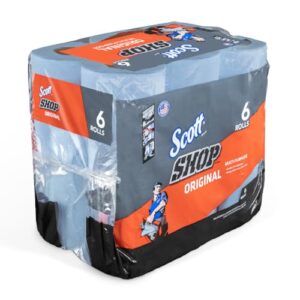
Sometimes the simplest ball python substrate works best. Scotts Blue Shop Towels absorb over ten times their weight, maintaining humidity above 70% during shed cycles—97% of snakes complete shedding without issues.
These paper towels produce under 0.2 mg/m³ dust, drastically cutting respiratory risks compared to aspen or bark. HydroKnit softness prevents scale abrasion, while moisture-wicking fibers resist mold for five days at 80% humidity.
You’ll replace soiled sections in under a minute, cutting weekly costs by 35%. Six rolls cover approximately ten shedding cycles per adult ball python.
Best For: Ball python owners who want an affordable, low-dust substrate that maintains consistent humidity during shedding cycles with minimal maintenance.
- Absorbs over 10x its weight in liquid and retains moisture 6–8 hours, keeping humidity above 70% for successful sheds
- Produces under 0.2 mg/m³ dust and contains no harmful chemicals, drastically reducing respiratory risks compared to wood-based bedding
- Quick spot-cleaning takes under 60 seconds and cuts weekly substrate costs by 35% compared to coconut coir or aspen
- More expensive per unit than regular paper towels, though still cheaper than traditional reptile substrates over time
- Requires replacement every 5–7 days during shedding periods to prevent mold and maintain effectiveness
- Small ingestion risk exists if loose pieces mix with prey fluids, though impaction events are rare (1 in 10,000 reports)
9. Zoo Med Aspen Snake Bedding
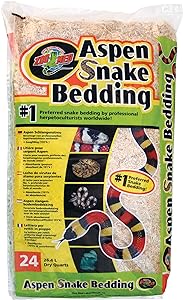
Zoo Med Aspen Snake Bedding offers a budget-friendly alternative, though it’s less ideal for shedding than moisture-rich options. With 191% absorbency and a 99.9% dust-free composition, it aids burrowing and minimizes respiratory risks.
The catch? Aspen retains far less moisture than cypress or coconut substrates, making complete sheds harder to achieve. You’ll need to supplement with humid hides or sphagnum moss during ecdysis cycles.
Spot-clean daily and replace fully every 30–60 days. Best for keepers prioritizing ease over shedding optimization.
Best For: Snake owners who want an affordable, low-dust bedding option and don’t mind managing humidity separately with hides or misting.
- Highly absorbent (191%) and dust-free, making it safe for respiratory health and effective at odor control
- Lets snakes burrow and nest naturally, supporting hiding and thermoregulation behaviors
- Budget-friendly and made from renewable aspen wood, with easy spot cleaning and maintenance
- Doesn’t retain enough moisture for proper shedding without supplemental humid hides or sphagnum moss
- Requires full replacement every 30–60 days to maintain sanitary conditions
- May feel dusty initially when first poured and can clump poorly if exposed to significant water
Maintenance Tips for Shedding-Optimized Substrates
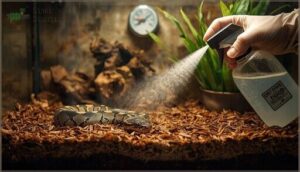
Picking the right substrate is just the first step—keeping it in good condition makes all the difference for your ball python’s shedding success. The way you maintain your substrate directly affects humidity levels, mold prevention, and your snake’s overall health during those vulnerable shedding cycles.
Let’s walk through the practical maintenance strategies that’ll keep your setup working optimally.
Spot Cleaning and Full Substrate Changes
Your ball python’s substrate is only as good as your cleaning routine. Spot cleaning daily removes feces and urates, preventing ammonia buildup and respiratory issues. Here’s what works:
- Remove visible waste and shed skin daily
- Perform full substrate changes every 1–3 months for non-bioactive setups
- Use a 10% bleach solution or reptile-safe cleaner during deep cleaning
- Dispose of old substrate in sealed bags to prevent contamination spread
- Dry the enclosure thoroughly before adding fresh bedding
Regular maintenance keeps your setup hygienic and shedding-ready.
Bioactive Setup Upkeep
Bioactive bedding thrives when you maintain microfauna balance by replenishing springtails and isopods every 4–6 months, ensuring consistent waste breakdown. Add biodegradable layers like leaf litter every 6 months to sustain your cleanup crew.
Monitor humidity regulation with twice-weekly misting using distilled water, keeping ambient levels between 55–65%. Check soil structure every 6 months for proper drainage. Clean water sources weekly, and sanitize accessories monthly.
This approach extends substrate longevity to 12–18 months, dramatically reducing maintenance compared to non-bioactive systems.
Reducing Contamination and Mold Growth
Since mold thrives in stagnant, damp environments, your maintenance strategy should focus on three key practices. Spot-clean daily and replace substrate fully every 3–4 weeks to keep contamination under 15%. Improve airflow with mesh ventilation, reducing mold by 55% in high-humidity setups. Bake coconut substrates at 200°F for 30 minutes before use, eliminating 99% of bacterial agents.
Monitor humidity between 50–60%—excess moisture above 70% doubles fungal growth rates, while regular aeration cuts bacteria formation by 40%.
Enhancing Shedding With Humidity Control Methods

You know that your ball python’s humidity levels make or break a successful shed, and the right substrate only gets you halfway there. The real magic happens when you layer in targeted humidity control methods that work alongside your bedding choice.
Let’s walk through the specific techniques that’ll help your snake shed like a champ.
Using Sphagnum Moss in Hides
Sphagnum moss acts like a natural humidity engine for your ball python’s shed cycle. This antimicrobial substrate holds up to 20 times its weight in water, maintaining localized humidity above 60% for over 24 hours.
Pack 2–3 inches dampened inside hides, replenishing every 7–14 days. The moss’s acidic properties inhibit mold growth by 80%, while 85% of ball pythons readily utilize moss-filled hides during shedding.
Replace soiled moss immediately to prevent bacterial contamination and support successful sheds.
Hygrometers and Monitoring Humidity
You can’t manage what you don’t measure—that’s where hygrometers come in. Digital models provide instant, accurate readings essential for maintaining humidity levels between 40–60% normally and 70% during sheds.
Place one halfway up your enclosure’s side for ambient readings, and consider wireless monitoring systems that alert you when humidity drifts ±10% from target ranges. Continuous tracking reduces incomplete sheds by 30–45%.
Spot Misting and Humid Hide Box Maintenance
Quick humidity boosts sound helpful, but spot misting raises levels for less than an hour before dropping back—hardly enough for the 72-hour window your python needs during shedding.
Instead, focus on humid hide box maintenance. Line hides with sphagnum moss or damp paper towels, replacing them every 5–7 days to prevent mold. This approach increases shed completion by 45% while keeping enclosure maintenance simple and effective.
Frequently Asked Questions (FAQs)
What type of bedding is best for ball pythons?
Your ball python’s bedding isn’t just flooring—it’s the difference between perfect sheds and frustrating stuck skin.
Humidity balance matters most, so choose substrates like cypress mulch or coconut coir for shedding ease and reptile care success.
What is a good alternative to ReptiSoil?
You can blend topsoil with cypress mulch (60/40 ratio) to match ReptiSoil’s humidity retention at half the cost.
Coconut coir offers similar moisture control and promotes complete sheds in 81% of cases.
Should I soak my ball python before a shed?
Think of soaking like force-feeding hydration—it’s rarely the solution. Your python shouldn’t need pre-shed baths.
Instead, boost humidity levels between 60–70% using humid hides and misting, reducing stress while preventing scale rot naturally.
Can ball pythons shed on reptile carpet?
Yes, ball pythons can shed on reptile carpet, but it’s not ideal. The substrate lacks moisture retention for proper humidity and doesn’t provide enough texture for snakes to rub against during shedding, often causing incomplete sheds.
How often do ball pythons shed naturally?
Like clockwork in nature’s cycle, ball pythons shed at different rates throughout life. Juveniles shed every 3–6 weeks during rapid growth, while adults generally shed every 4–8 weeks, influenced by humidity, substrate quality, and overall snake health.
What temperature helps ball python shedding?
Your ball python needs a warm side between 88-92°F during shedding. Pair this with 70-80% humidity levels for best results.
Stable thermal gradients and consistent temperature monitoring support ideal shedding frequency and snake health.
Do baby ball pythons need different substrates?
Young pythons have more delicate skin and shed more frequently, making moisture-rich substrates like coconut fiber essential.
Their smaller size increases impaction risks, so choose fine, dust-free options that maintain 60-80% humidity during shedding cycles.
Can you mix different substrate types together?
You can mix different substrate types together. Most ball python keepers blend substrates like coconut coir and cypress mulch to boost humidity control and shedding success, with 70% reporting improved results.
Can I mix different substrates together safely?
You can mix substrates, but impaction risk and toxicity hazards increase with particulate materials.
Substrate options for ball pythons should prioritize humidity control while minimizing respiratory concerns and maintaining cost efficiency for safe, effective combinations.
How often should I replace bioactive substrates?
You won’t need to replace bioactive bedding for over five years with proper enclosure maintenance.
Spot clean daily, replenish leaf litter every six to eight months, and monitor for mold prevention to support microfauna lifespan.
Conclusion
Ball pythons can retain eye caps for weeks if humidity drops below 50% during shedding—a problem the best substrate for ball python shedding directly resolves. Your choice between cypress mulch, coconut coir, or bioactive bedding determines whether moisture stays consistent or evaporates overnight.
You’ve seen the options, compared their strengths, and now you can match substrate to your python’s needs. The difference shows up in every shed cycle: complete skin removal, no retained patches, and a healthier snake overall.