
This site is supported by our readers. We may earn a commission, at no cost to you, if you purchase through links.
Your dog ignores breakfast on a 90-degree morning, yet devours double portions when winter arrives. That’s not picky eating—it’s biology. Temperature shifts trigger metabolic changes that alter how much energy your animal needs and when they want to eat.
Cold weather can spike caloric demands by 30 percent as the body works overtime to stay warm. Heat does the opposite, slowing appetite to prevent internal overheating. If you’re still feeding the same portions at the same times year-round, you’re fighting against your animal’s natural rhythms.
The good news? Adjusting your feeding schedule to match temperature changes protects digestive health, maintains ideal weight, and reduces stress-related behaviors.
Table Of Contents
Key Takeaways
- Temperature swings trigger metabolic changes that spike caloric needs by up to 30 percent in cold weather while reducing appetite by 25 percent in heat, so feeding the same portions year-round works against your animal’s natural biology.
- Watch for behavioral cues like skipped meals during afternoon heat, increased morning hunger in cold, and shifts in feeding times toward cooler parts of the day—these aren’t picky eating but your animal’s climate resilience system responding to real energy demands.
- Adjust feeding schedules gradually over 7-14 days with 5-10 percent daily shifts to protect digestion and reduce stress, while immediate changes should only happen for urgent health needs with close daily monitoring.
- Shift summer meals to early morning or late evening when it’s cooler and boost winter calories with fat-rich feeds, but always pair schedule changes with daily tracking of water intake, weight trends, and stool quality to catch problems before they escalate.
Why Temperature Affects Animal Feeding Schedules
Your animal’s body works overtime when temperatures swing—and that changes everything about how they eat. Cold weather cranks up their internal furnace, while heat slows everything down to avoid overheating.
Let’s break down exactly what’s happening inside so you can feed smarter, not harder.
Tracking these signals closely will help you apply safe snake feeding practices that match your snake’s real-time needs.
Temperature’s Impact on Metabolism
Temperature regulation drives your animal’s energy metabolism more than you might expect. When the thermometer drops below or climbs above comfortable zones, metabolic rate increases to generate warmth or power cooling systems. This thermal stress elevates caloric needs by 15-30 percent in cold weather. Your animal burns fuel just staying comfortable, reshaping energy balance and nutrient utilization before you even think about growth or performance.
Temperature swings force your animal’s metabolism into overdrive, spiking caloric needs by up to 30 percent just to stay comfortable
Understanding the importance of methodological rigor is essential in scientific studies related to animal care.
Appetite Changes in Hot Vs. Cold Weather
As metabolic demands shift, appetite follows suit in predictable patterns. Cold weather usually boosts hunger as your animal’s body craves extra calories to fuel temperature regulation and maintain warmth. Hot conditions work the opposite way—many species naturally reduce feed intake by up to 25 percent to limit internal heat production.
Morph-specific traits can also influence these patterns, so tracking individual feeding responses across ball python morphs helps you anticipate seasonal changes more accurately.
Watch for these telltale signs of weather adaptation:
During hot months, your snake’s metabolism may shift—here’s how to adjust summer feeding schedules based on temperature and activity changes.
- Skipped meals or reduced portions during afternoon heat
- Increased requests for food in early morning cold
- Shifts in feeding times toward cooler parts of the day
- Heightened water consumption replacing solid food intake
These appetite changes aren’t arbitrary. They’re your animal’s built-in climate resilience system responding to thermoregulation effects. Energy intake adjusts to match what the body truly needs for nutrient utilization under stress. That’s why feed optimization depends on reading these cues correctly and timing feed adjustments to support rather than fight natural rhythms. Understanding language patterns can help you better analyze your animal’s behavioral changes.
Digestion and Nutrient Absorption Variations
Beyond appetite shifts, temperature directly changes how your animal processes nutrients. Extreme heat slows enzyme activity and gut microbiome function, reducing nutrient bioavailability by 15-20 percent even when feed intake stays steady. Cold stress accelerates gastric emptying, which can compromise mineral absorption and digestive health.
A properly designed enclosure can help buffer these temperature swings and protect your snake’s digestive system—check out this guide to building a temperature-stable snake enclosure for practical setup tips.
That’s why feed efficiency drops during temperature swings—nutrient uptake suffers regardless of energy density or supplementation efforts.
Recognizing When to Adjust Feeding Times

Your animal won’t send you a text when the heat’s getting to them, but they’ll show you in other ways. Learning to read these signals means you can step in before small issues turn into real problems.
If your snake suddenly refuses food or acts defensive during feeding, check out this guide on why snakes reject oversized prey and how to adjust portion sizes safely.
Let’s look at the key signs that tell you it’s time to rethink when and how you’re feeding.
Signs Your Animal Needs a Schedule Change
Your animal’s body speaks volumes when feeding schedules don’t match temperature shifts. Watch for persistent begging between meals or reduced interest at feeding time—both signal misaligned energy needs.
Digestive symptoms like diarrhea after meals, unexplained weight changes, and altered activity patterns all point to schedule adjustments needed.
In hot weather, decreased feed intake paired with increased water demand means timing matters more than ever.
Monitoring Body Condition and Weight
Consistency matters more than any single number when tracking your animal’s health. Check body condition scoring monthly—run your hands over ribs and spine to feel fat cover changes before they become obvious.
Weigh your animal weekly using the same scale at the same time. Record feed intake, hydration levels, and growth rate together.
These combined weight trends guide your nutrition planning and reveal when temperature-driven adjustments actually work.
Behavioral Cues Indicating Discomfort
Your animal’s body language tells you when something’s off before lab work or weight changes catch it. Watch for these discomfort signs that signal feeding schedule adjustments:
- Pacing or restlessness near the feeding area
- Excessive panting before or after meals
- Hunched posture while eating
- Slower meal finishing or food avoidance
- Increased water intake paired with meal-time stress behaviors
Pain signals and feeding anxiety often point to heat stress or cold stress affecting digestion and animal welfare—trust these animal behavior cues and adjust hydration strategies accordingly.
How to Safely Change Feeding Schedules

Changing your animal’s feeding schedule isn’t something you rush into without a plan. The way you shift meal times can mean the difference between a smooth shift and days of digestive upset or stress.
Let’s walk through the safest approach to making these changes stick.
Gradual Vs. Immediate Adjustments
Shifting your animal’s feeding schedule doesn’t have to be a guessing game. You’ve got two paths: staged changes or quick pivots. A staged feed shift over 7–14 days cuts stress and aids nutrient balance during seasonal feeding shifts. Immediate adjustments work when health monitoring flags urgent needs, but they demand careful observation.
Here’s how climate and temperature regulation drives your adjustment timing strategy:
| Approach | Timeline | Best For |
|---|---|---|
| Gradual (Staged) | 7–14 days, 5–10% daily shifts | Routine temperature regulation and seasonal feeding changes |
| Immediate (Rapid) | 2–3 days with close health monitoring | Critical safety needs or sudden weather extremes |
| Hybrid | Partial quick shift, then gradual fine-tuning | Balancing urgent feed management with stress reduction |
Gradual changes protect digestion and maintain body weight during feed formulation and adjustment. You’re giving their system time to adapt without triggering refusal or upset. Immediate shifts require a written plan and daily checks—think of it as emergency feed management with guardrails. Both methods aid temperature regulation, but your animal’s tolerance and the weather’s severity determine which path you take.
Best Practices for Transitioning Meals
You’ll want to break each meal timing strategy into 5–7 day phases to support digestive health. Start with small nutrient adjustments—shift portions by 10–15% while keeping caloric management steady.
Your feed shift plans should document daily intake and stool quality. This approach protects dietary adjustments during seasonal feeding changes, ensuring your animal’s nutritional needs stay met without shocking their system or derailing feeding schedules.
Tools for Tracking Feeding and Growth
Data logging transforms guesswork into precision when you’re fine-tuning feeding schedules. Modern technology gives you real-time feed monitoring and growth tracking that simplifies nutrition analysis across temperature swings.
- Animal sensors track meal timing and activity patterns continuously
- FeedTracker apps sync feeding schedules with body condition scores
- Barn Buddy systems automate feed management and technology integration
- Growth scales record weight trends for seasonal feeding planning
- Cloud dashboards compare multiple animals’ progress simultaneously
Seasonal Feeding Strategies for Different Temperatures
Your animal’s feeding strategy can’t stay the same when the thermometer swings from freezing to scorching. What works in January will leave your livestock struggling in July, and summer schedules often fall short when winter arrives.
Let’s walk through the specific adjustments you’ll need to make as temperatures shift throughout the year.
Feeding During Heatwaves

When temperatures soar, your animal’s appetite often drops—it’s a natural response to heat stress. You’ll want to shift feeding times to early morning or late evening when it’s cooler. This timing respects their thermal comfort and encourages better intake.
Summer feeding requires lighter, palatable meals paired with strong hydration strategies and electrolyte balance to combat hot weather challenges and maintain ideal animal nutrition.
Adjustments for Cold Weather
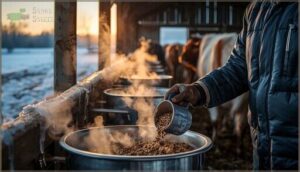
Cold weather flips the script—your animal’s energy requirements climb as their body fights to stay warm. You’ll need to boost caloric intake by adjusting feed density and portion sizes gradually over 7–14 days.
Cold stress management means adding fat-rich feeds for concentrated energy while keeping protein adequate for tissue maintenance.
Winter nutrition isn’t just about more food; it’s about smarter feed formulation that matches their elevated metabolic demands without overwhelming digestion.
Hydration and Supplementation Needs
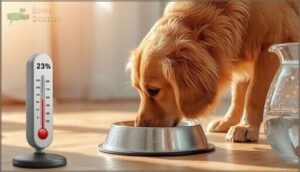
More calories mean your animal needs more water, but temperature extremes shift those hydration strategies in both directions. Fresh water must stay accessible always; intake usually climbs with heat as insensible losses mount.
Monitor drinking patterns, urine concentration, and body condition daily. Electrolyte balance matters less in healthy animals than you’d think—stick to species-specific nutrient supplements under veterinary guidance and avoid unnecessary fluid management interventions.
Tips for Maintaining Health During Temperature Shifts

Temperature swings can throw your animal’s system off balance if you’re not paying close attention. The good news is that a few simple strategies can protect your animal’s health when the weather shifts.
Here’s what you need to focus on to keep digestion stable, hydration on track, and your animal thriving through any temperature change.
Preventing Digestive Stress
Your animal’s gut function takes a real hit when thermal stress kicks in. Keep meal timing rock-solid to prevent digestive health problems and maintain nutrient balance.
During heat stress or seasonal feeding shifts, offer small frequent portions of high-quality feed to support digestive health and nutrition.
Electrolytes help offset losses from temperature swings, stabilizing gut function and overall nutrient management and supplementation needs.
Monitoring Water Intake and Feed Freshness
You’ve stabilized your animal’s gut—now watch what goes in and how much. Measure water intake daily; sudden changes signal stress or poor feed freshness. Check stored feed for mold or off smells, especially in high humidity management conditions.
Use tools like FeedTracker apps to log hydration monitoring patterns and feed formulation adjustments. Water quality tests reveal contamination that tanks nutrient absorption, while freshness evaluation prevents illness and maintains electrolyte balance for ideal animal nutrition.
When to Consult a Veterinarian or Specialist
When should you pick up the phone? Some warning signs demand immediate veterinary care—your health monitoring catches what home adjustments can’t fix.
Contact your vet or seek specialist referral if you notice:
- Sudden weight loss despite proper feeding and climate change and animal nutrition adjustments
- Persistent vomiting or bloody stool lasting beyond 24 hours—emergency signs requiring crisis management
- Severe lethargy or eating pain—behavioral shifts indicating deeper animal health concerns
- Urinary changes or distress—often linked to dehydration from temperature stress
Your pet owner responsibilities include knowing when professional intervention outweighs veterinary costs.
Frequently Asked Questions (FAQs)
What feed types work best in humidity?
Humidity is like a thief—it steals feed quality overnight. Pellet feeds resist mold better than mash in damp air.
Store everything sealed tight, monitor moisture control daily, and add electrolytes to support digestive health during humid spells.
How does altitude affect feeding schedule adjustments?
Higher elevations reduce oxygen levels, which can slow digestion and shift energy needs.
Monitor your animal’s weight and behavior closely, then adjust meal timing gradually with veterinary guidance to prevent digestive stress.
Should nighttime feeding differ from daytime in summer?
Think of summer heat like an unwelcome dinner guest—it changes everything. Shifting meals to cooler evening hours can boost intake, ease heat stress mitigation, and align with natural nocturnal feed benefits when thermal comfort management matters most.
Conclusion
You don’t need a thermometer and spreadsheet to adjust feeding schedule by temperature—just watch your animal. A skipped meal in July heat or doubled appetite in January cold tells you everything.
Start small: shift meal times by 30 minutes, add a quarter-cup when frost hits, split servings when humidity climbs. Your animal’s body already knows what it needs. Your job is simply to listen and respond before stress, weight swings, or digestive trouble force the conversation.