This site is supported by our readers. We may earn a commission, at no cost to you, if you purchase through links.

first time your baby snake turns dull gray and hides all day, it feels scary. I know that tight knot in your stomach; you wonder if something’s wrong, or if you already messed up.
Most of the time, though, it’s not an emergency—it’s their body getting ready to trade in that old, too‑tight skin for a perfect new one. Understanding a normal baby snake shedding schedule helps you relax, spot problems early, and tweak their setup. Once you know what to expect week by week, their odd behavior starts to look like a healthy rhythm.
Table Of Contents
Key Takeaways
- baby snakes shed often because they grow fast, so dull skin, hiding, and odd behavior around shedding are usually normal, not an emergency.
- first shed soon after hatching, then usually shed every 2–4 weeks in their first year, and about every 4–6 weeks as growth slows, with some differences by species.
- colors look dull, the eyes turn blue‑gray and then clear, and your snake hides more, moves less, and may stop eating for a short time.
- smooth sheds depend on good heat and humidity, a moist hide, proper diet and hydration, gentle handling, and skipped feeds during the “blue” phase, plus quick action if you see stuck skin or cloudy eye caps that don’t clear.
What is Baby Snake Shedding?
Baby snake shedding, or ecdysis, is the natural process where your young snake replaces its old skin with a fresh new layer. Because babies grow so fast, this happens more often than in adults, and it can look a bit worrying if you’re not ready for it.
If you’re unsure what’s normal, this guide to pre-shed signs and symptoms in snakes can calm your nerves.
To make things easier, we’ll walk through enclosure options that help your baby shed cleanly and stay comfortable.
Definition of Ecdysis in Baby Snakes
Think of ecdysis as your baby snake’s built‑in reset button for skin.
During this Snake Shedding process, only the outer epidermis is replaced through Epidermal Renewal, driven by a Hormonal Trigger that starts the Apolysis Mechanism and Lymph Enzyme Action.
This first Shedding Cycle also causes a major Skin Permeability Shift, protecting Juvenile snakes and supporting Reptile Health and Wellness.
The ecdysis process also helps snakes grow by snakes shed skin for growth.
Purpose of Shedding for Growth
Now that you know what Ecdysis is, let’s talk about why it matters for your baby.
During the Shedding Process, Skin Expansion lets the body lengthen while the fixed scales enlarge, matching a fast Growth Rate in Juvenile Snakes.
At the same time, Parasite Removal, Wound Healing, Metabolic Boost, and a stronger Lipid Barrier all protect Reptile Health and Wellness. The parasite removal process also helps keep the snake clean.
Differences Between Baby and Adult Shedding
All that growth you just read about shows up very differently in juvenile snakes than in adult snakes during ecdysis.
Babies have softer skin thickness, faster metabolic rate, and stronger hormonal triggers, so their snake shedding and shedding frequency are higher.
Adults shed less often, and small changes in habitat humidity cause bigger frequency variance and more stuck skin problems.
Typical Shedding Schedule for Baby Snakes
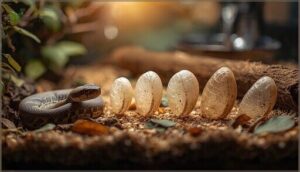
Baby snakes don’t shed at random; there’s a pattern to it that you can learn pretty quickly.
Understanding whether the parents were pythons or boas using this guide to egg-laying and live-bearing snake species helps predict baby shedding timelines.
In this section, we’ll look at how often most babies shed, from that very first shed after hatching through their fast-growing juvenile months. That way, as you read through the timeline below, you can compare it to your own snake and know what’s normal.
First Shed After Hatching
That first shed after hatching is a significant event in snake shedding, not just a wardrobe change.
In the wild, Chemical Crypsis Timing and Maternal Scent Retention balance out; I see Species‑Specific Ecdysis setting the timing.
In your care, solid Temperature Gradient Effects, correct humidity level, and thoughtful Humidity Hide Design help juvenile snakes avoid stuck shed and complete first shed.
Shedding Frequency by Age
Usually, Age‑Based Frequency in baby snake ecdysis follows their growth rate: hatchlings may shed every 2–4 weeks, with 12–26 sheds in year one.
As Growth Spurts slow, juveniles shift toward shedding every 4–6 weeks, a normal Reptile Shedding pattern shaped by Species Growth Rates and Metabolic Influences.
Seasonal Variations nudge Shedding Process, so you keep Snake Shedding and Care flexible.
Species Variations in Shedding Timing
Although species share the same basic Shedding Process, Colubrid shed cycles often run every few weeks, while Viperid first shed can happen within hours.
Python hatchling timing usually stretches closer to the Ancestral ecdysis standard, whereas Boa neonate frequency is slower.
I link these Reptile Shedding patterns to ecdysis, snake growth and development, and overall reptile health and wellness outcomes.
Signs a Baby Snake is About to Shed
Before a baby snake sheds, its body gives you several clear clues, if you know what to watch for.
You’ll notice changes in how the skin and eyes look, along with small shifts in behavior and routine.
In a moment, I’ll walk you through these signs step by step so you can quickly check them against your own setup.
Changes in Skin and Eye Appearance
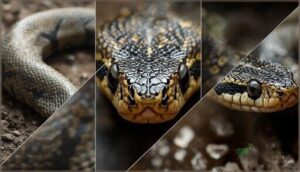
Ever notice baby’s colors fade like photos? That early Skin Dullness is your first hint ecdysis, the Shedding Process is coming, as snake skin turns matte and color shift begins.
Next, Eye Clouding appears, the blue‑gray spectacles lifting for Spectacle Shedding.
When eyes clear again, you’ll soon see Post‑Shed Shine; lingering haze suggests a retained spectacle, needing humidity support.
Behavioral Shifts Before Shedding

Think of pre‑shed Animal Behavior as your baby snake hanging a “don’t disturb” sign on the glass.
You’ll see an Activity drop, Hide preference, and Microclimate seeking near humid hides or water bowls.
Appetite decline and Temperament change are normal parts of the Shedding Process, not misbehavior, and really matter for Snake Health and Reptile Care during Animal Shedding.
Timeline of Shedding Stages
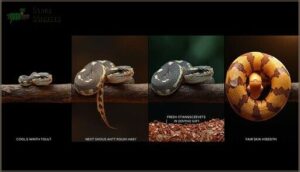
Shedding feels like a marathon, yet timeline is repeatable. Pre‑shed Duration lasts one to two weeks, then Active Shedding Timing is minutes to hours.
After this Snake Shedding Process, or Shedding Process, Post‑shed Recovery is days. First Ecdysis Interval runs about a week, and Growth‑Linked Shedding keeps Reptile Skin and Shedding cycling; watch for skin shedding or stuck shed.
Factors Affecting Shedding Frequency

How often your baby snake sheds isn’t random; it’s shaped by a few key parts of its care.
Things like growth, diet, environment, and overall health all play a role, and some are easier to change than others.
Let’s walk through the main areas you can adjust so you know what to expect from each.
Growth Rate and Nutrition
Your baby snake’s growth is basically powered by its dinner schedule and Calorie Frequency.
With smart Snake Feeding, matching Prey Size to body width and watching the Body Condition Index, you support steady Animal Development and a smooth Shedding Process.
Whole-prey diets improve Vitamin Balance and Reptile Health, while meeting Hydration Needs is a quiet but essential Pet Snake Care practice.
Humidity and Environmental Conditions
Food builds the body, but air and water shape how your baby’s skin actually comes off.
Food fuels growth, but air and water decide how smoothly your baby snake sheds
In good reptile husbandry, you watch Humid Hide Placement, Substrate Moisture Management, and Ventilation Balance inside the snake enclosure.
Pair a gentle Temperature Gradient Effects setup with smart Water Bowl Position, deep substrate under cork bark, and the shedding process usually stays smooth overall.
Health and Stress Impacts
Good moisture is only half the story; health and stress quietly steer the Shedding Process through your baby’s whole body.
- High Corticosterone Levels and Behavioral Anxiety slow growth, risking Growth Stunting and stuck sheds.
- Heavy Parasite Load and Immune Suppression invite skin infections.
- In Reptile Care and Veterinary Medicine, we read Animal Behavior to protect Animal Health and Wellness daily.
How to Support Healthy Shedding in Babies
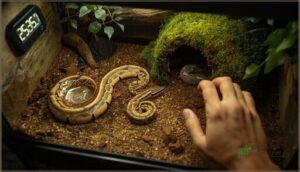
baby snakes shed well, it’s almost always because their setup is doing most of the work for you.
Instead of guessing, you can follow few simple checks for habitat, humidity, handling and general health.
Below, I’ll walk you through the main enclosure choices and routines that make shedding smoother and safer for your little snake.
Optimal Habitat Setup and Humidity
For a smooth shedding process, your enclosure setup matters more than most beginners expect.
| Setup Element | Recommendation | Why It Matters |
|---|---|---|
| Tank temperature gradient | 75–85°F cool-to-warm | Facilitates thermoregulation during shedding |
| Moisture-retentive substrate | Cypress mulch or coconut husk | Maintains stable humidity naturally |
| Water bowl placement | Warm side of enclosure | Boosts ambient humidity through evaporation |
| Ventilation management | Partially cover mesh lid | Prevents humidity from escaping too quickly |
| Humidity monitoring tools | Digital hygrometer | Gives accurate, reliable readings |
Cork bark hides and damp sphagnum moss pockets give your snake private, humid retreat spots. Good reptile care and snake health both start here.
Handling and Feeding During Shedding
Once humidity and hides are dialed in, Snake Care and Maintenance shifts to Stress‑Free Handling and smart Feeding.
During the Shedding Process, keep Pet Care calm: use Emergency Glove Use if needed, limit contact to a Limited Interaction Duration, skip Blue‑Phase Feeding, then focus on gentle Post‑Shed Nutrition.
That rhythm aids Reptile Husbandry and a confident, growing pet thriving safely.
Recognizing and Managing Shedding Problems
Although baby snakes shed, you should learn the Shedding Process so problems don’t sneak past you. Dysecdysis Identification protects Python Shedding and Health, guiding you on when home care ends and Veterinary Intervention starts.
- Incomplete sheds, Eye Cap Retention, or Retained spectacle all signal trouble you shouldn’t ignore.
- Humidity Troubleshooting fits into everyday Snake Care and Maintenance.
- Soak Treatment helps.
Frequently Asked Questions (FAQs)
Can baby snakes safely cohabitate during shedding periods?
Pet snake hatchlings shouldn’t cohabitate while shedding skin because Vision Impairment Risks, Aggression Spikes, and Cannibalism Threats overwhelm Stress Management Strategies, causing incomplete sheds and husbandry issues; follow Species‑Specific Guidelines in reptile husbandry and breeding.
Should I remove or keep my snake’s shed skin?
Remove shedding skin for Hygiene Risks and Bacterial Prevention.
Review for Growth Tracking and Memento Value.
Retain with Storage Methods, Reptile Husbandry and Breeding, Veterinary Advice and Guidance, animal shedding, skin regeneration.
Is it normal if baby snakes eat their shed skin?
Yes, a pet snake, Shed Skin Consumption, occasional, is generally normal; Keratophagy Benefits Snake Nutrition and Skin Regeneration, fitting into Eating Habits during animal shedding of snake skin, with snake care and feeding, not shaving.
How can I track and interpret baby snake’s shedding history?
Track your pet snake shedding with Log Templates or Digital Apps.
Log humidity for Humidity Correlation, shed dates, incomplete sheds, Shed Interval Analysis, and Photo Documentation to guide better reptile husbandry and breeding choices later.
Conclusion
At the end of the day, shedding is your baby snake’s way of proving it’s still growing and thriving. When you know a normal baby snake shedding schedule, you can match their quiet days and dull skin to each stage.
Watch the patterns, tweak humidity, and adjust handling instead of guessing. If something feels off, trust your instincts and get help early. You’re not overreacting—you’re learning to be a calm, observant keeper for your snake.
- https://a-z-animals.com/blog/how-often-do-corn-snakes-shed-facts-about-their-skin/
- https://www.furrycritter.com/pages/health/snakes/shedding_cycle_abnormalities.htm
- https://reptifiles.com/heterodon-hognose-snake-care/hognose-snake-health/shedding/
- https://enviroliteracy.org/animals/why-is-my-snake-having-a-hard-time-shedding/
- https://pubmed.ncbi.nlm.nih.gov/37539070/