This site is supported by our readers. We may earn a commission, at no cost to you, if you purchase through links.
A spider morph ball python striking at its own reflection isn’t aggression—it’s a nervous system misfiring in slow motion. Ball python head wobble aggression is one of the most misread combinations in reptile keeping, where a genetic neurological quirk collides with normal defensive behavior, and owners end up blaming temperament for something rooted in biology.
The wobble itself is congenital, hardwired into certain morph lines, and it gets dramatically worse the moment your snake’s adrenaline spikes. Understanding what’s driving the movement—and what’s driving the strike—changes everything about how you manage, handle, and feed these animals.
Table Of Contents
- Key Takeaways
- Ball Python Head Wobble Explained
- Aggression or Defensive Behavior?
- What Triggers Wobble and Striking
- How to Calm a Wobbly Ball Python
- When Veterinary Help is Needed
- Frequently Asked Questions (FAQs)
- Why does my ball python’s head wobble?
- How to tell if a ball python is being aggressive?
- What is the wobble syndrome in ball pythons?
- How to tell if a snake has neurological problems?
- Can wobble worsen as the snake ages?
- Do wobble snakes recognize their owners over time?
- Are wobble snakes legal to sell everywhere?
- Can diet affect wobble symptom severity?
- Do wobble snakes experience pain from their condition?
- Conclusion
Key Takeaways
- Head wobble in spider morphs and related lines is a hardwired neurological condition, not a temperament flaw, and it visibly worsens the moment your snake’s stress or arousal spikes.
- Most behavior that looks like aggression in wobbly ball pythons is actually fear-based defense or misfired hunting instinct, and misreading the difference leads to handling mistakes that make things worse.
- Enclosure stability, slow handling technique, and consistent feeding routines are your most effective tools for reducing wobble flare-ups, since the condition itself can’t be cured, but its triggers can be controlled.
- Symptoms that worsen weekly, seizure-like episodes, repeated feeding refusal, or rapid weight loss cross a line that husbandry alone can’t fix, and those signs warrant prompt evaluation by a reptile veterinarian.
Ball Python Head Wobble Explained
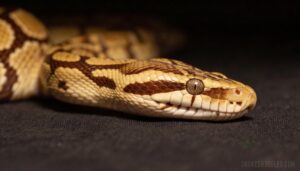
If your ball python has ever tilted its head sideways or lost its balance mid-movement, you’re not imagining things — that’s the wobble, and it’s more common than most new keepers expect. It’s a neurological condition, not a mood, and understanding what it actually looks like helps you respond to it the right way.
Here’s what you need to know about the signs, the morphs most affected, and how wobble can shape your snake’s daily life.
From visible head tilts to corkscrew movements, identifying wobble syndrome signs in ball pythons helps you catch problems early and adjust care before they affect your snake’s quality of life.
What Head Wobble Looks Like
Head wobble isn’t random flailing — it’s a rhythmic, side-to-side sway that repeats at a steady pace, often resembling a gentle figure-eight motion. The head tremor stays within a limited amplitude, rarely swinging fully left or right.
Watch for these distinct movement patterns:
- Smooth continuity — the motion flows without sharp jerks
- Nodding motion — a repetitive yes/no rocking pattern
- Consistent frequency range — a few cycles per second
- Constrained arc — head bobbing within a narrow angle
Common Signs of Wobble Syndrome
Beyond the rhythmic sway, wobble syndrome shows up in several recognizable ways. You’ll notice head tremors clustering during stress, balance loss episodes when righting, and incoordination during movement.
Limb scuffing patterns, muscle atrophy signs near the shoulders, and neck pain indicators round out the picture.
| Sign | Mild | Severe |
|---|---|---|
| Head Tremor Frequency | Occasional bobbing | Constant circling |
| Balance Loss Episodes | Brief tilting | Unable to right |
| Limb Scuffing Patterns | Minor foot dragging | Repeated collapse |
Morphs Most Often Linked to Wobble
Not every morph carries equal risk. The Spider Morph shows wobble in virtually all individuals — it’s the one case where the neurological effect is consistent.
Beyond that, Champagne‑Spider Pairs, Sable‑Spider Combos, Powerball Spotnose, and Hidden Gene Woma lines show elevated incidence.
Banana ball pythons, champagne ball pythons, woma ball pythons, and spinner ball pythons also appear in wobble‑linked morph lists worth reviewing before purchasing.
The condition is a spider morph wobble syndrome caused by a congenital neurological disorder.
Why Wobble Can Worsen During Excitement
Morph genetics set the foundation, but excitement turns up the volume.
Adrenaline surge shifts your snake into high-alert mode, triggering a muscle tension spike that disrupts already fragile balance control.
Rapid breathing effects alter neck stability, while attention shift disruption delays postural correction. Startle response overload compounds it all:
- Head tremors intensify during feeding anticipation
- Neurological condition worsens with sympathetic nervous system activation
- Balance issues surface faster when arousal increases
- Behavioral observation often reveals wobble spikes near enclosure glass
- Reduce stress during handling to minimize coordination errors
Providing a balanced workload prevents burnout can help mitigate stress-induced wobble in snakes.
How Severe Wobble Affects Daily Behavior
Severe wobble reshapes your snake’s entire day, not just feeding time. Head tremors disrupt navigation, reduce exploration time, and alter thermal zone preference as the snake seeks flatter, lower resting spots.
When handling a snake with head tremors, supporting the body gently without thoracic pressure can ease stress and reduce the frequency of startling reactions during necessary interactions.
| Behavior | Wobble Impact |
|---|---|
| Substrate Navigation Difficulty | Slower, unsteady movement between zones |
| Water Edge Drinking | Inefficient; head stabilization issues cause missed licks |
| Strike Accuracy | Delayed, weaker prey contact |
| Behavioral Observation | Less roaming, more repositioning |
Aggression or Defensive Behavior?
Most ball python owners see a strike or a flinch, and immediately think "aggression" — but that’s rarely the full picture. What looks like a mean snake is usually just a scared one, and the difference matters a lot for how you respond.
What looks like a mean snake is almost always just a scared one
Here’s what each behavior actually signals and why the distinction changes everything.
Signs of True Aggression Vs Fear
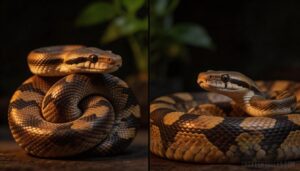
True aggression and fear aren’t the same thing — and misreading the difference can make handling worse.
A ball python showing body tension, flattened neck, or tail vibration is usually communicating defensiveness, not offense. Eye contact held with a rigid posture signals threat readiness. Mouth gaping often reflects stress, not attack intent.
head tremors from ball python wobble can mimic behavioral signs of aggression, so context matters.
Defensive Postures Owners Often Misread

Most defensive postures look threatening — but they’re not. A tightly curled tail, low tail position, or sudden freezing behavior signals fear, not intent to attack.
Even vocalization distress and a submission grin showing closed-mouth teeth are misread as aggression. Watch for these five behavioral signs:
- Tail curling inward
- Low tail, flattened body
- Freezing behavior mid-movement
- Head bobbing or head tremors
- Teeth-visible submission grin
Context, not the signal alone, tells the real story.
Hunting Behavior Mistaken for Aggression
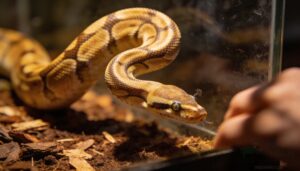
A hunting ball python can look aggressive — but it’s not aiming at you. Prey cue response drives targeted strike accuracy toward movement, scent, or shadows. Body tension signals show the head angled low, neck extended forward.
Light shadow confusion makes fast hand movements look like prey. Temperature hunting activity rises with warmth, increasing strike frequency.
Head tremors or difficulty striking prey during this state often reflects wobble, not hostility.
Stress Signals Before a Strike
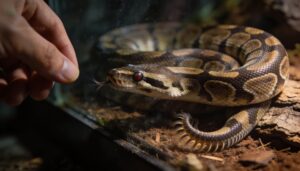
Your snake tells you it’s about to strike — if you know what to look for. Watch for eye dilation, body coil tightening along the enclosure edge, and a sudden head angle shift toward your hand. Tail vibration and breathing acceleration often follow.
In ball python wobble cases, stress reduction techniques matter here: a calmer environment lowers baseline reactivity before difficulty striking prey becomes a secondary concern.
How Wobble Can Mimic Aggressive Movements

Wobble creates a convincing illusion of threat, stemming from a neurological condition rather than deliberate intent. Specific behaviors—such as irregular head movement, erratic striking patterns, and rapid repositioning—are misinterpreted as hostility.
Key manifestations include:
- Irregular head oscillation mirrors the Visual Threat Illusion of a deliberate lunge.
- Missed strikes followed by rapid repositioning resemble aggressive pursuit.
- Perceived Aggressive Intent intensifies when excitement shortens the delay between head lift and forward motion.
- Behavioral adaptation in affected snakes involves repeated repositioning that mimics feinting.
- Clinical signs of this movement disorder are routinely misread as aggression.
These neurological symptoms are frequently confused with intentional hostility, particularly in cases of ball python wobble.
What Triggers Wobble and Striking

Both wobble and defensive striking usually have a root cause — and more often than not, it’s something in your hands or your husbandry. Once you know what’s pushing your snake over the edge, the fixes become a lot more straightforward.
Here are the most common triggers to watch for.
Handling Mistakes That Increase Stress
How you pick up your ball python matters more than most keepers realize. Rough gripping, sudden movements, and improper support all spike stress quickly — especially in wobbly morphs.
| Mistake | Why It Raises Stress |
|---|---|
| Rough gripping | Triggers defensive response |
| Sudden movements | Increases arousal and lunging |
| Loud disturbances | Startles and destabilizes |
| Cluttered handling area | Causes accidental bumps |
| Improper support | Worsens balance loss |
Reduce stress by moving slowly and supporting the body fully.
Feeding-time Overstimulation and Missed Strikes
Feeding sessions are another pressure point.
Scent Overload from strong prey odors can lock a wobbly snake into a heightened go-state, causing it to lunge before its head fully aligns. Rapid Keeper Movements or Prey Motion Timing errors compound the problem — erratic presentation disrupts the snake’s targeting. Enclosure Edge Distraction and Feeding Routine Conditioning can further misdirect strikes, so consistent, calm setups matter.
Shedding, Hunger, and Enclosure Changes
Beyond feeding sessions, shedding hydration needs, hunger-driven activity, and enclosure layout optimization, all quietly shape how a wobbly snake behaves.
During pre-shed, clouded eyes reduce vision, triggering defensiveness. Missed feeds build hunger, sharpening strike intensity.
And any enclosure layout change disrupts familiar scent paths, spiking stress. Moisture gradient adjustments and a consistent feeding schedule help your snake stay grounded.
Temperature and Humidity Problems
Environmental conditions shape wobble expression more than most owners expect. Hotspot Overheating forces your snake to endure heat it can’t escape, spiking stress and intensifying tremors. Cold Spot Digestion slows gut motility, making your snake edgy and restless. Temperature Gradient Instability removes the snake’s ability to self-regulate entirely.
Watch for these warning signs:
- Sensor misreading from poor Humidity Sensor Placement near vents skews your adjustments
- Condensation Issues signal humidity running too high, softening substrate and stressing the snake
- Humidity levels outside the 50–60% range trigger repeated micro-discomfort
- Temperature gradient gaps cause the snake to hunt heat compulsively, mimicking aggression
- The role of temperature and humidity in symptom expression means poor humidity control worsens wobble visibility during movement
Illness, Pain, and Parasites as Triggers
When your snake is sick, wobble often gets worse overnight. Gastrointestinal Irritation from internal parasites drives feed refusal and pain-related defensive behavior that looks like aggression.
Parasite-Induced Inflammation can escalate into Neurologic Parasite Infection, triggering seizure-like movements that mimic severe wobble. Systemic Illness Effects from viral infection risk compound the neurological condition rapidly.
A reptile veterinarian using veterinary diagnostics can separate these causes accurately.
How to Calm a Wobbly Ball Python
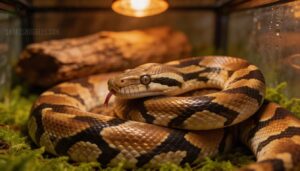
Managing a wobbly ball python is mostly about removing the things that set it off in the first place. A few targeted changes to its environment, handling routine, and feeding setup can make a real difference.
Here’s what actually helps.
Setting Up a Low-stress Enclosure
Think of your enclosure as a sensory buffer zone. Strategic Hide Placement — warm-side and cool-side hides with snug, enclosed entrances — gives your snake constant escape from stimulation. Pair that with Subdued Lighting, Stable Substrate Choice to prevent slipping, Ambient Noise Management through low-traffic placement, and consistent routines.
These stress reduction techniques for ball pythons with wobble directly support environmental management for neurologically affected snakes.
Safe Handling for Unstable Snakes
When your ball python wobbles, handling becomes a balance act — for both of you. Use a Slow Approach Technique, moving from the side to avoid triggering a predator response. Prioritize Controlled Head Support through the body’s middle third, never the head directly. Tool Assisted Handling with hooks reduces contact stress.
Ball Up Respect means returning your snake immediately if it curls defensively. For Bite Aftercare, wash promptly with soap and water.
Feeding Tips for Poor Strike Accuracy
Poor strike accuracy isn’t stubbornness — it’s a neurological timing problem. A wobbling python can’t reliably self-correct mid-lunge, so your setup compensates.
- Fixed Feeding Position: Present prey consistently at the same spot to reduce repositioning confusion.
- Prey Size Matching: Smaller prey lowers the margin for aim errors.
- Angle Presentation Technique: Align prey with the snake’s head axis, at eye level.
- Quiet Feeding Environment: Dim lighting and minimal disturbance reduce stress-amplified tremors during strikes.
Using Hides, Clutter, and Quiet Routines
Your enclosure layout is your first line of defense against wobble flare-ups. Stable, predictable surroundings reduce neurological stress before handling even begins.
| Element | Purpose | Key Tip |
|---|---|---|
| Hide Placement Strategy | Warm and cool-side hiding spots | Match hide size to body |
| Clutter Minimization Techniques | Reduces movement interference | Clear path to water |
| Quiet Routine Scheduling | Lowers startle responses | Same time, every visit |
Consistent Visual Stimulus Reduction — solid backgrounds, dim lighting, no reflective surfaces — keeps your snake from reacting to phantom movement. Predictable Handling Flow and soft substrate together support environmental enrichment that actually works.
Preventing Falls and Feeding Injuries
Wobbly snakes fall — and that’s a real clinical concern. Secure enclosure flooring with soft substrate prevents impact injuries when balance issues cause tumbling.
Keep water reachable without climbing. Hydration management helps nerve function, so always check water freshness.
Think of nighttime path lighting as your snake’s navigation aid — dim, consistent, non-startling.
For assisted feeding, a reptile veterinarian can guide safe positioning that minimizes missed-strike injuries.
When Veterinary Help is Needed
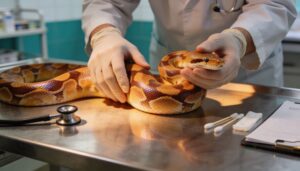
Most wobble is manageable at home, but some symptoms cross a line that husbandry alone can’t fix.
Knowing when to call a reptile vet isn’t about being overcautious — it’s about catching something serious before it gets worse.
Here’s what to watch for, how vets approach the diagnosis, and what responsible long-term care actually looks like.
Red Flags Beyond Normal Wobble
Most wobble stays stable over time, but certain signs cross into territory that needs prompt veterinary attention. Watch closely for these red flags:
- Persistent head tilt that worsens weekly, spiraling locomotion, or incoordination that prevents normal movement
- Mouth gaping at rest, regurgitation, or seizure-like episodes signaling a deeper neurological condition
- Repeated feeding refusal paired with rapid weight loss, or frequent falls causing visible injuries
How Vets Rule Out Other Neurological Issues
When red flags appear, a reptile veterinarian starts with a Neurologic Localization Exam to pinpoint where the neurological disorder originates — brain, spinal cord, or peripheral nerves.
Bloodwork Screening rules out metabolic mimics, while Imaging Diagnostics and CSF Infection Checks identify inflammation or structural lesions.
Electrodiagnostic Nerve Testing confirms whether neurological impairment involves faulty nerve-muscle signaling rather than genetic wobble syndrome alone.
Tracking Symptoms With Photos and Videos
Once a vet rules out other neurological conditions, your documentation becomes the ongoing record.
Use Consistent Lighting and Standardized Angles when filming ball python wobble — same camera distance, same frame each time. Apply a simple Severity Rating System, like mild or marked, and name files using date-based File Naming Conventions.
Temporal Comparison Techniques, reviewing clips side-by-side, help you and your vet identify wobble symptoms and signs that shift over weeks.
Long-term Quality of Life and Monitoring
Your documentation record feeds directly into long-term monitoring. Most wobble-affected snakes maintain a solid quality of life with consistent care:
- Track Weight Trend Tracking monthly to catch nutritional decline early
- Log behavioral shifts using Behavioral Baseline Logging to detect changes
- Follow a Regular Health Checkups schedule with your reptile vet
Long-Term Nutritional Planning and an Enrichment Rotation Schedule support lasting reptile welfare.
Responsible Morph Selection and Breeding Decisions
If you’re choosing morphs to breed, responsible breeding practices start before any pairing happens. Carrier Testing and Bloodline Tracking help you identify genetic predisposition early, so you’re not guessing at morph inheritance outcomes.
A Morph Compatibility Matrix flags pairings that concentrate wobble risk.
Welfare First Breeding and Breeding Ethics Disclosure aren’t optional — they’re the baseline for any serious keeper following ethical considerations and breeding guidelines to minimize wobble gene prevalence.
Frequently Asked Questions (FAQs)
Why does my ball python’s head wobble?
Imagine a snake weaving side to side, not from anger but from neural pathway damage.
Ball python wobble stems from a genetic mutation, inherited as an autosomal recessive trait, causing vestibular dysfunction—a hereditary neurological disorder requiring carrier testing for confirmation.
How to tell if a ball python is being aggressive?
Watch for hissing intensity, tail vibration, and eye dilation together — those three signals usually mean defense, not curiosity. A single sign rarely confirms aggression on its own.
What is the wobble syndrome in ball pythons?
Wobble syndrome is a neurological condition rooted in genetic causes, where a mutation disrupts balance and coordination from birth, producing involuntary head tremors and unsteady movement in affected ball pythons.
How to tell if a snake has neurological problems?
Spotting neurological problems is like reading a map written in movement — gait observation, reflex scoring, and vision checks guide you.
A reptile veterinarian assesses response timing and auditory reaction to confirm wobble syndrome symptoms.
Can wobble worsen as the snake ages?
Yes, it can. Inner ear wear and progressive neurological decline mean symptom spikes become more frequent with age, and compounding health issues can make wobble look noticeably worse over time.
Do wobble snakes recognize their owners over time?
Scent familiarity builds through repeated, calm contact — not emotional bonding.
Your wobbly snake can develop conditioned handling responses and owner-specific cues over weeks, though wobble may make that recognition look inconsistent day-to-day.
Are wobble snakes legal to sell everywhere?
No, they aren’t. Country regulations, import permits, customs documentation, and platform policies all vary. Seller disclosures about neurological conditions may also be legally required depending on your location.
Can diet affect wobble symptom severity?
Diet won’t cure wobble, but it acts like a support beam — poor Feeder Quality Consistency, weak Protein Adequacy, or a skewed Calcium-Magnesium Ratio can quietly worsen neuromuscular function and intensify visible symptoms.
Do wobble snakes experience pain from their condition?
Wobble syndrome doesn’t directly cause pain, but disorientation and poor motor control raise real animal welfare concerns.
Secondary injuries from falls or missed strikes can trigger behavioral pain indicators worth monitoring closely.
Conclusion
Imagine maneuvering a complex storm without a map—dealing with ball python head wobble aggression can feel just as overwhelming.
But with a deeper understanding of the causes, triggers, and fixes, you’ll be better equipped to manage this challenging behavior.
By recognizing the nuances of ball python head wobble aggression and implementing informed care strategies, you can greatly reduce stress and create a safer environment for both you and your snake, leading to a more harmonious and fulfilling experience.
- https://www.petmd.com/dog/behavior/fear-aggression-dogs
- https://vcahospitals.com/know-your-pet/fear-vs-aggression
- https://www.lakelandbehavioralhealth.com/co-occurring/aggression/signs-effects-symptoms/
- https://www.cbsnews.com/newyork/news/decoding-your-dog-how-owners-may-be-misunderstanding-their-pets-behaviors/
- https://fastercapital.com/keyword/defensive-posture.html