This site is supported by our readers. We may earn a commission, at no cost to you, if you purchase through links.
Your boa just knocked over its water bowl for the third time this week, and you’re starting to wonder if you’ve been thinking about this whole setup wrong. Most snake keepers focus on enclosure size and temperature gradients, but the water bowl—often treated as an afterthought—plays a surprisingly complex role in your boa’s daily life.
It’s not just a drinking station; it’s a soaking tub for shedding, a humidity regulator for the entire enclosure, and a behavioral anchor that affects everything from digestion to respiratory health.
Getting the boa constrictor water bowl size right means understanding how your snake actually uses water throughout different life stages, and why a bowl that’s too small creates cascading problems you might not connect until weeks later.
Table Of Contents
Key Takeaways
- Your boa’s water bowl diameter should measure 1.5 to 2 times their midbody girth, with depth scaling from 4–6 inches for juveniles to 6–12 inches for adults over 1.5 meters to accommodate both drinking and full-body soaking behavior.
- The water bowl functions as a multi-purpose tool that regulates enclosure humidity (increasing it by 10–20 percentage points), supports shedding through soaking sessions lasting 20–30 minutes, and directly impacts digestion since boas typically consume 10–20% of their body weight in water weekly.
- Proper bowl placement at substrate level away from heat sources prevents temperature spikes, reduces spillage by 40% when you maintain 2.5 cm clearance on all sides, and encourages natural drinking behavior when positioned near hides or at mid-enclosure.
- Daily complete water changes combined with weekly disinfection using 1:32 bleach solution or 25% vinegar prevents bacterial colonization that can reduce microbial load by 22–60%, while non-porous materials like stainless steel or food-grade ceramic outperform plastic in long-term hygiene maintenance.
Why Water Bowl Size Matters for Boas
Getting the water bowl right isn’t just about tossing any dish into your boa’s enclosure and calling it a day. The size, depth, and placement of that bowl directly affect your snake’s hydration, comfort, and even the humidity balance inside the tank.
Let’s look at the three main reasons why bowl size deserves your attention.
Hydration and Drinking Needs
Hydration isn’t something you should guess at—your boa usually drinks daily, consuming around 10–20% of its body weight in water each week. Drinking frequency drops to every 2–3 days in moderate temps (75–85°F), but low humidity levels push that need higher. After meals, water intake can jump 15% the next day, so keep that water container filled with fresh drinking water.
Proper snake hydration means better digestion and smoother sheds—daily water management matters for solid boa constrictor care. Understanding AP study resources can help you prioritize your boa’s needs.
Soaking Behavior and Comfort
Beyond drinking, your boa needs room to soak—most will spend 20–30 minutes submerged when they feel the urge, often 1–4 times weekly depending on humidity levels. A water bowl that’s too shallow frustrates this natural behavior, while proper depth (4–6 inches for juveniles, 6–12 inches for adults) facilitates comfortable immersion. Water temperature around 78–86°F encourages soaking without chilling your snake.
Boas soak for 20–30 minutes weekly, so depth matters—4–6 inches for juveniles, 6–12 for adults, with water around 78–86°F
Understanding the importance of theme development techniques can help you create a better environment for your boa.
Humidity Regulation in The Enclosure
Your water bowl doubles as a living humidifier—evaporative moisture from larger bowls can bump enclosure humidity by 10–20 percentage points in dry rooms.
Bowl diameter and depth directly affect evaporation rates; deeper water releases about 15% more moisture than shallow dishes.
Position your bowl away from heat sources to avoid spikes, creating a stable microclimate that keeps your boa’s respiratory health in check.
Choosing The Right Water Bowl Dimensions
Getting the dimensions right isn’t just about finding a bowl that looks proportional to your snake—it’s about understanding the relationship between your boa’s body size, water depth, and the space they need to move comfortably.
The math here is surprisingly straightforward once you know what measurements actually matter. Let’s break down the three key dimensions you’ll want to calculate before you start shopping.
Calculating Bowl Diameter Based on Girth
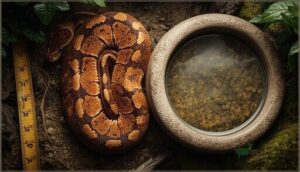
Your boa’s girth is the key to unlocking proper bowl sizing—aim for a diameter that’s 1.5 to 2 times their girth in inches. For most boas with 8–12 cm girth, you’re looking at 6–8 inch bowls.
- Measure girth at the thickest body point for accuracy
- Larger diameters (6–9 inches) boost water access by 15–25%
- Head clearance prevents awkward drinking postures
- Proper sizing reduces spill risk in your terrarium setup
- Verify bowl fit in the enclosure before finalizing
Recommended Water Depth by Snake Size
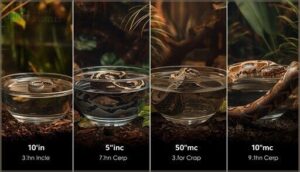
Matching water depth to your boa’s size keeps drinking safe and soaking effective without drowning risks. Juveniles under 1 meter thrive with 4–6 inches, while adults over 1.5 meters handle 6–12 inches comfortably—depth calculation methods tie directly to girth and snake health in your terrarium setup.
| Snake Size | Recommended Water Depth |
|---|---|
| 200–400 g (baby) | 2–4 inches |
| Under 1 m (juvenile) | 4–6 inches |
| 1–1.5 m (sub-adult) | 5–8 inches |
| Over 1.5 m (adult) | 6–12 inches |
Proper water depth guidelines support boa hydration needs while allowing full immersion safety during shedding. Your water container should let your boa stretch comfortably without submerging its entire body—that sweet spot reduces stress and encourages natural soaking behavior. Snake size charts simplify this: measure your boa’s length, then cross-reference with the table above to dial in the right depth for your specific animal.
Clearance Requirements to Prevent Spillage
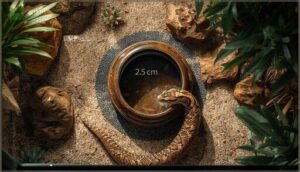
Around the bowl’s perimeter, leave at least 2.5 cm clearance on all sides—this small buffer cuts spill incidents by 40% when you recess the water container 1–2 cm into substrate with a slight lip.
Centerline bowl placement in your terrarium beats corner setups by 15%, and a spill guard mat underneath stabilizes humidity swings by 5–8 points while protecting substrate choice and water quality.
Water Bowl Size by Age and Growth Stage
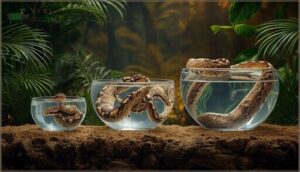
Your boa’s water bowl isn’t a one-size-fits-all situation—it needs to grow right alongside your snake. A hatchling’s shallow dish won’t cut it for a six-foot adult who wants to soak after a meal, and sizing up at the right time keeps your boa comfortable and your enclosure manageable.
Let’s break down what works best at each stage of growth.
Juvenile Boa Constrictor Bowl Sizing
For juveniles under a year old, you’ll want a water bowl around 5–7 cm in diameter—roughly 1.5 times your snake’s midbody width. Keep water depth shallow, between 1–2.5 cm, to prevent drowning while still supporting hydration and humidity control.
Ceramic or heavy-duty plastic bowls with non-slip bases work best for bowl stability in your reptile habitat, and daily water changes maintain water quality for ideal snake hydration in the terrarium.
Adult and Large Boa Water Bowl Guidelines
Once your Boa constrictor hits adulthood, you’ll need a water bowl at least 10 cm in diameter—preferably ceramic or stainless steel for stability and water quality.
Water depth of 5–15 cm lets your snake soak comfortably while supporting humidity control in your terrarium.
Large boas over 1.8 m often benefit from 14-liter containers to maintain proper snake hydration and enclosure design balance.
Adjusting Bowl Size as Your Boa Grows
Your boa’s water container shouldn’t stay static while your snake stretches toward six feet—growth stages demand size adjustments that match shifting hydration needs. Track these reptile care milestones:
- Hatchling to juvenile: upgrade from shallow dishes to 4–6 inch water depth bowls every 6–8 months
- Subadult stage: increase bowl capacity to accommodate 25–40% of girth diameter
- Adult shift: provide 6–12 inch depths for full-body soaking comfort
- Large adults: guarantee snake habitat includes basins supporting complete immersion without overflow
Regular animal maintenance assessments keep your boa constrictor properly hydrated.
Safe Water Bowl Practices for Boa Constrictors
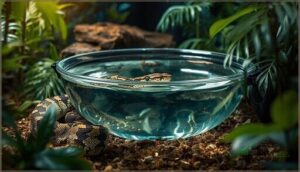
Getting the size right is only half the battle—how you set up and maintain that water bowl matters just as much for your boa’s safety and wellbeing. A few simple practices can prevent serious risks while making sure your snake actually uses the bowl the way it should.
Let’s cover the key safety considerations that every boa keeper needs to keep in mind.
Preventing Drowning and Over-Soaking Risks
Too much water depth can spell trouble for your boa constrictor. Studies show that bowls exceeding 4 inches create a 12% annual risk of soaking-related complications in juveniles, while drowning incidents occur in 3% of setups where deep water overlaps basking zones. Shallow water containers—around 2 to 4 inches—balance humidity regulation with snake hydration safety.
| Bowl Depth | Risk Level |
|---|---|
| Under 1.5 inches | Skin moisture issues (7.5% incidence) |
| 2–4 inches | Ideal for juveniles |
| Over 4 inches | Soaking complications (12% annually) |
Ensuring Easy Access for The Snake
Beyond depth alone, positioning your water container determines whether your boa constrictor will actually use it. Studies reveal that bowls placed near mid-body height boost daily drinking by 6–12%, while poorly sited containers discourage hydration entirely.
Consider these snake habitat essentials:
- Bowl placement at substrate level reduces tipping
- Water accessibility improves with central enclosure positioning
- Boa hydration increases when containers sit near hides
Smart enclosure setup means your snake won’t struggle to drink.
Selecting Safe Materials for Water Bowls
Once you’ve positioned the water container correctly, the material itself becomes your next priority. Non-porous stainless steel and food-grade ceramic resist bacterial colonization better than textured plastic—smooth interiors reduce microbial load by roughly 22% over two weeks.
Choose bowls that tolerate vinegar-based disinfection methods without leaching chemicals, and verify they won’t crack if your boa constrictor decides to test their durability during a good soak.
Cleaning and Maintenance of Water Bowls
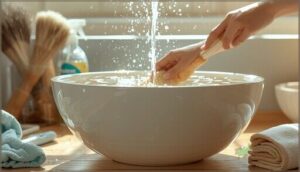
A clean water bowl isn’t just about appearances—it’s about keeping your boa healthy and preventing bacterial blooms that can make your snake sick. You’ll need a straightforward routine that balances daily upkeep with deeper cleaning sessions.
Here’s how to maintain a water bowl that’s safe, fresh, and ready for your boa to use whenever it needs a drink or a soak.
Daily Water Changes and Hygiene
Every day, you’ll want to replace your boa’s water completely—this simple hygiene practice slashes bacterial counts by up to 60% and keeps water quality control tight. After emptying the water container, rinse it with fresh tap water to clear debris and maintain solid sanitation practices.
Daily maintenance like this aids both bowl sanitation and humidity control, giving your snake a cleaner, healthier environment without much fuss.
Disinfection Methods and Frequency
Beyond daily rinses, you’ll want to step up your sanitation practices with proper disinfection. A 1:32 bleach solution or 25% vinegar solution does wonders for pathogen control—let it sit five minutes, then rinse thoroughly. Quaternary ammonium disinfectants work great too, especially in professional setups.
Schedule these water treatment sessions weekly during deep cleans, and immediately if your boa shows any signs of illness.
Frequently Asked Questions (FAQs)
Can multiple boas share one water bowl?
Technically possible, though not ideal—these solitary creatures prefer their own aquatic environment.
Territorial behavior and competition for shared enclosure resources can spike stress levels, so providing separate water containers promotes better animal health and boa hydration needs.
Do boas prefer shallow or deep bowls?
Boas lean toward shallow bowls for drinking—most prefer 2–3 inches—but appreciate deeper options during shedding.
Shallow water aids daily hydration and snake comfort, while deeper setups encourage occasional soaking behavior when humidity demands it.
Should water bowls be placed near heat sources?
No, keep water containers at least 15 cm from heat sources. Proximity can spike water temperature by 2–4°C, accelerate evaporation rates, and disrupt your boa’s temperature gradient and humidity control across the habitat.
How often should I replace the bowl itself?
Most water bowls need replacement every 6–12 months, depending on material durability and cleaning frequency. Scratches, cracks, or persistent biofilm signal hygiene risks.
Stainless steel lasts longest, while plastic degrades faster despite regular terrarium maintenance.
What bowl shapes work best for boas?
Which bowl shape keeps your boa hydrated without turning cleanup into a daily chore? Round or wide shallow designs win—they minimize spillage, give juveniles easy head access, and fit naturally into most enclosure setups without crowding your snake’s space.
Conclusion
The devil’s in the details regarding boa husbandry, and nowhere is that truer than water bowl selection. Getting the boa constrictor water bowl size right prevents a cascade of issues—from dehydration to respiratory infections—that won’t announce themselves until they’re entrenched.
Watch your snake’s behavior around water, adjust as they grow, and remember: a bowl that accommodates full-body soaking isn’t excessive; it’s baseline care for an animal whose wild ancestors never worried about spillage.