This site is supported by our readers. We may earn a commission, at no cost to you, if you purchase through links.
Most snakes don’t die from neglect. They die from setups that looked right on paper. A tank that’s “big enough,” a heat mat plugged straight into the wall, substrate grabbed off the pet store shelf without a second thought—small decisions that quietly stack up into serious problems.
A snake can’t tell you it’s too hot on one end and freezing on the other. It just stops eating, hides constantly, or starts rubbing its nose raw against the glass.
These common mistakes when setting up snake tanks are easy to miss precisely because they don’t look like mistakes at first. Knowing what to watch for changes everything.
Table Of Contents
- Key Takeaways
- Choosing The Wrong Enclosure Size
- Using Insecure or Poorly Ventilated Lids
- Incorrect Heating Setup
- Neglecting Accurate Temperature Monitoring
- Failing to Maintain Proper Humidity
- Choosing Unsuitable Substrate Materials
- Skipping Essential Hides and Decor
- Improper Lighting and Photoperiod
- Inadequate Water Bowl Selection and Placement
- Poor Maintenance and Observation Habits
- Frequently Asked Questions (FAQs)
- Conclusion
Key Takeaways
- An unregulated heat mat can spike past 110°F and burn your snake before you notice — always run one through a thermostat.
- Tank size should be planned around your snake’s adult length from day one, not the hatchling you bring home.
- Wrong substrate, bad humidity, and skipping hides aren’t minor oversights — they stack into chronic stress and illness.
- Your snake can’t tell you something’s wrong with words, so glass-surfing, hiding constantly, or refusing food are the signals you need to act on.
Choosing The Wrong Enclosure Size
Tank size is one of those things that looks simple until you get it wrong. Most beginners either start too small or don’t plan ahead for how fast snakes grow. Here’s what to watch out for.
A quick look at appropriate snake tank dimensions by species can save you from upgrading enclosures every few months.
Underestimating Adult Snake Growth
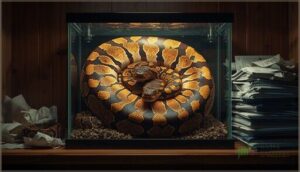
Optimism is what gets most new keepers in trouble. You pick up a 10-inch ball python hatchling, grab a 20-gallon tank, and think you’re set. You’re not. That hatchling will hit 3–5 feet within two to three years. Snake size planning matters from day one — not after the snake outgrows its third enclosure.
Watch out for these common growth mistakes:
- Buying a tank based on current size instead of adult length
- Trusting pet store advice that a snake will “stay small”
- Waiting until the snake looks cramped before upgrading
- Forgetting that enclosure upgrade costs add up fast without a plan
- Skipping species research before purchasing
Ignoring Species-Specific Space Needs

Even with the right tank size, ignoring species-specific needs breaks enclosure design fast.
A corn snake needs floor space — think 48×18 inches — while a green tree python needs height and branches to support natural snake behavior. Space requirements aren’t one-size-fits-all.
Skip species research and your reptile enclosure design fails the animal. Animal welfare starts with understanding what your snake actually needs.
Factors like vertical space and climbing structures are especially critical for arboreal species.
Failing to Upgrade as Snakes Grow
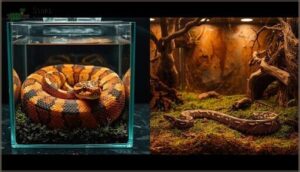
Planning ahead matters more than most new keepers realize.
A juvenile corn snake looks fine in a 20-gallon tank — until it doesn’t. Corn snakes reach adult size in 3 to 4 years, and that same tank becomes a problem fast. Snake growth rates catch people off guard.
When enclosure planning falls behind, here’s what suffers:
- Floor space shrinks, limiting natural movement
- Temperature gradients become impossible to maintain
- Waste builds up faster in tight quarters
- Enrichment items get cut because there’s no room
- Stress behaviors increase, like glass-surfing and constant hiding
Tank size calculations should factor in adult length from day one. For more details, see why enclosure size directly impacts welfare. Match enclosure length to your snake’s full adult size — ball pythons need at least 4x2x2 feet, not the starter tank they came home in. Upgrade strategies built around species requirements keep your snake habitat functional and your reptile care on track.
Using Insecure or Poorly Ventilated Lids
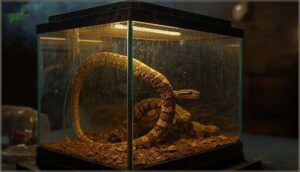
The lid on your snake’s tank does more work than most people realize. Get it wrong and you’re either dealing with an escape artist or a snake with chronic respiratory problems.
Here’s what you need to know before that becomes your weekend.
Risks of Snake Escapes
A loose snake doesn’t just vanish — it becomes a problem fast. Without escapeproof lids on your snake tank, your reptile enclosure design fails at the most basic level.
Escaped snakes hide in appliances, risking injury or death. Snake Escape Prevention also matters legally — neighbors panic, animal control gets called, and community awareness of reptile keeping takes a hit.
Lock your tank down.
Inadequate Airflow and Respiratory Health
Bad ventilation isn’t just uncomfortable for your snake — it’s a health risk. When airflow stalls, ammonia from waste builds up fast. That alone triggers respiratory infections.
Poor air quality also traps moisture, pushing humidity levels beyond safe ranges. Your snake ends up breathing stale, bacteria-laden air daily.
Watch for open-mouth breathing or wheezing. Those are early signs of serious breathing problems you don’t want to ignore.
If your snake is housed in a cramped setup, poor airflow could make breathing issues worse—vertical snake terrariums for small spaces offer better ventilation without eating up your floor space.
Selecting Proper Lid Materials
Metal mesh is your best bet for most snake tank setups. Screen top benefits are real — they allow heat and airflow to move freely, which matters a lot for ventilation. Hybrid lid designs combine solid panels with mesh sections to balance warmth and airflow.
Whatever lid material options you choose, use four secure fastening clips. Heat source compatibility matters too — never place solid acrylic directly under a ceramic emitter.
Incorrect Heating Setup
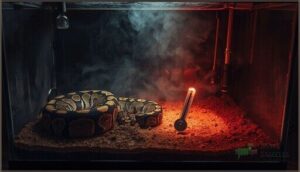
Getting the heat right is one of those things that looks simple but trips up a lot of beginners. A few common mistakes show up again and again, and honestly, they’re easy to avoid once you know what to watch for.
Here’s where most people go wrong.
Placing Heat Mats Without a Thermostat
Plugging a heat mat straight into the wall is one of the fastest ways to hurt your snake. Without Thermostat Controls, surface temps can spike past 110°F — well above the 95°F threshold where Thermal Burn Risks become real. Your snake won’t move off it either. They simply can’t feel belly heat well enough to react.
An unregulated heat mat can spike past 110°F, and your snake won’t even feel it burning them
- Heat Mat Safety starts with a thermostat-controlled setup, every time
- Unregulated mats destroy Temperature Gradients, leaving one dangerous hot patch
- Burns often hide until the next shed — by then, damage is done
- Snake Health Monitoring means checking mat temps daily with a temperature gun
Using The Wrong Heat Source for Species
Not every heat source works for every snake. A heat lamp suits a basking corn snake, but point that same lamp at a nocturnal boa and you’re buying yourself a stressed, hiding animal.
Desert vs Tropical needs split things further — belly heat pads work fine for ground dwellers, but arboreal species need warm ambient air. Nocturnal Light Stress is real. Match the tool to the animal.
Not Creating a Temperature Gradient
One heat source doesn’t mean one temperature — it means you need to place it right. Push your heat lamp to one end only. That creates a basking zone near 88–90°F and lets the cool side drop to the mid-70s.
Without that spread, temperature regulation stalls. Your snake can’t thermoregulate properly, digestion slows, and stress builds. Gradient design isn’t optional.
Neglecting Accurate Temperature Monitoring

Getting the heat right is only half the battle. If you’re not measuring it accurately, you might as well be guessing.
Here are three temperature monitoring mistakes that catch even experienced keepers off guard.
Relying on Inaccurate Thermometers
That cheap stick-on thermometer might be costing your snake its health. Analog dials can run 5–10°F off, which turns a safe 88°F basking zone into a dangerous 98°F without any warning.
For real thermometer calibration and accurate temperature gradients, use these tools:
- A digital thermometer on each end
- Infrared guns for quick surface spot-checks
- A thermostat controlling heat mats directly
- Regular heat source management audits
Improper Placement of Temperature Probes
Even with a good thermostat, probe placement errors can wreck your temperature gradient entirely. Stick the probe on the cool side, and the thermostat chases that reading — letting your hot spot run unchecked.
For real hot spot control and heat mat safety, press the probe where your snake actually basks. Thermostat calibration means nothing if the sensor’s reading the wrong spot.
Failing to Monitor Both Sides of The Tank
Checking only the hot side leaves you flying blind. Hidden hotspots form quietly, and your snake pays for it.
Watch both ends by tracking these:
- Warm side targets: 85–90°F for solid Gradient Management
- Cool side: mid-70s, confirmed daily
- Two-probe Thermometer Placement catches Snake Stress early
- Temperature Gradients collapse fast in warm rooms
- Seasonal shifts flatten gradients without warning
Failing to Maintain Proper Humidity
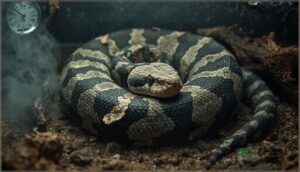
Humidity is one of those things that’s easy to ignore until your snake starts having bad sheds. Getting it right comes down to a few specific habits and choices. Here’s where most people go wrong.
Using The Wrong Substrate for Humidity Control
Substrate selection shapes everything about humidity management. Aspen dries fast — fine for corn snakes, rough for ball pythons needing 60 to 70 percent during a shed. Coconut husk holds moisture well and suits tropical species needs.
Substrate depth matters too. A thicker layer creates a moist base with a drier surface. Match your substrate choice to your snake’s actual humidity levels.
Not Checking Humidity Levels Regularly
Picking the right substrate is only half the job. You still have to watch what it’s doing. Humidity fluctuations happen fast — room conditions alone can swing 20 to 30 percent between morning and night.
Without a digital hygrometer and regular checks, you won’t catch drops that cause snake dehydration, skin problems, or respiratory risks before real damage sets in. Enclosure stability depends on consistent monitoring, not guesswork.
Poor Placement of Hygrometers
Where you stick your hygrometer matters more than most people realize. Mount it too close to a heat lamp and you’ll see artificially low humidity levels. Press it against wet substrate and it’ll read near 99 percent — which tells you nothing useful.
For accurate hygrometer accuracy, place it mid-wall on the cool side, away from heat and obstructions. Humidity gradients are real, and sensor placement reveals them.
Choosing Unsuitable Substrate Materials
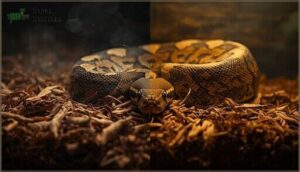
Substrate seems simple — just pick something and go. But the wrong choice can harm your snake faster than almost any other mistake. Here’s what to avoid and why it matters.
Using Cedar or Pine Bedding
Cedar and pine might smell fresh to you, but to your snake, they’re a slow-burn hazard. Both woods release phenolic compounds that irritate the lungs and stress the liver over time.
Toxic wood effects show up as wheezing, excess saliva, and poor feeding response — classic respiratory risks.
For a safe snake tank setup, aspen bedding and reptile bark are the go-to bedding alternatives.
Ignoring Species’ Substrate Preferences
Every snake has different ground rules. A hognose needs 3 to 5 inches of loosely packed substrate for burrowing behavior, while a tropical species demands high substrate moisture for humidity control.
Get the surface texture wrong, and thermoregulation suffers too. Your reptile tank setup only works when substrate and bedding choices actually match species-specific needs — not just what’s convenient at the pet store.
Not Considering Bioactive or Natural Options
Skipping bioactive substrates is a missed opportunity most new keepers don’t realize until they’re scrubbing tanks every two weeks. A bioactive terrarium setup with isopods, springtails, and live plants creates a self-sustaining ecosystem that manages waste, odor, and microclimate creation automatically.
Natural enrichment through layered soil and moss maintains environmental parameters for snakes, helps regulate humidity, and builds a functional microhabitat that works around the clock.
Skipping Essential Hides and Decor
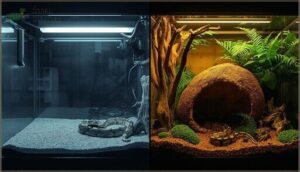
A bare tank isn’t just boring — it’s stressful for your snake. Without the right hides and decor, even a perfectly heated enclosure can cause real behavioral problems.
Here are the three biggest mistakes people make in this area.
Not Providing Multiple Hides
One hide isn’t enough — not even close. When your snake tank only offers a single hiding spot, your snake faces a hard choice: stay warm or stay safe. Most will pick safe every time. That’s where thermoregulation impact becomes real.
Poor hide placement across the enclosure setup forces stress behaviors like glass-surfing and food refusal. Ball pythons especially need at least two hiding spots — one per temperature end.
Lack of Climbing and Basking Features
A bare tank is basically a sensory dead end for your snake. Without climbing structures or proper basking spots, snake exercise drops fast.
Most corn snakes and king snakes are semi-arboreal — they want to move up, not just sideways. Thoughtful terrarium design uses vertical space for environmental enrichment.
Add branches and elevated basking areas for natural temperature regulation. Your snake will actually use them.
Using Unsafe or Sharp Decor
Decor safety matters just as much as what you put in the tank. Rough resin hides with casting seams can slice belly scales. Hollow ornaments become entrapment risks when your snake wedges inside and can’t reverse out. Heavy objects tip and crush. Unsafe materials off-gas under heat lamps.
Before anything goes into your reptile enclosure design, run your hand along every edge. Sharp edges don’t forgive.
Improper Lighting and Photoperiod
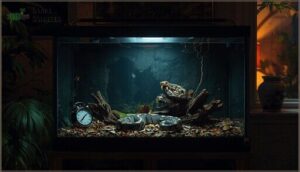
Lighting doesn’t get much attention in snake setups, but it matters more than most people think. Get it wrong and your snake’s internal clock gets thrown off, which affects feeding, activity, and overall health.
Here are the lighting mistakes that trip people up most.
Inconsistent Day/Night Cycles
Most keepers don’t realize how much a chaotic day/night cycle stresses a snake. Circadian rhythm disruption is real — your snake’s melatonin levels crash when lights flip on randomly at night, throwing off sleep patterns completely.
In reptile tank setup and maintenance, photoperiod management matters more than people think. A simple plug-in timer fixes most of this:
- Set a fixed 12-hours-on, 12-hours-off schedule
- Minimize light pollution from TVs or room lights near the enclosure
- Avoid turning lights on late — it disrupts the day/night cycle
- Adjust seasonally: 13 hours in summer, 11 in winter
Excessive or Insufficient Lighting
Getting light intensity wrong is just as disruptive as a bad schedule. Too bright, and your ball python hides all day — classic stress signals. Too dim, and it loses visual cues entirely, making feeding unpredictable.
Lighting adjustments don’t need to be complicated. Dimmable LED lighting, mounted above the mesh lid, softens the color spectrum and spreads it evenly. Small changes, big difference.
Misunderstanding UVB and LED Needs
Here’s the thing — a bright LED bar doesn’t replace UVB lighting. Most LED lighting puts your snake at a UVI near zero, even those labeled “full spectrum.” Species like corn snakes need a UVI around 2.0 to 3.0.
UV metering confirms what your eyes can’t see. Snake vision adapts, but biology doesn’t. Use a dedicated T5 UVB tube alongside your LED lighting.
Inadequate Water Bowl Selection and Placement
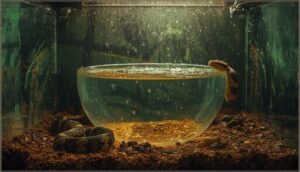
The water bowl seems simple enough — just fill it and drop it in, right? But small mistakes here can cause big problems, from spiked humidity to a snake that refuses to drink.
Here’s what most people get wrong.
Choosing Bowls That Tip or Spill Easily
A lightweight plastic bowl is basically a moving target in any snake tank. Active snakes — especially ball pythons — push against the rim, burrow underneath, and flip it without much effort.
Bowl stability comes down to two things: bowl weight and tank flooring. Heavy ceramic or resin bowls with textured bases resist that snake behavior far better.
Poor bowl stability means constant spills, wet substrate, and a maintenance headache you don’t need.
Providing Water Bowls Too Small for Soaking
A bowl barely big enough for your snake’s head isn’t a soaking bowl — it’s just a drink station. Proper soaking bowl size matters for snake hydration, cleaner water quality, and smoother sheds.
Watch for these signs your bowl is too small:
- Snake drapes over the edge or presses against the rim
- Stuck shed appears regularly around eyes and tail
- Restless circling near the water bowl
- Soaking behavior stops entirely
Placing Water Bowls in Wrong Temperature Zones
Where you place the water bowl in your snake tank setup quietly wrecks temperature gradients and humidity control at the same time. A bowl sitting directly over a heat mat warms the water fast, raises humidity levels past the safe range, and gives bacteria a head start.
| Bowl Placement | What Goes Wrong |
|---|---|
| Over heat mat | Humidity spikes, bacteria grow fast |
| Under heat lamp | Steals prime basking real estate |
| Cool side only | Humidity drops, stuck sheds follow |
| Mid-tank, cool-leaning | Best balance for snake hydration |
Keep your main bowl slightly cool-side for steady temperature and humidity control.
Poor Maintenance and Observation Habits
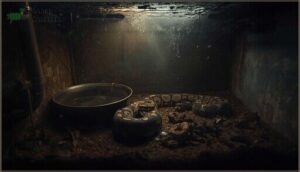
Setting up the tank is just the beginning. What keeps your snake healthy long-term comes down to consistency — how often you clean, how closely you watch, and whether you’re willing to make changes when something’s off.
These three habits are where most keepers quietly drop the ball.
Infrequent Cleaning and Substrate Replacement
Dirty tanks don’t just smell bad — they actively harm your snake. Ammonia from sitting waste irritates their lungs and eyes, and damp, soiled substrate causes scale rot fast.
Good waste management means spot cleaning daily and doing full substrate rotation every one to three months. Stick to consistent cleaning schedules, and tank sanitation and odor control basically handle themselves.
Overlooking Signs of Illness or Stress
Snakes hide illness well — that’s just how they’re wired. For reptile health and wellness, you need to actually look. Open-mouth breathing, mucus around the nostrils, and unusual lethargy all signal respiratory infections. Weight loss, odd shedding, or sudden aggression point to stress.
Animal health and wellbeing starts with you noticing these things early, before they spiral.
Not Adjusting Setup Based on Snake Behavior
Your snake is telling you something — you just have to listen. Constant glass surfing, refusing food, or staying buried in substrate are stress signals, not quirks.
These behavioral feedback cues point directly to enclosure setup problems. Ignoring them means missing your snake’s clearest communication.
Adjust hides, temperatures, or substrate based on what you observe. That’s habitat adaptation in practice.
Frequently Asked Questions (FAQs)
How often should you mist your snake tank?
It depends on your species and setup. Most keepers mist once daily or every other day. Watch your hygrometer — if humidity drops within hours, mist more. During shedding, bump frequency temporarily.
How often should I handle a new snake?
Give your new pet snake 7 to 14 days of Initial Settling time before any handling. Then start with two or three short sessions weekly, watching Snake Behavior and Stress Signals closely.
What foods are safe for beginner snake owners?
Frozen rodents are your safest bet. Match prey size to your snake’s body width, not its head.
Stick to a consistent feeding schedule, and you’ll keep your pet snake healthy long-term.
Can two snakes safely share one enclosure?
For most species, no. Snake socialization isn’t a real need — ball pythons, corn snakes, and kingsnakes are solitary by nature. Enclosure sharing creates coexistence risks that simply aren’t worth it.
How do I prepare my snake for the vet?
Think of it like packing for a nervous flyer. Use a pillowcase inside a secure carrier, bring health records and a fresh fecal sample, and keep the ride warm and dark for stress reduction.
What signs show a snake is ready to breed?
Breeding signs vary by sex. Males pace more, eat less, and tongue-flick constantly. Females swell noticeably in the lower body near ovulation.
Both sexes show sharper reactions to handling — that’s snake readiness in plain sight.
Conclusion
Getting a snake setup right is like building a foundation—one crack doesn’t bring it down immediately, but pressure finds it eventually. The common mistakes when setting up snake tanks aren’t always obvious until your snake shows you through stress, illness, or refusal to eat.
Now you know what to look for before those signs appear. Fix the small things early. Your snake can’t advocate for itself. That’s your job.
- https://www.beginnersnakes.com/common-snake-care-mistakes-beginners-make/
- https://exoticdirect.co.uk/news/corn-snake-set-up-advice/
- https://www.wilbanksreptiles.com/blogs/ball-python/top-7-mistakes-new-owners-make
- https://www.nwreptiles.com/common-mistakes-ball-python-owners/
- https://waynehighlands.com/category/natural-world/