This site is supported by our readers. We may earn a commission, at no cost to you, if you purchase through links.
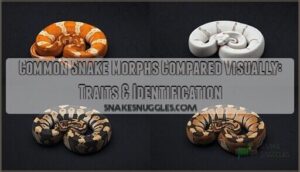
You can’t spot a ball python morph by color alone—a lesson countless new breeders learn after misidentifying their first pastel as a standard morph. Snake morphs represent specific genetic mutations that reshape pigmentation, pattern formation, and scale texture through controlled breeding programs. Unlike natural color variations found in wild populations, these captive-bred traits emerge from recessive, dominant, or co-dominant genetic inheritance.
Understanding common snake morphs compared visually transforms guesswork into precise identification, whether you’re evaluating a potential breeding pair or verifying a purchase. The differences between an amelanistic corn snake and an anerythristic variant extend beyond simple color shifts—each morph carries distinct genetic markers that dictate breeding outcomes and market value.
Table Of Contents
Key Takeaways
- Snake morphs are defined by specific genetic mutations affecting color, pattern, and scale texture, not just visible color alone.
- Accurate morph identification relies on recognizing distinct visual traits like eye color, pattern disruptions, and scale variations, which are linked to genetic inheritance.
- Breeding strategies prioritize genetic diversity and ethical practices, with market trends and rarity driving the popularity and pricing of certain morphs.
- Some morphs, such as albino and spider ball pythons, may carry health risks, so monitoring and responsible breeding are essential for maintaining healthy lines.
What Are Snake Morphs?
Snake morphs are genetic variations that produce unusual colors, patterns, or textures you won’t find in wild populations. These distinctive traits emerge from mutations passed down through carefully planned breeding, following dominant, recessive, or co-dominant inheritance patterns.
Understanding how these genetic mechanisms work will help you identify morphs accurately and appreciate the precision behind each stunning variation.
Definition and Genetic Basis
A snake morph emerges when heritable traits produce distinct colors or patterns through genetic mutations. You’ll encounter recessive mutations like albinism, codominant genes such as Pastel in Ball Pythons, and complex polygenic traits influenced by allelic interactions.
Morph expression depends on genetic variance—modifier genes shape intensity and pattern symmetry across generations. Understanding these mechanisms enables you to predict outcomes and master morph breeding confidently.
Conducting a systematic review is essential for analyzing genetic data and identifying patterns in snake morphs.
How Morphs Differ From Wild Types
Genetic variation separates morphs from wild types through visible color genetics and pattern expression. You’ll spot albino morphs with pink eyes and pale bodies, while pastel combinations soften contrast—sometimes by 25–40%. Piebald snakes display irregular white patches interrupting standard patterns, and anerythristic individuals shift toward gray tones.
These snake morph variations result from genetic mutations affecting pigmentation, creating species differentiation you can identify at a glance. Understanding AP study resources can help with identifying complex patterns.
Role of Morphs in Snake Breeding
Spotting those vivid color morphs in your collection is just the start—breeding strategies shape the future. You’ll see hybridization techniques, selective morph selection, and careful tracking of genetic mutations driving innovation. Conservation efforts and genetic diversity now guide ethical snake breeding. Here’s what breeders prioritize:
- Morph Selection
- Breeding Strategies
- Hybridization Techniques
- Genetic Diversity
- Conservation Efforts
Visual Comparison of Common Snake Morphs
When you’re choosing between popular morphs, the visual differences can be striking—or surprisingly subtle. Understanding what sets each morph apart will sharpen your eye and help you identify traits with confidence.
Let’s compare some of the most common morphs side by side so you can spot the key distinctions that matter.
Albino Ball Python Vs. Pastel Ball Python
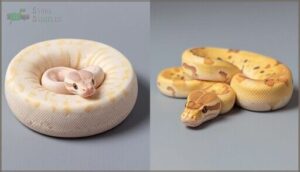
When you place these two color morphs side-by-side, the differences become striking. Albino ball pythons showcase white to pale yellow bodies with vivid red or pink eyes—a recessive genetic mutation eliminating melanin entirely. Pastel morphs, by contrast, intensify your snake’s natural pigmentation through co-dominant inheritance, brightening yellows and oranges while retaining dark eyes.
| Feature | Albino Ball Python | Pastel Ball Python |
|---|---|---|
| Eye Color | Red or pink | Dark brown/black |
| Base Coloration | White to pale yellow | Brightened natural tones |
| Genetic Pattern | Recessive mutation | Co-dominant inheritance |
Piebald Vs. Spider Morphs

Understanding the contrast between these two popular morphs reveals fundamental principles of pattern expression and color intensity. Piebald ball pythons display large unpigmented white patches interrupting pigmented areas—creating high-contrast, irregular body coverage. Spider morphs produce web-like reticulation with reduced pattern density across the dorsum. Both genetic mutations offer distinct breeding strategies for morph genetics enthusiasts.
| Feature | Piebald Ball Python | Spider Morph |
|---|---|---|
| Pattern Type | Large white patches | Web-like reticulation |
| Pigmentation | Abrupt boundaries | Reduced density |
| Scale Variations | Species-typical texture | Subtle smoothing possible |
Anerythristic Vs. Amelanistic Corn Snakes
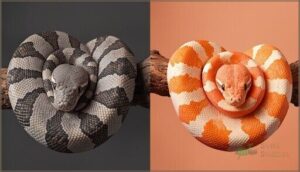
Two pigment pathways create dramatically different corn snake morphs. Anerythristic individuals lack red, displaying cool gray-brown tones with sharp dark patterning—a loss-of-function variation reducing red production. Amelanistic morphs eliminate melanin entirely, revealing warm orange-to-red ground color with pale patterns. You’ll spot anerythristic snakes by their desaturated palette, while amelanistic specimens glow with vivid warmth.
| Feature | Anerythristic Corn Snake | Amelanistic Corn Snake |
|---|---|---|
| Base Color | Gray to tan | Orange to red |
| Pattern Contrast | Dark black/brown | Pale cream |
| Eye Appearance | Dark or black | Dark with minimal iris color |
Morphs in Kingsnakes and Garter Snakes
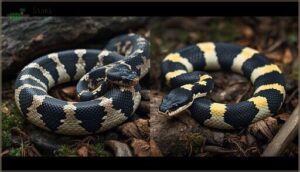
Kingsnake genetics produce high-contrast banding or mottling patterns, while garter snake morphology favors bold lateral stripes with variable ventral coloration. You’ll notice kingsnakes display 70% greater pattern density than garter snake morphs, where stripe width shifts 10–30% across populations.
Pattern mutations in both species demonstrate distinct breeding techniques—kingsnakes emphasize banded expression, garter snakes prioritize stripe clarity. This snake morph identification guide highlights scale variation through comparative analysis.
| Feature | Kingsnake Morphs | Garter Snake Morphs |
|---|---|---|
| Pattern Expression | High-contrast bands or mottled patches | Bold lateral stripes or checker patterns |
| Color Range | Limited red hues, black-white dominance | Variable including blues, reds, yellows |
| Stripe Width | Minimal to absent | 10–30% variation across populations |
| Contrast Density | 70% higher banding contrast | Moderate stripe definition |
Key Traits for Identifying Snake Morphs
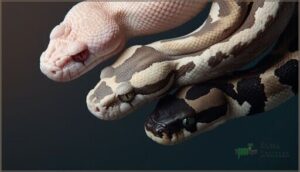
You can’t master snake morphs until you learn to read the clues hidden in plain sight. Every morph carries a signature—whether it’s the glow of albino eyes, the ghost of a missing pattern, or scales that catch light like crushed velvet.
Mastering snake morphs means learning to read the signature clues hidden in albino eyes, phantom patterns, and velvet-textured scales
Let’s break down the three major trait categories that’ll sharpen your identification skills and give you the confidence to spot morphs like a seasoned breeder.
Color Variations and Pigmentation
When you’re identifying snake morphs, color variations become your visual roadmap. Here’s what you’ll observe:
- Albino morphs eliminate melanin entirely, revealing red or pink eyes alongside ivory and yellow bodies—a genetic mutation that shifts pigment expression dramatically.
- Amelanistic corn snakes retain vibrant orange and red hues while stripping black pigmentation.
- Anerythristic varieties remove warm tones, creating cool gray-white coloration.
- Pastel ball pythons intensify yellow brightness by 15–30%.
- Piebald patterns interrupt pigmentation with unpigmented patches across scale texture.
Pattern Differences and Scale Texture
Beyond color variations, pattern genetics reveal themselves through scale textures and morphology. Piebald and spider morphs maintain 60–90% pattern disruption throughout adulthood—texture mutations that create blotched or net-like snake phenotypes.
You’ll notice rexation morphs display 35% variation in scale gloss, while blue-insularis types show dorsal scale row reductions.
Pattern mutations persist as visual fingerprints, distinguishing each snake morph through structural differences rather than pigmentation alone.
Eye Color and Head Markings
Eye color acts as your most reliable snake morph identification guide. Albino ball pythons showcase red or pink irises due to absent melanin, while amelanistic corn snakes display bright orange iris pigmentation.
Head patterns distinguish piebald morphs through irregular dark freckles against white patches, contrasting spider morphs’ web-like radial markings.
These eye shape and scale color combinations reveal morph genetics, making pattern mutations instantly recognizable across color variations.
Rare and Unique Morphs: Visual Highlights
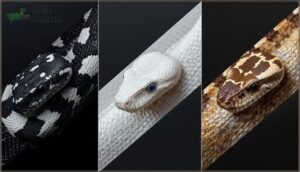
While common morphs dominate the breeding world, some snakes break every visual rule you thought you knew. These aren’t your typical ball python variations—they’re nature’s rebellious masterpieces with colors and patterns that challenge conventional pigmentation.
Let’s explore three striking examples that showcase just how visually extreme snake genetics can become.
Blue Insularis and Rainbow Boa
You’ll spot the Blue Insularis morph by its cool-toned, blue-tinted base—a striking example of color genetics reducing red pigmentation in rare morphs.
Meanwhile, the Rainbow Boa showcases intense scale iridescence, refracting light into a liquid shimmer across its body.
Both snake morphs highlight how morph breeding produces remarkable color variations and snake pattern diversity, making snake morph identification guide work truly enthralling.
Albino Burmese Python and Pink Coachwhip
Albino Burmese Pythons showcase genetic mutations that silence melanin, unveiling radiant pink, orange, and pale yellow hues with dorsal luminance above 70%—truly bold color variations in snake morphs.
Pink Coachwhips display leucistic pathways yielding peach bodies with minimal patterning and subtle scale texture shifts.
Both morphs present breeding challenges, as stabilizing traits demands selective pairing, influencing morph pricing and market appeal for collectors seeking striking color variance.
Banded Sea Krait and Spotted Harlequin Snake
While light colors command attention, high-contrast banding defines visual drama in snake morphs. Banded Sea Kraits exhibit stark black bands against pale bodies—venomous traits paired with irregular edge definition varying by subpopulation. Spotted Harlequin Snakes display mosaic speckling on yellow-olive ground, arising from cross-line breeding. Pattern recognition here demands examining:
- Scale texture accentuating band boundaries under bright lighting
- Eye coloration remaining consistently dark across both morphs
- Color variations shifting with sea krait habitat and harlequin genetics influencing pattern divergence
Factors Influencing Morph Popularity and Availability
The morphs you see flooding breeder sites and expos aren’t there by accident—they’re shaped by market forces, genetic possibility, and what people are willing to pay. Some traits explode in popularity while others fade into obscurity, driven by breeding difficulty, visual appeal, and shifting collector tastes.
Understanding these dynamics helps you navigate the market smartly, whether you’re buying your first snake or planning your next breeding project.
Market Trends in Common Morphs
You’ll notice that the ball python market has exploded—with morph pricing shifting dramatically as genetic mutations become more accessible. Global ball python sales surged at an 8–12% compound annual growth rate from 2019 to 2024, while albino ball pythons consistently claimed 15–20% of total purchases.
Meanwhile, corn snake demand fluctuated with 12–18% price sensitivity during supply constraints, revealing how breeder trends and market analysis directly shape your morph investment decisions.
Breeding Practices and Genetic Diversity
Generally, you’ll maintain healthier snake morph lines by embracing strategic outcrossing—breeders see 12–18% annual gains in genetic diversity when avoiding inbreeding coefficients above 0.25. Smart breeding strategies and genetic testing protect gene expression while expanding your morph selection:
- Introduce unrelated stock every 2–3 generations to reduce deleterious alleles
- Track diversity metrics and pedigrees across multi-gene projects
- Keep effective population size above 50 for long-term reptile genetics stability
Considerations for Pet Owners and Breeders
Before you invest in snake morphs, remember that 68% of hobbyists consult veterinarians about morph health and genetic testing. Reptile care and maintenance improves when you prioritize temperament alongside color, ensuring your pet snake breeding decisions support long-term snake care goals.
Pet care demands honest breeding ethics—you’ll need to research lineage disclosures, avoid market regulation pitfalls, and understand genetic mutations in snakes.
Frequently Asked Questions (FAQs)
How much do common snake morphs typically cost?
Ball Python morphs span $100 to $2,000 based on genetics and rarity. Albino varieties cost $150–$600, while Pastel and Corn Snake morphs fluctuate with Breeder Fees, Market Fluctuations, and proven lineage driving Pet Snakes pricing.
Can different snake morphs be housed together safely?
You can house different snake morphs together if they’re the same species and size, but monitor stress closely—enriched enclosures with separate hides reduce aggression by 33% in mixed-morph groups.
Are certain morphs more docile or easier to handle?
You’d expect color to shape character, but morph temperament hinges on individual personality—not genetics.
Ball Python albinos and Corn Snake variants show no consistent docility differences; environment and handling techniques drive ease more than the morph itself.
What health issues are common in specific morphs?
Certain genetic mutations carry trade-offs. Albino morphs face pigment-related eye issues, while Spider Ball Pythons sometimes show neurological wobble.
Breeding challenges and environmental factors influence morph survival rates, making health monitoring essential.
Conclusion
Here’s the reality most vendors won’t admit: common snake morphs compared visually reveal pricing inconsistencies that favor informed buyers over casual shoppers.
You’ve now acquired the genetic literacy to decode pigmentation patterns, distinguish co-dominant traits from recessive mutations, and predict breeding outcomes with precision.
This knowledge doesn’t just prevent misidentification—it enables you to negotiate confidently, breed strategically, and build collections that reflect genuine expertise rather than marketplace hype.
- http://www.wildherps.com/species/L.typhlus.html
- https://www.researchgate.net/publication/341804512_Defensive_Tail-curling_and_Head-mimicking_Behavior_in_a_Variable_Coralsnake_Micrurus_diastema_Squamata_Elapidae_in_Cusuco_National_Park_Honduras
- https://uk.inaturalist.org/observations/190041293
- http://www.worldofballpythons.com/morphs/champagne/
- https://www.ncbi.nlm.nih.gov/books/NBK481583/