
This site is supported by our readers. We may earn a commission, at no cost to you, if you purchase through links.

Most corn snake bites don’t happen because a snake is aggressive—they happen because a hand smells like food. Corn snakes hunt by scent, and once feeding mode kicks in, they don’t distinguish between a mouse and your fingers. It’s a reflex, not a personality flaw.
Feeding tongs break that cycle. They keep your hand out of the strike zone and teach your snake a clear, consistent signal: tongs mean food, hands mean safety.
Whether you’re raising a hatchling or managing a full-grown adult, the right feeding habits now prevent problems that are much harder to fix later.
Table Of Contents
- Key Takeaways
- Do Corn Snakes Need Feeding Tongs?
- Preventing Accidental Bites During Feeding
- Choosing The Right Feeding Tongs
- Safe Prey Presentation Techniques
- Feeding Environment and Location Tips
- Feeding Tongs for Hatchlings and Juveniles
- Establishing Safe Feeding Routines
- What to Do if a Bite Occurs
- Frequently Asked Questions (FAQs)
- How do you feed corn snakes?
- How often should you feed corn snakes?
- Can corn snakes eat fish?
- How do you feed a pet snake?
- Can corn snakes fast for weeks without harm?
- How do I switch my snake to frozen prey?
- Should I feed my corn snake during shedding?
- How often should hatchlings eat compared to adults?
- What prey size is safe for my corn snake?
- Conclusion
Key Takeaways
- Corn snakes bite hands because they smell like food, not because they’re aggressive — tongs remove that confusion entirely.
- Using tongs from day one trains your snake that hands are safe, building a habit that’s much harder to establish later.
- Match your tong length to your snake’s size — 8 inches for hatchlings, 12–14 inches for adults — so you’re always outside strike range.
- How you present prey matters: mimic natural movement, wash your hands with unscented soap, and feed at a consistent time to keep sessions calm.
Do Corn Snakes Need Feeding Tongs?
Feeding your corn snake by hand might seem harmless, but it comes with real risks you should know about. A snake in feeding mode doesn’t stop to check whether it’s biting prey or your fingers.
Once you understand how corn snake feeding actually works, it’s much easier to avoid the mistakes that lead to accidental bites.
Here’s what hand feeding can cost you — and why tongs make the whole process safer.
Risks of Hand Feeding
Hand feeding might seem harmless at first, but it quietly trains your corn snake to see your hand as prey. That’s conditioned hand targeting — and it’s harder to undo than you’d think. Avoiding hand feeding protects you both. For safer feeding, many keepers opt for durable metal tongs or forceps, sometimes repurposing using medical-grade forceps that can be thoroughly cleaned between meals.
Here’s what’s actually at stake:
- Escalating feeding aggression — strikes become more frequent and forceful over time
- Regurgitation and injury — handling post-feeding causes meal expulsion, damaging the esophagus
- Substrate ingestion risks — prey dragged across bedding carries particles that cause blockages
- Chronic stress effects — repeated hand proximity raises cortisol, disrupting shedding and appetite
- Infection risk — puncture wounds from bites need immediate antiseptic care
Benefits of Using Tongs
Tongs do more than just keep your fingers safe. They’re a Corn Snake Feeding Safety tool, a Behavioral Conditioning Aid, and a Hygiene Benefits upgrade — all in one. For more guidance on technique and risk reduction, you can explore this overview of detailed feeding tongs safety.
| Benefit | Why It Matters |
|---|---|
| Bite Prevention Techniques | Keeps strikes 12–14 inches from your hand |
| Prey Positioning Control | Angles prey head-first for smoother swallowing |
| Enclosure Cleanliness Improvement | Less blood smear, easier cleanup |
| Keeper Confidence Boost | Calm keeper means calmer snake |
Preventing Accidental Bites During Feeding
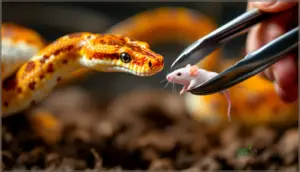
Corn snakes don’t bite out of aggression — they bite because something smells or moves like food. When feeding mode kicks in, your hand can look just as good as a mouse.
Here’s what’s actually happening in those moments, and how tongs change the game.
Feeding Response and Strike Behavior
Your corn snake’s pre-strike body language tells you a lot. Watch for rapid tongue flicking and that classic S-curve posture — those are hunger signals, not a bluff-strike.
Understanding how often corn snakes eat helps you connect that restless, tongue-flicking behavior to a feeding schedule that keeps your snake healthy and satisfied.
Understanding feeding response means recognizing that strike mechanics patterns happen fast: lunge, bite, constrict, hold. Once feeding mode kicks in, corn snake feeding safety depends on knowing your snake isn’t being aggressive — it’s just doing what instinct demands.
How Tongs Reduce Bite Risk
Once feeding mode kicks in, your hands become a liability. Feeding tongs create a safe strike buffer, keeping your fingers 12 to 14 inches back while clear targeting cues guide the snake straight to the prey.
Feeding tongs keep your fingers 12 inches back, where a snake in feeding mode can’t confuse them for prey
Minimized scent triggers mean no hand-smell confusion. Hands-out feeding, combined with a calm post-strike retreat, is your simplest bite prevention tool.
Choosing The Right Feeding Tongs
Not all tongs are created equal, and the wrong pair can make feeding time frustrating — or even unsafe.
A few key features separate a tool that works from one that doesn’t. Here’s what to look for when choosing yours.
Recommended Length and Material

Not all feeding tongs are created equal — size and material matter more than you’d think. For most corn snakes, 12 to 14 inches is the ideal length, keeping your hand well outside strike range. Stainless steel wins on durability and easy cleaning, while plastic risks flexing or breaking mid-feed.
- Ideal tong lengths: 8 inches for hatchlings, 12–14 inches for adults
- Stainless steel advantages: rust-resistant, holds firm during vigorous strikes
- Plastic versus metal: plastic tips reduce prey punctures but lack durability
- Size-to-snake ratios: match tong length to your snake’s current growth stage
Grip and Tip Design for Safety
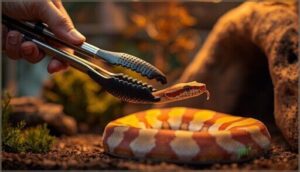
Good grip and tip design quietly do most of the safety work. Non Slip Grips keep control when your snake strikes fast. Soft Coated Tips protect its mouth on mistimed bites. Rounded Tip Geometry prevents scale scrapes inside tight enclosures. Secure Prey Grip means your hand stays farther back — safer every time.
| Feature | What It Does | Why It Matters |
|---|---|---|
| Non Slip Grips | Prevents tong twisting on strike | Keeps safe prey presentation stable |
| Soft Coated Tips | Cushions accidental jaw contact | Aids hygiene friendly design |
| Rounded Tip Geometry | Spreads impact across snout | Reduces scale damage in tight spaces |
Safe Prey Presentation Techniques
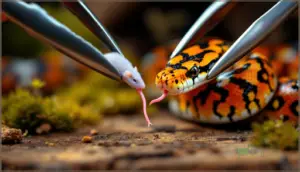
How you present prey matters just as much as what you’re feeding. Corn snakes are wired to respond to movement and scent, so small details in your technique can make a real difference.
Even the way you hold and move the prey can trigger a feeding response, so brushing up on proper corn snake handling and feeding techniques helps you fine-tune every presentation.
Here are two simple habits that’ll keep every feeding session calm and safe.
Mimicking Natural Prey Movement
A still mouse isn’t convincing. Use erratic wiggle patterns — short, irregular twitches that mimic a real rodent adjusting its position. Natural escape paths work best: drag the prey low, pause, then shift direction. That pause-strike timing is key.
Low-angle approaches at floor level feel instinctive to your snake.
Consistent motion sequences across sessions make safe prey presentation more predictable and feeding techniques more effective over time.
Avoiding Scent Confusion
Your hands tell a story your snake can’t ignore. Scent confusion prevention starts before tongs even touch the prey. Wash with neutral, unscented soap — scented lotions send mixed signals straight to your snake’s vomeronasal system.
For prey scent isolation, thaw mice in a sealed container. Clean tongs after every session for reliable tongs scent management. Scent cue separation keeps feeding safety and snake care consistent.
Feeding Environment and Location Tips
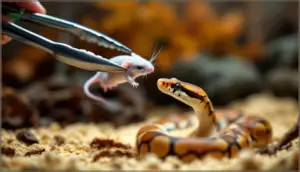
Where you feed your corn snake matters just as much as how you feed it. The right environment keeps your snake calm and your feeding sessions consistent.
Here are a few simple tips to help you get the setup right.
Feeding Inside Vs. Outside Enclosure
Where you feed your corn snake matters more than most keepers realize. Inside-enclosure digestion stays smooth because your snake isn’t stressed by the move. Outside-bin regurgitation is a real risk — handling after meals triggers it fast.
Inside feeding also raises substrate ingestion risks, so place prey on a flat rock. Using feeding tongs either way keeps feeding safety consistent and reduces feeding-association behavior issues.
Minimizing Stress and Distractions
Your snake reads the room — literally. Quiet Feeding Schedules work best in the evening, when household noise drops and your corn snake’s crepuscular instincts kick in naturally. Close the door, dim the lights, and use Visual Barrier Setup on three enclosure sides to block movement. After presenting prey with feeding tongs, walk away.
Keeper Presence Management and Noise Reduction Strategies together make the biggest difference in snake feeding stress reduction.
Feeding Tongs for Hatchlings and Juveniles
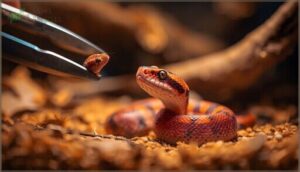
Feeding hatchlings and juveniles takes a little more care than feeding adults. Their small size and quick reflexes mean tongs aren’t just helpful — they’re essential.
Here’s what to keep in mind as your young corn snake grows.
Special Considerations for Young Snakes
Young corn snakes need extra care. Use mini tongs for feeding hatchlings — their strike aim isn’t reliable yet. Offer age-appropriate prey like micropinkies every 5 to 7 days, and always use a separate tub to build food confidence.
This prevents accidental bites and regurgitation. Consistent feeding tongs usage from day one sets safe habits early.
Adapting Tools as Your Snake Grows
As your corn snake grows, your tools need to grow with it. Start with 6–8 inch tongs for feeding hatchlings, then scale up to 12–16 inches for adults. Stronger tool jaws handle bigger prey without slipping. Longer-reach presentations keep your hand safely outside strike range.
These growth-driven routine changes make feeding tongs usage safer and more consistent long term.
Establishing Safe Feeding Routines

Feeding a corn snake isn’t just about dropping in a mouse — it’s about building a routine your snake can count on. Consistent cues and a little observation go a long way toward stress-free sessions for both of you.
Here’s what to focus on as you settle into a feeding rhythm.
Consistent Feeding Cues
Predictability is your best tool here. Routine cue patterns — same tongs, same time, same motion — teach your snake exactly what feeding means. Time-based feeding signals work surprisingly well; many snakes stir before you even open the lid.
Use visual feeding markers like placing tongs on the table first. Distinct handling cues keep things clear. Reinforcing cue consistency protects both of you.
Monitoring Feeding Response Over Time
Once your routine clicks, start keeping a simple feeding log. Tracking meal frequency and recording strike accuracy over weeks tells you a lot.
- Body condition trends catch overfeeding early
- Noting seasonal appetite dips prevents unnecessary worry
- Interpreting refusal patterns separates shedding from stress
- Managing strong feeding responses gets easier with consistent tong use
Long-term tong use builds calmer, more predictable feeding behavior.
What to Do if a Bite Occurs
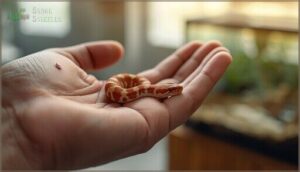
Even with tongs, the occasional bite can still happen — corn snakes are fast and mistakes occur. The good news is that a bite from one rarely causes serious harm.
Here’s what to do right away and how to lower the chances of it happening again.
Immediate First Aid Steps
Even with the best feeding safety measures, accidental bites happen. Stay Calm Techniques matter first — panicking causes jerking, which worsens the wound.
Focus on releasing an attached snake by gently pressing behind its head; never yank.
Then spend five minutes cleaning the bite wound with warm water and mild soap. Manage bite bleeding with light pressure. Seek care if bleeding won’t stop or the wound looks deep.
Reducing Future Bite Risks
After a bite, the real work is figuring out what went wrong. Long-term bite prevention comes down to four simple habits:
- Use feeding tongs every single time — no exceptions
- Wash hands before feeding to eliminate scent confusion
- Watch for stress signals like hissing or tight coiling
- Feed only during calm, predictable safe handling windows
Avoiding hand feeding consistently trains clear boundaries your snake learns to respect.
Frequently Asked Questions (FAQs)
How do you feed corn snakes?
Use feeding tongs to offer thawed prey at the right ideal prey size. Follow feeding frequency guidelines, monitor body condition regularly, and wait 48 hours before handling after feeding.
How often should you feed corn snakes?
Age-based feeding schedules matter. Hatchling meal frequency runs every 5 to 7 days. Juvenile feeding intervals stretch to every 7 to 10 days. Adult feeding frequency drops to every 14 to 21 days.
Can corn snakes eat fish?
Corn snakes can technically eat fish, but it’s not ideal. Fish create a Natural Diet Mismatch and carry Parasite Transmission Risks. Thiaminase Toxicity Concerns make them risky long-term. Stick to rodents as your snake’s core prey.
How do you feed a pet snake?
Think of feeding your pet snake like a small ritual. Offer thawed prey with feeding tongs, keep movements slow, and avoid post meal handling for 24 hours.
Can corn snakes fast for weeks without harm?
Yes, adults can fast safely for 4 to 8 weeks. Juveniles max out at 2 to 3 weeks. Beyond that, watch for weight loss or lethargy — both signal it’s time to act.
How do I switch my snake to frozen prey?
Switching to frozen-thawed prey takes patience. Start with thawing frozen prey overnight, then warm it to 95–100°F. Use tong feeding with gentle wiggling to mimic movement. Most snakes accept it within a few tries.
Should I feed my corn snake during shedding?
Skip feeding during the blue phase. Your corn snake’s vision is blurred, stress runs high, and regurgitation risk spikes. Wait until eyes clear and colors brighten — then offer a meal.
How often should hatchlings eat compared to adults?
Hatchlings eat every 5 to 7 days. Adults need feeding only every 14 to 21 days. Faster metabolism and rapid growth drive the hatchling meal frequency higher than adult meal spacing requires.
What prey size is safe for my corn snake?
Too big causes harm. Too small leaves them hungry. Use girth-based prey sizing: prey width should match 1–5× your snake’s thickest point for safe, healthy feeding.
Conclusion
Like Pavlov’s dogs, your corn snake learns from every feeding session—building associations that either work for you or against you. Hands are safe, tongs bring food. That boundary protects your snake’s trust and your fingers equally.
Do corn snakes need feeding tongs? They need the habit tongs create. Each consistent feeding reinforces a simple truth: hands are safe, tongs bring food.
Build the routine now, and feeding time becomes something you both handle with confidence.
- https://www.furrycritter.com/pages/articles/snakes/species_specific_feeding.htm
- https://reptifiles.com/corn-snake-care-guide/corn-snake-food/
- https://exoticdirect.co.uk/news/feeding-corn-snakes/
- https://britexotics.co.uk/blog/corn-snake-feeding-schedule-uk
- https://www.africansnakebiteinstitute.com/articles/the-pros-and-cons-of-snake-tongs/