This site is supported by our readers. We may earn a commission, at no cost to you, if you purchase through links.
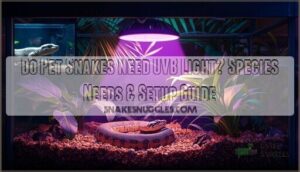
Most snake keepers can get by without UVB lighting, and their animals survive just fine—but survival isn’t the same as thriving. Research shows that even nocturnal species synthesize vitamin D3 from limited UV exposure in the wild, absorbing what they need during brief moments at burrow entrances or under dappled shade.
Without it, captive snakes often develop weakened immune systems and struggle with calcium metabolism, issues that don’t kill them outright but chip away at their vitality over years. The question isn’t whether your snake will die without UVB—it’s whether you’re giving it the tools to reach its full potential. Understanding how different species use ultraviolet radiation helps you match your setup to your snake’s actual needs, not just the bare minimum for survival.
Table Of Contents
- Key Takeaways
- Do Pet Snakes Need UVB Light?
- Benefits and Risks of UVB Lighting for Snakes
- Factors Affecting UVB Requirements in Snakes
- Setting Up UVB Lighting for Snake Enclosures
- Species Examples: UVB Needs in Popular Pet Snakes
- Frequently Asked Questions (FAQs)
- Do snakes need UVB light?
- Do I need a basking light and a UVB light?
- Can Ball Pythons live without UVB?
- How much UVB does a ball python need?
- Can snakes get UVB from windows or skylights?
- Do albino snakes need different UVB levels?
- How does UVB affect snake breeding cycles?
- What happens if UVB bulbs arent replaced?
- Can too much UVB cause burns or stress?
- Conclusion
Key Takeaways
- Most snakes survive without UVB lighting, but they don’t thrive—UVB enables vitamin D3 synthesis that strengthens immune function, improves calcium metabolism, and prevents metabolic bone disease over time.
- UVB needs vary dramatically by species: diurnal snakes like garter snakes require moderate to high intensity, while nocturnal species like ball pythons need minimal exposure or can rely on dietary supplementation alone.
- Proper UVB setup requires species-specific bulbs (typically 2-5% output), correct placement 12-18 inches above the basking zone, and replacement every 6-12 months since output declines even when bulbs still illuminate.
- Excess UVB poses real risks including eye damage, skin burns, and stress behaviors, so you’ll need shade zones, appropriate thermal gradients, and regular UVB meter testing to keep exposure safe.
Do Pet Snakes Need UVB Light?
The question of whether your pet snake needs UVB lighting doesn’t have a one-size-fits-all answer, and that’s where UVB research comes in. While snakes have thrived in captivity without UVB lighting for decades, recent studies suggest that proper reptile lighting can boost snake health in meaningful ways.
For species like ball pythons, basic care routines work fine without UVB, though adding low-level exposure may still support their overall wellbeing.
UVB lighting for reptiles facilitates vitamin D3 synthesis, which helps calcium metabolism and bone health in your pet snakes. However, not all species require it equally. If your snake’s diet provides adequate vitamin D3 and calcium, you might maintain good reptile care without supplementation.
The key is habitat simulation—matching lighting design to your snake’s natural environment. Desert species that bask frequently may utilize UVB differently than nocturnal burrowers, so understanding UVB and Vitamin D3 requirements for your specific species will guide your decision.
To help prevent metabolic bone disease, make sure you’re familiar with UVB lighting requirements for your snake’s habitat.
Benefits and Risks of UVB Lighting for Snakes

UVB lighting isn’t just about replicating sunlight—it plays a real role in your snake’s health, from strengthening bones to supporting immune function.
That said, too much exposure can cause problems, so understanding both sides helps you make the right choice for your pet.
Let’s break down the key benefits and potential risks you should know about.
Vitamin D3 Synthesis and Bone Health
When you provide UVB exposure to your snake, you enable a biological cascade that begins in the skin where UVB converts a precursor compound into vitamin D3. Here’s what happens next:
- Your snake’s liver transforms vitamin D3 into an intermediate form called 25-hydroxyvitamin D
- The kidneys activate this compound into the hormone that regulates calcium absorption
- Active vitamin D increases intestinal uptake of calcium and phosphate from digested prey
- Adequate calcium levels support proper bone mineralization during growth and maintenance
- Sufficient vitamin D prevents secondary hyperparathyroidism, which would otherwise pull calcium from bone tissue and weaken the skeleton
Research on vitamin D and bone health highlights the essential role of vitamin D in maintaining a strong, mineralized skeleton across many species. This metabolic pathway is why UVB lighting plays a protective role against metabolic bone disease in reptile nutrition. Without adequate vitamin D3 synthesis, your snake can’t efficiently absorb dietary calcium, leading to reduced bone mineral density and potential skeletal deformities over time.
Immune System and Behavior
Beyond supporting strong bones, UVB lighting enhances your snake’s immune function through vitamin D3-dependent pathways. Adequate UVB exposure helps your snake mount stronger responses to pathogens, reducing infection risk and the need for veterinary intervention. Research shows immune signals can also influence behavioral adaptation—snakes with resilient immune function often display more natural feeding responses, improved activity levels, and better stress resilience.
UVB lighting strengthens your snake’s immune system, helping it fight infections and display healthier feeding and activity behaviors
Here’s how UVB promotes reptile health and wellness across multiple systems:
Beginners can explore comprehensive UVB lighting systems for beginners to ensure their reptiles receive optimal wavelengths for calcium metabolism and immune function.
| UVB Benefit | Impact on Snake Behavior |
|---|---|
| Enhanced immune response | Reduced withdrawal from feeding |
| Lower inflammatory markers | Increased exploratory activity |
| Stronger pathogen defense | More consistent basking patterns |
| Improved stress recovery | Better tolerance of handling |
| Balanced gut microbiome | Natural breeding behaviors |
When your snake’s immune system functions optimally, you’ll notice these health benefits translate into observable changes in snake behavior and overall vitality.
Potential Risks of Excess UVB Exposure
While UVB lighting facilitates vitamin D3 synthesis and metabolic bone disease prevention, UVB overexposure introduces serious health risks you need to monitor.
Excess UVB can cause eye damage including corneal inflammation and photokeratitis, plus skin cancer from DNA mutations in exposed tissue.
Thermal stress from poorly positioned bulbs may also trigger avoidant behavior, reduced feeding, and increased restlessness—signs your snake is uncomfortable with current UVB exposure levels.
Factors Affecting UVB Requirements in Snakes
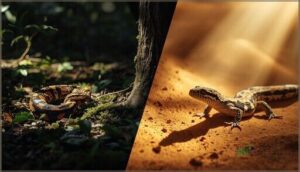
Not all snakes need the same amount of UVB light, and getting it right depends on understanding what your specific snake would experience in the wild. The amount of exposure your pet requires is shaped by its species, where it naturally lives, and how active it’s during daylight hours.
These three factors work together to determine whether your snake needs minimal UVB or something closer to full desert sun conditions.
Species-Specific Lighting Needs
Each snake species has evolved under different lighting conditions, which means your pet’s UVB lighting requirements depend on its natural habitat and classification.
Diurnal species like garter snakes need moderate to high UVB intensity for proper basking behavior, while nocturnal ball pythons thrive with minimal UVB exposure.
Species classification systems help you match reptile lighting requirements to your snake’s specific needs, ensuring appropriate UVB levels without overexposure.
Natural Habitat and Activity Patterns
Where your snake comes from matters more than you might think. A desert snake basks openly in harsh sunlight, while tropical species navigate dense canopies where UV rays barely penetrate.
Consider these habitat factors when setting up lighting:
- Climate origin determines baseline UVB exposure levels your snake expects
- Activity timing (diurnal versus nocturnal) shapes natural light encounters
- Microhabitat preferences influence how much direct sunlight reaches them
- Basking behavior varies between species that thermoregulate differently
- Seasonal patterns affect natural day/night cycle and circannual rhythms
Understanding these natural behaviors helps you create appropriate thermal gradients matching your snake’s evolutionary blueprint.
Ferguson Zone Classification
The Ferguson Zone system gives you a reliable framework for matching UVB intensity to your snake’s natural sun exposure. This classification divides reptile care into four zones based on UV Index values rather than simple percentages.
Zone 1 corresponds to shade-dwelling species with minimal habitat lighting needs, while Zone 4 targets open grassland and desert reptiles requiring strong temperature requirements and clear thermal gradient paths for effective species matching.
Setting Up UVB Lighting for Snake Enclosures
Setting up UVB lighting correctly makes all the difference between a beneficial addition and a wasted effort. You’ll need to take into account the type of bulb, where you place it, and how you maintain it over time.
Let’s walk through each component so you can create a lighting system that works for your snake’s specific needs.
Choosing The Right UVB Bulb
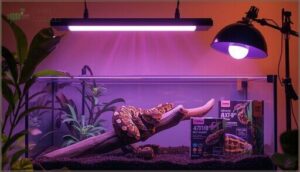
Selecting the appropriate bulb starts with understanding your snake’s reptile lighting requirements. T5 high output linear tubes deliver consistent UVB exposure across larger enclosures, while compact fluorescent fixtures work for smaller setups.
Bulb selection depends on UVB intensity needs—most common pet snakes thrive with 2-5% output bulbs. Reputable brands like Exo Terra and ZooMed provide reliable reptile lighting with documented output specifications, ensuring proper UVB lighting for bone health and immune function.
Proper Placement and Distance
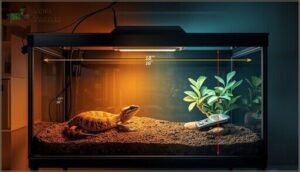
Positioning your UVB bulb correctly transforms your enclosure into a functional habitat. Keep the fixture 12 to 18 inches above the basking zone for most pet snakes, adjusting based on your species’ UVB intensity needs and tank height.
Follow these distance guidelines:
- Measure from the snake’s head position during typical basking behavior
- Mount fixtures securely to prevent shifting that disrupts UVB exposure
- Use a UVB meter to confirm 200-400 microwatts per square centimeter at the basking surface
- Align UVB coverage with thermal gradients to encourage natural thermoregulation
- Avoid placing lighting systems directly over water bowls to prevent confusing reflections.
Maintenance and Replacement Schedule
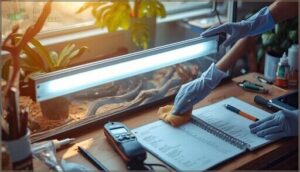
Even high-quality UVB lighting loses effectiveness over time, so you’ll need a consistent replacement strategy. Replace fluorescent UVB bulbs every 6 to 12 months and test output quarterly with a UVB meter to confirm levels stay within your species’ requirements. Clean fixtures every 1 to 3 months to remove dust that blocks UVB transmission, and keep spare bulbs on hand to minimize downtime during scheduled changes.
| Maintenance Task | Recommended Frequency |
|---|---|
| UVB bulb replacement | Every 6-12 months |
| Fixture cleaning | Every 1-3 months |
| UVB meter testing | Quarterly |
| Ballast inspection | Annually |
| Protective cover replacement | Every 1-2 years |
Creating a Safe Thermal Gradient
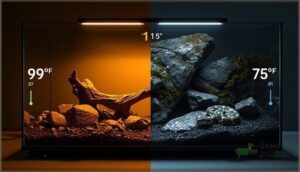
A thermal gradient is just as important as UVB lighting in enclosure design.
Position heat sources—like heat lamps or heat lights—on one end to create tank temperatures ranging from 75°F in the cool zone to 90°F in the basking area.
This temperature control lets your snake choose microclimates that match its needs throughout the day.
Species Examples: UVB Needs in Popular Pet Snakes
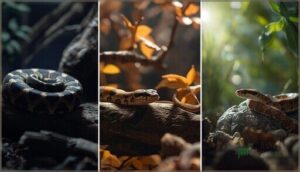
Understanding UVB needs starts with knowing your specific snake species. Different snakes have evolved in vastly different environments, which means their lighting requirements can range from minimal to moderate.
Let’s look at how some of the most common pet snakes fit into this spectrum.
Ball Pythons and Low UVB Requirements
Ball pythons sit comfortably in the low UVB camp, which makes them forgiving for new keepers dealing with reptile lighting requirements. You can offer a modest UVB source to support vitamin D3 synthesis and calcium metabolism, though many hobbyists rely on dietary supplementation instead.
Consider these python lighting safety priorities:
- Position the low-output bulb 9–12 inches above the basking zone to prevent eye irritation
- Maintain a 12-hour day-night cycle to align with crepuscular activity patterns
- Remove any glass or plastic barriers that block UVB transmission
- Monitor behavior for unusual basking tenacity, signaling stress or overexposure
This straightforward snake habitat design balances low UVB benefits with ball python care essentials.
Corn Snakes and Moderate UVB Exposure
Corn snakes handle moderate UVB exposure well, sitting between ball pythons and diurnal species in reptile lighting requirements. You can position a low-to-moderate output bulb 12–18 inches above basking zones to encourage natural vitamin D3 synthesis without overwhelming the animal.
Provide shaded retreats so your snake controls UVB dosage throughout lighting cycles, and pair thermal gradients with consistent photoperiods to support pet snake health and normal activity patterns.
Diurnal Vs. Nocturnal Snake Lighting Needs
Diurnal snakes benefit from UVB exposure during 12-hour daylight cycles that support vitamin D3 synthesis and natural basking behaviors.
Nocturnal species show limited UVB requirements and rely more on thermal gradients paired with minimal lighting to maintain circadian rhythms. You’ll want to match reptile lighting requirements to your snake’s activity pattern—bright habitat simulation for day-active species, dim low-intensity cycles for night hunters.
Frequently Asked Questions (FAQs)
Do snakes need UVB light?
Most snakes can survive in captivity without UVB lighting, though research suggests it facilitates vitamin D3 synthesis and calcium absorption.
Historical practices didn’t include UVB, leaving owner decisions complicated by ongoing research gaps.
Do I need a basking light and a UVB light?
Yes, you need both if your species requires UVB lighting. Heat lamps create the thermal gradient for basking, while UVB bulbs support vitamin D3 synthesis—each fulfills a distinct function in reptile lighting requirements.
Can Ball Pythons live without UVB?
Ball pythons can survive without UVB lighting when you provide proper temperatures, humidity, and diet with adequate calcium supplementation.
Many keepers successfully maintain these pet snakes using ambient light alone, though low-level UVB offers potential benefits.
How much UVB does a ball python need?
Like telegraphs once kept operators precise, UVB metering lets you dial in proper dosage for ball python habitat—aim for UVI 2 to 3 at the basking zone, creating lighting gradients your snake behavior naturally regulates.
Can snakes get UVB from windows or skylights?
Window glass blocks most UVB wavelengths, making indoor sunlight unreliable for vitamin D3 synthesis and calcium metabolism.
You’ll need a dedicated UVB light in your snake enclosure to prevent metabolic bone disease and overheating risks.
Do albino snakes need different UVB levels?
Albino snakes are dramatically more vulnerable to UVB damage than normal morphs, so you’ll need to reduce intensity and duration while ensuring ample shade zones—think forest-grade tubes at longer distances with plenty of cover for eye protection and safe self-regulation.
How does UVB affect snake breeding cycles?
UVB exposure aids snake reproduction by driving vitamin D3 synthesis, which aids calcium metabolism for egg production and embryo development.
Proper photoperiod effects with UVB basking opportunities can synchronize breeding cycles and improve mating success in many species.
What happens if UVB bulbs arent replaced?
Over time, bulb efficiency declines and UVB decay reduces vitamin D3 synthesis, compromising snake health.
Without proper lighting maintenance and replacement schedules, your snake risks metabolic bone disease and weakened reptile health.
Can too much UVB cause burns or stress?
Yes, excessive UVB intensity can cause skin irritation, redness, and behavioral stress signals like hiding or reduced feeding.
Proper UVB lighting placement, distance, and thermal gradient zones help prevent UVB burn risks in snakes.
Conclusion
Think of UVB lighting as preventive medicine rather than emergency care—you won’t see dramatic changes overnight, but you’re investing in your snake’s long-term resilience. Whether pet snakes need UVB light depends on their species and natural history, but even facultative users benefit from low-level exposure that mimics what they’d encounter in the wild.
Your setup should reflect their biology, not just keep them alive. Give them the advantage of optimization, not mere survival.
- https://www.reptiles.swelluk.com/help-guides/uvb-lighting-part-1-snakes-nocturnal-species/
- https://www.furrycritter.com/pages/health/snakes/sunburn.htm
- https://www.reptileacademy.co.uk/post/the-science-of-reptile-husbandry-uvb-ferguson-s-zones
- https://www.zenhabitats.com/blogs/reptile-care-sheets-resources/ball-python-complete-lighting-and-heating-guide
- https://my.clevelandclinic.org/health/diseases/oculocutaneous-albinism