
This site is supported by our readers. We may earn a commission, at no cost to you, if you purchase through links.
Your ball python spends 23 hours a day wedged into the smallest corner of its enclosure, completely ignoring the spacious cave you carefully selected. This isn’t stubbornness—it’s hardwired survival behavior rooted in millions of years of evolution.
In the wild, snakes that squeeze into tight crevices avoid predators, conserve moisture, and regulate body temperature more effectively than those exposed in open spaces. This preference, known as thigmotaxis, triggers a measurable calming response when a snake’s body contacts multiple surfaces simultaneously.
Understanding why snakes prefer tight-fitting hides—and how to replicate this security in captivity—directly impacts your snake’s stress levels, feeding consistency, and overall health outcomes.
Table Of Contents
Key Takeaways
- Snakes instinctively prefer tight-fitting hides because close contact with surfaces helps them feel secure and reduces stress.
- Properly sized, snug hides support critical health functions like thermoregulation, humidity control for shedding, and consistent feeding.
- Oversized or transparent hides can increase anxiety and disrupt natural hiding behavior, leading to health and behavioral issues.
- Regularly adjusting hide size as your snake grows and placing hides on both warm and cool sides of the enclosure helps maintain comfort and well-being.
Why Snakes Choose Tight Fitting Hides
Your snake’s preference for tight-fitting hides isn’t a quirk—it’s deeply rooted in evolutionary survival strategies that have kept serpents safe for millions of years. Understanding these instincts helps you create an environment where your snake feels secure enough to thrive, rather than merely survive.
When choosing a hide, think about how safe snake hiding places mimic the snug crevices and burrows snakes seek in the wild.
Your snake’s love of tight hides is an ancient survival instinct, helping it feel safe enough to truly thrive in captivity
Let’s examine the biological and behavioral reasons behind this universal hiding preference.
Natural Instincts for Safety and Security
Predator avoidance drives your snake’s instinct to seek tight hiding spots that replicate natural snake refuges like rock crevices and hollow logs. This security behavior, called thigmotaxis, creates environmental adaptation by letting body contact with surfaces trigger calming responses.
Most snake owners underestimate their pet’s needs, but providing multiple hides throughout the enclosure prevents stress-related health issues like feeding strikes and immune suppression.
When you provide snug hides, you’re addressing fundamental security and safety needs—minimizing exposure and supporting stress reduction through concealment that mirrors wild snake hiding patterns.
A well-designed hide that fits your python’s body closely mimics the protective crevices they’d seek in nature, and you’ll find complete placement guidelines in this python enclosure setup walkthrough.
Stress Reduction and Comfort
When your snake curls up in a snug hide box, it’s not just seeking shelter—it’s actively reducing stress. Secure Snake Refuge designs, with tight entry points and solid walls, act as comfort zones, lowering vigilance and heart rate.
Boxes with multiple exits—often called escape-route snake hides—give your pet choices, which naturally eases anxiety.
Environmental Enrichment through proper Hide Design facilitates stress mitigation, letting natural Snake Hiding behaviors flourish and promoting reliable thermoregulation and long-term security. This is particularly important for addressing captive snake stress.
Field Observations of Wild Snakes
Researchers tracking wild snakes in arid habitats have documented a striking pattern: when given the choice between open shelters and narrow crevices, these animals consistently select the tightest spaces available. This behavior is related to their natural habitat feature selection patterns.
Field Observation Methods reveal that Snake Refuge Selection prioritizes compact entry points minimizing air movement and evaporation, demonstrating how Wild Snake Habitats shape evolved Snake Hiding preferences across diverse ecosystems.
For tips on maintaining these natural hiding spots in your enclosure, check out this guide to corn snake naturalistic vivarium design and cleaning routines.
Ideal Hide Size and Shape for Snakes
Understanding the right dimensions for your snake’s hide makes all the difference between a stressed reptile and one that thrives in captivity. The fit should be snug enough that your snake feels secure, with its body touching multiple sides when coiled inside, but not so tight that it struggles to enter or exit.
Let’s examine how to match hide size to different species, what happens when hides are improperly sized, and how to adjust as your snake grows.
Proper Fit for Different Snake Species
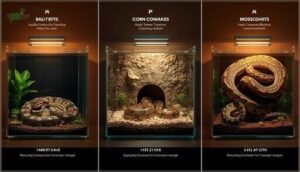
You’ll find that snake size variance dramatically influences species hide preferences and proper enclosure layout. Ball pythons need hides allowing contact with three sides when curled—adults use 12x12x6 inch dimensions, while hatchlings require 5x5x4 inch spaces.
Corn snakes thrive with plastic hides featuring small entrances in 36x18x18 inch minimum enclosures, whereas boa constrictors demand proportionally larger refuges: babies under two feet use 2×1.5×1 foot hides, but adults exceeding eight feet require 8x4x4 foot spaces for adequate snake hiding behavior.
Risks of Hides That Are Too Large
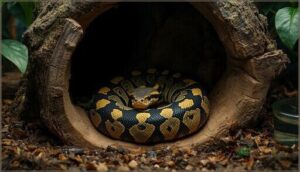
Vulnerability creeps in when Hide Size overshoots your snake’s Security Needs. Oversized Hide Design undermines Snake Hiding instincts, fueling Snake Anxiety and Stress Factors.
In a complex Enclosure Setup, large, open hides act more like exposed spaces than refuges, disrupting Hide Placement and reducing feeding response.
That’s why enclosure complexity must prioritize snug, secure Hide Design over mere spaciousness.
Benefits of Snug, Enclosed Spaces
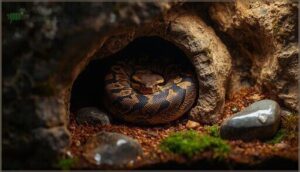
Security isn’t the only advantage—snug, enclosed spaces deliver measurable health and behavioral gains you’ll see in your snake. Compact spaces with proper hide placement support:
- Thermal Regulation through reduced air circulation and stable microclimates
- Humidity Control that aids complete shedding cycles
- Stress reduction by limiting visual exposure
- Natural ambush behavior from concealed hiding spots
- Improved feeding response in secure snake refuge zones
Tight snake hides promote calmer, healthier animals.
Snake Growth and Changing Hide Needs
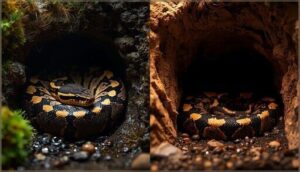
Growth patterns drive constant shifts in hide preferences, especially during rapid juvenile development. As your snake increases in girth and body diameter, you’ll need to upsize hides every few months to maintain that snug fit essential for security.
Shedding cycles temporarily intensify the need for tighter spaces, so providing a range of reptile hides—from snug to moderately roomy—aids healthy snake development without triggering stress during environmental adaptation phases.
How Hide Preferences Affect Snake Health
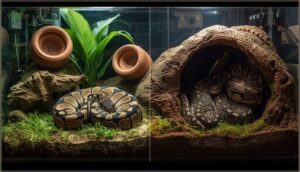
Your snake’s choice of hide isn’t just about comfort—it directly influences critical physiological processes that determine overall health and longevity. When snakes can’t find appropriately sized, secure hiding spots, their ability to regulate body temperature and complete successful sheds becomes compromised, often leading to preventable health issues.
Understanding how hide preferences connect to these essential biological functions will help you create an environment where your snake can thrive naturally.
Thermoregulation and Temperature Control
Think of your snake’s enclosure as a climate roadmap—it needs distinct thermal zones. Snakes rely on behavioral thermoregulation, shuttling between heat sources and cold spots to maintain their preferred operating range of 75 to 90 degrees Fahrenheit. Without proper temperature gradients and ambient control, your snake can’t digest efficiently or fight off infections. Strategic hide placement facilitates this thermal cycling naturally.
- Effective thermal regulation requires multiple microhabitats within the enclosure, allowing snakes to self-select appropriate temperatures based on metabolic needs.
- Temperature gradients between 75 and 90 degrees Fahrenheit enable most species to thermoregulate effectively, though specific ranges vary by origin.
- Heat sources positioned near hides create warm retreats where snakes can digest meals efficiently while maintaining security.
- Cold spots with separate hides provide essential cooling zones, preventing overheating and supporting long-term health.
- Inadequate ambient control disrupts thermoregulation, potentially compromising immune function and increasing disease susceptibility.
Impact on Shedding and Humidity
Your snake’s shedding success hinges on humidity control within its hiding spots. Humid microclimates inside enclosed reptile hides create moisture-rich zones approaching saturation, which prevent dysecdysis—the incomplete shed caused by insufficient snake hydration.
During ecdysis, tight-fitting hides packed with damp substrate maintain stable vapor levels that enable clean skin separation. Combined with proper thermoregulation, this localized humidity approach fosters healthy shedding cycles and prevents respiratory complications from excessive whole-enclosure moisture.
Setting Up The Perfect Snake Hide in Captivity
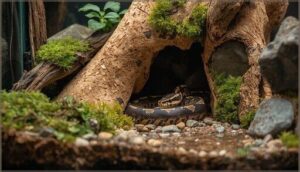
Now that you understand how hides impact your snake’s health, let’s talk about putting that knowledge into practice. Creating an effective hide setup involves more than just placing a box in the enclosure—it requires strategic placement, thoughtful material selection, regular maintenance, and ongoing observation of your snake’s behavior.
The following sections will guide you through each critical aspect of designing a hide system that promotes security, proper thermoregulation, and overall well-being for your snake.
Placement on Warm and Cool Sides
Providing distinct temperature zones isn’t just convenient—it’s essential for your snake’s thermoregulation strategies. By placing hide boxes on both warm and cool sides, you enable natural microclimate selection, allowing your snake to shift between thermal gradients as needed. This dual-hide placement aids ideal thermal regulation and reduces stress-related behaviors:
- Warm-side hides promote rapid body temperature elevation during cooler periods
- Cool-side retreats prevent overheating when ambient conditions exceed comfort ranges
- Accessible temperature gradients improve feeding regularity and shedding success through stable thermoregulation
Material Choices: Commercial Vs. Natural Hides
When you weigh Hide Material for your reptile enclosure design, think beyond looks. Commercial reptile hides offer easy Sanitation Methods and fit minimalist setups, while natural hide boxes—like cork or stone—bring richer Thermal Mass and Microclimate stability. Here’s a quick comparison:
| Commercial Hides | Natural Hides |
|---|---|
| Easy to clean | Textured, realistic |
| Low thermal mass | High thermal mass |
| Predictable fit | Customizable look |
Cleaning and Maintenance for Hygiene
Once you’ve selected your hide material, regular Hygiene Practices keep your snake healthy. Spot-clean feces daily, then deep-clean hide boxes every two to four weeks with a reptile-safe Disinfectant. Use diluted chlorhexidine or bleach for Bacterial Control. Scrub crevices, rinse thoroughly, and air-dry before returning the hide to your enclosure setup.
Consistent Cleaning Schedules prevent scale rot and respiratory infections, especially in humid hides.
Monitoring Snake Behavior for Preference
After establishing a Cleaning Schedule, you’ll want to track how your snake interacts with each hide box through deliberate Snake Observation. Behavior Tracking reveals Hide Selection patterns through three key indicators:
- Time spent in each refuge during 24-hour cycles shows stable Preference Monitoring data.
- Repeated use of specific hides signals genuine comfort rather than random Animal Behavior.
- Temperature differentials between chosen and ignored hides confirm thermoregulation-driven Reptile Behavior.
This Environmental Enrichment approach helps you adjust your Snake Hides setup.
Top 6 Hides for Snug Snake Security
Now that you understand the principles behind selecting and setting up effective hides, you can explore specific products that meet your snake’s biological need for snug, secure spaces.
The following six hides have been selected based on their design characteristics, material composition, and suitability for providing the tight-fitting refuges that reduce stress and promote natural behavior.
Each option covers different aspects of hide functionality, from thermoregulation support to ease of maintenance, giving you practical choices for your captive snake’s enclosure.
1. Tikaton Reptile Heat Pad
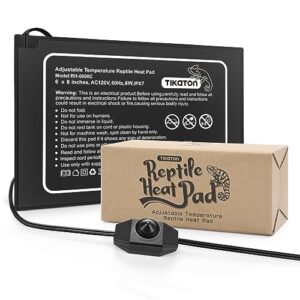
The Tikaton Reptile Heat Pad functions as an energy-efficient heat source that integrates directly beneath hide boxes, creating a localized temperature gradient essential for thermoregulation. With adjustable temperature control and low power consumption (8–24W), this PVC pad material maintains stable warmth under snug reptile hides without overheating.
You’ll find its compact dimensions (6×8 to 8.5×18.5 inches) ideal for small to medium enclosures, encouraging natural snake behavior by making tight-fitting hides thermally attractive. Always pair it with a thermostat to prevent temperature spikes that could compromise your snake’s comfort and safety.
| Best For | Snake keepers who want to add reliable under-hide warmth to small or medium enclosures, especially for species that prefer tight, heated retreats. |
|---|---|
| Primary Use | Reptile heating |
| Material | PVC |
| Size Range | 6×8 to 8.5×18.5 inches |
| Easy Cleaning | Yes |
| Target Species | Reptiles, amphibians, arachnids |
| Price Point | Mid-range |
| Additional Features |
|
- Low energy use (8–24W) means you can run it continuously without a big jump in your electric bill
- Adjustable temperature control lets you dial in the right warmth for your specific snake species
- IPX67 waterproofing handles spills and humidity without shorting out
- Only works with glass tanks—won’t stick properly to wood, plastic, or acrylic setups
- Larger enclosures (55 gallons) might need multiple pads or a different heat source to hit target temps
- You really need a thermostat to avoid overheating, which adds to the upfront cost
2. Leoterra Ball Python Hide
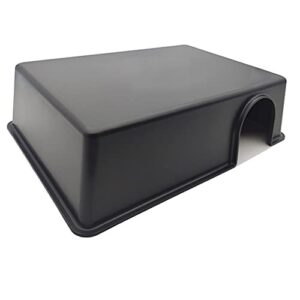
The Leoterra Ball Python Hide offers a hollow, single-entry design that mimics the narrow crevices wild pythons seek in nature, providing full-body contact for security. Its compact dimensions suit small to medium adult ball pythons, encouraging natural refuge behavior while you maintain enclosure setup flexibility.
You’ll appreciate the non-porous material for simple cleaning and humidity control during shedding cycles. Because python behavior demands snug hide boxes that touch multiple body points, this shelter meets core reptile hides requirements without excess space that could compromise your snake’s sense of safety.
| Best For | Ball python owners who need a secure, easy-to-clean hide that provides the snug fit their snake needs to feel safe, especially during shedding. |
|---|---|
| Primary Use | Snake hide |
| Material | Plastic |
| Size Range | 16.5×10.6×4.3 inches |
| Easy Cleaning | Yes, smooth design |
| Target Species | Ball pythons, large snakes |
| Price Point | Premium |
| Additional Features |
|
- Single-entry design creates the tight, enclosed space ball pythons naturally prefer for security
- Non-porous plastic material makes cleaning simple and helps maintain proper humidity levels
- Compact size works well in most enclosures without taking up too much room
- The XL size may be too large for younger or smaller ball pythons under 150g
- Some owners find the price point a bit high for a basic plastic hide
- Lightweight construction means it might need to be weighed down to prevent your snake from pushing it around
3. Exo Terra Reptile Hide Cave
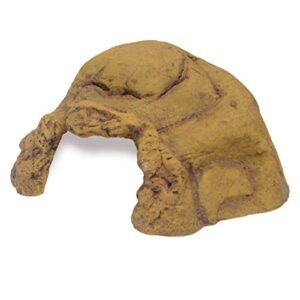
You’ll find the Exo Terra Reptile Hide Cave delivers a molded resin shell that holds surface temperature for thermoregulation without rapid heat loss—critical for snake enrichment in your terrarium setup. Its 6-to-8-inch height suits mid-size snakes, while the rounded interior and single entrance eliminate sharp corners that compromise security.
Many keepers report increased use during inactive periods, confirming the cave design meets natural reptile behavior preferences for closed refugia. Because reptile hides demand snug contact points, this hide box satisfies core reptile enclosure design standards without excess space.
| Best For | Snake and reptile owners who need a secure, temperature-stable hide that encourages natural resting behavior in mid-size species like ball pythons and bearded dragons. |
|---|---|
| Primary Use | Reptile hide |
| Material | Polyurethane foam |
| Size Range | 5.51×5.51 inches |
| Easy Cleaning | Yes |
| Target Species | Ball pythons, bearded dragons |
| Price Point | Mid-range |
| Additional Features |
|
- Molded resin construction holds surface heat well, supporting your snake’s thermoregulation needs without constant external warming.
- Rounded interior with a single entrance creates the snug, enclosed feel reptiles seek during inactive periods—many keepers see increased hide usage.
- Stackable design saves terrarium floor space, and the realistic rocky look blends into naturalistic setups.
- Shipping damage is common due to thin packaging, and some units arrive with rough edges or sharp points inside that need sanding.
- Strong chemical smell and plastic shavings often require thorough washing before first use.
- Price runs higher than local pet shops for similar hides, and quality control issues occasionally result in defects.
4. Wontee Reptile Hideout Box
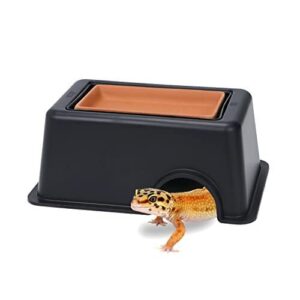
You’re looking at a compact hide with a 6.68×4.32×2.75-inch footprint that fulfills double duty: the Wontee Reptile Hideout Box combines enclosed spaces with a removable water basin for humidity control systems. Its upper reservoir releases moisture gradually, supporting thermoregulation and shedding in juvenile snakes—though the manufacturer doesn’t publish peer-reviewed thermal data.
User feedback in this hideout box review highlights the snug opening favored in snake enclosure design, but you’ll need to confirm interior dimensions match your snake’s coiling diameter before purchase.
Regular cleaning prevents calcium buildup and maintains hygiene in your reptile enclosure design.
| Best For | Owners of juvenile snakes, small geckos, or young lizards who need a compact hide that doubles as a humidity station during shedding cycles. |
|---|---|
| Primary Use | Reptile hide with humidity |
| Material | Plastic with water tank |
| Size Range | 6.68×4.32×2.75 inches |
| Easy Cleaning | Yes |
| Target Species | Juvenile snakes, lizards, geckos |
| Price Point | $11.39 |
| Additional Features |
|
- Built-in water basin with slow-release moisture keeps humidity steady without constant misting
- Snug opening creates the secure, cave-like feel that helps shy reptiles destress
- Affordable at $11.39 and easy to wipe clean between substrate changes
- 6.68-inch footprint won’t work for adult ball pythons or larger species
- Water dish can crack in transit, and the opening may feel tighter than photos suggest
- Calcium deposits form quickly if you use hard tap water, requiring weekly scrubbing
5. Reptile Heat Pad Mat
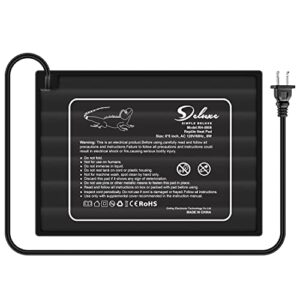
Under-tank heat source options often confuse keepers who need thermoregulation and temperature control solutions without traditional hides. The Reptile Heat Pad Mat (6×8 inches, 8-24W variants) adheres beneath glass terrariums via 3M backing, creating localized temperature gradients that support thermal regulation when paired with thermostat settings—unregulated surfaces exceed 100°F, posing reptile heating safety risks.
Mat design features distribute conductive warmth across 25-50% of your enclosure floor, establishing a functional temperature gradient. You’ll monitor temperature control systems with infrared thermometry to confirm safe thermoregulation zones.
| Best For | Keepers of terrestrial snakes and small reptiles in glass terrariums who need a reliable belly heat source to support digestion and thermoregulation when combined with proper thermostat control. |
|---|---|
| Primary Use | Reptile heating |
| Material | PVC |
| Size Range | 6×8 inches |
| Easy Cleaning | Yes, flexible material |
| Target Species | Desert and tropical species |
| Price Point | Budget to mid-range |
| Additional Features |
|
- Creates an effective thermal gradient when positioned under one side of the enclosure, letting reptiles choose between warm and cool zones for natural temperature regulation.
- Works well in low-profile glass tanks with minimal substrate, providing consistent conductive heat directly where ground-dwelling species rest and digest.
- Affordable and energy-efficient option at 8-24W that’s easy to install with adhesive backing and doesn’t require complicated setup.
- Requires a separate thermostat to prevent dangerous overheating—unregulated mats can exceed 110°F and cause thermal burns to reptiles.
- Ineffective as a sole heat source in taller enclosures or with deep substrates, since it only warms surfaces rather than ambient air temperature.
- Not compatible with wood, plastic, or acrylic tanks, and loses heating efficiency under thick bioactive substrate layers.
6. Zoo Med Reptile Cave Shelter
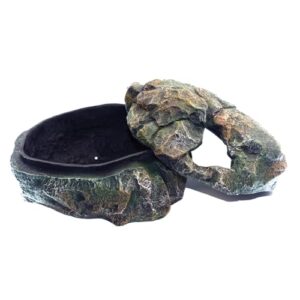
The Zoo Med Reptile Cave Shelter combines naturalistic rock textures with thermally stable ceramic construction, creating hiding environments that mimic the compact crevices wild snakes instinctively seek for security and shedding support.
You’ll find these ceramic hideouts provide the enclosed spaces necessary for thermoregulation—placement on warm zones aids heat absorption while cool-side positioning allows temperature regulation.
The 6×12×11-inch dimensions accommodate medium-to-large species within your reptile enclosures, though you’ll need to assess individual snake proportions for proper fit.
Hide maintenance requires routine cleaning to prevent bacterial colonization, and the removable lid simplifies terrarium designs without disturbing occupants.
| Best For | Snake owners who want a durable, naturalistic hiding spot that helps with shedding and thermoregulation for medium to large reptiles. |
|---|---|
| Primary Use | Reptile hide |
| Material | Ceramic |
| Size Range | 6x12x11 inches |
| Easy Cleaning | Yes, removable lid |
| Target Species | Various reptiles |
| Price Point | Mid to high-range |
| Additional Features |
|
- Three-in-one design works as a hide, shedding box, and nesting area with a removable lid for easy access
- Ceramic construction holds temperature well when placed on heating mats, helping snakes regulate their body heat
- Natural rock texture blends into terrariums and mimics the tight spaces snakes seek in the wild
- Ceramic material can crack or break during shipping or if dropped, creating sharp edges that might injure your pet
- The lightweight lid can be pushed off by stronger snakes, reducing the security of the hideout
- Size may not work for larger snake species—you’ll need to check measurements against your snake’s dimensions
Frequently Asked Questions (FAQs)
Can snakes share hides with tank mates?
Would your two corn snakes coexist peacefully in one hide? Most snake species exhibit territoriality and solitary behavior, making shared hides risky. Competition for enclosed spaces often triggers aggression, stress, and potential injury in multi-snake enclosures.
Do baby snakes need smaller multiple hides?
Yes, baby snakes require smaller hides sized for hatchling environments—usually 2–3 inches internally—plus multiple hiding spots on warm and cool sides to support juvenile thermoregulation, stress reduction, and healthy reptile enclosure design during critical growth phases.
How often should humid hides be misted?
Most humid hides require misting 1–2 times daily to maintain ideal humidity control. Frequency adjusts based on enclosure humidity levels, ambient conditions, and your snake’s shedding cycle for effective humidity management and thermoregulation.
What signs show a hide is stressing snakes?
Watch for increased defensive postures, persistent restlessness, and reduced time in the hide—these stress signals reveal environmental cues gone wrong.
Poor shedding, respiratory issues, and appetite changes also flag problems with snake hides and thermoregulation.
Are transparent hides suitable for shy snake species?
Transparent hidebacks often increase snake visual stress in shy species, as these reptile behavior and psychology patterns show opaque hides better support environmental adaptation, reducing perceived threats while maintaining proper enclosure security for improved animal welfare.
Conclusion
Picture your snake coiled inside its hide, body pressed against every surface, breathing slow and steady. That’s not coincidence—it’s biology answering a question evolution settled long ago.
Yes, snakes prefer tight-fitting hides because survival demanded it. Now you understand the why, the how, and the setup that replicates security in captivity.
Your snake won’t thank you with words, but consistent feeding, smooth sheds, and calm behavior will speak volumes.