This site is supported by our readers. We may earn a commission, at no cost to you, if you purchase through links.
A hatchling ball python will skip meals for weeks if it has nowhere to hide. I’ve seen the pattern in countless care notes: a bare tank, a snake pressed against the glass, and a food bowl that never gets touched.
In the wild, small snakes survive by staying tucked into tight, enclosed spaces. An open enclosure feels like a threat, and chronic stress can wreck appetite and weaken immunity.
The right snake hides for small snakes fix that fast. Size, material, and placement all matter, and a few inches either way changes how safe your snake feels. Here’s how to get each one right.
Table Of Contents
Key Takeaways
- Your small snake needs a snug, dark, enclosed hide because open space feels like a threat, and without one it can stop eating and develop weakened immunity from chronic stress.
- Choose a hide where your snake’s body touches the walls, made from smooth, non-porous material like plastic or resin, and upgrade it once your snake can’t fully coil inside.
- Place identical hides on both the warm side (85-90°F) and the cool side (72-80°F), never in the middle, so your snake doesn’t have to choose between feeling safe and feeling warm. If your snake still ignores both hides, this guide on why snakes refuse to use their hide covers other factors worth checking in the enclosure.
- Add a lidded humid hide with loose sphagnum moss when your snake’s eyes turn cloudy, and keep every hide clean with daily spot cleaning, weekly scrubbing, and monthly disinfecting.
Choosing Secure Hides for Small Snakes
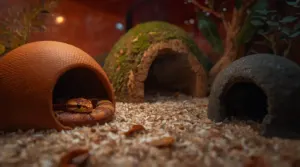
A small snake needs a hide that feels safe, fits snugly, and holds up to daily use. Those three things guide every pick in this guide. Here are the four hides I’d look at first, so you can see how they compare.
Even a snug, secure hide works best alongside gentle habits, and this guide to handling a nervous ball python shows how to build trust once your snake feels safe at home.
Security, Stress Reduction, and Natural Behavior
Security shapes everything a small snake does. In the wild, these animals survive by staying tucked into tight, enclosed spaces, so an open enclosure feels like a threat. That’s instinct, not a judgment of you.
A small snake feels safest when wrapped in tight cover, because open space signals danger to its instincts
A secure hiding spot lowers stress and helps with healthy feeding, shedding, and warming up. Without one, snakes can face chronic stress and appetite loss, including refusing food and a weakened immune system. Add a few branches or cork bark, and your snake can act naturally.
Snug Sizing by Species and Growth
Snug beats roomy. A hatchling ball python does best in a black plastic hide mini, where its body touches the walls. Corn snakes under 18 inches like that tight fit too. Pick reptile size-appropriate hides, then upgrade once your snake can’t fully coil inside.
Juveniles often outgrow hides within 3-4 months, so recheck every few weeks and keep spare sizes.
Material Safety and Durability
Once the fit is right, check what the hide is made of. Polypropylene and PVC hides hold up for years in humid tanks and don’t off-gas when heated. Resin looks great, but let it air out 24 hours first. Pick smooth inner walls so scales don’t scrape.
Skip untreated wood. It grows mold fast. Food-grade plastic is easy to clean and safe.
4 Snake Hides for Small Snakes Compared
I’ve picked four hides that suit small snakes, and each one has a different strength. As you read, check the size, material, and price against your snake’s current length. Here’s how they stack up side by side.
1. Zoo Med 3-in-1 Reptile Cave Medium
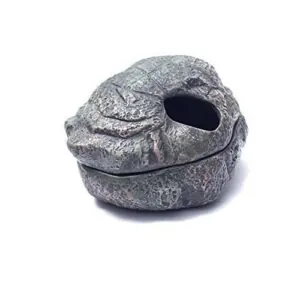
Picture a small rock outcrop sitting in your enclosure, with a dark doorway your snake can slip behind. That’s the Zoo Med 3-in-1 Reptile Cave Medium. It measures 8.8 x 8.6 x 6.2 inches and weighs 1.17 pounds.
Since this cave aids thermal regulation, it helps to know the difference between warm and cool side hides before choosing its spot.
The removable lid is the real win. You can check on your snake or collect eggs without tearing the setup apart. Fill it with Terrarium Moss or Eco-Earth, and you’ve got a humid microclimate for shedding.
Buyers report breakage, so handle gently.
| Best For | Snake and lizard keepers, especially owners of adult Ball Pythons or breeders, who want a humid hide that makes shedding easier and lets them check on animals or collect eggs without disturbing the whole enclosure. |
|---|---|
| Material | Durable resin |
| Dimensions | 8.8 x 8.6 x 6.2 in |
| Weight | 1.17 lbs |
| Stress Reduction | Prevents stress |
| Breeding Use | Nesting site |
| Durability Feedback | Very breakable |
| Additional Features |
|
- Removable lid makes it easy to check on your animal or collect eggs
- Can be filled with Terrarium Moss or Eco-Earth to create a humid microclimate that helps prevent bad sheds
- Works as a hiding shelter for adult Ball Pythons and as a nesting site for breeding snakes and lizards
- Some buyers say it is smaller than expected
- Customers report it is very breakable, so it needs gentle handling
- Reviews on appearance and value for money are mixed, with some saying the advertising did not match the product
2. Exo Terra Crocodile Skull Terrarium Hide
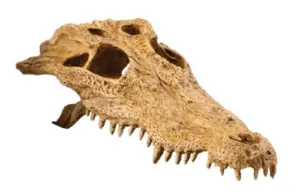
A skull-shaped hide like this one gives your small snake a snug, dark place to settle, and it doubles as decor. It measures 8.5 x 8.5 x 4 inches and uses non-toxic, durable resin. The eye sockets and nasal cavity act as multiple entrances, so your snake can slip in and out easily.
It works for desert and rainforest setups. Some owners report sharp edges inside, though, so check the interior by hand first. A few also found it fragile.
| Best For | Owners of small snakes, reptiles, or amphibians who want a secure hiding spot that also adds a realistic look to a desert or rainforest terrarium. |
|---|---|
| Material | Non-toxic resin |
| Dimensions | 8.5 x 8.5 x 4 in |
| Weight | 0.27 grams |
| Stress Reduction | Reduces stress |
| Breeding Use | N/A |
| Durability Feedback | Fragile despite claims |
| Additional Features |
|
- Multiple entrances make it easy for animals to slip in and out
- Non-toxic, durable resin works in both desert and rainforest setups
- Gives a dark, secure place to hide, which can reduce stress and add enrichment
- Some customers report sharp edges inside the skull, so check it by hand first
- Some buyers found it smaller than expected despite the 8.5 x 8.5 x 4 inch size
- A few reports describe it as fragile despite claims of sturdiness
3. REPTI ZOO 2-in-1 Reptile Hide Cave
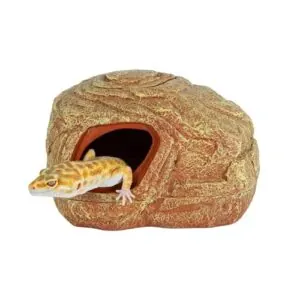
The two-entrance design is what sets this hide apart. You get a top hole and a side hole, so your snake can come and go from either spot. It’s a 2-in-1 multifunction hide, so it works for resting, breeding, and feeding.
It measures 5.1 x 3.7 x 3.7 inches and weighs 1.54 pounds, which suits small snakes and geckos. The smooth resin cleans up easily, and the rough rock look helps with shedding.
Owners report paint chipping and mixed durability.
| Best For | Owners of small snakes and geckos who want a easy-to-clean hide that works for resting, feeding, and breeding. |
|---|---|
| Material | Non-toxic resin |
| Dimensions | 5.1 x 3.7 x 3.7 in |
| Weight | 1.54 lbs |
| Stress Reduction | Reduces stress |
| Breeding Use | Top spawning hole |
| Durability Feedback | Mixed; paint chipping |
| Additional Features |
|
- Two entrances (a top hole and a side hole) give your pet more than one way in and out
- The rough rock texture helps with shedding, and the smooth resin surface is easy to clean
- The 2-in-1 design covers resting, breeding, and feeding in one hide
- Some owners report the paint chips over time
- Durability gets mixed feedback from users
- Too small for larger reptiles, since it only suits small snakes and geckos
4. REPTIZOO Resin Reptile Hide Cave
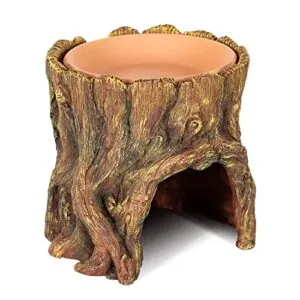
Think of this hide as a tiny stone cottage with a built-in well.
It measures 5.2 x 5.2 x 5.2 inches and weighs 1.32 pounds. The resin cave holds a removable terracotta water basin that slowly releases moisture, which helps with shedding. It also gives shy reptiles privacy and can work as a spawning spot.
Be honest with yourself about the downsides, though. Some owners say it doesn’t hold moisture well over time, and feedback on durability and value is mixed.
| Best For | Reptile owners with shy species like leopard geckos who want a private hide that also adds a little humidity to help with shedding. |
|---|---|
| Material | Resin (cave), terracotta basin |
| Dimensions | 5.2 x 5.2 x 5.2 in |
| Weight | 1.32 lbs |
| Stress Reduction | Comfortable, private shelter |
| Breeding Use | Spawning ground |
| Durability Feedback | Mixed feedback |
| Additional Features |
|
- The removable terracotta water basin slowly releases moisture to support healthy shedding.
- The resin cave gives reptiles a comfortable, private shelter and can double as a spawning spot.
- The water dish lifts out, which makes cleaning easier.
- Some customers report that it does not retain moisture well over time.
- Feedback on durability and long-term structural integrity is mixed.
- Opinions vary on whether the 5.2-inch size is right and whether it offers good value for the money.
Positioning Hides on Warm and Cool Sides
A hide that’s too far from the heat is just as useless as no hide at all. Snakes won’t use what makes them choose between feeling safe and feeling warm.
When you position hides on warm and cool sides, aim for these basics:
- Put the first hide over or beside the heat source where it stays 85-90°F.
- Place the second hide at the far end, around 72-80°F.
- Use identical snake hides for reptile tanks so neither side feels riskier.
- Keep a digital thermometer inside each hide, not on the glass.
Skip the middle of the enclosure. A central hide blocks airflow and flattens the temperature gradient your snake relies on for thermoregulation. Exposed snakes stress quickly, so get this right.
Humid Hides for Small Snakes During Shedding
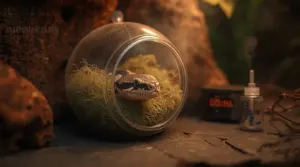
Ever watched a snake struggle with a patchy, stuck shed? A humid hide is the simple fix, and it works best when you set it up before the trouble starts.
Offer one when your snake’s eyes turn cloudy, the blue phase. Put it on the cool side and leave it until the shed is done. Use a lidded tub with a snug entry hole, then fill it halfway with loosely layered sphagnum moss, about 1 to 2 inches deep. Don’t pack it down. Loose moss holds moisture and lets air move through.
Check the humidity daily with a hygrometer. Mist lightly and swap out the moss if it smells or looks moldy. Ball pythons need it damper than corn snakes, so adjust for your species.
Making Safe DIY Hides for Small Snakes
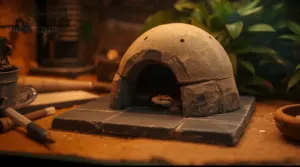
A hide doesn’t have to come from a pet store. A homemade one can work just as well, and you control the size, the cost and every material.
Start with a stable base, like a crock pot bowl or flat stone, so the hide can’t tip. Size the inside to about 1.5 times your snake’s diameter. For a hatchling, 4" x 3" x 2" is a good start.
Keep these three rules in mind:
- Sand every rough edge on slate, foam or grout.
- Seal porous materials with a reptile-safe sealant, then let silicone cure 24 to 72 hours.
- Drill 1/8 inch vent holes near the top.
Skip fragrant softwoods, since their oils harm reptiles. Safe builds give secure hiding spots.
Cleaning and Replacing Small Snake Hides
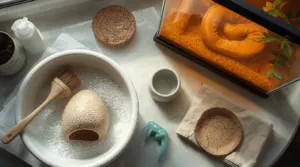
Whether you bought your hide or built it, it needs regular care. Sealed, non-porous surfaces are easy to clean, so seal that DIY build.
Spot clean daily. Remove feces, urates, shed skin and uneaten food right away.
Once a week, take the hide out and scrub it with hot soapy water. Use a soft brush in the crevices, rinse well and let it dry completely. Each month, or after any illness, disinfect with a reptile-safe disinfectant like F10, chlorhexidine or bleach diluted 1:32. Rinse and dry again. Skip Lysol and cedar cleaners.
Replace a hide if it cracks, chips or keeps a smell or stain after cleaning. Wood and cork can’t be fully disinfected, so swap them out when they’re soiled.
Frequently Asked Questions (FAQs)
What should I do if my snake refuses its hide?
Start by ruling out illness. Parasites or a respiratory infection can send a snake looking for relief instead of security. Then check the hide’s size, your temperature gradient, and humidity. Offer snug hides on both sides.
Why does my snake hide all day?
Congratulations, your snake is doing exactly what it should. Hiding is normal, especially for nocturnal species. It’s also how they regulate heat. Still, watch for appetite loss, soaking in water, or never leaving one side.
Should hides have ventilation holes for airflow?
Mostly no. Your hide sits inside an enclosure that already has vents, so it doesn’t need its own. A solid, snug cave feels safer to a small snake. If you use a humid hide, skip extra holes there.
Do small snakes prefer dark or light hides?
Your snake would trade a bright penthouse for a dark closet any day. Dark isn’t really the point, though. Snug, covered spaces are what make small snakes feel safe, so choose snake hides for reptile tanks with tight, opaque interiors.
Conclusion
Picture a six-week-old ball python that ignored three feeders in a row. The owner swapped its oversized hide for a snug $12 cave on the warm side, and the snake ate within four days.
That’s the power of choosing the right snake hides for small snakes. Keep them snug, safe, and spotless, and add a humid one during every shed. Your young snake will stop pressing against the glass and start acting like itself again.