
This site is supported by our readers. We may earn a commission, at no cost to you, if you purchase through links.

Mold doesn’t announce itself. One morning your shed smells fine, and three weeks later you’re scraping black fuzz off a $400 power tool.
That gap—three weeks, maybe less—is how fast unchecked moisture works when dry shed humidity levels drift above 60%. Most people never think about shed humidity until something rusts, warps, or rots.
But the damage starts long before you see it, quietly accelerating inside wood grain and along metal edges. Getting your humidity range right, and keeping it there, is what separates a shed that lasts decades from one that slowly self‑destructs.
Table Of Contents
- Key Takeaways
- What Are Optimal Shed Humidity Levels?
- Why Humidity Levels Matter in Sheds
- Common Causes of Elevated Shed Humidity
- Methods to Control Shed Humidity Levels
- Best Practices for Maintaining Dry Shed Conditions
- Frequently Asked Questions (FAQs)
- Is 25% humidity too dry for a house?
- What humidity level is bad for COPD?
- Is 65 RH too high for curing?
- Can solar panels power shed dehumidifiers effectively?
- How does landscaping affect shed moisture levels?
- What flooring materials resist moisture absorption best?
- Does shed color impact internal temperature and humidity?
- How long do desiccant moisture absorbers typically last?
- Conclusion
Key Takeaways
- Keep shed humidity between 45–55% RH — drifting past 60% and mold can appear within 24 hours, while dropping below 30% cracks wood and splits tool grips.
- Moisture enters from three directions at once: rising through the ground, seeping through roof gaps, and condensing on metal surfaces during overnight temperature drops.
- A layered defense works best — combine a digital hygrometer, a correctly sized dehumidifier (25–40 pints for sheds under 300 sq ft), and a 6 mil vapor barrier to address air, appliances, and ground moisture together.
- Ventilation only works when it’s unblocked — clogged screens cut airflow by up to 70%, so clean them every six months and keep 30 cm of clearance around all wall vents.
What Are Optimal Shed Humidity Levels?
Getting the humidity right in your shed isn’t guesswork — there’s a practical range that keeps your tools, timber, and gear in good shape.
Staying within that range also protects against mold and respiratory issues, as outlined in this guide to optimal shed humidity and ventilation conditions.
A few key numbers and the right monitoring tools make all the difference.
Here’s what you need to know.
Recommended RH Range for Dry Storage
Most sheds don’t need climate control — they need a target. Aim for 45–55% relative humidity for dry storage, following ASHRAE guidelines. That range covers most needs:
- Metal tools: 30–50% RH stops rust
- Wood materials: 40–55% RH prevents swelling
- Electronics: under 50% RH blocks oxidation
- Documents: 40–55% RH preserves paper integrity
Humidity control starts with knowing your number. Implement a drying lane near the door to help remove moisture from wet gear before storage.
Risks of High Vs. Low Humidity
Drift past 60% humidity, and problems stack fast. Wood swelling warps doors off their frames. Metal rust pits tool surfaces within weeks. Mold growth can appear in as little as 24 hours on damp walls.
Past 60% humidity, mold claims your walls within 24 hours and rust follows close behind
Drop below 30% and you’re not safe either — material cracking, split grips, and static sparks become real health hazards. Moisture works both ends against you. Maintaining the optimal indoor humidity range helps protect wood and metal components.
Monitoring Tools for Shed Humidity
Knowing your humidity range means nothing if you can’t track it.
Digital Hygrometers like the ThermoPro TP49 update every 10 seconds — accurate to within 2-3%.
Wireless Sensors such as the Govee H5051 send phone alerts when moisture climbs past your set threshold.
Prefer no batteries? Analog Devices need none.
Data Logging models track daily spikes, helping you spot ventilation gaps before rot sets in.
Why Humidity Levels Matter in Sheds

Humidity doesn’t just make your shed feel damp — it quietly destroys what’s inside.
Over time, trapped moisture warps wood, rusts tools, and breeds mold — much like humidity silently damages a snake’s shedding environment when left unchecked.
Wood warps, metal rusts, and mold claims corners before you ever notice the damage.
Here’s what’s actually at stake when humidity levels go unchecked.
Impact on Wood, Tools, and Equipment
Think of your shed as a living system — humidity touches everything inside it.
Handle swelling loosens axe and hammer heads when moisture spikes. Blade corrosion starts quietly on idle tools. Motor degradation follows when condensation reaches wiring. Shelf warping shifts loads unevenly. Joint rust stiffens every pivot point.
Consistent moisture control, good ventilation, and basic timber care keep your tools and equipment working the way they should.
Mold, Mildew, and Rust Prevention
Once humidity climbs past 60% RH, mold and rust don’t wait. Mold-resistant paints and rust-inhibiting primers form your first line of defense on walls and metal surfaces.
Back those up with desiccant packets in corners, humidistat-controlled fans for ventilation, and a dehumidifier keeping levels under 50%. Vapor-barrier flooring cuts ground moisture at the source — making mold prevention a system, not a guess.
Effects on Shed Longevity and Safety
Ignore humidity long enough, and your shed pays the price — structurally, financially, and physically. Here’s what’s quietly at stake:
- Structural Decay accelerates wood rot, cutting shed lifespan by 10+ years
- Electrical Hazards develop as condensation corrodes wiring and outlets
- Pest Infestation thrives in damp conditions, weakening load‑bearing framing
- Slip Hazards increase when moisture control fails and floors stay damp
Consistent shed maintenance prevents mold growth before it spreads.
Common Causes of Elevated Shed Humidity

Moisture doesn’t just appear out of nowhere — your shed is pulling it in from multiple directions at once. Knowing where it’s coming from is the first step to actually stopping it.
Here are the most common culprits worth checking.
Ground and Soil Moisture Intrusion
Your shed floor is the first line of defense — and often the weakest.
Ground moisture rises silently through soil capillary rise, wicking upward into your foundation before you notice anything wrong. Clay soils make this worse.
Without vapor barrier installation or a gravel pad beneath your base, that moisture has nowhere to go but up. Proper foundation grading and perimeter skirting keep ground moisture out for good.
Roof Leaks and Water Ingress
Your roof isn’t just a cover — it’s first real moisture barrier. Fastener failure lets water seep through corroded screw holes, while panel seam gaps widen with temperature shifts, channeling rain straight inside. Flashing leaks form at edges where seals lift and crack.
Check gutters, downspouts, and roof drainage regularly. Early leak detection stops water damage before humidity climbs.
Condensation From Temperature Swings
Temperature swings are silent troublemakers. When night air drops 10–20°F, Dew Point Dynamics kick in — your metal panels cool fast, hitting the dew point before you know it. That’s Metal Panel Cooling doing damage while you sleep.
- Cold Bridging Effects form on fasteners and door tracks first
- Anti‑Condensation Coatings absorb moisture, then release it as temperatures rise
- Night‑time Heating Strategies keep surfaces a few degrees above dew point
- Even modest insulation slows Condensation on exposed panels considerably
- Humidity and Temperature Regulation together protect your tools from rust
Poor Ventilation and Airflow Issues
Poor airflow is often the hidden culprit behind stubborn shed dampness. Blocked Vents, Improper Vent Placement, and Missing Cross Ventilation each quietly drive humidity past 60% RH. Clogged Vent Screens cut airflow by 50% within months. Undersized Openings trap moisture just as effectively as no vents at all.
| Ventilation Problem | Humidity Impact | Fix |
|---|---|---|
| Blocked Vents | Up to 80% airflow loss | Clear 12-inch clearance |
| Improper Vent Placement | 50% reduced cross-breeze | Align with prevailing winds |
| Clogged Vent Screens | 70% exhaust blockage | Clean screens every 6 months |
Methods to Control Shed Humidity Levels
Once you know driving the moisture, fixing it gets a lot more straightforward.
There’s no single solution — the right approach depends on your shed’s size, location, and how it’s built.
Here are the most effective methods to bring humidity under control.
Proper Ventilation Techniques

Air moves where you direct it — or it stagnates. Good shed ventilation systems rely on smart placement, not guesswork.
- Gable Vent Placement: Mount vents on opposite ends, high near the peak, for true cross-ventilation.
- Ridge Vent Installation: Cut a 2-inch ridge slot — pairs with soffit intake design to pull air upward.
- Louvered Wall Vents: Position low on windward walls for steady air circulation.
- Vent Sizing Calculations: Follow the 1:150 rule — one square inch per 1.5 square feet of floor space.
Using Dehumidifiers and Moisture Absorbers

Ventilation moves air — but sometimes you need hardware to finish the job. A dehumidifier pulls moisture directly from the air; dehumidifier sizing matters here. Sheds under 300 square feet generally need 25–40 pint units.
For moisture absorbers, silica gel packs suit toolboxes while calcium chloride manages heavier humidity loads. Follow a monthly maintenance schedule and adjust power options and absorber placement seasonally.
Installing Vapor Barriers and Insulation
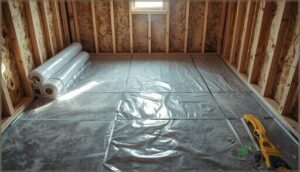
Dehumidifiers handle the air — vapor barriers handle the source.
A 6 mil polyethylene sheet blocks 99% of ground vapor transmission.
Barrier Material Selection matters: cold climates need interior placement, hot-humid zones need exterior.
Follow the right Insulation Placement Order — insulation against framing first, then barrier inward.
Use Seam Sealing Techniques like 6‑inch overlaps with acrylic tape.
Climate Specific Barriers and proper Installation Tools Overview make shed moisture prevention straightforward.
Sealing Gaps, Cracks, and Entry Points

Vapor barriers stop ground moisture — but gaps in walls and doors undo that work fast.
Weatherstripping installation around door frames blocks drafts up to half an inch wide. Door sweep selection matters too: twin-fin silicone sweeps cut under-door humidity inflow by 80 percent. Silicone caulk application seals joints for 20 years. Use expanding foam for larger cracks, then finish with base joint sealing.
Best Practices for Maintaining Dry Shed Conditions

Keeping your shed dry isn’t a one-time fix — it’s an ongoing habit.
A few simple routines, done consistently, make the difference between a shed that lasts and one that quietly falls apart.
Here’s what actually works.
Regular Humidity Monitoring and Inspections
Check your hygrometer reading at the same time every evening — consistency reveals slow humidity trends you’d otherwise miss. Place the sensor at chest height, away from vents and doors, for accurate relative humidity readings.
Inspect high-risk corners and wall-floor joints weekly during damp seasons. Log your findings; seasonal RH trends become obvious quickly, letting you set alert thresholds before moisture damage begins.
Seasonal Maintenance Tips
Each season brings a different moisture threat — and your response needs to shift accordingly. Here’s a practical breakdown of shed maintenance tips by season:
- Spring Prep: Clear debris, regrade soil, and clean gutters before rains arrive.
- Summer Cooling: Run your dehumidifier more often, open vents fully, watch for condensation.
- Autumn Leaf Management: Remove leaves against walls, reseal caulk, check drainage.
- Winter Insulation: Use desiccant units, add insulation, keep temperatures steady.
Year-round checks keep humidity and ventilation working together.
Cleaning and Organization for Airflow
Clutter is your biggest ventilation enemy. Clear Floor Pathways — at least 60 to 90 centimeters from door to back wall — let air flush through instead of stagnating.
Maintain Vent Clearance by keeping 30 centimeters around wall openings. Vertical Tool Racks free floor space, improve air circulation, and simplify shed organization. Good Shelf Spacing and Decluttered Containers complete your moisture management system for reliable dry storage.
Addressing Issues Before Damage Occurs
A small problem ignored is a big repair waiting. Early Detection is your first line of defense — check moisture sensors weekly and log any humidity spikes above 60 percent.
Rapid Response matters: open vents for 20 to 30 minutes when you spot condensation, run your dehumidifier after heavy rain, and apply Proactive Sealing around joints annually.
Preventive Maintenance keeps moisture control simple and damage rare.
Frequently Asked Questions (FAQs)
Is 25% humidity too dry for a house?
Dry as a bone—25% humidity in your house triggers skin dryness, static electricity, and wood shrinkage.
HVAC efficiency drops, and humidifier options help. For comfort, aim for 40–50% humidity; lower levels aren’t dangerous, but aren’t ideal.
What humidity level is bad for COPD?
Humidity above 50% is bad for COPD — dense air makes breathing harder. Below 30% carries Low COPD Risk concerns: dry airways, thicker mucus. Humidity Fluctuations between extremes are often the worst trigger.
Is 65 RH too high for curing?
Not necessarily. At 65% RH, cannabis mold risk stays low with good airflow and cool temps. For meat texture impact, it’s actually standard. Temperature interplay matters more than the number alone.
Can solar panels power shed dehumidifiers effectively?
Yes, but only when solar sizing, battery capacity, and panel efficiency match the dehumidifier’s load.
A 300W unit needs 200+ Ah of storage. Mismatched systems fail. Pair with ventilation and moisture control for best results.
How does landscaping affect shed moisture levels?
Your landscaping shapes moisture pathways directly.
Grading slope, plant placement, soil drainage, mulch management, water source positioning, gutters, downspouts, ground moisture control, and drains all determine how much water reaches your shed’s base.
What flooring materials resist moisture absorption best?
Your floor is your first line of defense.
Porcelain tile, waterproof vinyl, rubber flooring, epoxy concrete, and resin grid systems all resist moisture absorption — each blocking damp through different but effective moisture control strategies.
Does shed color impact internal temperature and humidity?
Shed color absolutely affects interior heat.
Dark exteriors absorb over 80% of sunlight, driving color heat gain that spikes condensation patterns at night. Light shades with high SRI values keep things cooler and drier.
How long do desiccant moisture absorbers typically last?
Like a sponge, desiccants fill up fast. Silica gel lasts 12–18 months sealed, but saturates in under 24 hours at high humidity. Regeneration cycles restore capacity. Match capacity vs. size carefully.
Conclusion
Think of your shed as a sealed envelope—once moisture gets inside, everything slowly sticks, warps, and falls apart.
Keeping the shed’s humidity levels between 30% and 50% isn’t complicated, but it does require consistency. Monitor regularly, seal what lets air in, and act before damage has a head start.
The tools and wood inside your shed don’t ask for much—just a stable, dry environment where they can do their job.
- https://backyardoas.com/blogs/storage-sheds/how-to-prevent-mold-in-storage-shed
- https://woodweb.com/knowledge_base/Keeping_Wood_Dry_in_Storage.html
- https://happyhydro.com/blogs/growing-cannabis/humidity-for-drying-cannabis
- https://www.statelinebuilders.com/post/how-to-maintain-your-shed
- https://storables.com/gardening-and-outdoor/outdoor-structures/how-to-keep-a-shed-dry/