This site is supported by our readers. We may earn a commission, at no cost to you, if you purchase through links.
Your ball python coiled around your wrist feels secure now, but in six months it’ll stretch nearly four feet and need an entirely different home. Most new snake owners underestimate how quickly their pet’s needs will shift, leading to expensive enclosure upgrades or, worse, stress-related health problems.
The factors that affect snake terrarium selection extend far beyond picking an attractive glass box—you’re fundamentally designing a life-support system that regulates temperature, humidity, security, and behavioral needs simultaneously. Species-specific requirements vary dramatically: what works for a desert-dwelling king snake will suffocate a tropical boa, and a terrarium that’s escape-proof for a docile corn snake won’t contain a curious milk snake.
Understanding these variables before you buy prevents costly mistakes and creates an environment where your snake can truly thrive.
Table Of Contents
- Key Takeaways
- Snake Species and Their Unique Needs
- Determining The Ideal Terrarium Size
- Terrarium Materials and Construction
- Security Features for Snake Safety
- Ventilation and Airflow Considerations
- Temperature Regulation and Heating Options
- Humidity Management in Terrariums
- Substrate Selection and Maintenance
- Habitat Enrichment and Accessories
- Maintenance and Health Considerations
- Frequently Asked Questions (FAQs)
- Conclusion
Key Takeaways
- Your snake’s species, adult size, and activity level determine minimum terrarium dimensions—undersizing causes stress and health problems while proper space planning prevents costly upgrades as your pet grows.
- Material choice between glass, plastic, and wood directly impacts temperature retention, humidity control, and maintenance frequency, with each option requiring different approaches to ventilation and insulation.
- Security features like escape-proof locks, ventilation that prevents respiratory infections, and species-specific humidity ranges (30-40% for desert snakes, 80-90% for tropical species) form the foundation of a functional life-support system.
- Habitat enrichment through hiding spots, climbing structures, and environmental mimicry reduces stress and promotes natural behaviors, transforming basic survival conditions into a thriving ecosystem for your snake.
Snake Species and Their Unique Needs
You can’t select the right terrarium without first understanding your snake’s specific requirements, which vary dramatically from species to species. A ball python’s needs differ markedly from those of a corn snake or boa constrictor, affecting everything from enclosure dimensions to environmental controls.
Let’s examine the key species-related factors you’ll need to research before making your purchase.
Researching Common Pet Snake Species
Before you choose a snake terrarium, research your pet species thoroughly. Understanding snake behavior and species-specific needs ensures proper snake care and habitat research from day one.
Ball pythons usually reach 3–4 feet and need secure enclosures with climbing space, while corn snakes grow to 4–5 feet and thrive in 20–40 gallon setups. King snakes, averaging 3–4 feet, require escape-proof habitats with humidity controls.
Activity Levels and Enclosure Requirements
Your snake’s activity levels directly shape its space requirements and enclosure design. Highly active species demand larger terrariums with both vertical and horizontal features, while less mobile snakes thrive in simpler setups.
To meet these exercise needs and support activity monitoring, consider:
- Floor space allowing coil-free movement
- Thermal gradients enabling natural thermoregulation
- Environmental enrichment through branches and shelves
- Rotating accessories sustaining long-term engagement.
Effective science writing requires using clear science terms to describe these needs.
Growth Potential and Adult Size
While activity dictates daily space use, growth rates and adult length determine your long-term enclosure investment. Most snake species reach full size within 2 to 5 years, though species variations mean a corn snake’s 20-gallon tank size won’t suit a ball python’s 40-gallon minimum.
Smart space planning accounts for maximum adult dimensions from day one, preventing costly upgrades and chronic confinement as your snake matures. Considering research methodology is essential for making informed decisions about snake terrarium selection.
Determining The Ideal Terrarium Size
Choosing the right terrarium size isn’t just about fitting your snake inside—it’s about giving them enough room to move, explore, and thrive throughout their entire life.
A cramped enclosure can lead to stress and health problems, while the right setup fosters natural behaviors and keeps your snake comfortable.
A cramped enclosure causes stress and illness, while proper space enables natural behavior and comfort
Here’s what you need to keep in mind when determining the ideal size for your snake’s home.
Minimum Size Guidelines
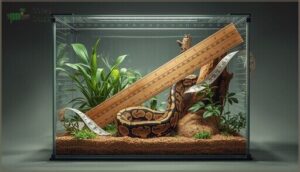
When selecting terrarium dimensions, you’ll want to follow a straightforward rule: the enclosure size should measure at least 1-1.5 times your snake’s total body length, with width equaling half that length.
These snake habitat size requirements aren’t arbitrary—they’re based on species-specific growth factors and movement patterns. Research your snake’s adult size before purchasing, as adequate space requirements prevent the stress and expense of frequent upgrades.
Space for Exercise and Enrichment
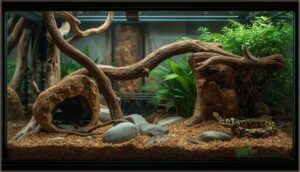
Beyond meeting minimum dimensions, your terrarium size directly impacts snake activity and behavioral health. Adequate exercise space—roughly 10-20% of your snake’s body length in linear distance—facilitates natural movement patterns and reduces stress indicators seen in cramped enclosures.
Consider these enrichment essentials:
- Climbing structures like branches and ledges provide vertical enrichment without expanding floor space
- Burrowing substrate encourages natural digging behaviors and thermoregulation
- Rotating accessories such as rocks or low-temperature basking spots sustain environmental stimulation and prevent behavioral stagnation
Secure hiding spots within activity zones let your snake explore confidently throughout its snake habitat.
Balancing Snake Needs and Home Space
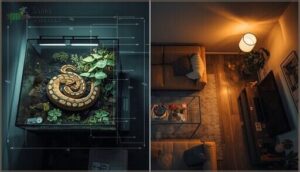
Space optimization begins with a realistic look at your home’s footprint and the adult dimensions of your snake. You’ll need to balance secure enclosure requirements with room temperature fluctuations, humidity control demands, and terrarium placement that won’t disrupt daily routines.
Assess noise levels, heat sources, and future growth to guarantee your snake terrarium integrates smoothly while supporting natural snake behavior without compromising your living space.
Terrarium Materials and Construction
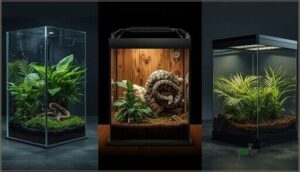
The material you choose for your snake’s terrarium directly impacts everything from temperature retention to how often you’ll be scrubbing down the enclosure.
Each option—glass, plastic, and wood—comes with its own set of trade-offs in durability, insulation, and maintenance demands.
Let’s break down what each material brings to the table so you can make an informed decision.
Glass Vs. Plastic Vs. Wood Enclosures
Each material shapes your snake terrarium differently, and understanding these differences helps you make the right call. Glass terrariums offer crystal-clear visibility for monitoring your snake’s health, though they require attention to temperature control and secure enclosure features. Plastic terrariums are lightweight with decent insulation properties, while wood enclosures excel at maintaining stable conditions but limit observation. Your choice affects ventilation systems, weight capacity, and overall terrarium size planning.
Durability and Insulation Properties
Your terrarium’s long-term performance depends on how well it withstands daily use and maintains stable conditions. Material durability and insulation types are crucial in protecting your snake from temperature fluctuations and potential hazards.
- Glass terrariums resist impact but can crack under temperature shock, though laminated options improve safety and secure enclosure reliability.
- Plastic terrariums offer shatter resistance and lighter weight, yet they scratch easily and may deform when exposed to heat.
- Wooden enclosures provide excellent thermal mass and natural insulation, but moisture can cause warping without proper sealing.
- Wall thickness and sealing quality directly affect how well your terrarium maintains stable humidity and temperature, with gaps around lids increasing heat loss and requiring better ventilation management.
Ease of Cleaning and Maintenance
You’ll spend less time scrubbing if you choose materials that resist staining and allow quick sanitization. Smooth surfaces in your snake terrarium reduce cleaning frequency, while enclosure design affects access for debris removal and disinfectant hold times.
Consider how internal features complicate maintenance schedules—complex reptile enclosure design with poor ventilation requires more frequent cleaning to maintain a secure enclosure and prevent health issues.
Security Features for Snake Safety
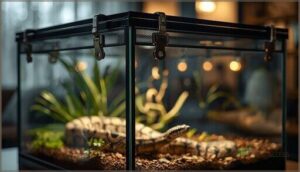
A secure terrarium isn’t just about keeping your snake inside—it’s about protecting them from injury and keeping curious pets or children out. Snakes are surprisingly strong and persistent escape artists, so you’ll need more than a basic lid to keep them safe.
Let’s look at the key security features that prevent escapes and protect everyone in your household.
Escape-Proof Locks and Latches
You’ll want locks and latches specifically rated for terrarium use—think tamper resistance against both curious children and your snake’s surprising strength. Secure fasteners are your first line of escapeproofing.
Consider these essentials for secure enclosure design:
- Spring-loaded mechanisms that resist leverage attempts
- Dual-sided latch placement for added security
- Magnetic locks with secondary backup features
- Regular inspections documenting wear or deformation
Proper lock mechanisms transform reptile enclosure design into genuine escape prevention, giving you peace of mind that your snake terrarium stays secure.
Secure Lids and Access Points
Beyond locking mechanisms, your lid design determines whether escape-proofing actually works. Complete coverage across the snake terrarium opening eliminates gaps that clever serpents exploit, while hinge placement should block finger or claw access.
Inspect regularly for cracks or warping that compromise your secure enclosure’s access control, since tamper-proof features mean nothing if the lid itself fails under pressure or manipulation attempts.
Preventing Access by Other Pets or Children
Even secure enclosures need additional access control measures when curious pets or kids share your home. Position your snake terrarium on a sturdy, elevated stand in a low-traffic area to discourage interference.
Install tamper-resistant secondary barriers or room locks for child safety and pet proofing, creating multiple layers of escapeproofing that protect both your pet snake and household members from unintended interactions.
Ventilation and Airflow Considerations
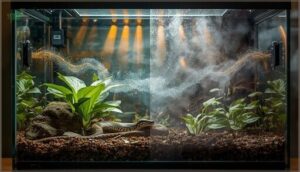
Proper airflow isn’t just a nice-to-have feature, it’s essential for preventing serious health problems in your snake. Without adequate ventilation, humidity can spike, stale air accumulates, and respiratory infections become a real threat.
Let’s look at what you need to know about keeping the air fresh and healthy in your snake’s terrarium.
Importance of Proper Ventilation
Proper ventilation stands as one of the most critical yet frequently overlooked aspects of terrarium design. Adequate airflow management prevents humidity buildup, stabilizes temperature, and reduces airborne pathogens that compromise respiratory health. Without effective fresh air exchange in your secure enclosure, even the right terrarium size won’t prevent mold growth and breathing complications.
- Lowers risk of respiratory infections through consistent air circulation
- Reduces harmful pathogen concentration in enclosed spaces
- Prevents excess moisture that leads to mold and bacterial issues
- Maintains stable microclimate conditions for ideal snake health
Types of Vents and Mesh Panels
You’ll encounter several ventilation systems when shopping for snake enclosures, each balancing airflow management with security.
Screened panels with openings no larger than 1/4 inch prevent escapes while promoting proper ventilation, particularly when paired with stainless steel or aluminum mesh materials.
Louvered window vents let you adjust airflow patterns without creating direct drafts, and inset vent placement in lids maintains sealing integrity across your terrarium size range.
Avoiding Respiratory Health Issues
Respiratory care depends on balancing air quality with humidity control and thermal management, because poor ventilation systems trap contaminants that irritate airway tissues and promote bacterial growth.
You’ll need proper ventilation to prevent temperature control failures and excessive moisture accumulation, both of which compromise snake health and wellbeing.
Disease prevention starts with maintaining species-appropriate humidity ranges while ensuring adequate airflow throughout the enclosure.
Temperature Regulation and Heating Options
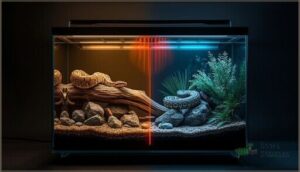
Snakes can’t regulate their own body temperature, so you need to create the right thermal environment in their terrarium. This means setting up heating equipment that gives your snake both warm and cool zones to move between throughout the day.
Let’s look at the three key elements of proper temperature control that will keep your snake healthy and comfortable.
Creating a Temperature Gradient
Your snake can’t move to adjust its body temperature without a proper temperature gradient, which usually ranges from a warm basking zone of 28–32°C down to a cooler area near 22–26°C.
Thermal mapping helps you verify gradient stability across 5–15 cm from heat sources to cool zones, supporting essential thermoregulation for digestion and immune function while maintaining proper temperature and humidity management throughout the enclosure.
Heating Pads, Lamps, and Emitters
You’ll choose from three primary heat source options to maintain your snake’s temperature gradient: under-tank heating pads that deliver gentle baseline warmth through substrate layers, ceramic heat emitters that produce radiant heating without disrupting day-night cycles, and basking lamps that create localized hot spots for active thermoregulation.
Each heating option carries specific safety considerations:
- Heating pads require substrate barriers preventing direct contact and potential burns
- Infrared lamps need proper wattage matching to avoid dehydration and overheating
- Heat emitters demand secure positioning to prevent accidental snake contact with exposed heating elements
Temperature and humidity management depends on selecting heating options that complement your species’ natural behavior patterns.
Using Thermostats for Safety
Think of thermostats as your terrarium’s safety net, preventing dangerous temperature spikes that cause burns and stress. You’ll need a quality thermostat for heat control with every heating element you install, creating precise temperature gradients while eliminating hot spots.
These devices provide failsafe shutoffs during power fluctuations, ensuring thermal regulation stays consistent and your snake remains protected from overheating injuries.
Humidity Management in Terrariums
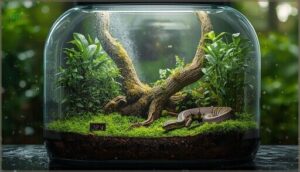
Humidity management plays a critical role in snake health, affecting everything from successful shedding to respiratory function. Different species require vastly different humidity ranges, and maintaining these levels demands specific tools and techniques.
Let’s examine the key considerations you’ll need to address when managing humidity in your snake’s terrarium.
Species-Specific Humidity Needs
Your snake’s natural habitat dictates its moisture requirements, making humidity levels a critical aspect of reptile habitat design and species-specific care. Desert species like Sonoran Gopher Snakes thrive at 30-40% humidity, while tropical snakes such as Green Tree Pythons need 80-90%.
Use a hygrometer to monitor your snake terrarium accurately, and provide a humid hide to support healthy shedding and respiratory function through proper humidity control.
Methods for Maintaining Humidity
Maintaining stable humidity levels requires a comprehensive strategy combining several proven techniques. You’ll achieve ideal humidity control through daily water misting, moisture-retaining substrates like coconut fiber or cypress mulch, and strategic placement of large water dishes on the warm side to increase evaporation.
Adjust ventilation control by partially covering mesh panels in dry climates, and provide a humid hide with damp sphagnum moss during shedding cycles for effective terrarium maintenance.
Preventing Shedding and Respiratory Problems
When humidity control falls short, your snake faces incomplete shedding and dangerous respiratory infections. Proper ventilation prevents stagnant air that harbors mold and airborne irritants, while consistent temperature gradients support healthy metabolic function during shed cycles.
You’ll protect snake health by maintaining species-specific humidity levels, using dust-free substrates, and establishing regular cleaning schedules that reduce microbial buildup threatening respiratory health.
Substrate Selection and Maintenance
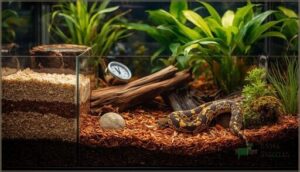
Choosing the right substrate for your snake’s terrarium isn’t just about aesthetics—it directly affects your pet’s health, behavior, and comfort. The material lining the enclosure floor impacts everything from thermoregulation to respiratory wellness, so you’ll want to select carefully based on your species’ needs.
Let’s explore the most common substrate options, how they influence your snake’s wellbeing, and the maintenance practices that keep the habitat safe and clean.
Common Substrate Types
Your substrate selection directly influences moisture control, snake safety, and overall terrarium success. When shopping for reptile supplies, you’ll encounter several bedding materials, each with distinct advantages:
- Aspen bedding absorbs moisture efficiently while minimizing respiratory irritation, making it ideal for dry-climate species.
- Reptile carpets offer reusable, sanitary surfaces that simplify cleaning routines.
- Cypress mulch retains humidity levels naturally, benefiting tropical snake species.
Sand substrates pose impaction risks and should generally be avoided.
Impact on Health and Behavior
Your substrate choice shapes thermal comfort, humidity control, and snake stress in measurable ways. Poor selections can trigger dermatitis or respiratory issues, while appropriate bedding fosters natural burrowing and behavioral enrichment. Regular health monitoring reveals these linkages clearly:
| Substrate Impact | Health & Behavioral Effect |
|---|---|
| Thermal regulation | Improves digestion, reduces stress indicators |
| Moisture retention | Prevents shedding problems, aids respiratory wellness |
| Surface irritation | Causes integumentary disorders, disrupts activity patterns |
Proper substrate directly prevents disease while promoting reptile health and wellness.
Cleaning and Replacement Practices
Once you’ve addressed substrate’s health effects, regular sanitization methods become your next priority. Spot-clean waste removal daily, then deep-clean your snake terrarium monthly with 70% isopropyl alcohol for terrarium disinfection. Complete substrate replacement happens quarterly, though disease outbreaks demand immediate action within 24 hours.
- Document each cleaning event with date and agents used
- Scrub all decorations weekly with hot water and pet-safe detergent
- Inspect seals, locks, and ventilation during quarterly habitat maintenance sessions
Habitat Enrichment and Accessories
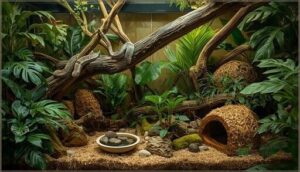
Your snake’s terrarium shouldn’t just meet basic survival needs—it should encourage natural behaviors that keep your pet mentally and physically healthy. The right accessories and enrichment features reduce stress, promote exercise, and help your snake thrive rather than simply exist.
Let’s look at three essential components that transform a basic enclosure into a proper habitat.
Hiding Spots and Climbing Features
Think of your snake terrarium as a miniature ecosystem—hiding spots and climbing structures are the backbone of that world. You should provide at least one designated refuge per 12 inches of snake length, mimicking natural retreat availability. For arboreal species, vertical space matters: climbing structures should occupy 20–40% of your enclosure’s floor area to accommodate natural behaviors.
Place alternative refuges at multiple heights to create microhabitat gradients and reduce territorial stress. This thoughtful terrarium design approach, combined with quality reptile supplies, ensures your snake feels secure while expressing natural behaviors.
| Feature Type | Recommended Specifications | Material Considerations |
|---|---|---|
| Hide Box Designs | Smooth interiors, rough exteriors | Non-toxic, easily sanitized |
| Climbing Structures | 20–40% of floor area | Cork bark, branches, ledges |
| Refuge Options | 1 per 12 inches snake length | Multiple heights for gradient |
| Perch Materials | Sturdy, appropriately sized | Textured surfaces for grip |
Water Dishes and Bathing Areas
Your snake’s water dish serves dual purposes—hydration and thermoregulation. Use a stable, shallow container positioned away from heat sources. Water depth should range from 2–4 cm for smaller species, with daily cleaning to maintain water quality.
For species that actively soak, provide a separate bathing area large enough for full immersion, which also aids humidity control in your snake terrarium.
Environmental Mimicry for Stress Reduction
Mimicking your snake’s native ecosystem transforms a basic enclosure into a sanctuary that genuinely reduces stress. Research shows that habitat textures, natural lighting cycles, and visual familiarity lower defensive behaviors during handling. You’ll want to create environmental cues through:
- Temperature gradient zones for thermoregulation
- Humidity control matching seasonal patterns
- Varied substrates replicating natural terrain
- Naturalistic décor reducing avoidance responses
This approach to habitat creation and maintenance aligns with environmental conservation principles while promoting snake terrarium wellness.
Maintenance and Health Considerations
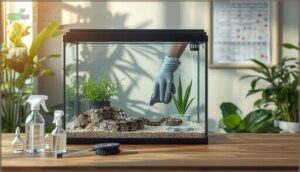
A clean terrarium isn’t just about aesthetics—it’s the foundation of your snake’s long-term health and wellbeing. You’ll need to establish regular cleaning routines, stay alert to behavioral changes that signal trouble, and know when professional care becomes necessary.
These three maintenance pillars will help you catch problems early and keep your snake thriving for years to come.
Cleaning Schedules and Protocols
You’ll need consistent hygiene practices to protect your snake’s health and maintain a clean environment. Daily cleaning of waste removal and spot-checking is essential, while weekly water dish sanitation prevents biofilm formation.
Conduct full monthly disinfectant use with reptile-safe products, rinsing thoroughly before returning your snake.
Document each cleaning session to track patterns and maintain ideal terrarium conditions throughout your reptile care routine.
Monitoring for Illness or Stress
Your snake’s wellbeing depends on catching warning signs early, before minor issues escalate into serious health problems. Watch for these key stress signs and illness detection markers during daily health checks:
- Appetite changes – refusing food or irregular feeding behavior indicates underlying distress
- Discharge from eyes, nose, or mouth – signals respiratory infections requiring prompt veterinary care
- Abnormal skin condition – retained shed, lesions, or discoloration reflects poor humidity control or disease
- Reduced activity – lethargy or hiding excessively suggests behavioral changes from illness
- Respiratory effort – labored breathing demands immediate disease prevention action
Veterinary Care and Quarantine Practices
Establishing quarantine protocols protects your entire collection from disease transmission. Keep new snakes isolated for 30 to 90 days in a separate space, scheduling veterinary screening to detect respiratory infections, parasites, and skin abnormalities early.
Your veterinarian will conduct parasite control testing and monitor clinical signs before issuing health clearance. This disease prevention approach ensures safe integration while supporting reptile health through proactive veterinary care.
Frequently Asked Questions (FAQs)
Can multiple snakes share one terrarium safely?
Most reptile keepers discover that cohabitation risks outweigh any benefits, as resource competition, stress, disease transmission, and aggression make terrarium sharing dangerous.
Snake species are naturally solitary, requiring individual pet snake habitats for ideal health.
How does terrarium placement affect snake behavior?
Where you place your snake’s terrarium directly impacts stress levels and behavior. Room temperature, nearby noise, human traffic, and light exposure all influence your snake’s comfort, activity patterns, and overall wellbeing.
What lighting schedules benefit nocturnal snake species?
Picture twilight seeping through forest canopy—that’s your lighting goal. Maintain a 12:12 photoperiod with gradual transitions, using dim red LEDs for nighttime observation to preserve circadian rhythms and support natural nocturnal behavior.
Should terrariums have background decorations or paintings?
Background decorations and paintings improve visual enrichment while reducing stress from external activity. You’ll want non-reflective designs that increase environmental complexity, provide visual barriers, and support your snake’s sense of security without compromising ventilation.
How often should terrarium equipment be replaced?
You should replace UVB bulbs every six to twelve months and inspect heating elements and thermostats monthly for wear.
Swap water dishes or hides immediately when cracks, damage, or persistent contamination appear.
Conclusion
You can’t put the cart before the horse regarding your snake’s home—choosing the right terrarium demands careful evaluation of species requirements, growth patterns, and environmental controls before you make the purchase. The factors that affect snake terrarium selection work together as an integrated system, not isolated checkboxes.
When you prioritize your snake’s biological needs over aesthetics or convenience, you’re building a foundation for decades of healthy, stress-free companionship.