This site is supported by our readers. We may earn a commission, at no cost to you, if you purchase through links.
Your snake doesn’t care that the plastic cave from the pet store matches your shelf. It cares that the substrate is 8 cm deep, the hide has a snug 1.5 cm gap, and the cool side stays near 24°C.
That’s why building naturalistic reptile environments works so well. You copy the swamp, the burrow, or the branch, and your snake finally acts like a snake. Tunneling, basking, hunting, shedding clean in one piece.
Think of it like building a tiny wild neighborhood, one zone at a time. Start with the question that shapes every choice after it: where does your snake actually live?
Table Of Contents
- Key Takeaways
- Plan a Species-Specific Reptile Habitat
- Choose and Size Your Snake’s Enclosure
- Build a Naturalistic Substrate Layer
- Arrange Snake-Safe Plants, Hides, and Branches
- Set Up Heat, Lighting, and Humidity
- Clean and Monitor Your Naturalistic Enclosure
- Frequently Asked Questions (FAQs)
- How to build your own reptile enclosure?
- What is the Holy Grail of reptiles?
- What environments do reptiles live in?
- What can I build a reptile enclosure out of?
- How do I create a perfect reptile habitat?
- What makes a good reptile habitat?
- How do you build a reptile enclosure?
- How do I choose the perfect lighting for my reptile habitat?
- How do you make a reptile habitat scaly?
- What is a substrate for a reptile?
- Conclusion
Key Takeaways
- Match your snake’s species and habits first, since its burrowing, climbing, or soaking behavior should decide the enclosure size, substrate, and layout rather than what looks good on your shelf.
- Build a thermal gradient with a warm basking zone, a cooler side, and a nighttime drop, and keep humidity in your species’ range using two thermometers and a thermostat so your snake can choose its own comfort.
- Give your snake deep, safe substrate for burrowing, snug hides with entry gaps no wider than 1.5 cm, non-toxic plants, and smooth branches, and avoid pine and cedar.
- Keep the setup healthy with a cleanup crew of springtails and isopods, daily spot cleaning, and a regular routine of checking temperatures, humidity, and substrate to prevent mold.
Plan a Species-Specific Reptile Habitat
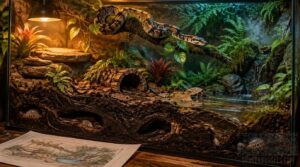
Before you buy a plant or bag of dirt, get to know your snake. Is it a ground-hugging burrower, a branch-draping climber, or a swamp lover? It shapes everything.
Once you know whether your snake burrows, climbs, or soaks, this step-by-step guide to setting up a bioactive vivarium for snakes shows how to match substrate, plants, and cleanup crew to its habits.
Before you buy a single plant or bag of dirt, get to know your snake, because it shapes everything
Start with your species’ habitat requirements. Check its native range and note the seasonal temperature and humidity swings. Plan a thermal gradient running from a 26–32°C basking zone to 22–26°C cooler spots, with nights dropping 4–6°C. Aim for 40–60% humidity unless your snake hails from rainforests.
Sketch zones for basking, hiding, foraging, and swimming. Match them to your snake’s activity, and let enclosure size follow the plan, not the other way around. Pick species-friendly substrates and a cleanup crew that suit the same habitat, and your bioactive environment will run itself.
Choose and Size Your Snake’s Enclosure
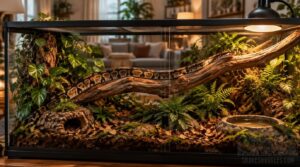
Your plan is sketched, so now it’s time to give it walls. Let your snake set the enclosure size, not the spare shelf in your living room.
Measure snout to vent, then multiply that number by two or three for your enclosure length. Keep width at least 1.5 times girth. Climbers need vertical height of one to 1.5 body lengths, while ground dwellers manage with half to one.
Picture your terrarium setup done right:
- Your snake stretches out fully, no cramped coils in sight.
- It basks calmly while you grin like a proud parent.
- Naturalistic reptile environments finally feel like home to it.
Plan for easy reptile enclosure maintenance too, with front-opening doors and enough floor for generous substrate depth.
When choosing between liners and deep bedding, this comparison of reptile carpet vs loose substrate shows which suits your species and cleaning routine.
Build a Naturalistic Substrate Layer
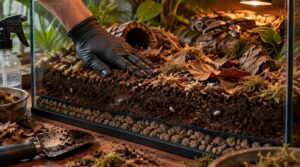
Your snake’s substrate is the floor of its whole little world, so let’s build it right. Below, you’ll find two steps that turn plain dirt into a living, working layer. Grab your gloves, because this part gets fun.
Choose Substrate for Burrowing
Worried burrows will collapse? They won’t if you pick speciesfriendly substrates and mix them right. Snakes crave burrowing behavior, so give them a natural habitat feel with reptilesafe sand and loam.
| Part | Share |
|---|---|
| Sand | 60–70% |
| Silt | 20–30% |
Keep substrate depth at 8–20 cm, and skip pine or cedar. Squeeze a handful. It should resist lightly, but never feel rock hard.
Pairing the right substrate depth with a steady routine of spot cleaning and regular health checks is easier with this snake habitat maintenance guide.
Add a Bioactive Cleanup Crew
Your burrows are set, so now let’s hire the staff. A bioactive terrarium runs on tiny janitors, and they work for free.
Add springtails and isopods to your bioactive substrate. This microfauna munches mold and waste, keeping your bioactive environment fresh. Quarantine newcomers two weeks first, then spread leaf litter 1–2 cm deep. Check weekly. Happy crew, happy bioactive setup.
Arrange Snake-Safe Plants, Hides, and Branches
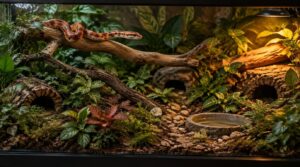
Arranging your layout is where naturalistic reptile environments start to feel alive. Think of it like staging a jungle for a picky tenant.
Start with low, dense reptile plants under 50 cm. Pick non-toxic species, and skip oleander and dieffenbachia. Mix evergreen and deciduous types so cover never vanishes.
Next, add three reptile hides: cool, warm, and mid-range. Each should fit your snake fully, with entry gaps no wider than 1.5 cm. Keep lids snug and cleanable.
Then add two or three smooth maple or grapevine branches, 2 to 6 cm thick, at different heights. Angle them away from hot spots. Keep a clear path to reptile basking and water, and you’ve got a reptile enclosure your snake will explore.
Set Up Heat, Lighting, and Humidity
Set up your heat first, because everything else follows it. Think of heat gradients like a cozy neighborhood: a toasty basking spot at 90–100°F, a cool side near 75–80°F, and your snake picks its favorite street.
Picture your day this way:
- A ceramic heat emitter glows warm at one end, run through a thermostat.
- UVB lighting hangs 12–18 inches above the basking area, unblocked and bright.
- Two thermometers, one high and one low, keep you honest.
Run terrarium lighting on a steady 12:12 cycle, no surprise flickers. Keep humidity levels at 40–60% for tropical species or 30–50% for arid ones, and mist during shedding. Watch terrarium humidity for foggy walls, since good airflow stops mold. Night temps can dip 5–10°F.
Clean and Monitor Your Naturalistic Enclosure
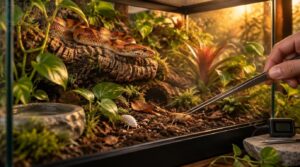
Picture Maya, who skipped a weekly check and found her corn snake’s tank smelling like a damp gym sock. A forgotten dead cricket had started the mold party. Don’t be Maya.
You’ll spot clean daily, pulling feces and uneaten prey within 24 hours. Your bioactive terrarium is a tiny city, and a tidy city is a happy city.
Here’s your simple rhythm:
| Frequency | Task |
|---|---|
| Daily | Check temperatures, humidity, escape-proof latches |
| Weekly | Log probe readings, confirm cleanup crew activity |
| Monthly | Inspect seals, substrate depth, drainage |
| Annually | Replace 25–30% of substrate |
Terrarium maintenance gets easier with a data logger, which catches sneaky nighttime humidity spikes. Terrarium humidity control matters most, so keep swings under 10% daily. Keep your ventilation systems clear of decor, too.
Frequently Asked Questions (FAQs)
How to build your own reptile enclosure?
Start with the right reptile enclosure size, like 36×18×12 inches for a small snake. Add 4–6 inches of substrate depth and a bioactive setup. Then dial in reptile heating and reptile lighting, and you’re golden.
What is the Holy Grail of reptiles?
Think of it as the golden ticket: a living terrarium habitat that mirrors the wild.
Naturalistic terrariums combine habitat replication, smart plant selection, and bioactive substrate, so your snake thrives safely and stays stress free.
What environments do reptiles live in?
Ironically, the hottest deserts hide the coolest homes: burrows. Reptiles live in deserts, rainforests, wetlands, grasslands, and rocky mountains.
Each natural habitat needs different microclimate control, habitat simulation, habitat replication, and behavioral enrichment, you’ll see.
What can I build a reptile enclosure out of?
Your reptile enclosure can be built from glass, marine-grade plywood, PVC, acrylic, or fiberglass.
Skip cedar, it’s toxic. Naturalistic terrariums stay damp, so seal wood. Then plan substrate selection, bioactive substrate, and terrarium plants.
How do I create a perfect reptile habitat?
Perfect reptile habitat design means matching your snake’s real home. Pick one species, then build naturalistic terrariums with substrate selection, bioactive setups, and steady temperature gradients. You’ll nail it, and your snake will thank you.
What makes a good reptile habitat?
A good habitat copies your animal’s wild home. Naturalistic terrariums need roomy space, safe hides, and the right reptile substrate. Add temperature gradients and steady humidity control, and a bioactive environment keeps everything beautifully balanced.
How do you build a reptile enclosure?
Start with enclosure size: aim for at least twice your snake’s length, with locking doors and secure vents. Then layer in reptile substrate, a bioactive terrarium cleanup crew, hides, and a heat gradient. Easy, right?
Once the enclosure is secure, a checklist of essential snake habitat items can help you confirm nothing is missing before your new pet moves in.
How do I choose the perfect lighting for my reptile habitat?
Picture a tiny sun rising over your snake’s world.
Choose UVB lighting matched to your species, aim it at the basking spot, and verify the heat gradient. Let reptile UVB, lighting and decoration work together.
How do you make a reptile habitat scaly?
Want a scaly look? In your reptile habitat design, layer pebbly bioactive substrate with cork bark and knobby hides. Add ragged terrarium plants.
Rake light across it, hold a thermal gradient, and watch reptile behavior.
What is a substrate for a reptile?
Substrate is the material lining your reptile’s enclosure. It gives your pet footing, grip, and digging room, and it holds substrate moisture.
Among substrate options, a reptilesafe substrate or bioactive substrate also helps terrarium plants.
Conclusion
Think it sounds like too much work? It’s not, because you build it once and tweak it forever. Start small, watch your snake, and adjust.
Building naturalistic reptile environments rewards patience. Deep substrate, snug hides, a proper heat gradient and a tidy cleanup crew turn a glass box into a home. Your snake will show you it’s working, by burrowing, basking and shedding clean.
Build the tiny wild neighborhood and let your snake move in.