
This site is supported by our readers. We may earn a commission, at no cost to you, if you purchase through links.

Garter snakes (Thamnophis spp.) occupy nearly every terrestrial and semi-aquatic environment across North America, from Canadian boreal edges down through Central America—a distribution range few reptiles match on this continent. Spot one in your backyard, and you’re witnessing a species that has mastered the art of living almost anywhere.
That adaptability isn’t accidental. Garter snakes track specific environmental conditions with surprising precision: the right temperature gradient, moisture levels, shelter density, and prey availability all factor into where they settle.
Understanding garter snake natural habitat information reveals a creature far more selective—and ecologically important—than its common presence suggests.
Table Of Contents
- Key Takeaways
- What is a Garter Snake Habitat?
- Geographic Range of Garter Snakes
- Preferred Habitat Types
- Climate and Environmental Conditions
- Vegetation and Shelter Sources
- Water Sources and Proximity
- Soil and Terrain Preferences
- Garter Snake Nesting and Hibernation
- Habitat Threats to Garter Snakes
- Conservation and Habitat Protection
- Frequently Asked Questions (FAQs)
- What is the natural habitat of a garter snake?
- What are some interesting facts about garter snakes?
- Are garter snakes aggressive?
- Is it good or bad to have garter snakes in your yard?
- How to make a garter snake habitat?
- Where do garter snakes like to nest?
- How long do garter snakes typically live?
- What predators commonly hunt garter snakes?
- Are garter snakes venomous or dangerous?
- How can you identify different garter snake species?
- Conclusion
Key Takeaways
- Garter snakes (Thamnophis spp.) don’t just wander into your yard by accident — they’re tracking specific conditions like temperature gradients, moisture levels, and prey availability with surprising precision.
- Their survival hinges on a tight combination of water proximity, dense vegetation, and terrain complexity, which is why you’ll almost always find them near wetland edges, stream banks, or forest borders rather than in the middle of open pavement.
- When winter hits, these snakes get remarkably strategic — thousands pile into communal dens (some Manitoba sites host up to 8,000 individuals), sharing body heat to survive temperatures as brutal as -40°C outside.
- Despite their "least concern" conservation status, habitat loss has wiped out over 90% of California’s historical wetlands, pushing subspecies like the San Francisco garter snake (T. sirtalis tetrataenia) to fewer than 2,000 individuals remaining in the wild.
What is a Garter Snake Habitat?

Garter snakes aren’t picky neighbors — they’ve made themselves at home across an impressive range of environments, from soggy marshlands to dry suburban backyards.
Whether you spot one sunning on a rock or slipping through tall grass, it helps to know how to tell a garter snake apart from a garden snake before you get too close.
What makes a habitat work for them comes down to a handful of consistent factors. Here’s what their natural environment actually looks like.
Defining Natural Habitats
Garter snake habitat isn’t just "somewhere near water" — it’s a carefully selected ecosystem shaped by microhabitat selection, terrain features, and seasonal opportunity. These snakes navigate surprisingly complex landscapes, balancing shelter, prey access, and safety.
Their natural habitats usually include:
- Wetland edges and marsh borders
- Meadows with dense ground cover
- Rocky terrain offering concealment
- Riparian corridors linking foraging and hibernation zones
Garter snakes thrive in areas with suitable wildlife corridors, which play a vital role in their survival.
Key Environmental Features
What makes a garter snake habitat work isn’t one single feature — it’s how several environmental factors lock together. Water proximity, vegetation density, terrain complexity, soil moisture, and microclimate regulation all shape whether a spot is truly livable. Creating a garter snake habitat requires careful consideration of these factors to support the local species.
| Environmental Feature | Why It Matters |
|---|---|
| Water Proximity | Sustains prey like frogs and tadpoles |
| Vegetation Density | Provides cover and hunting concealment |
| Microclimate Regulation | Allows daily temperature management |
| Terrain Complexity | Offers shelter, escape routes, and basking spots |
Geographic Range of Garter Snakes

Garter snakes are remarkably well-traveled for a creature most people spot near their garden hose. They’ve spread across an impressive stretch of North America, adapting to wildly different landscapes along the way.
Here’s a closer look at where they actually live and how different species have carved out their own corners of the continent.
North American Distribution
Thamnophis covers an impressive slice of North America, from the subarctic plains of Canada’s Northwest Territories to the subtropical lowlands of Costa Rica. You’ll find at least one species in every continental U.S. state — that’s striking geographic diversity for a single genus.
- Common garter snakes reach Canada’s northernmost provinces
- All 48 lower U.S. states host native populations
- Climate influence shapes regional density and habitat use
Regional Variations by Species
Not every garter snake lives the same way. Species adaptation shapes how each Thamnophis fits its corner of the continent — Thamnophis sirtalis thrives in suburban gardens, while Butler’s garter snake depends on open wetland edges near the Great Lakes, a specialist squeezed by habitat fragmentation.
| Species | Regional Habitat Focus |
|---|---|
| T. sirtalis | Widespread; meadows, suburbs, marshes |
| T. butleri | Great Lakes wetland edges |
| Western Terrestrial | Sea level to 3,993 m elevation |
| Coastal Western | Pacific stream banks, moist habitats |
| Inland Western | Rocky slopes, freshwater sources |
Geographic isolation drives regional genetics, carving distinct ecological niches across snake habitat and distribution zones.
These isolated populations develop unique feeding behaviors over generations, much like what’s explored in this overview of snake survival and fasting patterns across species.
Preferred Habitat Types
Garter snakes aren’t picky about where they set up home — they’re remarkably good at making themselves comfortable across a surprising range of landscapes. Whether you spot one in your backyard or out on a trail, there’s usually a good reason it’s there.
Here are the main habitat types where garter snakes tend to thrive.
Grasslands and Meadows

Open habitats like meadows and grasslands are surprisingly rich ecosystems for garter snakes. You’ll find them threading through meadow ecology alongside diverse grassland fauna, using patches of taller vegetation for cover while basking in direct sun.
Plains garter snakes especially favor prairies near ponds and streams, where prey is abundant.
These open habitat wildlife corridors support snake migration and allow populations to thrive across broad ranges.
Wetlands and Marshes

Regarding wetland biodiversity, garter snakes are right at home. Marshes aren’t just wet ground — they’re packed with aquatic food sources that keep these snakes well-fed year-round.
- Frogs, tadpoles, and leeches concentrate along vegetated marsh edges
- Dense cattails offer cover and ambush sites
- Snake migration routes often follow wetland corridors seasonally
Habitat restoration in these ecosystems directly bolsters garter snake populations.
Forest Edges and Woodlands

Forest edges are where garter snake habitat really comes alive. Where tree lines meet open meadows, you’ll find ideal woodland microhabitats — warm sunbathing spots by day, dense ground cover for quick escapes.
Edge zone ecology fosters rich forest floor dynamics, with leaf litter, fallen logs, and canopy layer gaps creating refuges. Wildlife ecology calls this the ‘ecotone advantage’ — and garter snakes have mastered it.
Suburban and Urban Areas

Garter snakes don’t just tolerate urban areas — they’ve quietly claimed them. Your backyard rock walls, wood piles, compost heaps, and foundation gaps function as city dens and yard habitats these adaptable urban refugees genuinely depend on.
Wildlife ecology increasingly recognizes this human coexistence as mutually beneficial: garter snakes handle suburban pest populations — slugs, rodents, insects — while thriving in the animal habitats your garden unknowingly provides.
Climate and Environmental Conditions

Garter snakes don’t just wander anywhere and call it home — climate shapes nearly every move they make. Their survival depends on getting the right mix of temperature, seasonal rhythm, and moisture.
Here’s what those conditions actually look like.
Temperature Preferences
Think of thermoregulation as a garter snake’s personal climate control system. These reptiles keep their body temperature between 28°C and 32°C when active, using sun-warmed rocks and shaded retreats to fine-tune their heat tolerance.
Their climate adaptation is remarkably precise — when air temperatures climb past 30°C, they’ll retreat to cooler microclimates, protecting their habitat performance and overall health.
Seasonal Changes and Adaptations
Garter snakes are nature’s most disciplined adapters — their entire year revolves around temperature cues. Seasonal migration kicks in each fall, pulling them toward communal dens before soil temperatures drop below 10°C, while spring emergence triggers rapid feeding and mating. Their ecological flexibility is what keeps them thriving:
- Dormancy lasts up to six months in colder ranges
- Summer activity shifts toward cooler morning and late-afternoon hours
- Fat reserves built in fall fuel the entire winter hibernation
Humidity and Moisture Needs
Moisture is just as important to a garter snake’s survival as temperature. Humidity levels between 35 and 60 percent keep their skin hydrated and support a clean shedding process — drop below that, and you’ll see incomplete sheds and stressed animals.
Their habitat almost always puts them within reach of water sources like streams or ponds, where moisture retention in the surrounding ecosystem does the heavy lifting naturally.
Vegetation and Shelter Sources
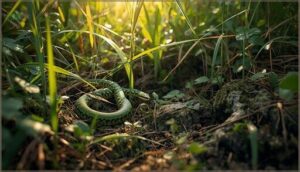
Garter snakes aren’t picky about their address, but they do have clear preferences for what makes a good one. Cover, shade, and the right mix of natural materials can make or break whether a spot feels safe to them. Here’s what actually draws them in.
Importance of Dense Vegetation
Dense vegetation isn’t just scenery in a garter snake’s world — it’s survival infrastructure. Whether you’re observing these reptiles in wetlands or your backyard, vegetation structure shapes everything about how they live.
- Predator avoidance: Cover breaks up their striped bodies from aerial hunters
- Microclimate regulation: Shade and moisture buffer extreme heat
- Shelter provision: Stems and roots create hidden resting tunnels
- Ecosystem services: Dense habitat sustains their entire prey base
Use of Logs, Rocks, and Debris
Beyond vegetation, physical structures like fallen logs, rock piles, and scattered debris serve as critical snake shelter within garter snake habitat.
Log pile ecology facilitates hunting near earthworms and slugs concentrated in rotting wood, while rock wall usage allows thermal regulation — snakes slide between sun-warmed surfaces and cool crevices to manage body temperature efficiently.
Debris habitat ties these animal habitats together seamlessly.
Natural Vs. Artificial Shelter
Natural and artificial shelter options shape garter snake survival equally. While wild dens form in rocky crevices and root tangles, artificial refuges — buried boards, prefabricated hibernacula, garden rock piles — replicate those burrow designs surprisingly well. Here’s what effective habitat enhancements share:
- Placement below frost line
- Access to nearby water
- Stable humidity retention
- Proximity to foraging corridors
Water Sources and Proximity
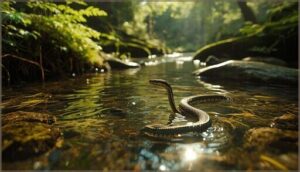
Water isn’t just a nice perk for garter snakes — it’s practically the center of their world. You’ll find these snakes almost always within easy reach of some kind of water source, whether that’s a slow-moving creek or a backyard pond.
Here’s a closer look at the aquatic environments they’re most drawn to.
Preference for Aquatic Environments
Garter snakes aren’t just near water by coincidence — their aquatic adaptations run deep. You’ll almost always find them within striking distance of wetlands, ditches, or pond edges, where wetland ecology delivers both prey and quick escape routes.
Their water dependence shapes everything: aquatic foraging on frogs, tadpoles, and invertebrates keeps them anchored to moist habitats, and their strong swimming ability aids snake migration across flooded terrain.
Role of Streams, Ponds, and Lakes
Streams, ponds, and lake shorelines aren’t just backdrop scenery for garter snakes — they’re the engine of survival. These water bodies anchor snake habitat and diet by fueling aquatic food chains packed with frogs, tadpoles, and small fish. Water temperature drives prey availability and snake migration patterns seasonally.
Within pond ecosystems, you’ll find garter snakes hunting shallow edges, basking nearby, and slipping beneath the surface when threatened.
Soil and Terrain Preferences
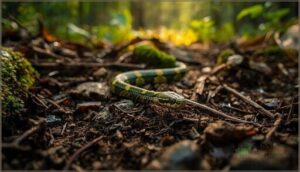
Garter snakes aren’t picky about where they set up camp, but they do have clear preferences regarding soil and terrain.
The ground beneath their scales affects how easily they can hide, burrow, and stay safe from predators.
Here’s a closer look at the specific soil types and terrain features that suit them best.
Soil Types for Burrowing
Loose, well-drained soil is basically a garter snake’s ideal real estate. Soil composition directly shapes burrow stability — they can’t push through compacted, rock-hard ground. What they’re after is substrate density that’s firm enough for tunnel architecture but crumbly enough to dig into. Soil moisture matters too: slightly damp, never waterlogged.
- Sandy loam — ideal burrowing habitat
- Moist but draining soil — promotes skin health
- Organic-rich topsoil — retains warmth, aids concealment
Terrain Features for Concealment
Terrain shapes a garter snake’s survival strategy more than you might expect. Rocky outcrops offer instant escape routes, while forest floors blanketed in leaf litter provide shallow hollows just deep enough to disappear into. Dense thickets break up their striped silhouette, and water edges deliver both concealment and prey. Even modest soil mounds and raised ground give garter snakes elevated cover within familiar animal habitats.
Garter Snake Nesting and Hibernation

When the temperatures drop, garter snakes don’t just wing it — they’re remarkably strategic about where they settle in for the season. Whether they’re picking a cozy den or piling in with hundreds of neighbors, their choices say a lot about how well they’ve adapted to survive.
Here’s a closer look at how they handle nesting and hibernation.
Selection of Burrows and Dens
When a garter snake picks its winter den, it’s not random — it’s remarkably deliberate. Den selection hinges on thermal regulation, moisture retention, and quick escape routes if a predator shows up uninvited.
- Burrow architecture matters: rodent tunnels and rock crevices maintain temperatures averaging 4–10°C, preventing freezing
- Humidity control keeps skin healthy through winter — dens near wetlands hit 70–80% relative humidity
- South-facing entrances warm faster, signaling safe spring emergence
Communal Hibernation Behavior
When temperatures drop below 16°C, garter snake communal denning kicks into something almost theatrical. Thousands gather at hibernacula — Manitoba’s Narcisse dens host up to 8,000 — sharing body heat through winter aggregations that prevent freezing even at -40°C outside. These brumation strategies dramatically cut individual energy loss.
When temperatures plunge, thousands of garter snakes pack Manitoba’s dens, sharing warmth to survive -40°C winters together
Come spring, snake balls form instantly as males swarm emerging females, making communal habitat behavior both a survival tactic and a mating launchpad.
Habitat Threats to Garter Snakes

Garter snakes are surprisingly resilient, but that doesn’t mean they’re untouchable. Human activity has quietly chipped away at the places these snakes depend on to survive.
Here’s a closer look at the two biggest threats working against them.
Habitat Loss and Fragmentation
Across North America, habitat destruction is quietly unraveling the ecosystems garter snakes depend on. Urban planning that prioritizes concrete over conservation has eliminated over 90% of California’s historical wetlands, while agricultural conversion drains another layer of viable habitat.
Fragmentation effects isolate populations, cutting off wildlife corridors and disrupting ecosystem balance. Without serious habitat preservation and conservation, these snakes lose the connected landscapes they need to survive.
Pollution and Environmental Hazards
Pollution compounds habitat destruction in ways that aren’t always visible. Toxic chemicals from agricultural runoff contaminate wetlands, passing through frogs and fish directly into garter snakes. Water contamination concentrates heavy metals like mercury and arsenic in their tissues.
Microplastic impact and noise pollution add chronic stress, quietly undermining ecosystem health and balance — accelerating biodiversity loss even where physical habitat still appears intact.
Conservation and Habitat Protection

Garter snakes are resilient little creatures, but even they need a helping hand when their habitats face serious pressure. Understanding where they stand today — and what’s being done to protect them — gives you a clearer picture of what these snakes actually need to survive.
Here’s a look at their current conservation status and the efforts working in their favor.
Current Conservation Status
Most garter snake species carry a Conservation Status of Least Concern — but don’t let that fool you. Reptile conservation status varies sharply by subspecies.
The San Francisco garter snake (Thamnophis sirtalis tetrataenia) has been federally Endangered Species-listed since 1967, with fewer than 2,000 individuals remaining. The giant garter snake holds federal threatened status.
Wildlife Protection designations reflect real population pressures, particularly from Habitat Preservation failures and ongoing Threats to Garter Snake Populations.
Conservation Efforts and Recommendations
Knowing the Conservation Status of a species is only half the story — the real work happens on the ground. Habitat Restoration projects in San Mateo County have recovered 33 acres of wetland for the San Francisco garter snake, while headstart programs release captive-raised young to increase wild numbers.
These Reptile Conservation and Biodiversity Preservation efforts, backed by Ecosystem Management and Species Protection planning, show Wildlife Conservation working exactly as it should.
Frequently Asked Questions (FAQs)
What is the natural habitat of a garter snake?
Garter snakes (Thamnophis) thrive across remarkably diverse environments — from wetland edges and marshy stream banks to dry meadows, forest borders, and suburban backyards — wherever prey and shelter coexist within North America’s varied landscapes.
What are some interesting facts about garter snakes?
These nonvenomous Thamnophis snakes are full of surprises — they release musky secretions to deter predators, tolerate toad toxins, and live up to 10 years, making their reptile ecology and conservation story genuinely fascinating.
Are garter snakes aggressive?
No, garter snakes aren’t aggressive by nature. Their snake temperament leans toward flight, not fight.
Defensive mechanisms like musk release or mild venom kick in only when they feel cornered — never without cause.
Is it good or bad to have garter snakes in your yard?
Having garter snakes in your yard is genuinely good. They’re natural pest control, quietly managing slugs, insects, and rodents.
They’re harmless to people and pets, supporting wildlife balance without any effort from you.
How to make a garter snake habitat?
Start with a 40-gallon enclosure, add a temperature gradient (29–32°C basking, 23°C cool end), coconut fiber substrate, two hides, a soaking dish, and maintain 35–60% humidity.
Where do garter snakes like to nest?
You’ll usually find them in underground burrows, beneath rock piles, or tucked under dense vegetation near water. These nesting sites offer warmth, shelter, and easy access to prey.
How long do garter snakes typically live?
In the wild, garter snakes generally live 2–4 years, with most dying in their first year. Captive individuals often reach 10–20 years when properly cared for.
What predators commonly hunt garter snakes?
Predators range from birds of prey like red-tailed hawks and herons, to aquatic predators such as bass and snapping turtles.
Additionally, mammal threats including raccoons, foxes, and kingsnakes — nature’s relentless snake hunters — also pose significant risks.
Are garter snakes venomous or dangerous?
Garter snakes carry mild venom, but their defensive mechanisms rarely threaten humans.
Snake bites usually cause minor irritation — toxicity levels are low, making envenomation effects negligible. For practical purposes, consider them non-venomous.
How can you identify different garter snake species?
Like reading a field guide, species identification comes down to stripe count, color variation, scale analysis, and body proportions.
Thamnophis sirtalis and related species each carry distinct snake pattern recognition clues.
Conclusion
Picture a garter snake threading through sun-warmed grass at the edge of a pond—not wandering, but precisely where it needs to be. Every patch of shelter, every degree of warmth, every nearby water source tells part of its story.
Garter snake natural habitat information isn’t just field data; it’s a map of a remarkably deliberate life. Understand where these snakes thrive, and you’ll never look at a meadow, marsh, or backyard the same way again.
- https://explorer.natureserve.org/Taxon/ELEMENT_GLOBAL.2.102240/Thamnophis_elegans
- https://www.nps.gov/articles/000/common-garter-snake.htm
- https://peecnature.org/learn/nature-guides/featured-critters/western-terrestrial-garter-snake/
- https://animaldiversity.org/accounts/Thamnophis_sirtalis/
- https://www.biologicaldiversity.org/species/reptiles/San_Francisco_garter_snake/natural_history.html