This site is supported by our readers. We may earn a commission, at no cost to you, if you purchase through links.

Most snake owners set up two hides and call it done—warm side, cool side, problem solved. But watch a ball python pace the glass at 2 AM, and you’ll realize something’s off. That restless behavior isn’t curiosity. It’s stress, and inadequate shelter is often the cause.
Snakes in the wild move between dozens of microhabitats daily, thermoregulating with precision. Your enclosure can’t replicate a forest floor, but the right hide setup gets surprisingly close. How many hiding places a snake needs depends on species, enclosure size, and the temperature gradient you’ve built—and getting it right changes everything about how your snake behaves.
Table Of Contents
- Key Takeaways
- How Many Hiding Places Does a Snake Need?
- Why Are Multiple Hides Important for Snakes?
- Species-Specific Hide Recommendations
- Best Placement and Types of Hides
- Signs Your Snake Needs More Hiding Places
- Frequently Asked Questions (FAQs)
- How much space does a snake need?
- Do snakes usually stay in the same area?
- Do snakes remember locations?
- Can snakes share hides with other snakes?
- How often should snake hides be replaced?
- Do hides need to be cleaned, and how?
- Can too many hides overwhelm a snake?
- What materials are unsafe for snake hides?
- Conclusion
Key Takeaways
- Every snake enclosure needs at least two hides—one on the warm end (88–92°F) and one on the cool end (75–82°F)—as a non-negotiable baseline for healthy thermoregulation.
- Ball pythons and other species prone to shedding issues benefit from a third humid hide maintained at 70–80% humidity, using damp sphagnum moss or coconut fiber.
- Chronic stress from too few hiding spots suppresses your snake’s immune system over time, leading to respiratory infections, regurgitation, and food refusal well before visible symptoms appear.
- Glass surfing, constant corner-checking, and nose rubbing are your clearest early warning signs that your snake needs more secure hiding options—add snug, body-contact-sized hides and watch behavior shift.
How Many Hiding Places Does a Snake Need?
Most pet snakes need at least two hides, but the right number depends on a few key factors. Getting this wrong can lead to real stress and health problems for your snake.
A good starting point is two or three hides placed strategically—this snake hide setup guide for beginners breaks down exactly where to put them and why it matters.
Here’s what you need to know to get it right.
General Guidelines for Hide Numbers
Two hides is the starting point for any snake enclosure — one on the warm side, one on the cool side. That baseline facilitates basic thermoregulation and gives your snake secure hiding spots across the full temperature gradient.
As enclosure size increases, so should hide quantity. Most experienced keepers don’t stop at two, and honestly, snake behavior improves noticeably when you don’t either. Larger snake enclosures following provide even more opportunities for additional hides and enrichment.
The Importance of Multiple Hides
More hides mean fewer stress signals — less glass surfing, less food refusal, more normal snake behavior. With multiple secure hiding spots across your snake enclosure, your snake isn’t forced to choose between warmth and safety.
A smart enclosure layout with proper hide box design and humidity control fosters real environmental enrichment for snakes, turning a basic setup into a space where your snake actually thrives. For a deeper understanding of snake temperature preferences, see this guide on.
Minimum Hide Requirements for Pet Snakes
So what’s the actual minimum? Most snakes need at least two secure hiding spots — one on the warm end, one on the cool end. That’s your baseline for snake care and maintenance. If your enclosure layout tips toward anything smaller than that, you’re already behind.
Ball pythons and similar species often need a third humid hide, especially when species-specific needs around shedding come into play.
Why Are Multiple Hides Important for Snakes?

A single hide isn’t enough — your snake needs options, and there are real reasons why. Multiple hides cover everything from stress levels to body temperature to natural behavior.
Thinking about placement? This guide on snake hide placement in enclosures breaks down exactly where to position each one for the best results.
Here’s what each one actually does for your snake.
Stress Reduction and Security
A snake without secure hiding spots is a stressed snake — and chronic stress doesn’t just affect behavior, it weakens the immune system over time.
A snake without secure hiding spots is a stressed snake, and chronic stress weakens the immune system over time
Your snake enclosure setup should treat hide placement as a security feature, not an afterthought. Snakes with reliable hide holes show calmer posture, steadier feeding, and fewer stress-related health issues. Good enclosure design and smart stress management start here.
Thermoregulation and Temperature Zones
Thermoregulation is the engine behind almost everything your snake does — digestion, immunity, even shedding. Without proper thermal gradients, that engine stalls. Your heat sources need to create a true range: around 88–92°F on the warm end, 75–82°F on the cool side. Hides placed across both temperature zones make snake thermoregulation work the way it should.
- Keep a hide directly over or near your main heat source
- Place a second hide on the cool end for temperature control balance
- Use a digital probe thermometer for accurate environmental monitoring in each zone
- Never let cool-side temps creep above 82°F — your snake loses its ability to cool down
- Proper temperature gradients only work if hides exist on both ends
Encouraging Natural Behaviors
Multiple hiding places do more than reduce stress — they foster natural behavior. A well-designed snake enclosure with hiding places across different zones encourages foraging strategies, burrowing behavior, and climbing structures use.
Environmental enrichment like scent trails and varied substrates provides sensory stimulation that keeps your snake actively exploring. Good enclosure design and reptile care means your snake actually lives its environment, not just sits in it.
Species-Specific Hide Recommendations

Not every snake needs the same setup — and that’s where a lot of keepers go wrong.
Hide requirements shift depending on whether your snake lives on the ground, climbs, or just needs a lot of room to move.
Here’s what each type actually needs.
Terrestrial Snakes (e.g., Ball Pythons, Corn Snakes)
Ball pythons and corn snakes are classic terrestrial species — and their hide box needs are straightforward once you understand their burrowing behavior. Both need at least two ground-level hides in their snake enclosure: one on the warm side, one on the cool side. Adding a third humid hide improves shedding.
Good ground cover and smart enclosure design keep their snake behavior calm and stress-free.
Arboreal and Semi-Arboreal Snakes
Tree Snake Care works differently than ground setups — arboreal species need vertical enclosures with height, not just floor space. For green tree pythons, branch placement matters as much as hide boxes. Dense leaf density and cork tubes mounted at height give them real cover.
Semi-arboreal species need both: ground hides and elevated climbing structures. Match your snake’s species-specific requirements, and hiding places take care of themselves.
Large and Active Snake Species
Large constrictors and active species aren’t casual setups — their snake enclosure needs to scale with adult size and Species Specific Activity levels.
For adult boas in 6–8 foot enclosures, plan on at least two large ground hides plus heavy visual cover spread across the length.
Active Snake Care for these large species enclosures means addressing Snake Exercise Needs and Constrictor Habitat Design by spacing hide clusters so your snake never has to cross open ground to feel secure.
Best Placement and Types of Hides
Knowing how many hides to provide is only half the equation. Where you place them — and what type you choose — determines whether your snake actually uses them.
Here’s what to keep in mind for each hide in the setup.
Warm Side Vs. Cool Side Placement
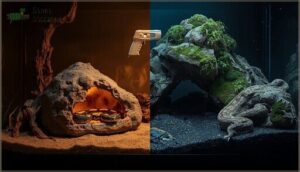
Every snake enclosure needs one hide at the heat end and one at the cool end — that’s non-negotiable for gradient essentials. Place your warm hide directly over the heat source, targeting upper 80s°F inside. Your cool side hide should sit opposite, staying in the mid-70s.
Monitoring hide temps with a temp gun ensures stress mitigation and consistent thermal regulation and control.
Humid Hides for Shedding
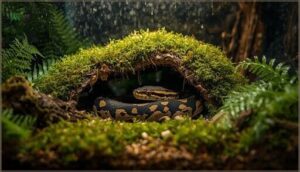
Once your thermal regulation and control is dialed in, the next layer is moisture. When your snake goes into shed — eyes cloudy, skin dull — a humid hide becomes the difference between a clean peel and a stuck shed nightmare. Aim for 70–80% humidity inside it.
- Use damp sphagnum moss or coconut fiber for steady moisture control
- Cut the entrance hole just wide enough for the snake’s thickest point
- Place it on the secure side of the snake enclosure your snake already trusts
- Check substrate daily — damp, never dripping
- Remove or dry it out after the shed is complete
Choosing The Right Hide Size and Material
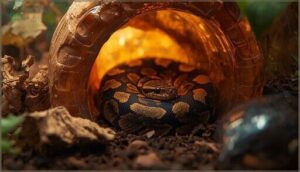
Size matters more than you’d think. A hide that fits your snake’s coiled body snugly — walls making contact on at least two sides — gives real security.
Plastic and resin are your safest Hide Material Options: easy to disinfect, humidity-resistant, and durable. Cork bark works too, but strip the crumbly inner layer.
Match Snake Hide Dimensions to your snake’s current size, not its adult length.
Signs Your Snake Needs More Hiding Places

Snakes can’t tell you when something’s wrong — but they do show it. Once you know what to watch for, the signs are hard to miss.
Here’s what stressed or hide-deprived snakes actually look like, and how to fix it.
Behavioral Indicators of Stress
Restlessness is one of the clearest stress signals your snake will show. Watch for glass surfing, constant corner-checking, or nose rubbing — these behavioral changes point directly to environmental factors like inadequate hides.
Snake behavior shifts fast under chronic stress: food refusal, defensive striking, and hiding pattern disruptions all affect behavioral health and animal welfare long before visible physical symptoms appear.
Health Risks From Insufficient Hides
Those behavioral red flags don’t stay behavioral for long. Chronic stress hormones suppress immune function directly, leaving your snake vulnerable to respiratory infections, parasites, and scale rot.
Digestive issues follow fast — stress-related health issues like regurgitation and meal refusal cause real organ damage over time.
Inadequate environmental enrichment isn’t just an animal welfare concern; it’s a snake health emergency waiting to happen.
Tips for Adjusting Enclosure Setup
Small changes beat big overhauls every time. Start with hide placement — one snug hide on the warm end, one on the cool end. Then assess snake behavior after each adjustment before changing anything else.
Add leaf litter, cork chunks, or fake plants to break up open space. For species-specific requirements, enclosure size and layout determine how many hiding places actually solve the problem.
Frequently Asked Questions (FAQs)
How much space does a snake need?
Think of a snake’s enclosure like a studio apartment — it needs to fit the tenant properly.
At minimum, enclosure size should match your snake’s adult size, with floor area and vertical space suited to species requirements.
Do snakes usually stay in the same area?
Yes — snakes tend to stick to a defined home range, showing strong site fidelity by returning to the same shelters and basking spots repeatedly rather than roaming randomly through their habitat.
Do snakes remember locations?
Snakes are remarkably sharp navigators — they rely on spatial memory, environmental landmarks, and navigation cues to recall exact locations.
Location recall can persist for months, directly influencing how confidently your snake uses its hiding places.
Can snakes share hides with other snakes?
Most snakes don’t share hides well. Cohabitation risks like hide competition and stress are real.
Each snake needs its own space — shared space dynamics often lead to chronic tension, even when everything looks fine.
How often should snake hides be replaced?
Replace hides when they crack, warp, mold, or no longer fit your snake’s size.
Routine inspections every one to three months catch material breakdown early, keeping your snake enclosure safe and stress-free.
Do hides need to be cleaned, and how?
Hides absolutely need regular cleaning. Spot-clean waste immediately, then disinfect with diluted F10SC or chlorhexidine every few weeks. Rinse thoroughly, dry completely before returning — lingering fumes harm your snake.
Can too many hides overwhelm a snake?
Too many hides can create Hide Overload — blocking heat flow and trapping stagnant air.
Spatial Complexity becomes Environmental Stress when Visual Barriers crowd the snake enclosure, triggering Snake Anxiety and stress-related health issues that compromise animal welfare.
What materials are unsafe for snake hides?
Avoid cedar, pine, and pressure-treated wood — toxic woods that off-gas chemicals harmful to your snake.
Skip porous materials that trap mold, problematic plastics that warp under heat, and any unsafe sealers not rated for reptile enclosures.
Conclusion
A wild ball python may use over thirty distinct refuge points in a single night—each shift a calculated survival decision. Your enclosure can’t match that, but it doesn’t need to. It just needs to answer the same question your snake is always asking: is there somewhere safe right now?
- Once you understand how many hiding places does a snake need through that lens, the setup becomes logical. Give options. Watch behavior. Adjust accordingly.
- https://reptifiles.com/kingsnake-care-sheet/
- https://www.behavioreducation.org/post/minimizing-transition-stress-for-snakes-a-guide-to-low-stress-home-and-habitat-changes
- https://edis.ifas.ufl.edu/publication/UW260
- https://extension.illinois.edu/blogs/good-growing/2016-06-09-snake-prevention-and-management
- https://www.hvreptilerescue.org/resources/care-guides/ball-python-care-guide