This site is supported by our readers. We may earn a commission, at no cost to you, if you purchase through links.
That slimy film coating your snake’s water bowl isn’t just unpleasant—it’s a biofilm teeming with bacteria that can compromise your snake’s immune system within days.
Most keepers change the water regularly but skip the cleaning steps that actually matter, letting pathogens colonize every microscopic scratch in the bowl’s surface. The difference between a quick rinse and proper sanitation can mean the gap between a thriving snake and one fighting off preventable infections.
Learning how to keep snake water bowl clean with the right techniques, safe solutions, and a realistic schedule transforms this daily chore into genuine disease prevention, supporting everything from hydration to successful sheds.
Table Of Contents
- Key Takeaways
- Why Clean Water Bowls Matter for Snakes
- How Often to Clean Snake Water Bowls
- Step-by-Step Daily Cleaning Process
- Safe Cleaning Solutions for Snake Bowls
- Top 5 Products for Snake Bowl Cleaning
- Choosing and Maintaining The Right Bowl
- Frequently Asked Questions (FAQs)
- How often should I change my snakes water bowl?
- Why does my snakes water bowl get slimy?
- Can I use Dawn to clean my snakes water bowl?
- Can I use tap water for my snake?
- How do I clean bowls during shedding season?
- What temperature water is safest for snakes?
- Should I clean the bowl if water looks clear?
- How do I prevent algae growth in bowls?
- Conclusion
Key Takeaways
- Daily hot water rinses and scrubbing with a soft brush prevent biofilm buildup that harbors bacteria, even when the water looks clear, making this simple routine your most effective defense against infections.
- Proper disinfection requires three distinct cleaning levels—daily rinses, weekly deep scrubs with vinegar or mild soap, and full disinfection every 2-4 weeks—to eliminate pathogens that basic water changes can’t touch.
- Non-porous stainless steel bowls resist bacterial colonization better than plastic or ceramic, and any bowl showing cracks, persistent slime, or mineral deposits should be replaced every 6-12 months, regardless of cleaning efforts.
- Complete drying between cleanings is critical because residual moisture creates breeding grounds for bacteria and fungi, so air-dry bowls for at least 15 minutes before refilling with fresh water.
Why Clean Water Bowls Matter for Snakes
Your snake’s water bowl isn’t just a drinking station—it’s a frontline defense against infections and health problems.
Keeping it clean is just one part of a solid snake enclosure setup and maintenance routine that keeps your pet healthy.
Dirty water can breed bacteria, interfere with shedding, and even trigger respiratory issues that’ll send you straight to the vet.
Dirty water breeds bacteria that can trigger shedding problems and respiratory infections requiring veterinary care
Here’s why keeping that bowl spotless matters more than you might think.
Prevents Bacterial and Fungal Infections
Neglect creates a breeding ground for trouble. When you skip regular water bowl cleaning, bacteria and fungi multiply fast, forming slimy biofilms that threaten your snake’s health. Proper hygiene practices and bowl disinfection stop these pathogens before they cause respiratory distress or skin infections.
- Cloudy water signals bacterial control has failed
- Slimy film harbors fungal spores your snake drinks
- Daily water sanitation prevents dangerous microbe colonies
Supports Healthy Hydration and Shedding
Beyond stopping infections, a clean snake water bowl fuels hydration benefits that power the shedding process. Fresh water quality helps your snake maintain skin health, while proper humidity control from evaporation aids smooth sheds.
Dirty bowls discourage drinking, leading to dehydration and stuck shed. Regular water bowl maintenance keeps your reptile care on track, ensuring ideal hydration when your snake needs it most.
Proper hydration is also vital for reptiles to avoid issues such as signs of dehydration in reptiles.
Reduces Respiratory and Skin Issues
When you neglect water bowl maintenance, bacteria growth creates respiratory health hazards. Here’s how bowl sanitizing protects your snake:
- Clean water quality reduces respiratory irritants and fungal spores
- Fresh water prevents humidity imbalances that cause shedding problems
- Regular disinfection cuts ammonia exposure from waste buildup
- Proper reptile hygiene stops skin infections from dirty surfaces
- Snake hygiene routines maintain clear breathing and smooth scales
Follow these hydration tips to keep your pet healthy.
How Often to Clean Snake Water Bowls
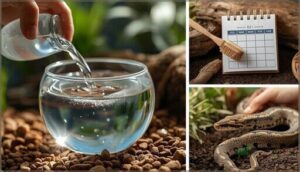
You don’t need a complicated schedule to keep your snake’s water bowl clean, just daily consistency. The key is breaking it down into three simple tiers: daily rinses, weekly scrubs, and deeper disinfection every few weeks.
Here’s exactly how often each type of cleaning should happen.
Daily Rinse and Water Replacement Routine
You should empty your snake’s water bowl every morning, plain and simple. Rinse it with hot tap water to flush away debris and biofilm that can compromise water quality.
This daily scrub takes under a minute but keeps hydration safe and prevents bacteria from building up. Refill with fresh water, and you’ve maintained excellent bowl sanitizing without complicated cleaning schedules or harsh disinfection methods.
Weekly Deep Cleaning Schedule
Once a week, your snake’s water bowl needs a proper deep clean to knock out stubborn bacteria, biofilm, and hidden grime that daily rinsing won’t touch. Use mild dish soap or diluted white vinegar with a soft brush to scrub every surface.
Rinse thoroughly, dry completely, and you’ve mastered essential bowl maintenance and hygiene practices that keep your snake healthy. Consistent bowl care and regular cleaning routines are key to preventing disease and supporting your snake’s overall well-being.
Full Disinfection Every 2-4 Weeks
Every 2 to 4 weeks, you’ll need to tackle a full disinfection cycle to control microbes like Pseudomonas and Aeromonas that daily rinsing misses. Use a reptile-safe disinfectant or diluted bleach solution, rinse thoroughly, and let the bowl air dry completely. This cleaning schedule locks in water quality management and prevents biofilm.
Between deep cleans, keeping water bowls in the right spots—like inside properly positioned hides—makes it easier to monitor freshness and catch contamination early.
Disinfection methods that work:
- Mix reptile-safe disinfectant at the recommended concentration for effective bowl sanitizing
- Ventilate your room during and after cleaning to protect yourself and your snake
- Rinse three times with hot water to remove all chemical residues
- Inspect for cracks or staining that signal it’s time for a replacement
- Track cleaning dates on a simple checklist to maintain consistent microbe control
Step-by-Step Daily Cleaning Process
Your snake’s water bowl needs daily attention, but the process doesn’t have to eat up your time. A solid daily routine takes about two minutes and keeps your snake healthy, hydrated, and free from unnecessary health risks.
Here’s exactly what to do each day to maintain a clean water source for your reptile.
Empty and Rinse With Hot Water
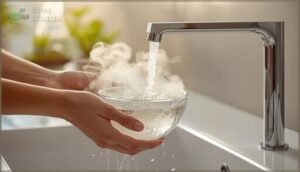
Start your bowl sanitizing routine by pouring out all old water—this simple step is your first line of defense against bacteria. Rinse the bowl for 15 to 30 seconds with water as hot as you can comfortably handle, around 140 to 160 Fahrenheit. Hot water benefits include loosening slime and boosting disinfection power, making water bowl maintenance far more effective.
| Water Temperature | Cleaning Frequency | Hydration Tips |
|---|---|---|
| 140-160°F for plastic | Daily rinse required | Replace water every 24 hours |
| Up to boiling for steel | Weekly deep clean | Check water quality twice daily |
| Test with thermometer | Full disinfection every 2-4 weeks | Monitor bowl for film buildup |
| Swirl water 15-30 seconds | Inspect during each cleaning | Dry bowl completely before refilling |
Scrub With Soft-bristled Brush
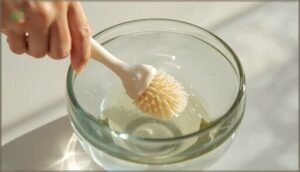
After rinsing, grab a soft-bristled brush made from nylon or natural fibers—these gentle scrubbing tools won’t scratch your bowl’s surface. Here’s how to scrub effectively:
- Hold the brush at a low angle and use small circular motions to lift debris from corners and crevices
- Scrub in one direction to minimize streaks and residue
- Rinse your brush between sections to avoid transferring grime around
This cleaning technique prevents micro-scratches while removing algae and mineral buildup. For proper Brush Care Tips, rinse your brush thoroughly after each use, then air-dry completely to prevent bacterial growth on bristles—replace every three to six months when bristles start to splay.
Dry Completely Before Refilling
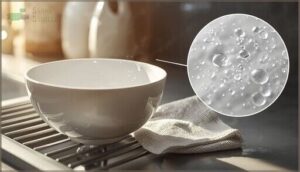
After Bowl Sanitizing, don’t rush to refill—moisture control matters for Water Quality. Let your water bowl air-dry for at least 15 minutes in a clean dish rack, then wipe the interior with a fresh lint-free cloth to eliminate micro-droplets where bacteria growth thrives.
This simple Drying Technique prevents residual cleaning agents from contaminating fresh water, ensuring Refilling Safety and ideal disinfection results.
Inspect for Cracks and Damage
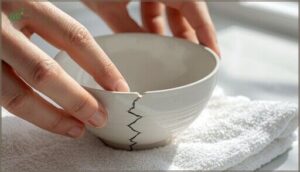
While your snake water bowl dries, run your fingers along the rim and base for Crack Detection—even hairline fractures can harbor bacteria and compromise Water Quality. Look for zigzag patterns near edges, chips that create sharp corners, or whitening in plastic that signals stress lines.
Damage Assessment now prevents leaks later. If any crack exceeds 1 mm or shows moisture intrusion during Leak Testing, replacement protects both Disinfection effectiveness and your snake’s safety.
Safe Cleaning Solutions for Snake Bowls
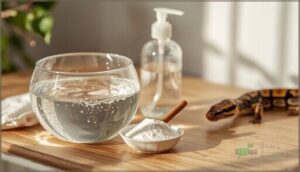
Not every cleaning product is safe for your snake’s water bowl. Harsh chemicals can leave residues that irritate skin, damage respiratory systems, or even poison your pet.
Here are three proven options that clean effectively without putting your snake at risk.
Diluted White Vinegar as Natural Disinfectant
White vinegar’s acidic properties make it one of the most trusted natural sanitizers for your snake’s bowl. Its microbe inhibition power helps disinfect surfaces and improve water quality without harsh chemicals.
Here’s how to utilize this disinfectant alternative:
- Mix 1 part vinegar with 1-4 parts water for safe vinegar dilution
- Let the solution sit 3-5 minutes to reduce bacteria growth
- Scrub gently with a soft brush
- Rinse thoroughly before refilling
Mild Dish Soap for Routine Cleaning
For everyday bowl sanitizing, a drop of mild dish soap works wonders. Gentle surfactants lift biofilm and debris without leaving harmful soap residues—if you rinse well.
Mix 1 teaspoon per liter of warm water, scrub lightly, then flush thoroughly with clean water. This cleaning frequency—once weekly—keeps your snake water bowl fresh and promotes excellent water quality between deeper disinfections.
Reptile-safe Commercial Cleaners
When dish soap isn’t cutting through stubborn residues, reach for a reptile-safe disinfectant. F10SC is a veterinary-grade staple: dilute it per label, spray cleaners directly onto the bowl, and let it sit for the recommended contact time. After disinfection, rinse thoroughly to remove any residue.
Other options include chlorhexidine and reptile-specific spray cleaners that target bacteria, fungi, and viruses without harsh fumes.
- F10SC use requires precise dilution ratios for maximum safety
- Spray cleaners coat surfaces evenly, lifting organic matter
- Reptile-safe cleaners minimize respiratory irritation in snakes
- Water bowl cleaning and disinfection prevents serious infections
- F10 and similar products leave no harmful chemical residues
Top 5 Products for Snake Bowl Cleaning
You don’t need fancy reptile-specific products to keep your snake’s water bowl spotless. Most of the best cleaning tools are already sitting in your home, ready to tackle bacteria and grime safely.
Here are five everyday items that make bowl maintenance quick, effective, and stress-free.
1. Van Ness Cat Litter Scoop
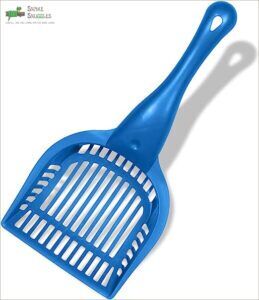
You don’t need pricy specialty tools to keep your snake’s bowl spotless. The Van Ness cat litter scoop works brilliantly for lifting out debris and old substrate that falls into water bowls.
It’s built from high-impact plastic that won’t crack under daily use, and the slotted head lets water drain while catching waste. The 11-inch size reaches into deeper bowls easily, and the smooth finish resists odors between cleanings.
At under five dollars, it’s a smart addition to your cleaning kit.
| Best For | Snake owners who need an affordable, durable tool to clean debris and substrate from water bowls without spending extra on specialized equipment. |
|---|---|
| Brand | Van Ness |
| Material | High impact plastic |
| Primary Use | Litter scooping |
| Easy to Clean | Yes |
| Odor Resistant | Yes |
| Weight | 0.07 Pounds |
| Additional Features |
|
- High-impact plastic construction holds up well to daily cleaning tasks
- Slotted design drains water while catching waste and substrate efficiently
- 11-inch length reaches into deeper bowls easily and costs under five dollars
- Handle may feel flimsy or short for some users during regular use
- Slots might be too large to catch finer substrate particles
- Some users report the scoop can bend or break with heavier materials
2. Exo Terra Reptile Mister Bottle
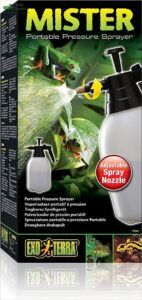
When you clean water bowls, humidity levels can drop fast in glass tanks. The Exo Terra Mister Bottle holds 67.5 ounces of water in a pressurized reservoir, so you can restore moisture levels quickly after your cleaning routine.
The adjustable nozzle switches between fine mist and single stream, letting you target corners without soaking substrate. A locking trigger keeps spray flowing without hand strain. Use distilled water to prevent mineral buildup, and rinse the bottle after each use to keep mold away.
| Best For | Reptile keepers managing large terrariums or multiple enclosures who need a quick way to restore humidity after maintenance. |
|---|---|
| Brand | Hagen |
| Material | Plastic |
| Primary Use | Misting terrariums |
| Easy to Clean | Requires maintenance |
| Odor Resistant | N/A |
| Weight | 0.25 Kilograms |
| Additional Features |
|
- 67.5-ounce capacity means fewer refills when misting large or multiple tanks
- Adjustable nozzle lets you switch from targeted stream to full mist without changing tools
- Locking trigger keeps spray going hands-free, saving effort during long misting sessions
- Top seal can leak, causing mess and wasted water
- Requires frequent pumping to maintain spray pressure
- Some units arrive with mystery liquid or Vaseline inside the bottle
3. Bounty Paper Towels
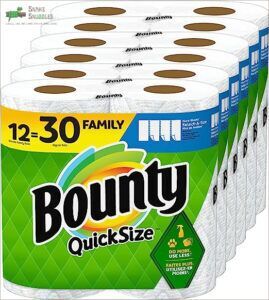
Drying water bowls completely prevents bacterial films from forming between cleanings.
Bounty’s two-ply sheets absorb moisture quickly without leaving lint behind, which matters when you’re wiping glass or stainless steel surfaces. The select-a-size feature lets you tear smaller sheets for quick wipe-downs, saving money over time.
Grab a half-sheet after rinsing your snake’s bowl, wipe the interior dry, then toss it. Each roll holds 1,404 sheets, so one package lasts months in your reptile room.
| Best For | Reptile keepers who need lint-free paper towels to quickly dry water bowls and prevent bacterial buildup between cleanings. |
|---|---|
| Brand | Bounty |
| Material | Paper |
| Primary Use | Cleaning spills |
| Easy to Clean | Disposable |
| Odor Resistant | N/A |
| Weight | N/A |
| Additional Features |
|
- Two-ply sheets absorb moisture fast without leaving lint on glass or stainless steel surfaces
- Select-a-size feature reduces waste by letting you tear half-sheets for quick wipe-downs
- One 1,404-sheet roll lasts months, even with daily use in your reptile room
- More expensive than generic paper towel brands
- Some users report inconsistent perforations that make tearing difficult
- Higher upfront cost at $43.50 per package compared to budget options
4. Clorox Splash Less Bleach
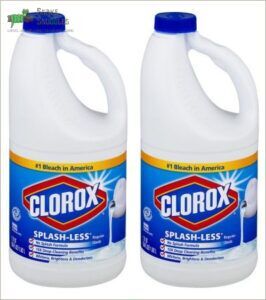
Monthly deep disinfection kills hidden pathogens that daily cleaning misses, especially when your snake soaks in its bowl.
Clorox Splash-Less Bleach offers a thicker, controlled pour that reduces spills during mixing, which matters when you’re working near your enclosure. Dilute one tablespoon per gallon of water, soak the bowl for 10 minutes, then rinse thoroughly until you smell no chlorine residue. The formula eliminates 99.9% of bacteria and viruses without requiring scrubbing force that might scratch non-porous surfaces.
| Best For | Snake owners who need a reliable monthly disinfectant for water bowls and enclosure surfaces without dealing with messy spills during dilution. |
|---|---|
| Brand | Clorox |
| Material | Liquid |
| Primary Use | Disinfecting surfaces |
| Easy to Clean | No |
| Odor Resistant | Deodorizes |
| Weight | 110 ounces total |
| Additional Features |
|
- Thicker splash-less formula makes it easier to measure and mix the correct dilution ratio without spilling near your enclosure
- Kills 99.9% of bacteria and viruses that accumulate in soaking bowls and on non-porous surfaces
- Two 55-ounce bottles provide enough supply for multiple months of regular deep cleaning sessions
- Requires purchasing two bottles at once, which might be excessive for owners with single small enclosures
- Needs thorough rinsing to eliminate all chlorine residue before reintroducing your snake to the bowl
- Heavier bottles can be awkward to handle when you’re trying to pour precise tablespoon measurements
5. Zoo Med Aspen Snake Bedding
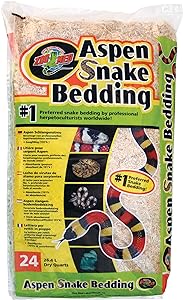
A dry substrate layer under your bowl catches spills before they soak into bedding and breed bacteria, which is exactly where Zoo Med Aspen Snake Bedding comes in. This 99.9% dust-free material absorbs 191% of its weight in moisture, pulling stray droplets away from the bowl’s base during water changes.
Spread a 1-inch layer beneath the bowl to catch condensation and splashes, replacing damp clumps every 3-5 days. The odorless, natural aspen won’t irritate your snake’s respiratory system while keeping the cleaning zone cleaner between full substrate changes.
| Best For | Snake owners who want a natural, absorbent substrate that catches water bowl spills and creates a cleaner maintenance zone without dust or odors. |
|---|---|
| Brand | Zoo Med |
| Material | Aspen |
| Primary Use | Pet bedding |
| Easy to Clean | Yes |
| Odor Resistant | Odorless |
| Weight | 5.4 Pounds |
| Additional Features |
|
- Absorbs nearly twice its weight in water, pulling moisture away from bowls and high-traffic areas before bacteria builds up
- 99.9% dust-free formula won’t irritate reptile respiratory systems during substrate changes or burrowing
- Natural aspen material lets snakes exhibit normal burrowing behavior while staying odorless between cleanings
- Wet clumps don’t dry out after soaking, so you’ll need to scoop and replace damp sections every few days
- Not suitable for all reptile species—check care guides before using with moisture-dependent animals
- Decomposes over time and releases tannins that can shift soil pH if you compost it
Choosing and Maintaining The Right Bowl
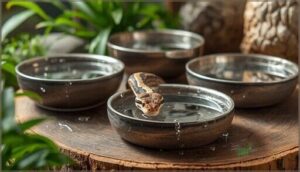
The bowl you choose matters just as much as how often you clean it. Some materials harbor bacteria, while others resist buildup and last for years.
Let’s look at what makes a good water bowl and when it’s time to replace it.
Non-porous Materials Like Stainless Steel
Stainless steel water bowls resist bacteria growth better than porous materials like plastic or ceramic. The smooth, non-porous surface blocks liquid absorption, making bowl sanitizing quick and thorough.
You won’t deal with stubborn stains or hidden grime. Metal corrosion isn’t an issue with proper surface finishing, and material durability means these bowls handle daily cleaning without cracking.
They maintain water quality consistently.
Replace Bowls Every 6-12 Months
Even the best stainless steel or plastic snake water bowl wears out over time. You’ll need to replace yours every 6 to 12 months to maintain water quality and prevent bacteria growth.
Watch for these replacement triggers:
- Visible scratches or micro-cracks that trap debris
- Persistent odors despite thorough bowl sanitization
- Clouding or discoloration that won’t scrub away
- Unstable wobbling or structural damage
Regular replacement protects snake health directly.
Why Slimy Film Develops in Water Bowls
That slimy film you notice? It’s biofilm formation—microbes secreting a protective slime matrix that clings to bowl surfaces.
Warm, stagnant water quality accelerates microbial growth, especially after feeding when nutrients accumulate.
Bowl materials matter too: porous plastics harbor more bacteria than smooth stainless steel.
Without effective cleaning and regular disinfect routines, biofilm shields these bacterial infections from basic scrubbing, compromising your reptile care tips.
Signs You Need a New Water Bowl
Even with perfect cleaning, water bowl cleaning won’t save a failing bowl. Cracks harbor bacteria you can’t disinfect away, while chalky mineral deposits signal material degradation.
If your snake water bowl develops persistent slime despite scrubbing, or wobbles and tips—risking spills—it’s time to swap it. Bowl material matters: choose non-porous replacements for better water quality, bowl stability, and slime prevention following solid reptile care tips.
Frequently Asked Questions (FAQs)
How often should I change my snakes water bowl?
Like clockwork, you’ll want to swap out your snake’s water daily—that’s the foundation of healthy hydration.
Beyond that basic water change frequency, weekly deep cleaning and monthly disinfection keep bacterial growth in check.
Why does my snakes water bowl get slimy?
Bacteria and algae thrive in warm, damp bowls, forming biofilm—a slimy surface that shields microbe growth.
Bowl materials, water quality, and infrequent cleaning accelerate this buildup, requiring reptile-safe disinfectant and regular water bowl cleaning.
Can I use Dawn to clean my snakes water bowl?
You can use Dawn, but it’s not worth the risk. Even with thorough rinsing, soap residue can irritate your snake’s skin. Stick to reptile-safe cleaners or diluted white vinegar instead.
Can I use tap water for my snake?
Yes, tap water is safe for snakes if it’s drinkable. Most chlorine evaporates quickly, but you can use a reptile-safe conditioner for chloramines.
Daily water changes matter more than the source.
How do I clean bowls during shedding season?
Ironically, when your snake needs hydration most during shedding, bacteria love humid conditions too.
Stick to daily rinses with reptile-safe cleaners, disinfect weekly, and replace water every 24 hours for shedding skin health.
What temperature water is safest for snakes?
Tepid water between 70 and 85 Fahrenheit works best for most snake water bowls.
Check behavioral signs like reluctance to drink, then adjust within safe ranges to match your species variation and thermal gradients.
Should I clean the bowl if water looks clear?
Absolutely. Clear water hides bacteria, fungi, and biofilm that threaten your snake’s health.
Daily inspection and bowl sanitizing with reptile-safe cleaners disinfect surfaces, preventing bacterial growth and clear water risks through consistent water bowl cleaning and disinfection.
How do I prevent algae growth in bowls?
Algae prevention starts with keeping your snake water bowl out of direct sunlight and changing water daily.
Use a non-porous stainless steel bowl, rinse it with hot water, and dry thoroughly between uses.
Conclusion
A keeper once traced her ball python’s recurring mouth rot back to a water bowl she’d rinsed daily but never actually scrubbed. The biofilm persisted despite fresh water changes, harboring the very bacteria causing the infection.
Mastering how to keep snake water bowl clean isn’t about flawlessness—it’s about consistency with the right methods. Your daily scrub, weekly vinegar soak, and keen eye for damaged bowls create the foundation for a healthier, more resilient snake.
- https://www.stitcher.com/podcast/herp-nation-radio/e/51162653?autoplay=true
- https://pmc.ncbi.nlm.nih.gov/articles/PMC7938798
- https://kids.britannica.com/kids/article/water-snake/543529
- https://journals.biologists.com/jeb/article/220/19/3565/18786/Feeding-begets-drinking-insights-from-intermittent
- https://royalsocietypublishing.org/rspb/article/281/1782/20140119/84112/Pelagic-sea-snakes-dehydrate-at-seaSea-snakes