This site is supported by our readers. We may earn a commission, at no cost to you, if you purchase through links.

A snake stuck mid-shed looks alarming—skin clinging in ragged patches, eyes clouded over, the animal visibly uncomfortable.
Most keepers who’ve dealt with it trace the problem back to the same culprit: humidity that dropped too low at the wrong moment. The outer skin layer separates cleanly only when a thin layer of lymphatic fluid keeps it supple, and that fluid depends entirely on moisture in the enclosure.
Miss that window, and you’re soaking your snake for an hour trying to undo what five minutes of preparation could have prevented. Knowing when and how to increase humidity before shed changes everything.
Table Of Contents
- Key Takeaways
- Why Snakes Need Higher Humidity Before Shedding
- How to Measure Humidity in Snake Enclosures
- Immediate Ways to Increase Humidity
- Long-Term Humidity Solutions for Shedding
- Troubleshooting Humidity Issues During Shed
- Frequently Asked Questions (FAQs)
- How to increase humidity immediately?
- Do snakes like humidity?
- Can diet affect a snakes shedding success?
- Does age influence how often snakes shed?
- Should handling be avoided during the shedding process?
- How does enclosure size impact shedding conditions?
- Do different seasons affect a snakes shedding frequency?
- Conclusion
Key Takeaways
- Low humidity during shed is the root cause of stuck shed, and a thin lymphatic fluid layer between skin layers depends entirely on enclosure moisture staying within species-specific ranges.
- dull skin, cloudy eyes, and behavioral changes like hiding or appetite loss—these are your cues to start raising humidity before the shed gets underway.
- Quick fixes like misting, enlarging water bowls, and partially covering the screen top can raise humidity fast, but long‑term solutions like humid hides, automatic misters, and live plants keep conditions consistent across every shed cycle.
- Stuck shed becomes dangerous within 48 hours—tail necrosis and vision loss are real risks—so soak your snake in lukewarm water for 15–20 minutes and use a damp cloth to gently remove any retained skin.
Why Snakes Need Higher Humidity Before Shedding
Shedding is one of the most vulnerable moments in your snake’s life, and humidity plays a bigger role than most keepers realize.
Getting the levels right makes all the difference, and maintaining proper humidity for snake shedding can mean the gap between a clean shed and a painful, stuck one.
Get it wrong, and you’re looking at stuck shed, stressed animals, and potential health problems.
Here’s what you need to know before your snake hits that next cycle.
The Shedding Process and Humidity Requirements
Before your snake sheds, its body builds a thin lymphatic fluid layer between the old and new skin. This pre‑shed hydration process peaks during the blue eye phase, when eyes turn milky and vision dulls. Humidity control directly maintains that fluid layer.
Without species‑specific targets — 70 to 80 percent for ball pythons, lower for desert species — the old skin can’t release cleanly. Understanding the continuous skin shedding(https://wholeeartheducation.com/snakes-shedding-skin/) process helps you time humidity adjustments.
Risks of Low Humidity During Shed
When humidity drops below 60%, retained shed becomes your first warning sign. Dry air prevents the lymphatic fluid from loosening old skin properly, leaving patches stuck around the tail and eyes.
Tail necrosis can develop within 48 hours as constricting shed bands cut off circulation. Eye cap issues cloud vision for up to two weeks. Skin infection, dehydration stress, and bacterial entry follow quickly without proper humidity control.
Without proper humidity control, stuck shed can cut off circulation within 48 hours and cloud a snake’s vision for weeks
Monitoring improper humidity levels is essential to prevent dysecdysis.
Signs Your Snake is About to Shed
Knowing when your snake is entering pre‑shed makes humidity management much easier.
Watch for dull skin and a dusty, faded appearance first — that’s days 1‑2. Cloudy eyes follow around days 3‑7, signaling fluid buildup between skin layers.
You’ll also notice behavior changes: hiding, appetite loss, and irritability.
Loose skin around the neck confirms it’s time to adjust your reptile enclosure management and start misting consistently.
How to Measure Humidity in Snake Enclosures

Before you can fix a humidity problem, you need to know what you’re actually working with. A reliable reading gives you something concrete to act on instead of just guessing.
Here’s what to look at when measuring humidity in your snake’s enclosure.
A digital hygrometer paired with proper UVB and lighting setup for boa constrictors helps you track humidity swings caused by heat output in the enclosure.
Choosing and Using Hygrometers
reliable digital hygrometer is your best tool for humidity management inside any snake enclosure.
Position it at mid-level on the side wall, away from heat lamps and water bowls, for accurate readings.
Digital features like min-max memory and Bluetooth alerts help you track moisture fluctuations throughout the day.
Clean sensors every few months and recalibrate using the salt method to maintain ±3% accuracy.
Ideal Humidity Levels for Common Species
Each species has its own baseline needs, so matching species-specific ranges matters more than chasing a single number.
Ball pythons thrive at 55–65% normally, climbing to 70–80% during shed. Corn snakes do best around 65–75%, while kingsnakes tolerate 50–70%. Boas need 55–75%, rising to 85% pre‑shed.
Understanding temperature-humidity balance and bedding moisture retention helps you build an effective humidity gradient design inside your enclosure.
Monitoring Changes Before and During Shed
Once you know your target range, tracking it consistently is what keeps your snake safe through the shed cycle. Watch for these key indicators:
- Eye opacity — milky blue eyes signal the pre-shed phase has begun
- Skin color changes — dullness and fading mean separation is underway
- Behavioral cues — hiding and reduced appetite confirm the cycle
- Hygrometer calibration — verify monthly accuracy using a salt test
- Temp-humidity correlation — rising heat drops moisture, so monitor both together
Immediate Ways to Increase Humidity
When your snake starts showing pre-shed signs, acting fast on humidity can make the difference between a clean shed and a frustrating one.
You don’t need fancy equipment to raise moisture levels quickly.
These three methods work immediately and are easy to implement right now.
Spraying or Misting The Enclosure
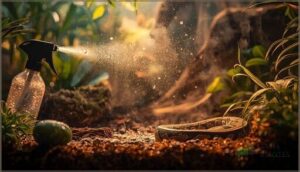
Misting is one of the fastest humidity control methods you have. Use a quality spray bottle — Exo Terra’s 2-quart model works well — and target substrate surfaces and decor, not your snake directly.
| Spray Bottle Types | Water Temperature | Misting Frequency |
|---|---|---|
| Handheld 32 oz | 75–85°F lukewarm | Once daily, pre-shed |
| Pressure sprayer 2 qt | Dechlorinated/distilled | Twice daily for ball pythons |
| Fluker’s 10 oz | Room temperature | Every 24 hours |
| Exo Terra locking mister | Avoid cold tap water | 1–2 weeks until eyes clear |
| Adjustable nozzle mister | ReptiSafe-treated | Morning sessions preferred |
Maintain ventilation balance so your enclosure dries within 36 hours — targeted substrate mist raises humidity without waterlogging the bedding.
Adding or Enlarging Water Bowls

A larger water bowl works like a built-in humidifier — more surface area means more evaporation. Bowl size impact is real: doubling the diameter from 6 to 12 inches can raise ambient humidity 5–10%.
Follow these essentials:
- Placement strategy: Position on the warm side to accelerate evaporation
- Material selection: Heavy ceramic resists tipping and promotes steady moisture release
- Cleaning routine: Change water daily; disinfect weekly with diluted bleach
- Soaking schedule: Allow 15–30 minute soaks before shed to soften skin
Covering Part of The Screen Top

Covering part of the screen top is one of the fastest humidity control methods available. Aim for a foil coverage ratio of 50 to 75 percent, leaving a ventilation gap size of at least 20 percent uncovered.
For plexiglass placement, cut sheets to fit your tank’s cool side.
Always follow coverage safety tips: material heat resistance matters, so avoid plastic near lamps.
Aluminum foil manages enclosure heat safely.
Long-Term Humidity Solutions for Shedding

Quick fixes like misting work well in the moment, but your snake needs more reliable humidity support during shed season. Building that consistency into the enclosure itself makes a real difference long-term.
Here are three solutions worth setting up before the next shed cycle begins.
Using Humid Hides and Absorbent Substrates
A humid hide is one of the most reliable humidity control methods during pre‑shed. For Hide Construction, use an opaque container with a tight lid — cut the doorway about 1 to 1.5 times your snake’s body width.
Moss Preparation matters: soak sphagnum moss, squeeze out excess moisture, then fill the hide one‑third full. Your Substrate Selection and Placement Strategy determine how long moisture lasts between your Maintenance Routine checks.
Installing Automatic Misters or Foggers
Humid hides work well, but automatic misters like MistKing take consistency further. Set up your system with these four steps:
- Pump Selection – Choose a diaphragm pump sized for your enclosure count.
- Reservoir Positioning – Place it below the tank to prevent backflow.
- Nozzle Placement – Angle heads toward decor, not heat lamps.
- Timer Programming – Run 30–90 second cycles at dawn and dusk.
Use distilled water for water quality maintenance. Foggers and humidifiers suit gentler humidity needs.
Incorporating Live Plants or Moss
Live plants and moss go beyond timers and nozzles—they work passively, around the clock. Sphagnum moss benefits your setup most during pre‑shed periods, holding moisture for up to 10 days. Pothos transpiration quietly boosts vapor levels through trailing vines. Fern cover strategies add dense foliage that mimics forest floors. Bromeliad water reservoirs give snakes a drink and release steady humidity.
| Plant | Humidity Role |
|---|---|
| Sphagnum Moss | Retains moisture 7–10 days |
| Pothos | Transpiration boosts vapor |
| Boston Fern | Absorbs excess, adds cover |
| Bromeliad | Stores water in rosettes |
Follow these plant placement tips: position moisture‑lovers on the cool side, quarantine new plants 30 days, and use fertilizer‑free soil to protect your snake.
Troubleshooting Humidity Issues During Shed

Even with the best setup, humidity problems can still pop up mid-shed. Knowing how to respond quickly makes the difference between a clean shed and a painful stuck one.
Here’s how to troubleshoot the most common issues before they become a bigger problem.
Dealing With Stuck Shed
Stuck shed happens when humidity drops too low during the process. Start with Soak Techniques — place your snake in lukewarm water for 15–20 minutes. Then try the Damp Cloth Method, gently rubbing from head to tail.
For critical areas, follow these steps:
- Eye Cap Removal: Use a damp q‑tip; never force it off.
- Tail Tip Care: Soak daily to prevent constriction and necrosis.
- Shed Aid Products: Apply coconut oil or reptile spray after soaking.
Adjusting Ventilation Without Lowering Humidity
Once your snake sheds cleanly, the next challenge is keeping airflow balanced. Strategic vent placement matters here — bottom intake vents and top exhaust vents create cross ventilation design that moves air without draining moisture.
Partial screen coverage using foil over 70–80% of the lid helps retain humidity. Plexiglass lid modifications and side vent holes give you precise control, so proper ventilation doesn’t compromise your humidity targets.
Preventing Mold and Health Risks
High humidity keeps your snake healthy during shed, but mold and mildew can develop fast if moisture builds unchecked. Stay ahead of it with these protocols:
- Mold Detection – Inspect substrate weekly for fuzzy growth or sour odors.
- Substrate Choice – Use cypress mulch or coconut husk; both resist mold naturally.
- Cleaning Protocols – Wipe surfaces with white vinegar, rinse thoroughly, and dry completely.
- Ventilation Design – Maintain air circulation without sacrificing moisture balance.
Frequently Asked Questions (FAQs)
How to increase humidity immediately?
Misting walls, adding a warm end bowl, using a humidity box, damp substrate, or a foil lid work fast.
Humidifiers, foggers, spraying, and a water bowl all raise levels within minutes.
Do snakes like humidity?
Yes, but it depends on the species. Natural Habitat Levels vary widely — ball pythons prefer 50 to 60 percent, while desert species like rosy boas stay healthiest below 40 percent.
Can diet affect a snakes shedding success?
Absolutely — diet plays a real role.
Calcium Balance, Vitamin A Intake, and Protein Levels all affect skin elasticity.
Nutrient Deficiency leads to patchy, incomplete sheds, no matter how well you manage enclosure humidity.
Does age influence how often snakes shed?
Age absolutely shapes how often snakes shed. Juvenile growth drives rapid shedding every two to four weeks, while adult shedding slows to just a few times yearly as growth stabilizes.
Should handling be avoided during the shedding process?
Avoid handling during the shedding process.
Blurred vision from the blue phase increases Defensive Behavior and bite risk.
Stress‑Induced Retention can cause a stuck shed.
Post‑Shed Recovery takes 24–48 hours before resuming Handling Timing Guidelines.
How does enclosure size impact shedding conditions?
Think of your enclosure as a microclimate: size shapes everything.
Larger enclosures lose humidity faster through surface-area evaporation and thermal stratification, while compact setups maintain steadier volume-humidity relationships, supporting cleaner, stress‑free sheds.
Do different seasons affect a snakes shedding frequency?
Yes, seasons directly affect shedding frequency. Warmer temperatures boost metabolic rate shifts, triggering more frequent ecdysis, while cooler months slow the cycle considerably.
Photoperiod influence and seasonal humidity variation both play key roles.
Conclusion
Shedding is your snake’s reset button—and humidity is what lets it run smoothly.
Now that you know how to increase humidity before shed, you’re no longer reacting to problems; you’re preventing them.
Monitor your hygrometer, adjust your setup when the signs appear, and keep a humid hide ready.
A clean, single-piece shed isn’t luck.
It’s the result of consistent preparation, and your snake will show you exactly when you’ve got it right.
- https://www.reptilecentre.com/blogs/reptile-blog/5-ways-to-increase-humidity-for-reptiles
- https://www.birdexoticsvet.com/post/leopard-gecko-shedding
- https://talis-us.com/blogs/blog-126/how-to-maintain-reptile-humidity-a-guide-for-optimal-health
- https://blog.getreptilia.com/blog/understanding-the-shedding-process-a-comprehensive-guide-for-reptile-owners
- https://www.reptiles.swelluk.com/help-guides/helping-your-reptiles-with-their-shed/