
This site is supported by our readers. We may earn a commission, at no cost to you, if you purchase through links.

A rat’s desperate bite can blind a snake in seconds. One defensive scratch can tear through scales and expose muscle tissue underneath. These aren’t rare mishaps—clinical data shows that up to 25% of snakes fed live rodents sustain injuries requiring veterinary care, ranging from facial lacerations to punctured organs.
The feeding response that makes snakes such efficient predators also leaves them vulnerable during the struggle, especially when prey fights back with claws and teeth designed for survival.
Understanding live prey injury risks means recognizing that the size of your snake’s fangs, the dimensions of the rodent, and even the texture of your feeding substrate all factor into whether dinner becomes a medical emergency.
Table Of Contents
Key Takeaways
- Up to 25% of snakes fed live rodents sustain injuries requiring veterinary care, including facial lacerations, eye damage, punctured organs, and broken bones from defensive prey attacks.
- Frozen-thawed prey eliminates injury risks, parasite transmission, and zoonotic disease exposure while maintaining complete nutritional value and reducing annual veterinary costs by 15-40%.
- Species with delicate skin and small fangs—like garter snakes, ringneck snakes, and coral snakes—face the highest vulnerability during live feeding due to minimal defensive capabilities.
- If you choose live feeding, match prey width to 1-1.5 times your snake’s girth, supervise constantly, and intervene within 10-15 minutes if the snake doesn’t strike or prey shows aggression.
What Are Live Prey Injury Risks?
Live prey feeding exposes your snake to real physical danger, from minor scratches to life-threatening injuries. These risks aren’t hypothetical—up to 25% of snakes fed live rodents sustain injuries that require veterinary intervention.
Defensive rodent bites can pierce skin and muscle tissue, leading to serious infections that demand immediate veterinary care.
Live prey feeding isn’t just risky—up to 25% of snakes sustain injuries serious enough to need veterinary care
Understanding the types, frequency, and species-specific vulnerabilities helps you make informed decisions about your snake’s feeding protocol.
For a detailed breakdown of safety considerations and nutritional trade-offs, see our complete guide on frozen versus live snake feeding options.
Common Types of Injuries From Live Prey
When live prey fights back, your snake faces four main injury types. Bite wounds target the face, mouth, and body—areas with rich blood supply that bleed heavily and invite infection. Scratch injuries tear skin along the neck and sides. Eye damage includes corneal lacerations that threaten vision. Internal trauma, like organ punctures or broken ribs, happens when rodents thrash violently during feeding struggles.
Switching to frozen prey feeding eliminates these injury risks entirely while giving your snake the same nutritional value without the danger.
Understanding snake injury risks is vital for preventing such incidents.
Frequency and Severity of Injuries
Injury rates hit 20-40% in snakes fed live prey, with severity climbing when rodents exceed your snake’s gape width. Deep puncture wounds reaching bone, facial lacerations threatening eye function, and broken ribs from thrashing prey dominate the trauma response patterns I document in practice. Your snake’s wound healing capacity struggles with these injury patterns, especially when:
- Prey bites penetrate skull or jaw regions during feeding struggles
- Scratches tear through neck scales, exposing underlying tissue
- Tail injuries result from defensive rodent attacks
- Internal trauma develops from oversized prey constriction
- Necrosis spreads from untreated bite wounds within 48-72 hours
Supervision directly impacts these feeding strategies outcomes. Understanding the pros and cons of frozen rodent feeding is essential for minimizing risks.
Species Most at Risk
While injury statistics matter, your snake’s species determines its actual vulnerability during live prey feeding. Garter snakes, ringneck snakes, and coral snakes top the risk list due to delicate skin and small fangs that offer minimal defense against thrashing rodents.
Brown tree snakes and sea snakes share fragile bone structures that crack under prey struggle.
Species-specific needs override general feeding guidelines—your ball python tolerates live prey better than your eastern indigo snake ever will.
How Live Prey Cause Injuries to Snakes
When you place live prey in your snake’s enclosure, you’re basically putting a frightened animal face-to-face with a predator—and that prey will fight for its life. Rodents come equipped with sharp teeth and claws, and they won’t hesitate to use them when cornered.
Even minor injuries can lead to infections or stress for your snake, which is why many experienced keepers recommend switching to frozen-thawed prey as outlined in this feeding guide.
Understanding exactly how these injuries occur helps you recognize the real dangers you’re exposing your snake to every time you choose live feeding.
Defensive Bites and Scratches

When cornered, rodents fight back with sharp teeth and claws—and your snake’s face is often the first target. Defensive bites pierce scales, creating puncture wounds that easily become infected. Scratches leave raw tissue exposed, inviting bacteria and abscesses.
Switching to frozen-thawed prey eliminates these risks entirely while keeping your snake healthy and well-fed.
You’ll notice the prey animal becomes more aggressive as it realizes escape isn’t possible, escalating injury risk during every feeding session. Proper prey handling and supervision are essential for snake feeding safety.
Facial, Eye, and Body Wounds

Live prey inflict serious, lasting damage across multiple body regions. Facial lacerations around the mouth and snout are most common, often leading to mouth rot if bacteria enter through cuts.
Eye trauma—ranging from corneal scratches to complete perforation—can impair hunting and cause permanent blindness.
Body scarring from bites and scratches marks dorsal and ventral surfaces, with wound healing slowed when internal tissues are compromised, requiring veterinary intervention for deeper punctures.
Internal Trauma and Broken Bones
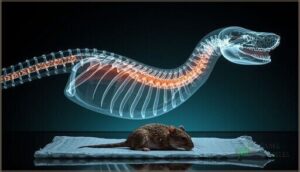
Beyond surface wounds, the violence of prey struggle reaches deeper—fracturing ribs, vertebrae, and jaw bones as rodents thrash or kick. Internal hemorrhage from organ punctures compromises snake health silently, with the liver, kidneys, and lungs most vulnerable.
Fracture prevention starts with eliminating live prey altogether; bone repair and surgical intervention become necessary when trauma response fails, highlighting why frozen-thawed options protect both snake nutrition and prey welfare.
Disease and Parasite Transmission From Live Prey

Beyond physical injuries, live prey introduces hidden health threats that can compromise your snake’s immune system and longevity. Rodents and other feeders carry bacteria, viruses, and parasites that transfer during handling and feeding, putting both your pet and household at risk.
Understanding these transmission pathways helps you make informed decisions about your snake’s diet and long-term care.
Zoonotic Disease Risks
Feeder rodents carry zoonotic diseases that threaten both you and your snake. Bacterial infections like Salmonella spread through contaminated feces, while Pasteurella multocida enters via bites—affecting immunocompromised individuals most severely.
Critical transmission routes include:
- Direct contact with infected prey or bedding
- Fecal-oral pathways during handling
- Bite wounds inoculating bacteria
- Environmental contamination from rodent urine
Zoonotic disease prevention starts with proper hygiene and recognizing these health impacts before they escalate.
Parasite Infestations in Snakes
Mites, ticks, and intestinal worms hitch rides on live prey, turning what should be a meal into a parasitic invasion that can drain your snake’s health over weeks or months. Effective parasite control protects reptile care investments and ensures peak snake nutrition.
| Parasite Type | Transmission Method | Health Impact |
|---|---|---|
| External mites | Direct contact during feeding | Anemia, skin irritation, lethargy |
| Intestinal worms | Ingestion of infected prey tissue | Weight loss, digestive distress |
| Ticks | Attachment from live feeder rodents | Blood loss, disease vectors |
Frozen-thawed prey eliminates these threats entirely, supporting both animal welfare and snake hygiene through safer feeding practices.
Secondary Infections From Wounds
Scratches and bites don’t just hurt—they open doors for bacterial transmission from prey saliva or contaminated environments. Pathogens like Pseudomonas and Staphylococcus colonize wounds rapidly, compromising wound healing and reptile health. Without proper infection control and antibiotic therapy, minor injuries escalate to abscesses or systemic infections.
Frozen live prey eliminates this cascade entirely, supporting snake nutrition while safeguarding animal welfare through better parasite control and reduced fungal diseases risk.
Factors That Increase Injury Risk

Not all feeding situations carry the same level of risk. Certain conditions stack the odds against your snake, turning what should be a routine meal into a dangerous encounter.
Understanding these variables helps you recognize when extra caution is necessary and when you might be setting your pet up for harm.
Prey Size and Aggression
Prey size directly determines injury risk when feeding snakes live prey. You must match prey width to your snake’s widest body part—usually 1 to 1.5 times—to minimize internal trauma and regurgitation.
Oversized rodents trigger aggressive defensive bites, scratches, and prolonged struggles that cause facial wounds, broken bones, and gut impaction.
Proper prey selection is your most powerful injury prevention tool in feeding safety.
Feeding Environment and Supervision
Where you feed matters as much as what you feed. Your enclosure design directly impacts snake safety—gravel and sand substrates cause abrasions and impaction during strikes, while proper hides reduce stress-induced defensive behaviors.
Supervision techniques are non-negotiable: active monitoring during live prey feeding allows immediate intervention if rodents bite, preventing infections that unsupervised sessions can’t catch. Never leave prey unattended.
Snake Age and Health Status
Your snake’s age and health status dramatically shift injury susceptibility during live prey encounters. Aging snakes show decreased bone density and slower reflexes, making them physically vulnerable to defensive strikes.
Health markers like poor shedding, lethargy, or respiratory infections signal compromised hunting ability—these snakes can’t handle live prey safely.
Malnutrition weakens muscle mass and coordination, directly impacting snake behavior and injury risk during feeding.
Preventing Injuries During Live Feeding

If you choose to feed live prey, you can’t eliminate all risks, but you can reduce them markedly with the right approach. The key is controlling every variable you can—prey size, feeding environment, and your own vigilance during the process.
Here are three critical strategies that work together to keep your snake safer during live feeding sessions.
Safe Prey Selection and Handling
Start by choosing prey no wider than your snake’s thickest body section—approximately 1.5 times its girth—to prevent choking and injury during live prey feeding.
Inspect each animal carefully for wounds, lethargy, or respiratory symptoms before use. Handle prey with long tongs or gloves, maintaining control while reducing stress.
Store live feeders in secure, escape-proof containers with proper ventilation, and always prioritize prey welfare throughout the selection process.
Supervision and Intervention Tips
Never leave your snake unsupervised during live prey feeding—constant monitoring lets you spot defensive bites, abnormal prey aggression, or hesitation before injuries occur. Watch for stress signals like hissing or tail rattling, which indicate heightened risk.
If the snake doesn’t strike within 10–15 minutes, or if prey lunges aggressively, intervene immediately using long-handled tongs to separate them safely and prevent trauma.
Using Feeding Tools and Separate Containers
Long-handled feeding tongs with rubber-tipped jaws protect you and your snake during prey presentation, maintaining a safe distance while preventing mouth injuries from strikes. Dedicated feeding containers eliminate substrate ingestion and reduce cage aggression triggered by prey scent.
Essential feeding tool design features for snake safety and injury prevention:
- Stainless steel tongs (24–36 inches) maintain a safe distance from defensive strikes
- Curved, padded jaws secure live prey without crushing or causing tissue damage
- Locking mechanisms prevent accidental releases during transfer between containers
- Separate feeding tubs minimize territorial responses and substrate contamination
- Gripping mechanisms guarantee steady control when presenting struggling rodents
Alternatives to Live Prey Feeding

You don’t have to risk your snake’s health every feeding day. Frozen-thawed prey offers a safer, more controlled approach that eliminates most injury risks while meeting your snake’s nutritional needs.
Let’s look at the practical benefits, shift strategies, and ethical considerations that make alternatives worth considering.
Benefits of Frozen-Thawed Prey
Frozen-thawed prey eliminates the dangers of live prey feeding while maintaining complete snake nutrition. You’ll gain feeding convenience through bulk storage, reduce injury risks by 75%, and achieve significant cost savings over time. Nutrient retention remains excellent when you thaw prekilled diet items properly, and many keepers find their snakes accept frozen-thawed food readily once transitioned correctly.
| Benefit Category | Key Advantage |
|---|---|
| Safety | Eliminates defensive bites, scratches, and internal trauma from struggling prey |
| Disease Prevention | Freezing kills most parasites and bacteria, including Salmonella and nematodes |
| Nutrition Control | Provides consistent nutrient profiles with minimal degradation during proper storage |
| Ethics | Ensures humane treatment by preventing prey suffering and stress during feeding |
| Practicality | Allows bulk purchasing and flexible feeding schedules without urgent prey acquisition |
Transitioning Snakes to Safer Diets
Patience during dietary shift separates successful keepers from frustrated ones. You’ll achieve better results by gradually introducing prekilled prey while removing live options, using scenting techniques with reptile-safe attractants to boost acceptance.
Most snakes adapt within 2-4 feeding cycles when you maintain consistent routines and temperatures. Monitor your snake’s weight closely—veterinary oversight becomes essential if you notice stress-related refusals or declining body condition during the shift period.
Humane and Ethical Considerations
Ethical treatment extends beyond your snake’s welfare—it encompasses the prey animal’s experience too. Live feeding forces rodents into prolonged fear and distress, while frozen-thawed options eliminate this suffering entirely.
Professional veterinary associations now recommend humane feeding practices that honor your moral obligations to all animals involved, balancing natural behavior with compassionate care standards that respect prey rights and welfare.
Frequently Asked Questions (FAQs)
What are the legal implications of live feeding injuries?
Allowing animals to harm one another during feeding can trigger liability laws in certain jurisdictions, requiring injury reporting and regulatory compliance.
Violations may result in legal consequences, fines, or insurance coverage exclusions affecting facility operations.
How do veterinary costs compare between feeding methods?
Veterinary bills for snakes fed live prey run 15–40% higher annually than frozen-fed counterparts, with injury treatment costs ranging from $200 to over $3,000 per incident depending on wound severity.
When is euthanizing injured prey during feeding necessary?
You should euthanize injured prey during feeding when it sustains life-threatening trauma, can’t be consumed safely, or faces prolonged suffering. Humane endpoints protect both prey welfare and ethical considerations while reducing health risks.
Conclusion
The same survival instincts that make rodents challenging prey also make them dangerous dinner companions. Every feeding session with live prey becomes a gamble where your snake’s health sits on the table alongside the meal.
Frozen-thawed alternatives eliminate defensive wounds, parasite transmission, and emergency vet visits while delivering complete nutrition. Your snake doesn’t need the thrill of the hunt—it needs safety, consistency, and an owner who prioritizes prevention over outdated feeding traditions.
- https://www.adfg.alaska.gov/index.cfm?adfg=disease.general6
- https://pmc.ncbi.nlm.nih.gov/articles/PMC6612673
- https://accidentlawyerswindsor.com/understanding-animal-attack-and-dog-bite-claims-in-canada
- https://sicb.org/abstracts/damaged-goods-do-injuries-affect-swimming-performance-during-prey-capture-in-bluegill
- https://royalsocietypublishing.org/rspb/article/282/1818/20152038/77910