This site is supported by our readers. We may earn a commission, at no cost to you, if you purchase through links.

A recent survey of wilderness hikers revealed that 78% would attempt folk remedies before seeking medical care for a snake bite—a decision that could prove fatal within hours. The allure of natural snake health remedies runs deep, rooted in centuries of traditional practice and a genuine desire to avoid synthetic interventions; however, the gap between cultural belief and clinical efficacy remains dangerously wide.
While certain plant-based compounds show promise for wound management and preventive measures—turmeric’s anti-inflammatory action, lemongrass’s repellent properties—none can neutralize venom coursing through your bloodstream.
Understanding which natural approaches offer legitimate supportive care, which serve as effective deterrents, and which cross into dangerous territory requires separating ancestral wisdom from wishful thinking.
Table Of Contents
- Key Takeaways
- Natural Snake Bite Remedies
- Plant-Based Snake Health Solutions
- Natural Snake Repellents and Deterrents
- Preventing Snake Bites Naturally
- Safe Application of Natural Remedies
- Frequently Asked Questions (FAQs)
- How to treat a snake bite naturally?
- Are there herbal remedies for snake infections?
- Can natural remedies boost snake immune systems?
- What natural methods improve snake digestion?
- How to relieve snake stress using natural remedies?
- Can natural remedies treat snake scale infections?
- What herbs support snake digestive system health?
- Are there natural treatments for snake parasites?
- How to naturally boost snake immune function?
- Which plants help snakes shed skin properly?
- Conclusion
Key Takeaways
- Natural remedies like lemongrass, garlic, and cedar oil can help prevent snake encounters by creating inhospitable perimeters, but they show inconsistent effectiveness and cannot replace proper habitat management or medical intervention after a bite.
- No herbal treatment—including turmeric, echinacea, Indian snakeroot, or essential oils—can neutralize venom once it enters your bloodstream; antivenom remains the only evidence-based lifesaving intervention for envenomation.
- Environmental modifications such as maintaining vegetation-free perimeters, sealing structural gaps, and eliminating prey attractants provide the most reliable snake bite prevention strategy compared to plant-based deterrents alone.
- The 78% of wilderness hikers who would attempt folk remedies before seeking medical care face potentially fatal consequences, as delaying professional treatment for natural alternatives dramatically increases the risk of severe complications or death from venomous bites.
Natural Snake Bite Remedies
When a snake bite occurs, you’ll find yourself facing a mix of traditional remedies and modern alternatives that claim to ease symptoms or counteract venom. Some of these approaches draw from centuries-old healing practices, while others incorporate botanical compounds with documented properties.
Here’s what you need to know about herbal treatments, essential oils, traditional medicine, and homeopathic options that people turn to after envenomation.
Herbal Treatments for Snake Bites
Despite persistent interest in botanical snake remedies and phytotherapy research, you won’t find a proven herbal antivenom. Claims surrounding plant toxins for natural envenomation treatment—including turmeric, echinacea, and Indian snakeroot—lack clinical validation.
Herbal medicine for envenomation can’t replace urgent medical care; relying on these herbal remedies for snake bites delays life-saving intervention and worsens outcomes.
Scientific study summaries often require methodological rigor checks to verify the validity of their findings.
Essential Oils for Wound Care
While lavender and tea tree oils show preliminary wound healing benefits and antimicrobial activity in controlled studies, these natural wound healing methods don’t address venom. Essential oil safety demands proper dilution—usually 0.5% to 2% in carrier oils—to prevent skin irritation remedies becoming necessary.
Aromatherapy benefits for calming post-bite anxiety exist, but oil blend recipes can’t replace antivenom; herbal treatment for snake bites requires immediate medical intervention, not essential oils.
Traditional Medicine Approaches
Ethnopharmacology documents how cultural beliefs shape folk medicine responses to envenomation—Ayurveda, Traditional Chinese Medicine, and Indigenous systems historically prescribed medicinal plants like Indian snakeroot or neem as antisnake venom aids. While traditional practices offer comfort and first aid, three realities matter:
- Efficacy remains unproven in rigorous clinical trials
- Delays in reaching medical care increase risk
- Antivenom is your evidence-based lifeline
Traditional medicine shouldn’t replace urgent professional treatment.
Homeopathic Remedies for Envenomation
Homeopathy prescribes Arsenicum album for burning pain, Lycopodium clavatum for localized swelling, and Belladonna for throbbing redness—remedies rooted in 19th-century vitalism, not venom pharmacology. Homeopathic potency dilutes substances beyond molecular detectability; envenomation studies find zero neutralization of toxins. You won’t find venom antidotes in sugar pills.
Herbal remedies and alternative medicine for outdoor injuries can complement comfort care, but homeopathic remedies for insect bites or snakebite lack the biochemical firepower to counter cytotoxic, neurotoxic, or hemotoxic venom. Medical intervention remains non-negotiable.
Plant-Based Snake Health Solutions
When a snake bite occurs, certain plants have been used in traditional medicine to address symptoms and support recovery. These remedies won’t replace emergency medical care, but they may offer supplemental benefits when used appropriately and under supervision.
Here’s what you should know about four plant-based options that have shown promise in snake bite scenarios.
Indian Snakeroot and Its Uses

Indian snakeroot—known as Rauvolfia serpentina in traditional medicine—has long been valued in Indian medicine for counteracting cobra and viper venom. This medicinal plant contains alkaloids like ajmaline and reserpine, which influence nerve activity and may reduce systemic envenomation effects.
While herbal extracts from this plant show promise in traditional healing contexts, you should view it as a complementary measure, not a standalone natural antivenom solution.
Neem for Detoxification

Neem leaves offer intriguing detox methods in traditional herbal medicine—specifically, azadirachtin and nimbolide compounds may support liver pathways after envenomation. However, scientific backing for neem benefits as a natural antidote remains limited; animal studies hint at enzyme modulation, but human clinical validation is absent.
You should approach neem-based plant therapy and herbal cleansing with caution; hepatotoxicity can occur with improper preparation, so professional oversight is essential for venom toxicity and neutralization protocols.
Turmeric’s Anti-Inflammatory Properties
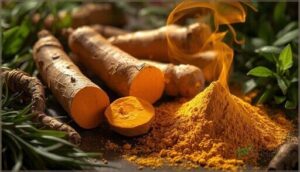
Curcumin, turmeric’s active compound, directly targets inflammation reduction through specific pathways in traditional and herbal medicine applications. While phytochemicals show promise in natural remedies for snake bites, bioavailability enhancement strategies are necessary for effective pain management.
Here are some key points about curcumin’s benefits:
- Curcumin inhibits inflammatory mediators like NF-kB and COX-2
- Anti-inflammatory effects reduce swelling and tissue damage
- Black pepper extract increases systemic absorption substantially
- Clinical trials show comparable results to standard NSAIDs
- Toxin neutralization potential remains under investigation; medical supervision is mandatory
Echinacea for Immune Support

Your immune system needs reinforcement after envenomation, and echinacea offers targeted support through its immunomodulatory compounds. This herbal supplement—commonly Echinacea purpurea or angustifolia extracts—demonstrates modest efficacy in reducing inflammation and supporting recovery as part of holistic herbal treatment protocols.
However, echinacea benefits remain adjunctive; professional medical intervention takes absolute priority in natural remedies for snake bites, as health tonics and natural boosters can’t neutralize venom independently.
Natural Snake Repellents and Deterrents
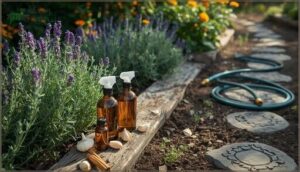
If you’re looking to keep snakes at a respectful distance from your home or garden, natural deterrents offer a practical first line of defense. These solutions range from strategically planted vegetation to homemade sprays and commercially available products that leverage scents snakes naturally avoid.
Below, you’ll find several proven options—each with its own application method, longevity, and level of effectiveness.
Lemongrass and Snake Plant
If you’re looking for natural repellents that genuinely discourage snakes, West Indian lemongrass and snake plant (Sansevieria) stand out. These plant-based alternatives offer herbal treatment options for snake bite prevention without harsh chemicals.
Key benefits you’ll notice:
- Lemongrass contains citral and linalool—essential oils with antimicrobial properties that snakes avoid
- Snake plant’s sharp leaves and phytochemicals disrupt serpent sensory detection
- Both thrive as perimeter barriers around decks, gardens, or entryways with minimal care
While plant toxicity remains low for humans, don’t rely solely on these natural remedies for complete protection.
Garlic and Onion Sprays
Garlic spray and onion extracts offer sulfur-rich repellent formulas, but you should understand their limitations before applying them around your property. These organic pesticides contain allicin and sulfur compounds—natural fungicides that volatilize into strong-smelling deterrents.
While herbal remedies and phytotherapy traditions support their use in alternative medicine for snake bite prevention, peer-reviewed evidence remains scarce; efficacy varies markedly by species, and you’ll need frequent reapplication after rain.
Clove and Cinnamon Oil Mixtures
Clove and cinnamon oil mixtures provide aromatic therapy with natural antiseptic properties, though you should exercise caution with skin safety during oil blending. These herbal remedies function primarily as insect repellents rather than proven snake deterrents—alternative medicine advocates promote them for natural first aid and snake bite prevention, yet their role in natural toxin neutralization lacks clinical validation.
Key Application Considerations:
- Dilute oils to prevent skin irritation
- Apply to porous surfaces only
- Reapply weekly or after precipitation
- Store blends in dark glass containers
- Test small areas before widespread use
Cedar Oil and Fox Urine Granules
Cedar oil benefits include a strong scent that may deter some wildlife, though repellent effectiveness lacks rigorous peer-reviewed support. Fox urine granules marketed as wildlife deterrents raise ethical concerns—you’re potentially disturbing non-target species while effectiveness remains questionable. Unlike herbal remedies for snake bite prevention and treatment or natural toxin neutralization, these natural barriers require broader integration into habitat management rather than standalone reliance.
| Deterrent Type | Primary Limitation |
|---|---|
| Cedar Oil | Inconsistent peer-reviewed efficacy data |
| Fox Urine Granules | Habituation and non-target disturbance risks |
| Both Products | Require integrated wildlife management approach |
| Alternative Medicine Claims | Lack clinical validation for outdoor injuries |
Preventing Snake Bites Naturally

Preventing snake bites starts with making your property less inviting to these reptiles in the first place. The most effective approach combines physical modifications to your space, strategic plant placement, and removing the resources that draw snakes to your yard.
Let’s look at four practical methods you can implement to reduce your risk of unwanted snake encounters.
Environmental Modifications
Beyond chemical deterrents, habitat alterations provide the foundation for effective snake bite prevention. You’ll want to maintain a 1–3 m vegetation-free perimeter around dwellings—this single yard modification dramatically reduces snake encounters near doors and sleeping areas.
Seal gaps under thresholds, raise grain stores above ground, and keep footpaths clear. These landscape design choices create outdoor safety through smart perimeter control, reducing the shelter and prey that draw snakes close.
Repellent Plant Barriers
You’ll find lemongrass, garlic, and onion plantings marketed as natural snake deterrents for garden protection—traditional medicine has long touted these phytochemicals as perimeter plants. However, controlled studies reveal inconsistent field results; evidence for significant protection varies widely by species and environment.
Cedar and clove-cinnamon mixtures show laboratory promise but don’t reliably translate to outdoor barrier effectiveness. These plant-based natural repellents offer limited, variable snake deterrents rather than guaranteed perimeter defense.
Safe Habitat Management
To reduce encounter risk through Wildlife Safety and Awareness, you’ll want solid Habitat Design paired with ongoing Perimeter Control. Exterior Lighting placement, Fence Maintenance, and Drainage Systems all factor into Reptile Handling and Safety, supporting Wildlife Conservation and Education alongside Outdoor Adventure and Safety.
Four Snake Awareness priorities include:
- Maintain intact native vegetation around property edges
- Seal structural gaps exceeding 6 mm
- Position compost piles away from living zones
- Schedule seasonal vegetation trims consistently
Eliminating Attractants and Entry Points
Clean Surroundings create the foundation for effective Snakebite Prevention and Treatment—you’ll want to remove debris, store pet food and birdseed away from living areas, and eliminate standing water that draws prey species.
Seal Entry Points around doors, windows, and foundations; block gaps exceeding 6 mm with weather stripping or caulk.
Snake Awareness paired with Secure Perimeter measures promotes Wildlife Safety and Awareness while enabling Outdoor Adventure and Safety.
Safe Application of Natural Remedies

Natural remedies can support recovery and prevention, but only when you apply them correctly and understand their limits. Improper use—whether it’s the wrong dose, ignoring side effects, or delaying emergency care—can worsen outcomes or even put you at risk.
Here’s what you need to know to use these treatments safely and effectively.
Dosage and Frequency Guidelines
Getting the Dose Calculation right separates safe herbal remedies from risky guesswork. For anti-inflammatory plant extracts, you’ll usually start at 5–10 mg/kg once daily, watching closely for signs of intolerance. Administration Methods matter—topical applications cap at a few drops per wound, while oral tinctures demand precise measurement.
Treatment Schedules and frequency adjust by species, age, and Toxicity Levels, so gradual titration under supervision protects against Herbal Interactions.
Potential Side Effects and Risks
Even trusted plant compounds can backfire when Toxicity Concerns and Dermatitis Risks collide with your body’s chemistry. Essential oils may trigger Allergic Reactions, Skin Irritation, or Phototoxic Effects if you apply them undiluted.
Some herbal treatments interfere with Antivenom, delaying relief from Snake Bite Symptoms and worsening Venom toxicology.
Always patch-test and consult a professional before layering remedies on any wound.
Combining Remedies for Best Results
Layering botanicals with standard wound care can release synergistic effects when you follow staggered timing protocols. Herbal interactions, under professional guidance, strengthen remedial blends—pairing turmeric’s anti-inflammatory properties with topical treatments may support toxin removal, while echinacea-based combined therapies reinforce immune response.
Integrated healing demands standardized extracts and dose-specific oversight; alternative medicine for snake bite treatment works best when natural remedies complement, not replace, conventional care.
When to Seek Professional Medical Help
Natural remedies don’t replace emergency care—you need urgent attention when swelling spreads rapidly, breathing becomes labored, or chest pain develops after venomous snake bites.
Medical evaluation determines whether antivenom and envenomation treatment are necessary; children, pregnant individuals, and those with compromised immunity require immediate first aid and wound care.
Snake bite symptoms escalate fast, so don’t gamble with delays—emergency medical care saves lives.
Snake bite symptoms escalate rapidly, so seek emergency medical care immediately—delays can cost lives
Frequently Asked Questions (FAQs)
How to treat a snake bite naturally?
While herbal wound care and alternative medicine have traditional roots, snake bite treatment requires immediate professional medical attention—natural antidotes and venom remedies can’t replace antivenom.
First aid means staying calm, immobilizing the limb, and calling emergency services immediately.
Are there herbal remedies for snake infections?
No herbal remedy has proven effective against snake venom in clinical trials; plant extracts show laboratory promise but lack human evidence.
Delaying medical antivenom for botanical remedies greatly increases life-threatening risks—always seek professional treatment immediately.
Can natural remedies boost snake immune systems?
Plants like echinacea and turmeric hold promise as immune system boosters in mammals. Yet, their pharmacological properties remain a locked door for snakes.
Reptile nutrition and physiology differ too drastically to confirm herbal supplements truly strengthen natural defenses.
What natural methods improve snake digestion?
You can support your snake’s gut health by offering properly sized prey, maintaining hydration balance, and considering probiotic supplements under veterinary guidance.
Fiber intake and digestive enzymes naturally enhance nutrient absorption.
How to relieve snake stress using natural remedies?
Captive animals thrive with routines, yet wild instincts demand variety—behavioral therapy bridges this gap.
You’ll lower stress responses through environmental enrichment: hiding spots, consistent photoperiods, thermal gradients, and quiet handling reduce cortisol while supporting snake calming naturally.
Can natural remedies treat snake scale infections?
While natural therapies and phytochemicals show promise in infection control, veterinary guidance remains essential for treating scale infections in reptile care.
Medicinal plants lack sufficient evidence; professional diagnosis and prescription treatments guarantee proper envenomation prevention and recovery.
What herbs support snake digestive system health?
Ginger benefits and chamomile effects documented in mammals don’t translate directly to reptiles—turmeric research, licorice root, and fennel oil lack snake-specific data, so relying on these herbal remedies for digestive support remains speculative.
Are there natural treatments for snake parasites?
Most plant-based antiparasitic claims lack rigorous testing in snakes; veterinary-approved drugs remain the benchmark. While some phytochemicals show promise in lab settings, you’ll need professional diagnosis and species-appropriate treatment for any parasitic infection.
How to naturally boost snake immune function?
You can support your snake’s immune function through proper nutrient supplements and vitamin therapy. Adequate protein, vitamin D sufficiency, and zinc play roles in immune cell production.
Stress reduction, appropriate habitat temperatures, and maintaining ideal body condition also strengthen natural defenses.
Which plants help snakes shed skin properly?
Ecdysis support through plant extracts lacks substantial evidence in reptile care. Proper humidity and substrate management remain the primary, validated approaches for skin health during shedding cycles, while herbal remedies offer limited, unproven pharmacological properties for this specific physiological process.
Conclusion
A Montana backpacker once credited lemongrass oil with deterring a rattlesnake encounter—not through venom neutralization, but by creating an inhospitable perimeter around her campsite. This distinction defines the entire landscape of natural snake health remedies: they excel at prevention and supportive care, yet fail catastrophically as envenomation treatments.
Your best defense combines environmental vigilance with evidence-based deterrents, reserving antivenin for the only crisis where it matters—actual bites requiring immediate medical intervention.