This site is supported by our readers. We may earn a commission, at no cost to you, if you purchase through links.
Every year, roughly 8,000 people in the United States receive venomous snakebites—and the decisions made in the first ten minutes determine how the next ten days unfold.
Most bites happen quickly, often before anyone realizes what struck them. Most bites happen quickly
gap between panic and action is where outcomes split sharply.
Knowing how to read the bite, stabilize the victim, and get the right care quickly can mean the difference between a brief hospital stay and lasting nerve or tissue damage.
Snake injury treatment isn’t complicated, but it has to be correct—wrong moves like applying ice or cutting the wound actively make things worse.
Table Of Contents
- Key Takeaways
- Recognize Snakebite Severity Fast
- Give Safe First Aid Immediately
- Get Emergency Medical Treatment
- Treat Wounds During Recovery
- Prevent Future Snake Injuries
- Frequently Asked Questions (FAQs)
- Can children receive the same antivenom dosages?
- How long does snake venom remain active?
- Are there dietary restrictions during snake recovery?
- Can pregnant women safely receive antivenom treatment?
- What insurance typically covers snake bite treatments?
- Can children receive the same antivenom doses as adults?
- How long does snakebite recovery typically take?
- Are certain blood types more vulnerable to venom?
- Can pregnancy complicate snakebite treatment outcomes?
- Does prior snakebite exposure build any immunity?
- Conclusion
Key Takeaways
- The first ten minutes after a snakebite are critical — staying calm, immobilizing the limb, and calling emergency services immediately can prevent lasting nerve or tissue damage.
- Common "helpful" instincts like applying ice, cutting the wound, or using a tourniquet actively worsen outcomes and should never be attempted.
- Antivenom — ideally given within four hours — is the only proven treatment for envenomation, and dosing is based on symptom severity, not age or body weight.
- Recovery can stretch from two weeks to nine months depending on severity, so follow-up care, wound monitoring, and watching for infection are just as important as the initial emergency response.
Recognize Snakebite Severity Fast

Knowing how bad a snakebite is can be the difference between a calm ride to the ER and a life-threatening delay. Your body gives you clear signals, but you have to know what to look for. Here’s what to watch for right away.
Brushing up on snake bite first aid signs and symptoms before you need it means you’ll recognize trouble faster when it counts.
Venomous Bite Symptoms
A venomous bite can feel deceptively mild at first — then escalates fast.
Sharp, burning pain commonly starts at the bite site and may spread up the limb within minutes. Watch for nausea, dizziness, blurred vision, or a metallic taste, as these signal systemic envenomation.
Numbness around the mouth, muscle weakness, or difficulty breathing mean neurotoxins may already be affecting your nervous system. Severe envenomation may lead to coagulopathy causing bleeding.
Nonvenomous Bite Signs
Not every bite means venom. Nonvenomous snakebites usually leave small tooth punctures or clustered scrapes — not the classic two-fang pattern. Pain stays mild and localized, swelling remains minor, and there’s no spreading tissue damage.
Watch for these signs:
- Small, clustered puncture marks instead of two clean fang holes
- Mild redness and warmth only at the bite site
- Localized, moderate pain without burning or spreading sensation
- No numbness, weakness, or systemic symptoms
- Wound behaves like a basic puncture injury
Still clean the wound carefully — bacteria from snake mouths can cause infection.
Swelling and Bruising
Even a bite that seems minor can surprise you once swelling sets in. Swelling begins quickly after envenomation — sometimes within minutes — as venom disrupts blood vessels and fluid leaks into surrounding tissue.
Bruising follows as small vessels rupture, shifting from reddish-purple toward yellow over days. Monitor swelling progression closely; rapid spread beyond the bite site is your clearest warning sign.
Bleeding or Blistering
Swelling isn’t always the loudest signal. Sometimes it’s blood pooling beneath the skin or blisters forming near the bite that tell the real story.
Haemorrhagins in venom attack blood vessel walls directly, causing hemorrhage in surrounding tissue. This triggers coagulopathy — your blood loses its ability to clot normally — so even a small wound may bleed far longer than expected.
- Blood blisters form when ruptured vessels leak blood into the skin’s upper layers
- Blisters can appear alongside bruising rather than as a standalone sign
- Tourniquet use in snakebite worsens bleeding and tissue damage — never apply one
- Clear or blood-filled blisters both signal that tissue is already under stress
Don’t attempt to drain blisters. Keep the area clean, loosely covered, and still until medical help arrives.
Breathing Trouble Warnings
When a neurotoxic snake strikes, your airway becomes the next target. Neurotoxins block nerve signals, causing respiratory muscles to stop working — quietly, and fast.
Understanding the difference between a corn snake vs copperhead snake could save critical minutes — misidentifying a neurotoxic species delays the right emergency response.
Listen for wheezing or stridor: a whistling or high-pitched sound with each breath signals narrowing airways. Watch for blue lips or nails (cyanosis), rapid forced breathing, or a person who can only speak in single words. These aren’t mild symptoms — they’re ventilatory collapse in progress.
Give Safe First Aid Immediately
The first few minutes after a snakebite matter more than most people realize. What you do — and what you don’t do — can make a real difference in how things turn out. Here are the steps to follow right away.
Move Away Safely

Your first move after a snakebite isn’t to freeze — it’s to back away calmly. Don’t run, don’t chase the snake, just create distance.
A controlled retreat reduces your risk of a second bite and helps you reach safer ground faster. Clear bystanders away too, especially children and pets, so emergency services can reach you without chaos.
Keep The Person Calm

Panic spreads fast — and that’s the last thing you need right now.
Speak in a calm, steady voice, and keep your instructions short: "You’re okay. We’re getting help." Guide the person to slow, deep breaths, inhaling for four counts, exhaling for four. This settles the heart rate and keeps them focused.
Don’t crowd them — give space, stay composed.
Remove Tight Jewelry
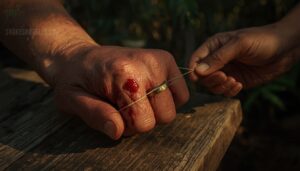
A ring that fits perfectly this morning can become a tourniquet by afternoon.
Remove all jewelry — rings, bracelets, and watches — from the bitten limb before swelling locks them in place.
Before you even reach for a ring or watch, take a quick look at the whole limb — this guide on protecting your hands from snake bites walks through what to check for and why it matters.
Try the nylon string technique, a surgical glove, or tape wrap if the ring resists.
When nothing works, get it cut professionally.
Immobilize The Bitten Limb

Think of immobilization like splinting a fracture — stillness limits damage.
- Splint the limb using a branch or rolled newspaper under the bandage layers
- Apply an Australian Pressure Immobilization Bandage firmly upward from fingers or toes
- Sling an arm bite; support leg bites so the limb stays flat
- Keep the limb at heart level — never elevated or dangling
Avoid Harmful Remedies

Every instinct says do something — but the wrong move can turn a bad bite into a catastrophe.
Tourniquets cut off blood flow, trapping venom and accelerating tissue death. Suction devices don’t pull venom out — they just damage skin and delay hospital care. Ice causes cold burns on already-injured tissue. Alcohol impairs judgment. Electric shock causes burns. None of these work.
If a coral snake or similar species bites, skip the myths and check a resource like this coral snake species profile with bite identification photos while getting to a hospital fast.
Tourniquets, suction, and ice don’t save snakebite victims — they make things worse
| What to Skip | Why It Harms |
|---|---|
| Tourniquets | Worsen tissue damage |
| Suction/cutting | Delay care, cause infection |
| Ice packs | Cold burns, reduced blood flow |
| Alcohol/herbal remedies | Impair judgment, affect clotting |
Get Emergency Medical Treatment

First aid buys time, but it’s not the finish line. Once you’ve stabilized the situation, getting professional medical care quickly is what actually saves lives. Here’s what that process looks like, step by step.
Call Emergency Services
The moment you suspect a venomous bite, call emergency services — 911, 112, or 999 — immediately. Don’t wait for symptoms to worsen.
Tell the call-taker the exact location, including nearby landmarks, and describe what happened. Stay on the line and follow their instructions. If the snake is still nearby, say so. Keep the line open until help arrives.
Contact Poison Control
While emergency services are on the way, call Poison Control at 1-800-222-1222 — available 24/7. They provide immediate expert guidance adapted to the bite details. Have ready the person’s age, symptoms, and the time of the bite.
If you can’t call, use webPOISONCONTROL online. Either way, they’ll help you act correctly until medical help arrives.
Hospital Bite Assessment
Once you’re at the hospital, the medical team gets to work fast. They’ll check your limb circulation — capillary refill, distal pulse, movement, and sensation — then document the bite wound’s size, depth, and tissue damage.
Blood tests track coagulation trends and platelet counts over time. If swelling looks severe, imaging rules out deeper injury or foreign material.
Antivenom Treatment Steps
Once the team confirms envenomation, antivenom administration begins as soon as possible — ideally within four hours of the bite. In the U.S., pit-viper bites are treated with CroFab or Anavip, delivered intravenously at a controlled rate. Staff monitor your vitals throughout. Key signs guiding antivenom dosing protocols:
- Swelling spreading beyond a major joint
- Worsening clotting abnormalities
- Persistent bleeding or systemic symptoms
Repeat dosing follows if those markers don’t improve.
Monitoring Venom Effects
Once antivenom is running, your care team watches several systems at once. They track coagulation labs — prothrombin time, fibrinogen, and platelets — because clotting problems can worsen hours after the bite. They measure limb circumference repeatedly to catch spreading swelling.
Breathing, kidney output, and critical signs are all monitored closely, since venom’s effects don’t always peak immediately.
Treat Wounds During Recovery
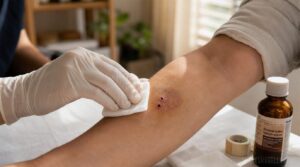
Once you’re home from the hospital, the work isn’t quite over. Your bite site still needs attention, and how you care for it in the days ahead makes a real difference in how well you heal. Here’s what to focus on during recovery.
Cleaning Bite Wounds
Once the crisis has passed, cleaning the bite wound properly is your next job.
Rinse with warm running water and mild soap for three to five minutes. Don’t scrub — gentle is the word here. Skip hydrogen peroxide and alcohol; they damage tissue and slow healing. Apply an antibacterial ointment, then cover with a sterile bandage.
Managing Swelling Safely
Swelling is your body’s loudest signal that healing work is underway. Raise the bitten limb above heart level using pillows — this moves fluid away from the injury.
Apply a cold pack wrapped in cloth for 15 to 20 minutes every few hours. Never apply ice directly to skin.
If swelling spreads rapidly or blistering appears, get back to emergency care immediately.
Watching for Infection
Even a healing wound can turn against you. Once the initial danger passes, watch for infection daily — it’s one of the most common setbacks during snakebite recovery.
Look for these warning signs:
- Spreading redness or warmth moving outward from the bite
- Pus or cloudy drainage from the wound
- Fever or chills developing hours later
- Escalating pain after early improvement
- Red streaks or swollen lymph nodes near the bite
Any of these means go back to the hospital immediately.
Pain Control Options
Pain doesn’t follow a schedule — it can spike hours after the bite.
Acetaminophen is usually the safest first choice, since it controls pain without worsening bleeding. If your coagulation looks stable, a doctor may add an NSAID like ibuprofen. For severe pain, monitored opioids are an option.
Cold packs wrapped in cloth can ease localized discomfort temporarily. Kidney function always guides the final call.
Follow-up Veterinary Guidance
Recovery doesn’t end at discharge.
Schedule a recheck within 24 to 72 hours — sooner if swelling is still spreading or blistering is present.
Your clinician will reassess circulation, movement, and wound appearance, and decide whether repeat labs are needed.
Return immediately if breathing changes, bleeding worsens, or the limb function drops.
Prevent Future Snake Injuries

Most snake injuries don’t have to happen twice. A few practical habits — whether you keep snakes or just cross paths with them outdoors — can make a real difference. Here’s what actually works to keep you and your family safer going forward.
Safe Snake Handling
Handling a snake safely starts long before you reach for it. Read its body language first — an S-shaped coil, raised head, or repeated repositioning toward you means back off completely. Never attempt to pick up a defensive snake barehanded.
When handling is necessary, use snake hooks or tongs to control movement without direct contact. Support the midsection evenly, move slowly, and keep sessions short to reduce stress.
Secure Enclosure Checks
A well-handled snake can still escape if its enclosure has weak points. Seal gaps along every seam, corner, and penetration point — snakes can push through surprisingly small openings. Test each latch thoroughly by applying light pressure from multiple angles.
Check door fit around the full frame. Remove interior ledges to eliminate non-climb surfaces, and verify all hardware security regularly.
Protective Outdoor Clothing
Your enclosure checks stop escapes indoors — but outdoors, your clothing becomes the barrier.
Gear worth wearing:
- Waterproof shells with taped seams shed rain and resist abrasion
- Integrated gaiters seal legs against low-striking snakes
- High visibility gear helps teammates spot you fast in dense brush
Reinforced cuffs and breathable layers round out solid snakebite prevention clothing.
Avoiding Wild Snakes
Clothing protects you — but your habits protect you even more.
Stay on clear, well-lit trails and avoid tall grass, rock crevices, and brush piles. Use a walking stick to probe ahead, and never reach into spots you can’t see. Most bites happen when people surprise a snake. Give it space, back away slowly, and let it leave on its own.
Teaching Family Safety
Teaching your family isn’t a one-time talk — it’s an ongoing practice. Start with a clear Emergency Contact Plan: program Poison Control and local emergency services into every phone, and assign one adult as the designated call leader during a crisis.
- Practice first aid for snake bite steps together.
- Build a Symptom Tracking Log to record bite time and changes.
- Schedule an Antivenom Awareness Session with your doctor.
Frequently Asked Questions (FAQs)
Can children receive the same antivenom dosages?
Yes — pediatric dose equivalence means children receive the same antivenom vial count as adults. Dosing follows venom severity, not body weight, so age-specific guidelines guarantee adequate treatment without reducing doses for smaller patients.
How long does snake venom remain active?
Snake venom can stay active in your body for hours to several days, depending on the species. Some toxins clear quickly, while others linger in tissue, prolonging symptoms well after the initial bite.
Are there dietary restrictions during snake recovery?
Most people eat normally during recovery. Stick to soft, easy-to-digest foods and stay well hydrated. Avoid alcohol and caffeine. Follow any clinician instructions around meal timing, especially if you’re taking antivenom or antibiotics.
Can pregnant women safely receive antivenom treatment?
Antivenom is generally safe in pregnancy. When envenomation is moderate to severe, withholding treatment poses greater risk to mother and baby than treating promptly does.
What insurance typically covers snake bite treatments?
Most health insurance plans cover emergency snakebite treatment, including hospital care, antivenom, and labs. You’ll still owe deductibles and copays. International coverage is often limited unless you have travel insurance.
Can children receive the same antivenom doses as adults?
Yes — dosing follows severity, not age. Clinicians use vial-based protocols tied to envenomation grade, so a child with severe systemic effects may receive the same initial antivenom vials as an adult.
How long does snakebite recovery typically take?
Recovery isn’t a sprint — it’s a marathon. Healing timeline varies widely: minor bites may resolve in 1–2 weeks, while severe envenomation can extend recovery to 9 months, requiring ongoing patient monitoring and rehabilitation.
Are certain blood types more vulnerable to venom?
Blood type doesn’t determine venom vulnerability. Venom targets tissues and clotting proteins directly, not ABO antigens. Severity depends on dose, bite location, and time to treatment.
Can pregnancy complicate snakebite treatment outcomes?
Pregnancy turns a snake bite into a dual medical emergency.
Venom-induced maternal coagulopathy raises placental abruption risk, while maternal shock drives fetal hypoxia.
Neonatal mortality odds are nearly three times higher.
Antivenom remains essential — delay costs two lives.
Does prior snakebite exposure build any immunity?
After a first bite, your body can develop venom-specific antibodies, but protection is inconsistent. Each new envenomation still demands emergency care—prior exposure doesn’t guarantee safety.
Conclusion
A snakebite unfolds in seconds, but your response writes the rest of the story.
When you stay calm, skip the harmful myths, and get to emergency care without delay, you give the body its best chance to recover fully. Snake injury treatment isn’t about being fearless—it’s about being prepared.
The knowledge you carry today is the shield you’ll reach for when panic tries to take over. Stay ready. Act right. Recover safely.