This site is supported by our readers. We may earn a commission, at no cost to you, if you purchase through links.

Reaching for a snake with bare hands—even a familiar one—is the kind of mistake you only make once. Whether you’re relocating a wild rat snake or managing a defensive boa, the gap between a controlled interaction and a trip to urgent care often comes down to what’s in your hands.
Fundamentals don’t change: distance, grip, and protection. The right tools make every encounter predictable, and the wrong ones turn routine handling into a gamble.
Table Of Contents
- Key Takeaways
- Top 10 Reptile Handling Tools
- 1. Professional Aluminum Snake Grabber
- 2. Bytcew Telescopic Snake Handling Pole
- 3. Kalkal Telescopic Snake Grabber
- 4. Gyorgkshi Long Aluminum Snake Tongs
- 5. Gyorgkshi Extra Long Snake Grabber
- 6. Vclpower Double Leather Animal Gloves
- 7. GYORGKSHI 60 Inch Snake Tongs
- 8. Ouronehome 47 Inch Aluminum Snake Tongs
- 9. V Cheetong Telescopic Snake Capture Net
- 10. AIUWIZO 61 Inch Snake Hook
- Essential Snake Handling Equipment
- Choosing Tools by Snake Species
- Safety Features Worth Paying For
- Transport and Temporary Containment
- Cleaning, Maintenance, and Storage
- Frequently Asked Questions (FAQs)
- How often should snake hooks be replaced?
- Whats the proper storage method for handling equipment?
- How do you calibrate temperature monitoring devices?
- Whats the minimum insurance coverage for reptile handlers?
- How do reptile enclosure materials affect animal health?
- What backup systems prevent lethal temperature fluctuations?
- How are reptile sexing probes used safely?
- Which brands meet international wildlife handling regulations?
- How do you select tools for multiple reptile species?
- Conclusion
Key Takeaways
- Matching your tool to the species and situation—hook for guiding, tongs for control, gloves for close contact—keeps both you and the snake safer than relying on one piece of gear for everything.
- Reach matters more than you might think: tools extending 47 to 78 inches put real distance between you and a defensive snake without sacrificing control.
- Safety features like locking handles, padded jaws, and non‑slip grips aren’t upgrades—they’re the difference between a routine interaction and a preventable injury.
- Cleaning, inspecting, and storing your gear after every session isn’t optional; worn jaws, loose locks, or corroded shafts can fail exactly when you need them most.
Top 10 Reptile Handling Tools
Having the right tools on hand isn’t just convenient — it’s what keeps both you and your reptile safe during every interaction. Whether you’re a beginner setting up your first enclosure or an experienced keeper managing multiple species, your gear matters more than you might think. Here are ten handling tools worth knowing about.
From hook selection to safe grip techniques, proper snake handling tools and methods can make a real difference in how confidently you work with your animals.
1. Professional Aluminum Snake Grabber
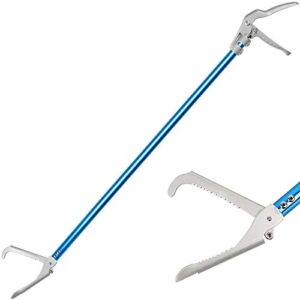
The Professional Aluminum Snake Grabber is a reliable first pick for anyone handling venomous or large species. Its 60-inch reach keeps a safe distance between you and the snake, while the wide, padded jaws grip firmly without crushing the animal.
At just 0.57 kg, the lightweight aluminum alloy build reduces fatigue during extended sessions.
The locking folding handle makes storage simple — toss it in a toolbox or keep it behind your car seat, ready when you need it.
| Best For | Anyone who needs to safely handle venomous or large snakes — whether you’re a wildlife handler, a homeowner dealing with an unwanted visitor, or an outdoor enthusiast who camps or fishes in snake country. |
|---|---|
| Material | Aluminum alloy |
| Extended Length | 60 in |
| Weight | 1.25 lb |
| Primary Use | Snake tongs |
| Compact Storage | Foldable handle |
| Non-Slip Grip | Standard handle |
| Additional Features |
|
- The 60-inch reach gives you a real buffer between you and a venomous snake, which is a big deal when things get stressful.
- Wide jaws grip securely without hurting the animal — great if you care about humane handling.
- Folds flat and locks, so it stashes easily in a truck, toolbox, or camping bag.
- The lock mechanism can be stiff and needs a firm hand to operate — not ideal if you’re in a rush.
- That long reach gets awkward fast in tight spots like under furniture or in a cramped shed.
- The jaw width is overkill for small snakes or tiny reptiles — you’d want something more precise for those.
2. Bytcew Telescopic Snake Handling Pole
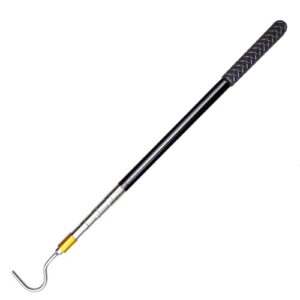
Where the aluminum grabber trades reach for grip strength, the Bytcew telescopic pole goes the other direction — pure distance. It extends up to thirteen feet from a compact folded size, which makes it ideal for field work where you genuinely can’t predict how much room you’ll need.
The dual hook head lets you engage a snake from different angles, and the anodized aluminum shaft stays light without flexing under typical handling loads.
| Best For | Anyone who needs to handle small snakes like rattlesnakes or copperheads from a safe distance, whether on hikes, field trips, or just dealing with backyard visitors. |
|---|---|
| Material | Stainless steel |
| Extended Length | 61 in |
| Weight | 0.35 lb |
| Primary Use | Snake hook |
| Compact Storage | Collapses to 16 in |
| Non-Slip Grip | Rubberized handle |
| Additional Features |
|
- Extends from 16" to 61", giving you serious reach without getting too close
- Lightweight stainless steel shaft with a rubberized grip makes it easy to carry on the go
- Five lockable sections let you dial in exactly the length you need for the situation
- 2 lb weight limit means it’s a no-go for larger, heavier snakes
- Some users have noticed the hook loosening over time, which isn’t great when you need it to hold
- The lightweight build can bend if you push it too hard — it’s built for control, not brute force
3. Kalkal Telescopic Snake Grabber
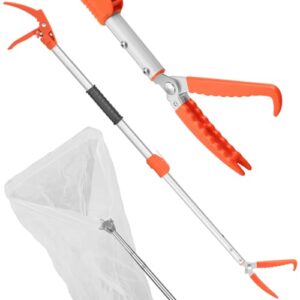
If the Bytcew is built for maximum reach, the Kalkal lands squarely in the middle — adjustable from 24 to 60 inches, giving you real flexibility without the bulk. The aluminum alloy shaft stays light and corrosion-resistant, so it functions in field conditions without fuss.
What sets it apart is the wide, rounded jaw design that grips securely without pinching, and the locking shaft keeps your chosen length stable mid-capture. For most common handling situations, it’s a solid, reliable choice.
| Best For | Hobbyists, wildlife rescuers, and homeowners who want a versatile, mid-range snake tong that balances reach with easy handling. |
|---|---|
| Material | Aluminum alloy |
| Extended Length | 60 in |
| Weight | 3.29 lb |
| Primary Use | Snake tongs |
| Compact Storage | Collapses to 43.6 in |
| Non-Slip Grip | Ergonomic non-slip handle |
| Additional Features |
|
- Adjustable from 43 to 60 inches, so you can match the length to the situation without swapping tools
- Wide silicone-coated jaws grip firmly without injuring the snake — great for catch-and-release
- Lightweight aluminum build resists corrosion, making it reliable in wet or outdoor conditions
- The lock mechanism can loosen with regular use, which isn’t ideal mid-capture
- The pole may flex under heavier snakes over 5 feet, limiting its use with larger species
- The included bag string is flimsy — you’ll likely want a sturdier tie to actually secure your catch
4. Gyorgkshi Long Aluminum Snake Tongs
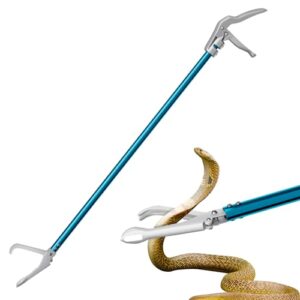
Where the Kalkal offers adjustability, the Gyorgkshi Long Aluminum Snake Tongs commit fully to a fixed 60-inch reach — and that distance is the whole point. It keeps you well clear of defensive strikes without sacrificing control.
The wide, serrated jaws grip scales without pinching, and the push-to-lock handle secures your hold during transport. At just 1.8 lb, fatigue won’t be an issue on longer sessions. Reliable, humane, and straightforward to use.
| Best For | Wildlife handlers, campers, and reptile owners who need a safe, no-fuss way to capture or relocate venomous or large snakes from a distance. |
|---|---|
| Material | Aluminum alloy |
| Extended Length | 60 in |
| Weight | 1.8 lb |
| Primary Use | Snake tongs |
| Compact Storage | Fixed length |
| Non-Slip Grip | Standard handle |
| Additional Features |
|
- 60-inch reach puts serious space between you and a defensive snake without losing control of the situation
- Wide serrated jaws hold firm without crushing — a genuinely humane grip
- At 1.8 lb, it’s light enough to use for extended periods without your arms giving out
- Too much gripping pressure for small or juvenile snakes — size matters here
- The lock screw needs regular checks or it can become unreliable over time
- Aluminum is great for weight, but it won’t hold up as well as stainless steel under heavy, repeated use
5. Gyorgkshi Extra Long Snake Grabber
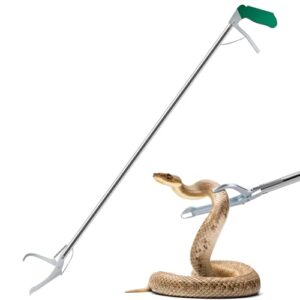
When dense vegetation or distance is the problem, the Gyorgkshi Extra Long Snake Grabber closes the gap. Its 78‑inch reach keeps you at a genuinely safe distance from larger or more defensive snakes, while the aluminum alloy shaft stays light enough to hold steady without strain.
The 4.5‑inch jaw opening accommodates thick‑bodied species comfortably, and serrated pads grip without pinching.
The push-to-lock mechanism means you won’t need white‑knuckle pressure to maintain control during transport.
| Best For | Anyone who needs to safely handle snakes or reptiles from a distance, whether you’re clearing your yard, camping, or working outdoors. |
|---|---|
| Material | Stainless steel |
| Extended Length | 47 in |
| Weight | Not specified |
| Primary Use | Snake tongs |
| Compact Storage | Fixed length |
| Non-Slip Grip | Rubber grip sleeve |
| Additional Features |
|
- 47-inch stainless steel build gives you serious reach while staying light and durable
- Wide, serrated jaws hold reptiles firmly without causing them harm
- Comes with spare parts (cable, ferrules, spring) so it’s built to last in the field
- No locking mechanism means you have to keep the trigger held the whole time
- The length can get awkward in tight spaces or for shorter users
- No instructions included, so first-timers have to figure it out on their own
6. Vclpower Double Leather Animal Gloves
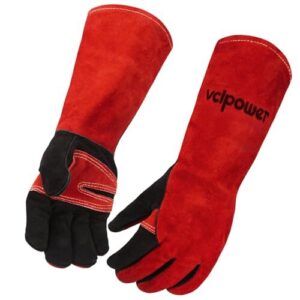
Tongs keep snakes at a distance, but sometimes you need your hands in the action — that’s where the Vclpower Double Leather Gloves earn their place.
Before suiting up, a quick look at safe snake handling gear inspections helps you catch wear or damage that could put both you and your snake at risk.
The double-layer cowhide construction resists bites, scratches, and punctures without sacrificing the grip you need when pinning or lifting. Pre-curved fingers reduce hand fatigue during extended handling sessions, and the adjustable wrist closure keeps debris out.
They’re a practical first line of defense when direct contact is unavoidable.
| Best For | Vets, animal rescue volunteers, and handlers who regularly deal with nervous, feral, or unpredictable animals up close. |
|---|---|
| Material | Split cowhide leather |
| Extended Length | 16 in cuff |
| Weight | 13 oz |
| Primary Use | Protective gloves |
| Compact Storage | Flexible cuff |
| Non-Slip Grip | Cotton inner lining |
| Additional Features |
|
- Double-layer cowhide on the palm, fingertips, and thumb web holds up against bites and scratches from a wide range of animals
- The 16-inch cuff is a real bonus — your forearms stay protected, not just your hands
- Built for the long haul, so you’re not replacing them every few months in high-wear environments
- The leather is thick, so expect some stiffness until they break in — fine motor tasks can feel awkward at first
- Only comes in Size L, which leaves smaller hands without a good fit
- Strong, determined dogs can still get through — these are tough, but not indestructible
7. GYORGKSHI 60 Inch Snake Tongs
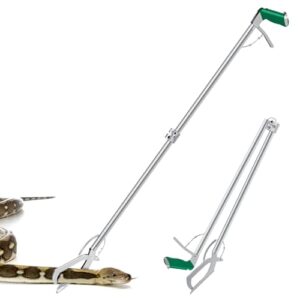
When you need serious reach, the GYORGKSHI 60 Inch Snake Tongs deliver. At five feet extended, you’re maintaining a safe working distance from even the most defensive species.
The stainless-steel construction resists rust in wet field conditions, while the rubber non-slip grip keeps your control steady.
Serrated jaws apply even pressure without tearing tissue, and the snap-lock mechanism holds your grip securely.
It folds to 32 inches for transport — practical for any kit bag.
| Best For | Wildlife handlers, field herpetologists, and homeowners who need to safely capture or relocate snakes from a safe distance. |
|---|---|
| Material | Stainless steel |
| Extended Length | 60 in |
| Weight | 1.1 lb |
| Primary Use | Snake tongs |
| Compact Storage | Collapses to 32 in |
| Non-Slip Grip | Rubber grip |
| Additional Features |
|
- Five feet of reach keeps you well away from defensive or venomous species
- Serrated jaws grip firmly without causing tissue damage — humane and effective
- Folds down to 32 inches, so it travels easily in any field kit
- The spring feels a bit flimsy — worth carrying a backup if you’re relying on it in the field
- Fixed lengths (32 or 60 inches) may not cut it in tight spaces or with very large snakes
- Not the right tool for beginners dealing with highly venomous species
8. Ouronehome 47 Inch Aluminum Snake Tongs
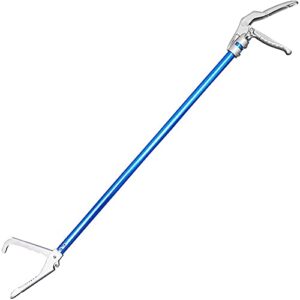
At 47 inches, the Ouronehome Aluminum Snake Tongs hit a practical sweet spot — long enough for safe distance, compact enough to maneuver in tight spaces. The lightweight aluminum alloy reduces arm fatigue during extended sessions, and wide, thick jaws grip without piercing, which matters when you’re working with defensive animals.
The locking handle folds flat for easy transport, and the non-slip grip stays reliable even in wet conditions. A solid everyday option for small to medium snakes.
| Best For | Homeowners, campers, and reptile keepers who need a safe, humane way to handle small to medium-sized snakes without getting too close. |
|---|---|
| Material | Aluminum alloy |
| Extended Length | 47 in |
| Weight | Not specified |
| Primary Use | Snake tongs |
| Compact Storage | Foldable handle |
| Non-Slip Grip | Standard handle |
| Additional Features |
|
- 47-inch reach keeps you at a comfortable, safe distance from defensive snakes
- Wide, thick jaws grip without piercing, so the snake stays unharmed
- Lightweight aluminum and a foldable handle make it easy to carry on hikes or store in a shed
- Jaw width struggles with larger snakes over about 2½ feet
- The wire mechanism extending from the handle can feel a bit awkward in hand
- Aluminum dents more easily than steel, so it won’t hold up as well to rough treatment
9. V Cheetong Telescopic Snake Capture Net
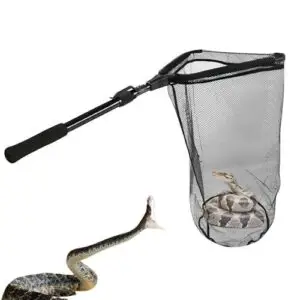
When you need to capture a snake without getting close, the V Cheetah Telescopic Snake Capture Net gives you real working distance. The aluminum rod extends from 16 to 22 inches, and the 31.5-inch mesh net with elastic edges keeps the animal contained once you’ve made contact.
It folds down compact enough for a field bag, and the EVA non-slip grip manages sweat without losing control. Best suited for small to mid-size non-venomous snakes.
| Best For | Homeowners, field workers, and reptile handlers who need a safe, hands-off way to capture and relocate small to mid-size snakes. |
|---|---|
| Material | Aluminum alloy |
| Extended Length | 22 in |
| Weight | 15.8 oz |
| Primary Use | Snake net |
| Compact Storage | Foldable design |
| Non-Slip Grip | EVA-covered grip |
| Additional Features |
|
- Telescopic rod gives you up to 22 inches of safe working distance from the snake
- Deep 31.5-inch mesh net with elastic edges keeps the snake from wriggling free
- Folds down compact and light enough to toss in a field bag or emergency kit
- The net may not hold very large or thick-bodied snakes securely
- 22 inches of reach won’t cut it for snakes in deep burrows or high spots
- The aluminum rod can dent under heavy stress, so it’s not ideal for aggressive large constrictors
10. AIUWIZO 61 Inch Snake Hook
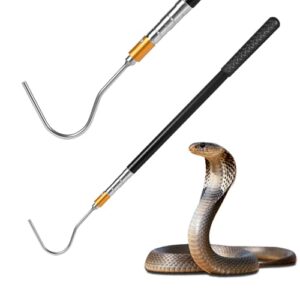
The AIUWIZO 61 Inch Snake Hook is the one tool that genuinely earns its place in any serious keeper’s bag. It telescopes from 16 to 61 inches across four lockable sections, giving you flexible reach without swapping tools.
The rivet-reinforced hook head stays aligned under pressure, and the rounded tip protects scales during contact. At under 1.5 pounds, handler fatigue stays low even during longer sessions.
| Best For | Outdoor enthusiasts, hikers, and reptile keepers who need a lightweight, adjustable tool for safely handling or relocating snakes in the field. |
|---|---|
| Material | Stainless steel |
| Extended Length | 61 in |
| Weight | 6.7 oz |
| Primary Use | Snake hook |
| Compact Storage | Collapses to 16 in |
| Non-Slip Grip | Rubber handle |
| Additional Features |
|
- Telescopes from 16 to 61 inches, so you get solid reach without carrying multiple tools
- All-metal construction with a non-slip rubber handle keeps things comfortable and sturdy during use
- Light enough at 6.7 oz that you won’t feel it after a long day on the trail
- The telescoping mechanism can be stiff out of the box and may need lubrication before it works smoothly
- At full extension, the pole loses some rigidity, which makes it less reliable for larger or heavier snakes
- Some users have run into lock and handle failures over time, so long-term durability is a bit of a question mark
Essential Snake Handling Equipment
Having the right snake handling equipment isn’t just a nice-to-have — it’s what keeps both you and the animal safe when things get unpredictable. Each tool fulfills a specific purpose, whether you’re working with a docile corn snake or a defensive venomous species. Here’s what you actually need in your kit.
Snake Hooks

A good snake hook is your first line of defense. Solid aluminum or stainless steel shafts offer the best balance of hook durability and corrosion resistance, especially in humid enclosures.
Telescopic length options — commonly 24 to 60 inches — let you adapt to any situation, while an ergonomic grip reduces fatigue during longer sessions. A long handle keeps distance for the handler, enhancing safety with venomous species.
Snake Tongs

Where a hook guides, snake tongs give you control. With telescopic reach extending from 24 to 60 inches, reinforced jaw design, and ergonomic grips, reptile tongs let you secure defensive snakes without closing the distance. Notched, padded jaws distribute pressure evenly, protecting the animal while keeping your hands clear.
Five features worth checking:
- Locking trigger for one-handed grip
- Wide jaw mouth for thick-bodied species
- Padded interior to reduce tissue pressure
- Telescopic shaft with rigid extension
- Aluminum build for corrosion resistance
Protective Gloves
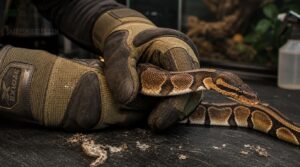
Tongs keep snakes at arm’s length, but protective gloves close the gap when hands‑on contact is unavoidable.
Kevlar and leather construction deliver real puncture protection against fangs and claws, while textured fingertips maintain grip on enclosure hardware.
Choose ergonomic fit design to prevent fatigue during extended sessions — a glove that slips is a glove that fails.
Capture Nets
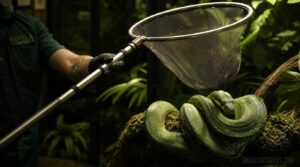
When gloves aren’t enough reach, capture nets fill the gap. Lightweight aluminum or fiberglass shafts keep weight low, and 1–2 inch nylon mesh catches without snagging scales.
Telescopic poles extend to 61 inches for elevated or distant animals.
Deploy smoothly, guide the snake into the pocket, and let the tail coil naturally — no forcing, no stress.
Restraining Tubes
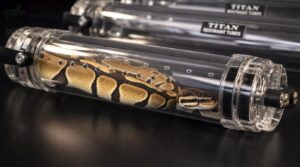
Restraining tubes are some of the most underrated animal restraint equipment in a keeper’s toolkit. Clear polycarbonate walls let you monitor the snake while it’s secured, and locking caps prevent accidental extrusion mid-procedure. Match the tube sizing carefully — the inner diameter should fit snugly around the snake’s widest point without restricting breathing.
- Ventilation ports maintain airflow during restraint
- Smooth interior surfaces prevent scale abrasion
- Cleaning protocols require hospital-grade disinfectant after every use
Choosing Tools by Snake Species
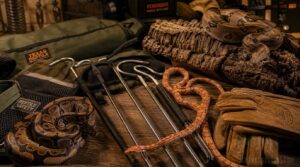
Not every snake needs the same approach, and the tools that work for a calm corn snake won’t cut it for a large boa. Matching your equipment to your specific species makes handling safer and less stressful for both of you. Here’s what you need to know for each type.
Ball Python Handling
Ball pythons are forgiving snakes, but they still reward good habits.
Always use two-handed support, lifting beneath the midsection and rear body rather than grabbing from above.
Keep your first handling sessions 10–15 minutes, watching for stress signals like tight coiling or a rigid posture.
Basic reptile tongs and protective gloves help if your snake is still settling in.
Corn Snake Handling
Corn snakes are beginner-friendly, but they still need gentle body support along most of their length — never grab from above or squeeze. Keep them close to your body, move slowly, and watch for signs of stress. Don’t handle during shedding or within 24 hours after feeding, and always wash your hands before and after.
Boa Constrictor Handling
Boa constrictors demand a different level of respect than most snakes you’ll handle. Support the full body length at all times — a sagging tail stresses them fast. Use a long snake hook for initial contact, then switch to both hands with padded gloves for grip. Watch for hissing or tight coiling; those are your cues to pause.
- Never handle within 24 hours of feeding
- Keep sessions short and gradually increase duration
- Have a second handler present for snakes over six feet
- Move slowly — sudden jerks trigger defensive wraps
Large Snake Control
When you’re working with a large snake, the margin for error shrinks fast. Telescoping poles extending 48 to 61 inches give you the reach you need, while wide-jaw tongs with padded grips distribute pressure evenly across the body.
Always have a secondary handler present — large constrictors can shift direction quickly, and solo control becomes a real liability.
Defensive Snake Behavior
A snake that feels cornered will tell you — if you know how to listen. Tail buzzing, neck flattening, and coiling all signal escalating stress before a strike happens.
A cornered snake always warns you first — tail buzzing, neck flattening, and coiling signal danger before a strike ever comes
Recognizing a bluff strike versus a genuine defensive response lets you adjust your snake hook position calmly, keeping both you and the animal safer throughout the encounter.
Safety Features Worth Paying For
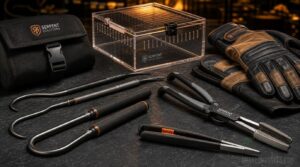
Not all handling tools are built the same, and the features that separate a good one from a great one can make a real difference when things get tense. Some upgrades aren’t flashy — they’re just the details that keep you in control and your animal calm. Here’s what’s worth looking for when you’re comparing your options.
If you want data you can actually trust, check out this guide on tracking humidity and temperature swings together, which covers logging intervals and sensor recalibration in more depth.
Locking Handle Mechanisms
A locking handle can be the difference between control and chaos when you’re managing a stressed or defensive snake. Cam lock designs rotate a cam into position to hold jaws firmly, while ratchet engagement maintains a secure grip without requiring constant hand pressure — genuinely useful during longer procedures.
- Push button release allows quick jaw disengagement with one finger
- Magnetic lock integration secures jaws until a lever deliberately releases them
- Bean Farm Hemostat 24 Curved Locking and 18 Straight Locking tools offer precision restraint for smaller species
- Handle material durability — aluminum or stainless steel — ensures reliable locking across thousands of use cycles
Your reptile handling equipment is only as dependable as its locking mechanism, so inspect every component before each session.
Non-slip Grips
A locked jaw means nothing if the handle slips mid-session. Rubber grip texture creates micro friction points that hold firm even with sweaty or gloved hands, channeling moisture away so contact stays consistent. Tools like the Bean Farm Deluxe Field Hook w Grips 40inch, 32inch, and Bean Farm Hook Golf Club Style Grip 38inch use contoured, ergonomic hand design that distributes pressure evenly across your palm, reducing fatigue during longer procedures.
| Feature | Benefit | Example Tool |
|---|---|---|
| Rubber Grip Texture | Prevents slipping in wet conditions | Bean Farm Field Hook 40" |
| UV Stabilized Material | Resists outdoor hardening/cracking | Bean Farm Field Hook 32" |
| Temperature Resistant Grip | Stays pliable from -20°C to 60°C | Golf Club Style Grip 38" |
UV stabilized material and temperature resistant grip compounds keep tool bodies functional across field conditions. Follow grip maintenance protocols — mild soap, no solvents — to preserve tackiness. The Bean Farm Tweezer 12 with rubber tip applies this same principle to smaller-scale reptile handling equipment tasks.
Puncture-resistant Materials
A good grip keeps you in control, but it’s the material itself that stops a fang from reaching the skin. Puncture-resistant gloves built from Kevlar aramid fibers or UHMWPE fabrics like Dyneema give you real bite protection without the bulk.
Layered composites and nanoparticle-reinforced textiles distribute impact across the surface, so no single point takes the full force.
Lightweight Aluminum Shafts
Material matters where gloves leave off. Lightweight aluminum shafts — especially 6061 T6 alloy — deliver genuine strength without the arm fatigue that comes from extended handling sessions.
That 30–40% weight reduction over steel means your snake hooks and L-shaped field hooks stay responsive during long relocations.
Corrosion resistance keeps your herpetology field gear reliable outdoors, season after season.
Wide Padded Jaws
Wide jaws that actually protect your snake aren’t a luxury — they’re the point. Jaw Cushioning Design uses soft TPU padding to spread grip pressure evenly, so your snake handling tools never pinch or leave ring marks on delicate scales. The TPU Grip Surface stays flexible even in cold conditions and resists bite oils.
- Pressure Distribution prevents dermal injury during restraint
- No direct metal contact with reptile skin
- Interchangeable Pad System accommodates different species sizes
- Durability Maintenance is simple — soap, water, air dry
Transport and Temporary Containment
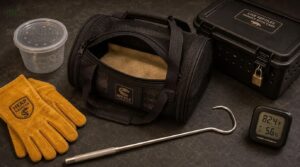
Moving a reptile — even a short distance — is where a lot of handlers get caught off guard. The right containment gear keeps your animal calm, secure, and where it’s supposed to be. Here’s what you’ll want on hand before you ever open that enclosure door.
Snake Bags
A snake bag is one of the simplest pieces of reptile handling equipment you can own — and one of the most important. Bag materials matter here: breathable, reinforced fabric keeps airflow steady while standing up to claws and scales.
The Bean Farm Venomous Snake Bag with Window 19×46 adds a mesh panel so you can assess the snake without opening the bag.
Ventilated Transport Boxes
Ventilated transport boxes are the upgrade from a snake bag when you need sturdier containment for longer hauls. Double-wall construction resists crushing when stacked, while cross-flow vent placement keeps air circulating without creating escape gaps.
Key features worth prioritizing:
- UV-stabilized plastic resists sun exposure during outdoor transport
- Louvered vents adjust airflow for different climates
- Reinforced locking lids prevent accidental openings
- Corrosion-resistant latches extend lifespan
- Interior coatings resist mildew and cleaning agents
Locking Reptile Buckets
A locking reptile bucket fills the gap between a snake bag and a full transport box — compact, sturdy, and surprisingly secure.
The two-part lid system clamps firmly to the rim, requiring deliberate alignment to release, so accidental openings during transport stay off the table.
FDA-approved food-grade plastic resists chemical exposure while keeping your animal safe.
Escape-proof Closures
A closure is only as good as its weakest point — and reptiles will find it.
Whether you’re using a snake bag, a clear container, or a bucket, escape-proof closures combine heavy-duty latches, spring-loaded mechanisms, and tamper-evident seals to prevent accidental release. A secondary latch that requires deliberate disengagement adds real peace of mind during transport.
Field Relocation Safety
Field relocation isn’t something you figure out as you go. Before you move any animal, route planning and permit requirements must be confirmed — this matters just as much for backyard transfers as it does for formal field herpetology surveys.
Keep emergency contacts and handler training current, carry your snake hooks and puncture‑resistant gloves, and maintain temperature control inside every transport container throughout the move.
Cleaning, Maintenance, and Storage
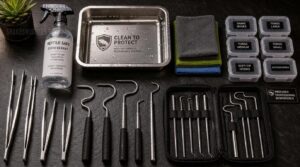
Your handling tools work hard, and keeping them clean and ready isn’t optional—it’s part of responsible reptile keeping. A little routine care goes a long way toward preventing contamination between animals and catching problems before they become safety issues.
Here’s what every keeper should stay on top of.
Disinfecting Handling Tools
Every tool that touches your reptiles needs proper disinfection after each use. Submerge all surfaces in a EPA-registered disinfectant, following the manufacturer’s contact time of 5–15 minutes.
Before you commit to full immersion, run a material compatibility test on a small area — aluminum and leather react poorly to certain formulas. Rinse thoroughly, air dry completely, then store in a clean, dry space.
Inspecting Worn Parts
Once your tools are clean and dry, take a close look before storing them.
Check for jaw wear — any dulling, chipping, or rounding beyond 0.5 mm means your grip is compromised.
Run your thumb along the shaft coating for peeling or exposed metal.
Test your locking mechanism by applying pressure; it should hold firm without slipping.
Glove Cleaning Care
Your gloves take on just as much risk as your hands do, so treat them accordingly. After each session, wash them with mild soap and warm water, rinse thoroughly, and lay them flat to air dry — never near a radiator or direct heat, which can harden leather or warp synthetics.
- Leather gloves need conditioning after cleaning to stay pliable and grip-ready.
- Kevlar or puncture-resistant gloves benefit from a mild disinfectant rinse to reduce microbial load between uses.
- Fabric or synthetic gloves can usually handle a gentle machine wash, then air dry completely before storage.
Store clean, dry gloves in a breathable bag away from sharp objects, and tuck in an activated charcoal sachet to manage moisture and odor over time.
Rust Prevention
Clean gloves are only half the battle — your metal tools need just as much attention. Rust prevention starts with drying snake hooks and tongs immediately after cleaning.
Moisture is the enemy. A light wipe of corrosion inhibitor oil along aluminum shafts and steel joints blocks oxidation before it starts, keeping your reptile handling equipment reliable session after session.
Safe Gear Storage
Where you store your gear matters as much as how you use it. Lockable, labeled cabinets keep reptile handling equipment away from unauthorized hands and protect your personal protective equipment from dust and damage.
Here’s what solid storage actually looks like:
- Desiccant packs tucked inside sealed containers maintain 30–50% humidity, blocking rust and mold
- Vented bins prevent mildew on gloves and fabric items
- A checkout log tracks which tools are out and when they return
Frequently Asked Questions (FAQs)
How often should snake hooks be replaced?
Replace snake hooks every 1–2 years under heavy use. In humid environments or high-volume handling, inspect before each session and retire immediately if you spot cracks, rust, or persistent bending.
Whats the proper storage method for handling equipment?
Keep your reptile handling equipment in a Climate Controlled Storage space, dry and away from sunlight. Use Tool Organization Racks and a clear container that is visibly marked so everything stays accessible and ready.
How do you calibrate temperature monitoring devices?
Calibrate temperature monitors using the ice point method at 0°C or boiling point calibration at 100°C. Apply offsets where readings drift, and document every adjustment for reliable reptile husbandry records.
Whats the minimum insurance coverage for reptile handlers?
Picture yourself at a packed reptile expo when a bite happens. You’ll need at least $1 million in general liability coverage per occurrence, plus a professional liability endorsement to stay protected.
How do reptile enclosure materials affect animal health?
Enclosure materials directly shape your reptile’s health. Rough surfaces cause abrasions, treated wood releases harmful compounds, and poor ventilation traps moisture, triggering skin and respiratory disease.
Choose smooth, non-toxic, easy-to-clean materials every time.
What backup systems prevent lethal temperature fluctuations?
Like a life raft in a storm, Battery Backup Heating and Standby Generator Power keep temperatures stable when the grid fails, preventing lethal drops critical to reptile health care.
How are reptile sexing probes used safely?
Reptile sexing probes work safely only in trained hands. Sterilize the probe first, use a water-based lubricant, and stop immediately if you feel resistance or the snake shows distress.
Which brands meet international wildlife handling regulations?
Brands like Acorn Naturalists and Komodo align with CITES compliance and Wildlife Friendly standards, ensuring transparent supply chains and independent audits that verify ethical sourcing and humane handling practices across international markets.
How do you select tools for multiple reptile species?
Select tools based on species size and behavior. Tongs with adjustable jaws and telescoping shafts handle everything from corn snakes to boas, while ergonomic, balanced grips keep control comfortable across multiple species.
Conclusion
A craftsman is only as good as his tools—and that holds especially true when the tools exist to protect both you and the animal in your care. Meeting your reptile handling equipment needs isn’t about overcautious gear‑hoarding; it’s about building a reliable system that keeps every interaction controlled and predictable.
The right hook, tongs, gloves, and containment gear don’t just minimize risk—they build the kind of confidence that makes you a better keeper.